Loading...
This comparison has not been analyzed yet.
One-time AI generation (~1 minute). Scores and timeline are already available below.
Jim Bolger vs Ram Jethmalani
Jim Bolger leads by 5.0 pts · 2 figures compared
…
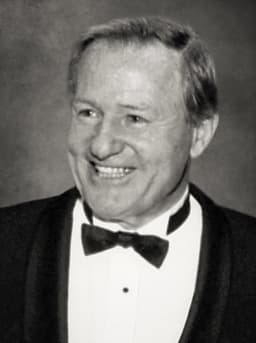
Jim Bolger
Politician · Modern
56.1Total

Ram Jethmalani
Politician · Modern
51.1Total
Basic Information
Born
1935
1923
Died
—
—
Era
Modern
Modern
Nationality
New Zealand
India
Occupation
Politician
Politician
Civilization
Western
Indian
Score Comparison
Military (10%)
50.0
48.1
Political (20%)
72.0
37.9
Influence (20%)
53.3
58.0
Legacy (20%)
45.0
45.0
Leadership (15%)
77.2
58.8
Strategy (15%)
41.2
60.0
TOTAL
56.1
51.1
Jim Bolger — Complete Timeline
1990 AD
1990 General Election VictoryPolitical Action◆ Major
Bolger led the National Party to a landslide victory, winning 67 of 97 seats. He became Prime Minister, succeeding Labour's Mike Moore, and began implementing free-market reforms known as 'Rogernomics' continuation.
ElectionNational PartyGovernment Formation
Impact: national
1993 AD
1993 Electoral Reform ReferendumPolitical Action◆ Major
Bolger's National government held a binding referendum on electoral reform. Voters chose to replace the first-past-the-post system with Mixed Member Proportional (MMP) representation, fundamentally changing New Zealand's political landscape.
Electoral ReformMMPDemocracy
Impact: nationalconstructive
1994 AD
1994 Fiscal Responsibility ActReform
Bolger's government passed the Fiscal Responsibility Act, requiring transparent budgeting and debt reduction targets. This legislation established a framework for fiscal discipline that influenced subsequent governments.
Fiscal PolicyBudget ReformTransparency
Impact: nationalconstructive
1997 AD
1997 Resignation as Prime MinisterPolitical Action◆ Major
Facing declining popularity and internal party challenges, Bolger resigned as Prime Minister and National Party leader. He was succeeded by Jenny Shipley, who became New Zealand's first female Prime Minister.
ResignationLeadership ChangeShipley
Impact: national
Ram Jethmalani — Complete Timeline
1975 AD
Defended Indira Gandhi in election petition casePolitical Action◆ Major
Ram Jethmalani represented Prime Minister Indira Gandhi in the Supreme Court against the Allahabad High Court's decision to unseat her for electoral malpractice. He successfully argued for a stay, but the case led to the declaration of Emergency in India.
LegalEmergencyIndira Gandhi
Impact: national
1993 AD
Defended accused in the 1993 Bombay blasts casePolitical Action◆ Major
Jethmalani defended several accused in the 1993 Bombay serial blasts case, including underworld don Dawood Ibrahim's associates. His legal arguments challenged the prosecution's evidence, though many accused were convicted.
LegalTerrorismBombay Blasts
Impact: national
1999 AD
Served as Union Law Minister under VajpayeePolitical Action
Jethmalani was appointed Law Minister in the Vajpayee government. He pushed for judicial reforms and the appointment of more judges, but resigned in 2000 after differences with the government over the appointment of a chief justice.
LawMinisterReform
Impact: nationalconstructive
This comparison has not been analyzed yet.
One-time AI generation (~1 minute). Scores and timeline are already available below.
Rankings
🥇
Jim BolgerLeader
Mil: 50.0Pol: 72.0Inf: 53.3
56.1
🥈
Ram Jethmalani
Mil: 48.1Pol: 37.9Inf: 58.0
51.1
+5.0 behind
How This Comparison Works
Algorithm
Each figure is scored on 6 dimensions (0—100 scale) based on structured historical data: Military (10%), Political (20%), Influence (20%), Legacy (20%), Leadership (15%), Strategy (15%). The weighted total produces the final ranking.
Data Sources
Scores are computed from structured sub-indicators in the database. Scale factors adjust for era (Ancient ×0.85, Modern ×1.0) and civilization size (Eastern ×1.05, Other ×0.80) to account for differences in population and military scale.
Maximum 3 Figures
Comparisons are limited to 2—3 figures to ensure readability and statistical meaningfulness.
Error Margins
±5 points per dimension — Sub-scores are derived from historical records with inherent uncertainty. Two figures within 5 points on a dimension should be considered roughly equivalent in that area.
Total Score Accuracy
±3 points overall — The weighted combination of 6 dimensions produces a total score with approximately ±3 points of uncertainty. Differences of less than 3 points are not statistically significant— the figures are effectively tied.
Known Limitations
- Historical records are incomplete and uneven across civilizations
- Figures from oral-tradition societies may be underrepresented
- Occupation labels can misclassify multi-role figures
- Scores measure capability and impact, not moral character
- Quantitative scoring is a comparison tool, not absolute truth
Capability Radar
Military (10%) — Battles & Warfare
Battles
30
41
Win Rate
32
49
Expansion
33
48
Political (20%) — Governance & Reform
Reform
70
30
Diplomacy
55
35
Economy
50
20
Influence (20%) — Cultural & Global Reach
Cultural
30
45
Global
30
35
Legacy (20%) — Historical Impact
Historical
40
40
Longevity
30
30
Leadership (15%) — Power & Stability
Tenure
60
40
Stability
55
15
Strategy (15%) — Tactics & Innovation
Strategy
37
51
Tactics
40
56
Reform
42
59
Similar Comparisons
Comments & Discussion
No comments yet. Be the first to share your thoughts!