Loading...
Jawaharlal Nehru vs Jim Bolger
Jawaharlal Nehru leads by 3.8 pts · 2 figures compared
…
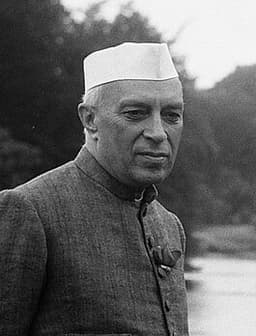
Jawaharlal Nehru
Politician · Modern
59.9Total
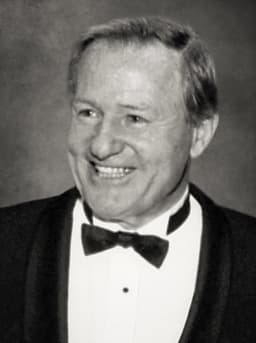
Jim Bolger
Politician · Modern
56.1Total
Basic Information
Born
1889
1935
Died
1964
—
Era
Modern
Modern
Nationality
India
New Zealand
Occupation
Politician
Politician
Civilization
Indian
Western
Score Comparison
Military (10%)
10.0
50.0
Political (20%)
78.0
72.0
Influence (20%)
88.0
53.3
Legacy (20%)
40.0
45.0
Leadership (15%)
78.0
77.2
Strategy (15%)
35.0
41.2
TOTAL
59.9
56.1
Jawaharlal Nehru — Complete Timeline
1919 AD
Jallianwala Bagh Massacre ResponsePolitical Action◆ Major
Nehru, deeply affected by the Jallianwala Bagh massacre, joined the Indian independence movement. He became a key leader in the Indian National Congress, advocating for non-violent resistance against British rule.
Independence MovementIndian National CongressNon-violence
Impact: national
1929 AD
Election as Congress President (Lahore Session)Political Action◆ Major
Nehru was elected President of the Indian National Congress at its Lahore session, where he declared Purna Swaraj (complete independence) as the party's goal. This marked a shift from dominion status to full independence.
Indian National CongressIndependencePurna Swaraj
Impact: nationalprogressive
1942 AD
Quit India Movement LeadershipPolitical Action◆ Major
Nehru, alongside Gandhi, led the Quit India Movement, demanding an end to British rule. He was arrested and imprisoned for nearly three years, but the movement intensified pressure on Britain to leave India.
Quit IndiaCivil DisobedienceImprisonment
Impact: nationalprogressive
1947 AD
First Prime Minister of IndiaPolitical Action
Nehru became the first Prime Minister of independent India, delivering his 'Tryst with Destiny' speech. He led the nation through partition, integration of princely states, and the drafting of a secular, democratic constitution.
IndependencePrime MinisterConstitution
Impact: globalconstructive
1961 AD
Founding of the Non-Aligned MovementPolitical Action◆ Major
Nehru co-founded the Non-Aligned Movement with Tito, Nasser, and Sukarno, advocating for a third way during the Cold War. This positioned India as a leader of developing nations, promoting peace and decolonization.
Non-Aligned MovementCold WarForeign Policy
Impact: globalconstructive
Jim Bolger — Complete Timeline
1990 AD
1990 General Election VictoryPolitical Action◆ Major
Bolger led the National Party to a landslide victory, winning 67 of 97 seats. He became Prime Minister, succeeding Labour's Mike Moore, and began implementing free-market reforms known as 'Rogernomics' continuation.
ElectionNational PartyGovernment Formation
Impact: national
1993 AD
1993 Electoral Reform ReferendumPolitical Action◆ Major
Bolger's National government held a binding referendum on electoral reform. Voters chose to replace the first-past-the-post system with Mixed Member Proportional (MMP) representation, fundamentally changing New Zealand's political landscape.
Electoral ReformMMPDemocracy
Impact: nationalconstructive
1994 AD
1994 Fiscal Responsibility ActReform
Bolger's government passed the Fiscal Responsibility Act, requiring transparent budgeting and debt reduction targets. This legislation established a framework for fiscal discipline that influenced subsequent governments.
Fiscal PolicyBudget ReformTransparency
Impact: nationalconstructive
1997 AD
1997 Resignation as Prime MinisterPolitical Action◆ Major
Facing declining popularity and internal party challenges, Bolger resigned as Prime Minister and National Party leader. He was succeeded by Jenny Shipley, who became New Zealand's first female Prime Minister.
ResignationLeadership ChangeShipley
Impact: national
Expert Analysis
Origins
Jawaharlal Nehru (1889–1964) was born into a wealthy Kashmiri Brahmin family in Allahabad, India. His father, Motilal Nehru, was a prominent lawyer and nationalist leader. Nehru was educated at Harrow and Trinity College, Cambridge, and studied law at the Inner Temple in London. His early exposure to Western liberal thought and Indian nationalism shaped his secular, socialist worldview. Jim Bolger (born 1935) grew up on a dairy farm in Taranaki, New Zealand. He left school at 15 to work on the family farm, later becoming a farmer and businessman. His background was modest compared to Nehru's elite upbringing. Bolger entered politics through the National Party, winning the seat of King Country in 1972.
Rise to Power
Nehru's political rise began after his involvement in the Indian National Congress following the Jallianwala Bagh massacre (1919). He became a close ally of Mahatma Gandhi and was elected Congress President in 1929 at the Lahore session, where he declared Purna Swaraj (complete independence) as the party goal. He led the Quit India Movement in 1942, enduring imprisonment for nearly three years. His role in independence negotiations made him the natural successor to Gandhi, and he became India's first Prime Minister on August 15, 1947. Bolger's rise was more conventional. He held various cabinet positions under Prime Ministers Robert Muldoon and later became National Party leader in 1986. He led the party to a landslide victory in the 1990 general election, winning 67 of 97 seats, and succeeded Mike Moore as Prime Minister. His rise was marked by a focus on economic reform and electoral change.
Leadership & Governance
Nehru's leadership was defined by his vision of a secular, democratic, and socialist India. He promoted a mixed economy with heavy state intervention, founding institutions like the Planning Commission (1950) and implementing five-year plans. He pursued a policy of non-alignment during the Cold War, co-founding the Non-Aligned Movement in 1961. His governance style was intellectual and paternalistic, often bypassing party machinery. Bolger, in contrast, was a pragmatic reformer. His government implemented radical economic deregulation, including the Fiscal Responsibility Act (1994), which mandated transparent budgeting and debt reduction. His greatest achievement was the 1993 electoral reform referendum, which replaced the first-past-the-post system with Mixed Member Proportional (MMP) representation. Bolger's leadership was more consensus-driven, but he faced internal party dissent over his economic policies.
Triumph & Tragedy
Nehru's triumphs include guiding India through its early years as a republic, integrating princely states, and establishing democratic institutions. His foreign policy successes include the Non-Aligned Movement and a strong relationship with the Soviet Union. However, his failures were significant: the 1962 Sino-Indian War was a military disaster, exposing India's unpreparedness and damaging his reputation. His economic policies led to slow growth and bureaucratic inefficiency. Bolger's triumph was the successful implementation of MMP, which transformed New Zealand's political landscape and increased representation. His Fiscal Responsibility Act established fiscal discipline. His tragedy was his resignation in 1997 amid declining popularity and internal party challenges. His economic reforms, while successful in reducing debt, led to social inequality and opposition from traditional National Party supporters.
Character & Destiny
Nehru was an intellectual with a strong belief in rationality and progress. He was charismatic but often aloof, and his decision-making was influenced by his socialist ideals. His character shaped India's destiny as a secular democracy, but his overconfidence in diplomacy contributed to the border war with China. Bolger was a pragmatic, down-to-earth politician. He was known for his persistence and ability to navigate political challenges. His character led him to pursue electoral reform despite opposition within his own party. His destiny was to be a transitional figure who modernized New Zealand's political system but was ultimately ousted by his own party.
Legacy
Nehru's legacy is vast: he established India's democratic framework, secularism, and non-aligned foreign policy. His influence is seen in India's institutions and its role as a global leader. However, his economic policies are criticized for stifling growth. Nehru scored 78.0 in political and 88.0 in influence, reflecting his lasting impact. Bolger's legacy is more focused: he is remembered primarily for electoral reform, which made New Zealand's parliament more representative. His fiscal reforms also left a mark. Bolger scored 72.0 in political and 53.3 in influence, lower due to his smaller stage. The score gap of 3.8 points reflects Nehru's broader historical impact, though Bolger's reforms were significant within New Zealand.
Conclusion
Jawaharlal Nehru had a greater historical impact than Jim Bolger. Nehru's role in founding modern India, his global influence through the Non-Aligned Movement, and his shaping of democratic institutions in a country of over a billion people far outweigh Bolger's achievements in a smaller nation. Nehru's total score of 59.9 versus Bolger's 56.1 reflects this difference. While Bolger's electoral reform was a landmark for New Zealand, Nehru's legacy is on a world-historical scale. Therefore, Nehru is the more significant figure.
Rankings
🥇
Jawaharlal NehruLeader
Mil: 10.0Pol: 78.0Inf: 88.0
59.9
🥈
Jim Bolger
Mil: 50.0Pol: 72.0Inf: 53.3
56.1
+3.8 behind
How This Comparison Works
Algorithm
Each figure is scored on 6 dimensions (0—100 scale) based on structured historical data: Military (10%), Political (20%), Influence (20%), Legacy (20%), Leadership (15%), Strategy (15%). The weighted total produces the final ranking.
Data Sources
Scores are computed from structured sub-indicators in the database. Scale factors adjust for era (Ancient ×0.85, Modern ×1.0) and civilization size (Eastern ×1.05, Other ×0.80) to account for differences in population and military scale.
Maximum 3 Figures
Comparisons are limited to 2—3 figures to ensure readability and statistical meaningfulness.
Error Margins
±5 points per dimension — Sub-scores are derived from historical records with inherent uncertainty. Two figures within 5 points on a dimension should be considered roughly equivalent in that area.
Total Score Accuracy
±3 points overall — The weighted combination of 6 dimensions produces a total score with approximately ±3 points of uncertainty. Differences of less than 3 points are not statistically significant— the figures are effectively tied.
Known Limitations
- Historical records are incomplete and uneven across civilizations
- Figures from oral-tradition societies may be underrepresented
- Occupation labels can misclassify multi-role figures
- Scores measure capability and impact, not moral character
- Quantitative scoring is a comparison tool, not absolute truth
Capability Radar
Military (10%) — Battles & Warfare
Battles
26
30
Win Rate
28
32
Expansion
32
33
Political (20%) — Governance & Reform
Reform
85
70
Diplomacy
90
55
Economy
70
50
Influence (20%) — Cultural & Global Reach
Cultural
80
30
Global
85
30
Legacy (20%) — Historical Impact
Historical
85
40
Longevity
80
30
Leadership (15%) — Power & Stability
Tenure
85
60
Stability
75
55
Strategy (15%) — Tactics & Innovation
Strategy
35
37
Tactics
37
40
Reform
36
42
Similar Comparisons
Comments & Discussion
No comments yet. Be the first to share your thoughts!