Loading...
This comparison has not been analyzed yet.
One-time AI generation (~1 minute). Scores and timeline are already available below.
Jigme Dorji Wangchuck vs Reza Shah Pahlavi
Reza Shah Pahlavi leads by 3.4 pts · 2 figures compared
…

Jigme Dorji Wangchuck
Emperor · Modern
60.2Total
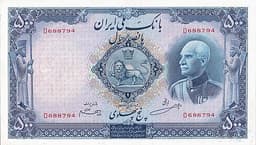
Reza Shah Pahlavi
Emperor · Modern
63.6Total
Basic Information
Born
1929
1878
Died
—
1944
Era
Modern
Modern
Nationality
Bhutan
Iran
Occupation
Emperor
Emperor
Civilization
Indian
Middle Eastern
Score Comparison
Military (10%)
45.0
50.0
Political (20%)
75.0
72.0
Influence (20%)
55.0
72.0
Legacy (20%)
52.0
52.0
Leadership (15%)
78.0
72.0
Strategy (15%)
60.0
60.0
TOTAL
60.2
63.6
Jigme Dorji Wangchuck — Complete Timeline
1949 AD
Establishment of Diplomatic Relations with IndiaPolitical Action◆ Major
Jigme Dorji Wangchuck signed the Indo-Bhutan Treaty of Friendship with India. The treaty affirmed Bhutan's sovereignty while giving India a guiding role in its foreign policy, a relationship that continues to shape Bhutan's international relations.
TreatyDiplomacyIndia
Impact: regionalconstructive
1960 AD
Opening of Bhutan to ModernizationReform
King Jigme Dorji Wangchuck initiated a series of modernization reforms, including the abolition of serfdom, introduction of a modern legal code, and establishment of the National Assembly. He opened Bhutan to foreign aid and development.
ModernizationReformBhutan
Impact: nationalprogressive
1961 AD
Introduction of Five-Year PlansReform◆ Major
Jigme Dorji Wangchuck launched Bhutan's first Five-Year Plan, focusing on infrastructure development, education, and healthcare. This systematic approach to development transformed Bhutan from a feudal society into a modernizing state.
DevelopmentPlanningBhutan
Impact: nationalconstructive
Reza Shah Pahlavi — Complete Timeline
1921 AD
1921 Persian coup d'étatPolitical Action◆ Major
Reza Khan, a Cossack Brigade officer, led a coup that overthrew the Qajar government. He became Minister of War and later Prime Minister, using the military to consolidate power and suppress regional rebellions.
CoupQajarMilitary
Impact: national
1926 AD
Coronation as Reza Shah PahlaviPolitical Action◆ Major
Reza Khan crowned himself Reza Shah Pahlavi, founding the Pahlavi dynasty. He replaced the Qajar dynasty and began a program of rapid modernization, centralization, and secularization of Iran.
CoronationDynastyModernization
Impact: national
1938 AD
Trans-Iranian Railway completionOther◆ Major
Reza Shah oversaw the completion of the Trans-Iranian Railway, connecting the Caspian Sea to the Persian Gulf. The project was a major infrastructure achievement, facilitating trade and military transport, but was built with forced labor.
InfrastructureModernizationRailway
Impact: nationalconstructive
1941 AD
Forced abdication by Allied powersPolitical Action
Britain and the Soviet Union invaded Iran to secure oil fields and supply routes. Reza Shah refused to expel German nationals, leading to his forced abdication in favor of his son Mohammad Reza Pahlavi. He was exiled to South Africa.
World War IIInvasionExile
Impact: nationaltragic
This comparison has not been analyzed yet.
One-time AI generation (~1 minute). Scores and timeline are already available below.
Rankings
🥇
Reza Shah PahlaviLeader
Mil: 50.0Pol: 72.0Inf: 72.0
63.6
🥈
Jigme Dorji Wangchuck
Mil: 45.0Pol: 75.0Inf: 55.0
60.2
+3.4 behind
How This Comparison Works
Algorithm
Each figure is scored on 6 dimensions (0—100 scale) based on structured historical data: Military (10%), Political (20%), Influence (20%), Legacy (20%), Leadership (15%), Strategy (15%). The weighted total produces the final ranking.
Data Sources
Scores are computed from structured sub-indicators in the database. Scale factors adjust for era (Ancient ×0.85, Modern ×1.0) and civilization size (Eastern ×1.05, Other ×0.80) to account for differences in population and military scale.
Maximum 3 Figures
Comparisons are limited to 2—3 figures to ensure readability and statistical meaningfulness.
Error Margins
±5 points per dimension — Sub-scores are derived from historical records with inherent uncertainty. Two figures within 5 points on a dimension should be considered roughly equivalent in that area.
Total Score Accuracy
±3 points overall — The weighted combination of 6 dimensions produces a total score with approximately ±3 points of uncertainty. Differences of less than 3 points are not statistically significant— the figures are effectively tied.
Known Limitations
- Historical records are incomplete and uneven across civilizations
- Figures from oral-tradition societies may be underrepresented
- Occupation labels can misclassify multi-role figures
- Scores measure capability and impact, not moral character
- Quantitative scoring is a comparison tool, not absolute truth
Capability Radar
Military (10%) — Battles & Warfare
Battles
0
20
Win Rate
0
30
Expansion
0
15
Political (20%) — Governance & Reform
Reform
85
85
Diplomacy
80
55
Economy
75
70
Influence (20%) — Cultural & Global Reach
Cultural
65
60
Global
55
55
Legacy (20%) — Historical Impact
Historical
70
65
Longevity
60
55
Leadership (15%) — Power & Stability
Tenure
70
60
Stability
70
50
Strategy (15%) — Tactics & Innovation
Strategy
0
40
Tactics
0
25
Reform
10
75
Similar Comparisons
Comments & Discussion
No comments yet. Be the first to share your thoughts!