Loading...
Jiang Wei vs Memnon of Rhodes
Jiang Wei leads by 9.6 pts · 2 figures compared
…

Jiang Wei
General · Ancient
53.5Total
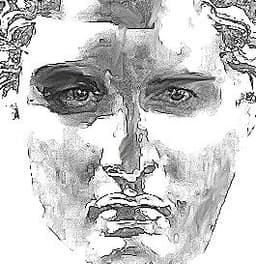
Memnon of Rhodes
General · Ancient
43.9Total
Basic Information
Born
202
-380
Died
264
-333
Era
Ancient
Ancient
Nationality
China
Rhodes
Occupation
General
General
Civilization
Eastern
Western
Score Comparison
Military (10%)
70.0
52.5
Political (20%)
35.1
27.9
Influence (20%)
55.7
50.2
Legacy (20%)
50.0
43.3
Leadership (15%)
54.2
30.0
Strategy (15%)
66.3
66.3
TOTAL
53.5
43.9
Jiang Wei — Complete Timeline
234 AD
Became successor to Zhuge LiangPolitical Action◆ Major
After Zhuge Liang's death, Jiang Wei was appointed as the commander of Shu Han's military forces, tasked with continuing the Northern Expeditions against Wei. He was given command of the remaining troops.
Shu HanZhuge LiangSuccession
Impact: nationalconstructive
238 AD
Led the first Northern ExpeditionWar
Jiang Wei launched his first major campaign against Wei, attacking the Wei-held territories of Longxi and Nan'an. The campaign achieved limited gains but failed to capture key cities.
Northern ExpeditionsShu HanMilitary Campaign
Impact: regional
Conducted eleven Northern ExpeditionsWar◆ Major
Over the course of his career, Jiang Wei launched eleven separate campaigns against Wei, each with varying degrees of success. These campaigns drained Shu Han's resources and manpower without achieving a decisive breakthrough.
Northern ExpeditionsShu HanMilitary Strategy
Impact: nationaldestructive
255 AD
Defeated by Deng Ai at the Battle of TaoxiWar◆ Major
Jiang Wei's forces were decisively defeated by Deng Ai at Taoxi. The defeat forced Jiang Wei to retreat and weakened Shu Han's military position.
Northern ExpeditionsDeng AiBattle
Impact: regionaldestructive
263 AD
Surrendered to Deng Ai after the fall of ShuPolitical Action
After Deng Ai's surprise attack on Chengdu, Jiang Wei surrendered to the Wei general. He later attempted to restore Shu by conspiring with Zhong Hui, but the plot failed and he was killed.
Shu HanFall of ShuSurrender
Impact: nationaltragic
Memnon of Rhodes — Complete Timeline
334 BC
Defense of HalicarnassusWar◆ Major
Memnon commanded the Persian defense of Halicarnassus against Alexander the Great. He used fortified positions and naval sorties to delay the Macedonian advance, forcing Alexander to besiege the city for months before it fell.
SiegePersian DefenseAlexander the Great
Impact: regional
Advice to Darius III on Scorched EarthPolitical Action
Memnon advised Darius III to adopt a scorched earth strategy, destroying crops and villages to deny supplies to Alexander's army. The Persian court rejected this plan, leading to the Battle of Granicus and subsequent losses.
StrategyPersian CourtAlexander
Impact: regional
333 BC
Naval Campaign in the AegeanWar◆ Major
Memnon launched a naval campaign to recapture Greek islands and threaten Alexander's supply lines. He captured Chios and most of Lesbos, but died during the siege of Mytilene, ending the Persian counteroffensive.
Naval CampaignAegeanPersian Strategy
Impact: regional
Expert Analysis
Origins
Jiang Wei (202-264 CE) was born in Tianshui, Gansu, during the late Eastern Han dynasty. His father died early, and he was raised by his mother. He entered service as a military officer under the Wei kingdom but later defected to Shu Han after Zhuge Liang's first Northern Expedition in 228 CE. Zhuge Liang recognized his talent and made him a protégé.
Memnon of Rhodes (380-333 BCE) was a Greek mercenary from Rhodes, a wealthy island-state known for its naval power. His brother Mentor served the Persian satrap Artabazus, and Memnon joined him. After Mentor's death, Memnon inherited command of Persian forces in Asia Minor. He married Barsine, a Persian noblewoman, and became a key commander for Darius III.
Rise to Power
Jiang Wei rose quickly under Zhuge Liang's mentorship. After Zhuge Liang's death in 234 CE, Jiang Wei was appointed commander of Shu Han's military forces, inheriting the strategic goal of conquering Wei. He launched his first Northern Expedition in 240 CE, attacking Longxi and Nan'an with limited gains. Over the next decades, he conducted eleven expeditions, becoming the dominant military figure in Shu.
Memnon's rise came through family connections. His brother Mentor had secured Persian favor, and after Mentor's death, Memnon was given command of the Persian fleet and army in western Anatolia. He proved effective in suppressing rebellions and defending against Macedonian incursions. By 336 BCE, he was a leading Persian commander, trusted by Darius III to counter Alexander the Great.
Leadership & Governance
Jiang Wei's leadership style was aggressive and persistent. He believed in offensive warfare to fulfill Zhuge Liang's dream. However, his repeated campaigns drained Shu's resources and manpower. He scored 54.2 in Leadership, reflecting his inability to unite his subordinates. His political score of 35.1 shows he lacked support in the Shu court, facing opposition from eunuch Huang Hao and others.
Memnon was a pragmatic strategist. He scored 30.0 in Leadership, indicating he was not a charismatic commander but relied on tactical acumen. He advised Darius III to adopt a scorched earth strategy against Alexander, which would have denied supplies and forced retreat. However, the Persian court rejected this, preferring open battle. Memnon's naval campaign in the Aegean (333 BCE) captured Chios and most of Lesbos, threatening Alexander's supply lines.
Triumph & Tragedy
Jiang Wei's greatest triumph was his tactical victory at the Battle of Taoxi (255 CE), where he defeated the Wei general Wang Jing, killing thousands. However, his overall record was mixed: he achieved some territorial gains but never delivered a decisive blow. His tragedy was the collapse of Shu Han. After Deng Ai's surprise attack on Chengdu, Jiang Wei surrendered. He then conspired with Wei general Zhong Hui to restore Shu, but the plot failed, and both were killed by mutinous soldiers.
Memnon's triumph was the defense of Halicarnassus (334 BCE), where he used fortifications and naval sorties to delay Alexander for months. He also captured several Aegean islands, threatening Greek loyalty. His tragedy was his death during the siege of Mytilene (333 BCE) from illness. Had he lived, his naval strategy might have altered the course of the war. His scorched earth advice, if followed, could have starved Alexander's army.
Character & Destiny
Jiang Wei was determined and loyal, but overambitious. He ignored the strategic limitations of Shu Han, which was smaller and weaker than Wei. His character led him to persist in hopeless campaigns, draining the state's strength. Historians note that he was a capable tactician but a poor strategist, scoring 66.3 in Strategy. His destiny was to be the last general of a doomed kingdom.
Memnon was cautious and clever, but his advice was ignored by the Persian court. He understood the value of attrition and naval power. His death at a critical moment sealed Persia's fate. If he had lived, he might have prolonged the war. His character was that of a mercenary who sought practical solutions, but his loyalty to Persia was limited.
Legacy
Jiang Wei's legacy is mixed. He is remembered as a loyal successor to Zhuge Liang, but also as the general who exhausted Shu's resources. His military score of 70.0 reflects his tactical skill, but his overall total of 53.5 places him below many contemporaries. In Chinese culture, he is a tragic figure, symbolizing futile perseverance.
Memnon's legacy is as the 'one who could have stopped Alexander.' Historians rate his strategic insight highly, but his actual achievements were limited by his early death and Persian court politics. His score of 43.9 overall reflects his unrealized potential. He is a cautionary tale of how good advice ignored can lead to downfall.
Conclusion
Jiang Wei had a greater overall impact due to his sustained campaigns over decades, which shaped the fate of Shu Han and the Three Kingdoms period. His military score of 70.0 and total of 53.5 exceed Memnon's 52.5 and 43.9. While Memnon's strategic advice was sound, his death prevented him from implementing it. Jiang Wei, for all his flaws, actually led armies and fought battles that directly influenced history. Therefore, Jiang Wei is the more significant historical figure.
Rankings
🥇
Jiang WeiLeader
Mil: 70.0Pol: 35.1Inf: 55.7
53.5
🥈
Memnon of Rhodes
Mil: 52.5Pol: 27.9Inf: 50.2
43.9
+9.6 behind
How This Comparison Works
Algorithm
Each figure is scored on 6 dimensions (0—100 scale) based on structured historical data: Military (10%), Political (20%), Influence (20%), Legacy (20%), Leadership (15%), Strategy (15%). The weighted total produces the final ranking.
Data Sources
Scores are computed from structured sub-indicators in the database. Scale factors adjust for era (Ancient ×0.85, Modern ×1.0) and civilization size (Eastern ×1.05, Other ×0.80) to account for differences in population and military scale.
Maximum 3 Figures
Comparisons are limited to 2—3 figures to ensure readability and statistical meaningfulness.
Error Margins
±5 points per dimension — Sub-scores are derived from historical records with inherent uncertainty. Two figures within 5 points on a dimension should be considered roughly equivalent in that area.
Total Score Accuracy
±3 points overall — The weighted combination of 6 dimensions produces a total score with approximately ±3 points of uncertainty. Differences of less than 3 points are not statistically significant— the figures are effectively tied.
Known Limitations
- Historical records are incomplete and uneven across civilizations
- Figures from oral-tradition societies may be underrepresented
- Occupation labels can misclassify multi-role figures
- Scores measure capability and impact, not moral character
- Quantitative scoring is a comparison tool, not absolute truth
Capability Radar
Military (10%) — Battles & Warfare
Battles
65
45
Win Rate
40
40
Expansion
30
30
Political (20%) — Governance & Reform
Reform
50
15
Diplomacy
45
55
Economy
40
20
Influence (20%) — Cultural & Global Reach
Cultural
55
20
Global
30
20
Legacy (20%) — Historical Impact
Historical
60
35
Longevity
55
25
Leadership (15%) — Power & Stability
Tenure
60
35
Stability
35
25
Strategy (15%) — Tactics & Innovation
Strategy
60
60
Tactics
70
65
Reform
55
20
Similar Comparisons
Comments & Discussion
No comments yet. Be the first to share your thoughts!