Loading...
This comparison has not been analyzed yet.
One-time AI generation (~1 minute). Scores and timeline are already available below.
Jia Chong vs Qu Yuan
Qu Yuan leads by 7.7 pts · 2 figures compared
…

Jia Chong
Politician · Ancient
53.9Total
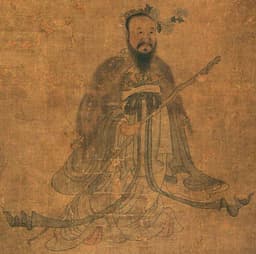
Qu Yuan
Politician · Ancient
61.6Total
Basic Information
Born
217
-340
Died
282
-278
Era
Ancient
Ancient
Nationality
China
China
Occupation
Politician
Politician
Civilization
Eastern
Eastern
Score Comparison
Military (10%)
45.0
42.1
Political (20%)
68.0
26.4
Influence (20%)
50.2
75.0
Legacy (20%)
44.2
90.0
Leadership (15%)
68.0
41.5
Strategy (15%)
54.3
60.0
TOTAL
53.9
61.6
Jia Chong — Complete Timeline
255 AD
Marriage to Sima Zhao's DaughterPolitical Action
Jia Chong married a daughter of Sima Zhao, strengthening his ties to the Sima clan. This marriage aligned him with the future Jin dynasty and ensured his political survival after the Cao Wei collapse. It also gave him influence over succession matters.
Three KingdomsWei PoliticsMarriage Alliance
Impact: national
260 AD
Assassination of Cao MaoPolitical Action
Jia Chong ordered the assassination of Emperor Cao Mao after the emperor led a coup against Sima Zhao. When Cao Mao attacked Sima Zhao's residence, Jia Chong's troops killed him. This act eliminated the last Cao emperor who resisted Sima control.
Three KingdomsWei PoliticsAssassination
Impact: nationaldestructive
265 AD
Appointed Minister of WorksPolitical Action◆ Major
Jia Chong was appointed Minister of Works under the Jin dynasty, becoming one of its highest-ranking officials. He played a key role in consolidating Sima Yan's rule and was instrumental in the conquest of Wu, serving as a strategist and administrator.
Three KingdomsJin PoliticsAppointment
Impact: nationalconstructive
Qu Yuan — Complete Timeline
299 BC
Exiled from Chu courtPolitical Action◆ Major
Qu Yuan was banished from the Chu court by King Huai of Chu due to slander from rival officials. This exile removed him from political influence and led to his wandering in the southern regions of Chu.
ExileChuPolitical Fall
Impact: nationaltragic
295 BC
Composed the Li SaoCultural◆ Major
During his exile, Qu Yuan wrote the Li Sao, a long autobiographical poem expressing his sorrow and loyalty to Chu. This work became a foundational text of Chinese literature and the Chu Ci anthology.
PoetryChinese LiteratureChu Ci
Impact: globalconstructive
278 BC
Drowned himself in the Miluo RiverOther◆ Major
Upon hearing that the Qin army had captured the Chu capital Ying, Qu Yuan drowned himself in the Miluo River. This act of protest against political corruption is commemorated annually by the Dragon Boat Festival.
SuicideDragon Boat FestivalProtest
Impact: nationaltragic
This comparison has not been analyzed yet.
One-time AI generation (~1 minute). Scores and timeline are already available below.
Rankings
🥇
Qu YuanLeader
Mil: 42.1Pol: 26.4Inf: 75.0
61.6
🥈
Jia Chong
Mil: 45.0Pol: 68.0Inf: 50.2
53.9
+7.7 behind
How This Comparison Works
Algorithm
Each figure is scored on 6 dimensions (0—100 scale) based on structured historical data: Military (10%), Political (20%), Influence (20%), Legacy (20%), Leadership (15%), Strategy (15%). The weighted total produces the final ranking.
Data Sources
Scores are computed from structured sub-indicators in the database. Scale factors adjust for era (Ancient ×0.85, Modern ×1.0) and civilization size (Eastern ×1.05, Other ×0.80) to account for differences in population and military scale.
Maximum 3 Figures
Comparisons are limited to 2—3 figures to ensure readability and statistical meaningfulness.
Error Margins
±5 points per dimension — Sub-scores are derived from historical records with inherent uncertainty. Two figures within 5 points on a dimension should be considered roughly equivalent in that area.
Total Score Accuracy
±3 points overall — The weighted combination of 6 dimensions produces a total score with approximately ±3 points of uncertainty. Differences of less than 3 points are not statistically significant— the figures are effectively tied.
Known Limitations
- Historical records are incomplete and uneven across civilizations
- Figures from oral-tradition societies may be underrepresented
- Occupation labels can misclassify multi-role figures
- Scores measure capability and impact, not moral character
- Quantitative scoring is a comparison tool, not absolute truth
Capability Radar
Military (10%) — Battles & Warfare
Battles
15
40
Win Rate
10
45
Expansion
5
44
Political (20%) — Governance & Reform
Reform
40
15
Diplomacy
55
10
Economy
50
10
Influence (20%) — Cultural & Global Reach
Cultural
20
85
Global
10
75
Legacy (20%) — Historical Impact
Historical
35
80
Longevity
20
90
Leadership (15%) — Power & Stability
Tenure
65
20
Stability
40
10
Strategy (15%) — Tactics & Innovation
Strategy
15
48
Tactics
10
55
Reform
5
57
Similar Comparisons
Comments & Discussion
No comments yet. Be the first to share your thoughts!