Loading...
This comparison has not been analyzed yet.
One-time AI generation (~1 minute). Scores and timeline are already available below.
Jeongjo of Joseon vs Murad III
Jeongjo of Joseon leads by 0.9 pts · 2 figures compared
…
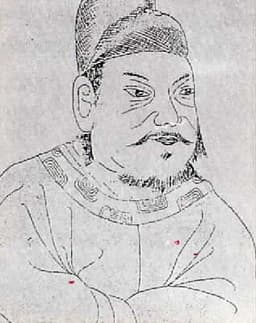
Jeongjo of Joseon
Emperor · Modern
51.3Total

Murad III
Emperor · Modern
50.4Total
Basic Information
Born
1752
1546
Died
1800
1595
Era
Modern
Modern
Nationality
Korea
Ottoman Empire
Occupation
Emperor
Emperor
Civilization
Eastern
Middle Eastern
Score Comparison
Military (10%)
10.2
20.0
Political (20%)
60.0
43.7
Influence (20%)
57.2
57.2
Legacy (20%)
46.7
45.8
Leadership (15%)
72.0
74.0
Strategy (15%)
45.0
50.0
TOTAL
51.3
50.4
Jeongjo of Joseon — Complete Timeline
1776 AD
Establishment of Kyujanggak Royal LibraryCultural◆ Major
Jeongjo founded the Kyujanggak library to house royal documents and promote scholarship. He appointed talented scholars regardless of faction, fostering intellectual growth. The library became a center for Silhak (Practical Learning) and reformist ideas.
LibraryScholarshipSilhak
Impact: nationalconstructive
1791 AD
Reforms in Taxation and AdministrationReform
Jeongjo implemented the 'Sagyek' system to improve tax collection and reduce corruption. He also reformed the land tax and military service system, easing burdens on peasants. These reforms strengthened the state but faced resistance from entrenched interests.
Tax ReformAdministrationEconomy
Impact: nationalconstructive
1794 AD
Construction of Hwaseong FortressCultural◆ Major
King Jeongjo built Hwaseong Fortress in Suwon to honor his father Crown Prince Sado and to establish a new administrative center. The fortress incorporated advanced Western and Eastern military architecture. It was completed in 1796 and is now a UNESCO World Heritage site.
ArchitectureFortressUNESCO
Impact: nationalconstructive
1800 AD
Mysterious Death of JeongjoOther◆ Major
King Jeongjo died suddenly at age 48, possibly from illness or poisoning. His death was suspicious, as he was in good health. It led to a purge of his reformist supporters by the Andong Kim clan, ending his progressive policies.
DeathConspiracyPower Shift
Impact: nationaltragic
Murad III — Complete Timeline
1565 AD
Failed Siege of MaltaWar
Although Murad III was not yet sultan, the failed siege of Malta occurred during his father's reign. However, Murad III later attempted to capture Malta in 1595 but was repelled by the Knights Hospitaller. This failure prevented Ottoman control of the central Mediterranean.
SiegeMaltaKnights Hospitaller
Impact: regionaldestructive
1574 AD
Sultanate of Women Influence BeganPolitical Action◆ Major
Murad III's reign saw the rise of the Sultanate of Women, as his mother Nurbanu Sultan and later his wife Safiye Sultan exerted significant political influence. They controlled court appointments and foreign policy, setting a precedent for female power in the Ottoman court.
Sultanate of WomenNurbanu SultanSafiye Sultan
Impact: national
1578 AD
Battle of ÇıldırWar◆ Major
The Ottoman army under Lala Mustafa Pasha defeated the Safavid forces at
Ottoman-Safavid WarCaucasusLala Mustafa Pasha
Impact: regional
1580 AD
English-Ottoman Trade AgreementPolitical Action
Murad III granted the English Levant Company trading privileges in the Ottoman Empire. This agreement established formal diplomatic and commercial relations between England and the Ottoman Empire, allowing English merchants to trade in Ottoman ports.
TradeEnglandLevant Company
Impact: globalconstructive
1590 AD
Treaty of Constantinople with SafavidsPolitical Action◆ Major
Murad III's empire signed the Treaty of Constantinople with the Safavid Empire, ending the war that began in 1578. The treaty granted the Ottomans control over Azerbaijan, the Caucasus, and parts of western Iran, marking the peak of Ottoman territorial expansion.
Peace TreatySafavid EmpireTerritorial Expansion
Impact: regionalconstructive
This comparison has not been analyzed yet.
One-time AI generation (~1 minute). Scores and timeline are already available below.
Rankings
🥇
Jeongjo of JoseonLeader
Mil: 10.2Pol: 60.0Inf: 57.2
51.3
🥈
Murad III
Mil: 20.0Pol: 43.7Inf: 57.2
50.4
+0.9 behind
How This Comparison Works
Algorithm
Each figure is scored on 6 dimensions (0—100 scale) based on structured historical data: Military (10%), Political (20%), Influence (20%), Legacy (20%), Leadership (15%), Strategy (15%). The weighted total produces the final ranking.
Data Sources
Scores are computed from structured sub-indicators in the database. Scale factors adjust for era (Ancient ×0.85, Modern ×1.0) and civilization size (Eastern ×1.05, Other ×0.80) to account for differences in population and military scale.
Maximum 3 Figures
Comparisons are limited to 2—3 figures to ensure readability and statistical meaningfulness.
Error Margins
±5 points per dimension — Sub-scores are derived from historical records with inherent uncertainty. Two figures within 5 points on a dimension should be considered roughly equivalent in that area.
Total Score Accuracy
±3 points overall — The weighted combination of 6 dimensions produces a total score with approximately ±3 points of uncertainty. Differences of less than 3 points are not statistically significant— the figures are effectively tied.
Known Limitations
- Historical records are incomplete and uneven across civilizations
- Figures from oral-tradition societies may be underrepresented
- Occupation labels can misclassify multi-role figures
- Scores measure capability and impact, not moral character
- Quantitative scoring is a comparison tool, not absolute truth
Capability Radar
Military (10%) — Battles & Warfare
Battles
10
45
Win Rate
10
40
Expansion
5
40
Political (20%) — Governance & Reform
Reform
75
25
Diplomacy
55
30
Economy
65
35
Influence (20%) — Cultural & Global Reach
Cultural
55
40
Global
30
35
Legacy (20%) — Historical Impact
Historical
50
45
Longevity
40
30
Leadership (15%) — Power & Stability
Tenure
60
60
Stability
60
30
Strategy (15%) — Tactics & Innovation
Strategy
25
35
Tactics
20
30
Reform
40
20
Similar Comparisons
Comments & Discussion
No comments yet. Be the first to share your thoughts!