Loading...
Charles XIV John vs Jeongjo of Joseon
Charles XIV John leads by 13.0 pts · 2 figures compared
…

Charles XIV John
Emperor · Modern
64.3Total
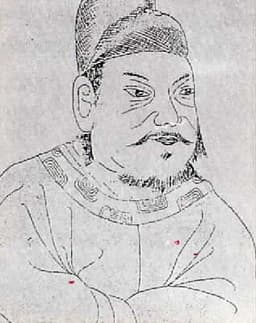
Jeongjo of Joseon
Emperor · Modern
51.3Total
Basic Information
Born
1763
1752
Died
1844
1800
Era
Modern
Modern
Nationality
Sweden
Korea
Occupation
Emperor
Emperor
Civilization
Western
Eastern
Score Comparison
Military (10%)
61.7
10.2
Political (20%)
72.0
60.0
Influence (20%)
55.0
57.2
Legacy (20%)
58.0
46.7
Leadership (15%)
80.7
72.0
Strategy (15%)
70.0
45.0
TOTAL
64.3
51.3
Charles XIV John — Complete Timeline
1810 AD
Election as Crown Prince of SwedenPolitical Action
After the death of the heir apparent, the Swedish Riksdag elected French Marshal Jean-Baptiste Bernadotte as Crown Prince. He was adopted by King Charles XIII. This unexpected choice was driven by a desire for a strong military leader to secure Sweden's interests against Russia and Napoleon.
SwedenBernadotteSuccessionNapoleon
Impact: national
1813 AD
Swedish entry into the Sixth CoalitionWar◆ Major
As Crown Prince, Charles John (Bernadotte) led Sweden into the Sixth Coalition against Napoleon. He commanded the Swedish army and the Northern Army of the Coalition. His decision to join the allies was crucial in tipping the balance against Napoleon and securing Sweden's post-war position.
SwedenNapoleonic WarsCoalitionWar
Impact: global
1814 AD
Acquisition of Norway from DenmarkPolitical Action
As a result of the Treaty of Kiel, Sweden forced Denmark to cede Norway. Charles John then led a military campaign to enforce the union, culminating in the Convention of Moss. Norway entered a personal union with Sweden under King Charles XIII, with Charles John as de facto ruler.
SwedenNorwayUnionTreaty of Kiel
Impact: regional
1818 AD
Coronation as King Charles XIV JohnPolitical Action
Upon the death of King Charles XIII, Bernadotte ascended the throne as Charles XIV John of Sweden and Norway. He founded the House of Bernadotte, which continues to reign in Sweden. His reign marked the beginning of a long period of peace and neutrality for Sweden.
SwedenBernadotteCoronationDynasty
Impact: nationalconstructive
Jeongjo of Joseon — Complete Timeline
1776 AD
Establishment of Kyujanggak Royal LibraryCultural◆ Major
Jeongjo founded the Kyujanggak library to house royal documents and promote scholarship. He appointed talented scholars regardless of faction, fostering intellectual growth. The library became a center for Silhak (Practical Learning) and reformist ideas.
LibraryScholarshipSilhak
Impact: nationalconstructive
1791 AD
Reforms in Taxation and AdministrationReform
Jeongjo implemented the 'Sagyek' system to improve tax collection and reduce corruption. He also reformed the land tax and military service system, easing burdens on peasants. These reforms strengthened the state but faced resistance from entrenched interests.
Tax ReformAdministrationEconomy
Impact: nationalconstructive
1794 AD
Construction of Hwaseong FortressCultural◆ Major
King Jeongjo built Hwaseong Fortress in Suwon to honor his father Crown Prince Sado and to establish a new administrative center. The fortress incorporated advanced Western and Eastern military architecture. It was completed in 1796 and is now a UNESCO World Heritage site.
ArchitectureFortressUNESCO
Impact: nationalconstructive
1800 AD
Mysterious Death of JeongjoOther◆ Major
King Jeongjo died suddenly at age 48, possibly from illness or poisoning. His death was suspicious, as he was in good health. It led to a purge of his reformist supporters by the Andong Kim clan, ending his progressive policies.
DeathConspiracyPower Shift
Impact: nationaltragic
Expert Analysis
Origins
Charles XIV John was born Jean-Baptiste Bernadotte on January 26, 1763, in Pau, France, into a middle-class family. His father was a lawyer, and he initially pursued a legal career before joining the French army at age 17. He rose through the ranks during the French Revolution, becoming a general by 1794. His military prowess caught Napoleon's attention, and he was made a Marshal of the Empire in 1804. However, his relationship with Napoleon was strained, leading him to accept the offer of becoming Crown Prince of Sweden in 1810.
Jeongjo of Joseon was born on October 28, 1752, as Yi San, the son of Crown Prince Sado and Lady Hyegyeong. His early life was marked by tragedy: his father was executed by his grandfather King Yeongjo in 1762. Jeongjo was raised in the palace, deeply influenced by his grandfather's rule and his father's unjust death. He became king in 1776 at age 23, inheriting a kingdom plagued by factional strife and economic challenges.
Rise to Power
Charles XIV John's rise was unconventional. In 1810, the Swedish Riksdag, seeking a strong military leader to secure the throne after the heir apparent's death, elected the French marshal as Crown Prince. He converted to Lutheranism and was adopted by King Charles XIII. As Crown Prince, he quickly took control of foreign policy, steering Sweden away from France and into the Sixth Coalition against Napoleon in 1813. He commanded the Northern Army, contributing to the defeat of Napoleon at Leipzig. In 1814, he forced Denmark to cede Norway, and after a brief military campaign, secured Norway in a personal union with Sweden. He became King Charles XIV John in 1818 upon the death of Charles XIII.
Jeongjo's rise was more conventional but fraught with danger. He ascended the throne in 1776 after the death of his grandfather, King Yeongjo. His early reign was marked by efforts to consolidate power against powerful factions, especially the Noron faction that had been implicated in his father's death. He used a policy of impartiality, promoting talented scholars regardless of faction, and established the Kyujanggak Royal Library to foster learning and create a loyal bureaucracy. He also built Hwaseong Fortress starting in 1794, partly as a strategic move to establish a new power base away from the faction-ridden capital.
Leadership & Governance
Charles XIV John's leadership was pragmatic and conservative. He focused on maintaining Sweden's neutrality in European conflicts, a policy that would later define Swedish foreign policy. Domestically, he promoted economic development, including infrastructure projects like the Göta Canal. However, he was authoritarian, suppressing press freedom and centralizing power. His governance score of 72.0 reflects his effective but autocratic rule. He prioritized stability over reform, which helped Sweden avoid the upheavals of the 19th century.
Jeongjo was a reformist leader with a political score of 60.0. He implemented the 'Sagyek' system to reform tax collection, reducing corruption and easing the burden on peasants. He also reformed the land tax and military service, aiming to strengthen the state. His establishment of the Kyujanggak library and promotion of Silhak (practical learning) fostered intellectual growth. However, his reforms faced resistance from entrenched factions, and his sudden death in 1800 at age 48 cut short his initiatives. His leadership score of 72.0 indicates strong but limited impact.
Triumph & Tragedy
Charles XIV John's greatest triumph was securing Norway for Sweden in 1814, fulfilling a long-standing Swedish ambition. He also successfully navigated Sweden through the Napoleonic Wars, avoiding the devastation suffered by other European states. His founding of the House of Bernadotte ensured a dynasty that continues to this day. However, his greatest failure was his authoritarian rule, which alienated the nobility and limited political development. His military score of 61.7 is lower than his leadership, reflecting his mixed record as a commander.
Jeongjo's greatest triumph was the construction of Hwaseong Fortress, a UNESCO World Heritage site that stands as a testament to his vision. The fortress incorporated advanced Western and Eastern military architecture, and the new city of Suwon became a model of planned development. He also fostered a cultural renaissance, with the Kyujanggak library becoming a center of scholarship. His tragedy was his mysterious death, likely from poisoning, which led to a purge of his supporters and a reversal of many reforms. His military score of 10.2 is extremely low, reflecting the lack of military campaigns during his reign.
Character & Destiny
Charles XIV John was pragmatic, ambitious, and cautious. His decision to betray Napoleon and align with the coalition demonstrated his survival instinct. He was a skilled diplomat, able to navigate the treacherous politics of Europe. His character shaped his destiny: he founded a dynasty and ensured Sweden's neutrality and stability for decades. However, his authoritarian tendencies limited his popularity, and his legacy is mixed.
Jeongjo was idealistic, determined, and perhaps naive. His devotion to his father's memory and his reform agenda showed his principled nature. However, his inability to consolidate power fully and his sudden death suggest a lack of ruthlessness. His character led to a reign of promise cut short, and his reforms did not survive him. His influence score of 57.2 reflects his lasting cultural impact but limited political change.
Legacy
Charles XIV John's legacy is profound: he founded the House of Bernadotte, which still rules Sweden. His policy of neutrality became a cornerstone of Swedish identity. He is remembered as a pragmatic ruler who secured Sweden's independence and prosperity. His legacy score of 58.0 is modest but enduring.
Jeongjo's legacy is more cultural than political. Hwaseong Fortress and the Kyujanggak library are lasting symbols of his reign. He is celebrated as a reformer and a patron of learning, but his political reforms were largely undone. His legacy score of 46.7 reflects this limited impact.
Conclusion
When comparing Charles XIV John and Jeongjo, Charles XIV John had greater overall impact. His total score of 64.3 versus Jeongjo's 51.3 reflects his more significant contributions to Sweden's long-term stability and his founding of a ruling dynasty. Jeongjo's reforms were ambitious but failed to outlast him, while Charles XIV John's pragmatic policies shaped Sweden for centuries. The score gap of 13.0 points is decisive. Charles XIV John's leadership score of 80.7 and political score of 72.0 demonstrate his effectiveness, whereas Jeongjo's lower scores in military (10.2) and strategy (45.0) highlight his limitations. Therefore, Charles XIV John is the more impactful historical figure.
Rankings
🥇
Charles XIV JohnLeader
Mil: 61.7Pol: 72.0Inf: 55.0
64.3
🥈
Jeongjo of Joseon
Mil: 10.2Pol: 60.0Inf: 57.2
51.3
+13.0 behind
How This Comparison Works
Algorithm
Each figure is scored on 6 dimensions (0—100 scale) based on structured historical data: Military (10%), Political (20%), Influence (20%), Legacy (20%), Leadership (15%), Strategy (15%). The weighted total produces the final ranking.
Data Sources
Scores are computed from structured sub-indicators in the database. Scale factors adjust for era (Ancient ×0.85, Modern ×1.0) and civilization size (Eastern ×1.05, Other ×0.80) to account for differences in population and military scale.
Maximum 3 Figures
Comparisons are limited to 2—3 figures to ensure readability and statistical meaningfulness.
Error Margins
±5 points per dimension — Sub-scores are derived from historical records with inherent uncertainty. Two figures within 5 points on a dimension should be considered roughly equivalent in that area.
Total Score Accuracy
±3 points overall — The weighted combination of 6 dimensions produces a total score with approximately ±3 points of uncertainty. Differences of less than 3 points are not statistically significant— the figures are effectively tied.
Known Limitations
- Historical records are incomplete and uneven across civilizations
- Figures from oral-tradition societies may be underrepresented
- Occupation labels can misclassify multi-role figures
- Scores measure capability and impact, not moral character
- Quantitative scoring is a comparison tool, not absolute truth
Capability Radar
Military (10%) — Battles & Warfare
Battles
75
10
Win Rate
70
10
Expansion
60
5
Political (20%) — Governance & Reform
Reform
75
75
Diplomacy
90
55
Economy
80
65
Influence (20%) — Cultural & Global Reach
Cultural
50
55
Global
55
30
Legacy (20%) — Historical Impact
Historical
65
50
Longevity
60
40
Leadership (15%) — Power & Stability
Tenure
85
60
Stability
85
60
Strategy (15%) — Tactics & Innovation
Strategy
85
25
Tactics
80
20
Reform
70
40
Similar Comparisons
Comments & Discussion
No comments yet. Be the first to share your thoughts!