Loading...
Anne of Great Britain vs Jeongjo of Joseon
Anne of Great Britain leads by 0.6 pts · 2 figures compared
…

Anne of Great Britain
Emperor · Modern
51.9Total
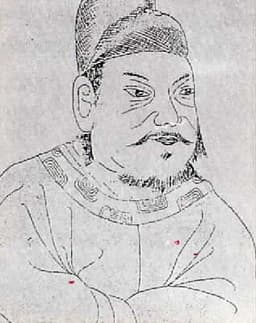
Jeongjo of Joseon
Emperor · Modern
51.3Total
Basic Information
Born
1665
1752
Died
1714
1800
Era
Modern
Modern
Nationality
England
Korea
Occupation
Emperor
Emperor
Civilization
Western
Eastern
Score Comparison
Military (10%)
20.0
10.2
Political (20%)
72.0
60.0
Influence (20%)
57.2
57.2
Legacy (20%)
49.2
46.7
Leadership (15%)
53.2
72.0
Strategy (15%)
45.0
45.0
TOTAL
51.9
51.3
Anne of Great Britain — Complete Timeline
1702 AD
War of the Spanish SuccessionWar◆ Major
Anne's reign saw Britain's involvement in the War of the Spanish Succession against France and Spain. British forces under the Duke of Marlborough achieved major victories at Blenheim, Ramillies, and Oudenarde. The war ended with the Treaty of Utrecht in 1713.
WarMarlboroughEuropean Conflict
Impact: global
Establishment of the Church of England's SupremacyPolitical Action
Anne supported the Occasional Conformity Act (1711) and the Schism Act (1714), which aimed to strengthen the Church of England and suppress dissenters. These acts reflected her high church Tory sympathies and her commitment to Anglican supremacy.
ReligionChurch of EnglandTory Policy
Impact: national
1707 AD
Acts of Union 1707Political Action
Anne gave royal assent to the Acts of Union, which united the Kingdom of England and the Kingdom of Scotland into the Kingdom of Great Britain. This created a single parliament in London and ended Scottish independence. Anne became the first monarch of Great Britain.
UnionScotlandConstitutional Change
Impact: nationalconstructive
1714 AD
Death and End of Stuart DynastyOther◆ Major
Anne died of illness at Kensington Palace at age 49. She was the last Stuart monarch. Her death triggered the succession of the Hanoverian line under George I, as specified by the Act of Settlement 1701, which excluded Catholic claimants.
DeathStuart DynastySuccession
Impact: nationaltragic
Jeongjo of Joseon — Complete Timeline
1776 AD
Establishment of Kyujanggak Royal LibraryCultural◆ Major
Jeongjo founded the Kyujanggak library to house royal documents and promote scholarship. He appointed talented scholars regardless of faction, fostering intellectual growth. The library became a center for Silhak (Practical Learning) and reformist ideas.
LibraryScholarshipSilhak
Impact: nationalconstructive
1791 AD
Reforms in Taxation and AdministrationReform
Jeongjo implemented the 'Sagyek' system to improve tax collection and reduce corruption. He also reformed the land tax and military service system, easing burdens on peasants. These reforms strengthened the state but faced resistance from entrenched interests.
Tax ReformAdministrationEconomy
Impact: nationalconstructive
1794 AD
Construction of Hwaseong FortressCultural◆ Major
King Jeongjo built Hwaseong Fortress in Suwon to honor his father Crown Prince Sado and to establish a new administrative center. The fortress incorporated advanced Western and Eastern military architecture. It was completed in 1796 and is now a UNESCO World Heritage site.
ArchitectureFortressUNESCO
Impact: nationalconstructive
1800 AD
Mysterious Death of JeongjoOther◆ Major
King Jeongjo died suddenly at age 48, possibly from illness or poisoning. His death was suspicious, as he was in good health. It led to a purge of his reformist supporters by the Andong Kim clan, ending his progressive policies.
DeathConspiracyPower Shift
Impact: nationaltragic
Expert Analysis
Origins
Anne of Great Britain was born on February 6, 1665, in London, the second daughter of King James II and his first wife, Anne Hyde. She received a Protestant upbringing under the guidance of her uncle, King Charles II, and was educated in history, languages, and religion. Her early life was marked by the political turmoil of the Exclusion Crisis and the Glorious Revolution, which deposed her Catholic father. Anne's 17 pregnancies resulted in only one child surviving infancy, Prince William, who died at age 11, leaving her without an heir.
Jeongjo of Joseon was born on October 28, 1752, in Seoul, the second son of Crown Prince Sado and Lady Hyegyeong. His early life was shadowed by his father's mental illness and eventual execution by his grandfather, King Yeongjo, in 1762. Jeongjo was raised in fear but received rigorous Confucian education from prominent scholars. He became crown prince in 1764 after his elder brother's death, and ascended the throne in 1776 at age 23.
Rise to Power
Anne became queen on March 8, 1702, following the death of her brother-in-law William III. Her accession was smooth due to the Act of Settlement 1701, which secured the Protestant succession. She initially relied on the advice of her close friend Sarah Churchill, Duchess of Marlborough, and the military successes of the Duke of Marlborough in the War of the Spanish Succession elevated Britain's standing. Anne's reign saw the Acts of Union 1707, which she strongly supported, creating the Kingdom of Great Britain.
Jeongjo's rise was fraught with danger. After his father's death, he was isolated but protected by his grandfather. Upon Yeongjo's death in 1776, Jeongjo became king and immediately faced opposition from the Noron faction, which had orchestrated his father's death. He consolidated power by appointing talented scholars regardless of faction, notably establishing the Kyujanggak Royal Library in 1776 as a center of learning and administration. His early reign focused on rehabilitating his father's memory and reforming the government.
Leadership & Governance
Anne's leadership was characterized by reliance on ministers and courtiers. She was not a hands-on ruler but used her position to mediate between Whigs and Tories. Her political score of 72.0 reflects her success in navigating partisan conflicts. She supported the Occasional Conformity Act (1711) and Schism Act (1714) to bolster the Church of England, but these were repealed after her death. Her governance style was passive, with policy largely set by ministers like Robert Harley and the Duke of Marlborough. The War of the Spanish Succession (1701-1714) drained resources but secured British interests.
Jeongjo was an active reformer with a leadership score of 72.0. He implemented the 'Sagyek' tax system to reduce corruption and improve collection, reformed land taxes, and eased military service burdens. He built Hwaseong Fortress (1794-1796) using innovative techniques and local materials, which became a model of urban planning. He also promoted commerce and industry, encouraging trade with China and Japan. His governance was centralized but meritocratic, appointing officials based on ability rather than faction. His political score of 60.0 is lower than Anne's due to limited foreign influence.
Triumph & Tragedy
Anne's greatest triumph was the Acts of Union 1707, which created a unified British state and laid the foundation for future global power. Her reign also saw major military victories under Marlborough at Blenheim (1704), Ramillies (1706), and Oudenarde (1708). However, her personal tragedy was the death of all her children, ending the Stuart dynasty. Her last years were marked by declining health and political infighting, with the Treaty of Utrecht (1713) ending the war but failing to secure all gains. Her legacy score of 49.2 reflects these mixed outcomes.
Jeongjo's triumph was the construction of Hwaseong Fortress, a UNESCO World Heritage site that showcased his vision and engineering prowess. His cultural achievements included the flourishing of Silhak (practical learning) and the compilation of royal documents. However, his mysterious death at age 48 in 1800, possibly from poisoning, led to a purge of his reformist officials by conservative factions. His reforms were partially reversed, and Joseon's stagnation resumed. His legacy score of 46.7 is slightly lower than Anne's.
Character & Destiny
Anne was personally devout, stubborn, and loyal to her friends, but her dependence on favorites like Sarah Churchill led to political instability. Her inability to produce an heir doomed the Stuart line, and her passive leadership allowed ministers to dominate. Historians rate her as a competent but unremarkable monarch, with a total score of 51.9.
Jeongjo was intelligent, determined, and reform-minded, but his filial piety and desire to honor his father drove his policies. His suspicious death cut short his reforms, and his inability to secure a lasting succession allowed conservative backlash. His total score of 51.3 is nearly identical to Anne's, reflecting similar impact within different contexts.
Legacy
Anne's legacy is the creation of Great Britain, which became a dominant global power. The union set the stage for the British Empire and the Industrial Revolution. However, her personal failures meant the end of the Stuarts. Her influence score of 57.2 is matched by Jeongjo's 57.2, but her political score of 72.0 exceeds his 60.0.
Jeongjo's legacy includes Hwaseong Fortress as a symbol of Korean resilience and innovation, and the Kyujanggak library which preserved Korean culture. His reforms influenced later modernization efforts, but his death prevented sustained change. His leadership score of 72.0 equals Anne's political score, but his overall impact is more localized.
Conclusion
While both monarchs had similar total scores (51.9 vs 51.3), Anne's impact on global history is greater due to the Acts of Union, which created a unified state that shaped world events. Jeongjo's reforms were significant for Korea but did not alter the international order. Therefore, Anne of Great Britain had a more profound and lasting impact on world history.
Rankings
🥇
Anne of Great BritainLeader
Mil: 20.0Pol: 72.0Inf: 57.2
51.9
🥈
Jeongjo of Joseon
Mil: 10.2Pol: 60.0Inf: 57.2
51.3
+0.6 behind
How This Comparison Works
Algorithm
Each figure is scored on 6 dimensions (0—100 scale) based on structured historical data: Military (10%), Political (20%), Influence (20%), Legacy (20%), Leadership (15%), Strategy (15%). The weighted total produces the final ranking.
Data Sources
Scores are computed from structured sub-indicators in the database. Scale factors adjust for era (Ancient ×0.85, Modern ×1.0) and civilization size (Eastern ×1.05, Other ×0.80) to account for differences in population and military scale.
Maximum 3 Figures
Comparisons are limited to 2—3 figures to ensure readability and statistical meaningfulness.
Error Margins
±5 points per dimension — Sub-scores are derived from historical records with inherent uncertainty. Two figures within 5 points on a dimension should be considered roughly equivalent in that area.
Total Score Accuracy
±3 points overall — The weighted combination of 6 dimensions produces a total score with approximately ±3 points of uncertainty. Differences of less than 3 points are not statistically significant— the figures are effectively tied.
Known Limitations
- Historical records are incomplete and uneven across civilizations
- Figures from oral-tradition societies may be underrepresented
- Occupation labels can misclassify multi-role figures
- Scores measure capability and impact, not moral character
- Quantitative scoring is a comparison tool, not absolute truth
Capability Radar
Military (10%) — Battles & Warfare
Battles
5
10
Win Rate
5
10
Expansion
5
5
Political (20%) — Governance & Reform
Reform
55
75
Diplomacy
65
55
Economy
50
65
Influence (20%) — Cultural & Global Reach
Cultural
40
55
Global
45
30
Legacy (20%) — Historical Impact
Historical
55
50
Longevity
50
40
Leadership (15%) — Power & Stability
Tenure
60
60
Stability
40
60
Strategy (15%) — Tactics & Innovation
Strategy
5
25
Tactics
5
20
Reform
5
40
Similar Comparisons
Comments & Discussion
No comments yet. Be the first to share your thoughts!