Loading...
Jean-Jacques Rousseau vs Julius Caesar
Julius Caesar leads by 39.3 pts · 2 figures compared
…
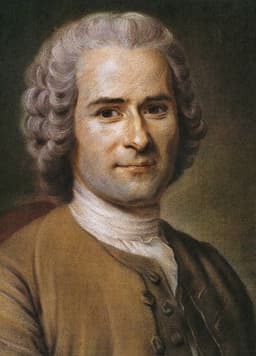
Jean-Jacques Rousseau
Philosopher · Modern
43.5Total

Julius Caesar
General · Ancient
82.8Total
Basic Information
Born
1712
-100
Died
1778
-44
Era
Modern
Ancient
Nationality
France
Roman Republic
Occupation
Philosopher
General
Civilization
Western
Western
Score Comparison
Military (10%)
9.1
88.0
Political (20%)
33.8
78.0
Influence (20%)
65.0
85.0
Legacy (20%)
40.0
82.0
Leadership (15%)
45.4
80.0
Strategy (15%)
44.4
85.0
TOTAL
43.5
82.8
Jean-Jacques Rousseau — Complete Timeline
1755 AD
Publication of Discourse on the Origin and Basis of Inequality Among MenCultural◆ Major
Rousseau argued that human inequality originated with the establishment of private property and civil society, corrupting natural human goodness. This work challenged Enlightenment optimism about progress and laid the groundwork for Romanticism and critiques of modern civilization.
InequalityPhilosophyRomanticism
Impact: globalconstructive
1762 AD
Publication of The Social ContractCultural
Rousseau published his political treatise arguing that legitimate political authority rests on a social contract formed by the general will of the people. The work's ideas of popular sovereignty and direct democracy influenced the French Revolution and modern democratic theory.
Political PhilosophySocial ContractGeneral Will
Impact: globalconstructive
Publication of Émile, or On EducationCultural◆ Major
Rousseau published a treatise on education advocating for natural development and learning through experience rather than rote instruction. The book was condemned by the Paris Parliament and the Catholic Church for its religious views, and Rousseau fled France to avoid arrest.
EducationPhilosophyCensorship
Impact: globalconstructive
1766 AD
Exile in EnglandPolitical Action
After the condemnation of
ExileEnglandParanoia
Impact: nationaltragic
Julius Caesar — Complete Timeline
58 BC
Gallic WarsWar◆ Major
Caesar, as proconsul of Gaul, launched a series of campaigns that conquered all of Gaul (modern France, Belgium, and parts of Switzerland). He fought numerous battles, including against the Helvetii, the Belgae, and the Gallic chieftain Vercingetorix. The wars brought immense wealth and a loyal army to Caesar.
Gallic WarsConquestRoman Expansion
Impact: regional
49 BC
Crossing the RubiconPolitical Action◆ Major
Caesar led Legio XIII across the Rubicon River into Italy, defying the Roman Senate's order to disband his army. This act triggered a civil war against Pompey and the Optimates, ultimately leading to Caesar's dictatorship and the end of the Roman Republic.
Roman Civil WarEnd of RepublicPower Struggle
Impact: global
48 BC
Battle of PharsalusWar◆ Major
Caesar's outnumbered army defeated the larger forces of Pompey the Great at Pharsalus in Greece. Caesar's tactical use of a reserve line to counter Pompey's cavalry charge proved decisive. Pompey fled to Egypt, where he was assassinated, leaving Caesar as the undisputed master of the Roman world.
Roman Civil WarBattleDecisive Victory
Impact: regional
44 BC
Appointment as Dictator for LifePolitical Action◆ Major
The Roman Senate appointed Caesar dictator perpetuo (dictator for life), granting him unprecedented personal power. This move concentrated military, legislative, and judicial authority in one person, effectively ending the Roman Republic's traditional system of checks and balances and alarming many senators.
DictatorshipEnd of RepublicPower Consolidation
Impact: regionaldestructive
Assassination on the Ides of MarchPolitical Action◆ Major
A group of Roman senators, led by Marcus Junius Brutus and Gaius Cassius Longinus, stabbed Caesar to death at a meeting of the Senate in the Theatre of Pompey. The assassination was intended to restore the Republic, but instead triggered another civil war that led to the rise of the Roman Empire.
AssassinationRoman PoliticsEnd of Republic
Impact: globaldestructive
Expert Analysis
jean-jacques-rousseau-vs-julius-caesar
# The General and the Philosopher: Two Paths to Reshape the World
On a January morning in 49 BCE, Julius Caesar stood at the banks of the Rubicon River, a small stream that marked the boundary of his legal authority. To cross with his army was to declare war on the Roman Republic itself. He paused, then uttered the words that would echo through millennia: *"Alea iacta est"* — the die is cast. Across the centuries, in a cramped Parisian garret in 1762, another man sat scribbling furiously, his pen tracing arguments that would, within a generation, topple a kingdom and redraw the map of human governance. One man held a sword; the other, a quill. Both would change the world forever, yet their paths could not have been more different.
Origins
Julius Caesar was born into the patrician Julian clan, an ancient but politically diminished family in the Roman Republic of 100 BCE. His childhood was steeped in the brutal politics of a dying republic — civil wars, proscriptions, and the constant threat of assassination. His father died when Caesar was sixteen, forcing him to navigate the treacherous currents of Roman power with little inheritance but immense ambition. The world he inherited was one of iron discipline, military glory, and merciless competition.
Jean-Jacques Rousseau, born in Geneva in 1712, emerged from a world of clocks, Calvinist discipline, and modest means. His mother died days after his birth; his father, a watchmaker, fled the city after a quarrel, leaving young Jean-Jacques to wander through apprenticeships, odd jobs, and the patronage of wealthy benefactors. While Caesar learned rhetoric and warfare, Rousseau taught himself philosophy in the libraries of Savoy, absorbing the ideas of Locke and Montesquieu. One man was forged in the crucible of power; the other, in the solitude of exile and poverty.
Rise to Power
Caesar’s ascent was a masterclass in calculated risk. He earned military laurels in Spain, forged the First Triumvirate with Pompey and Crassus in 60 BCE, and secured command of Gaul. Over eight years, he conquered a territory larger than Italy itself, amassing both wealth and a loyal army. The Gallic Wars were not merely campaigns — they were a political machine, turning barbarian gold into Roman influence. When the Senate demanded he disband his army, Caesar made his choice at the Rubicon. Within five years, he was dictator for life.
Rousseau’s rise was quiet, intellectual, and painfully slow. He arrived in Paris in 1742, a provincial with no connections, and spent years composing operas and essays that earned him modest fame. His breakthrough came in 1750 when his *Discourse on the Arts and Sciences* won an essay competition, arguing that civilization corrupts natural virtue. But it was 1755’s *Discourse on the Origin and Basis of Inequality Among Men* that established his radical voice: private property, he declared, was the source of all human misery. Unlike Caesar, Rousseau did not seize power — he planted ideas that would later seize the world.
Leadership & Governance
Caesar governed with the pragmatism of a soldier and the vision of a reformer. As dictator, he overhauled the calendar, granted citizenship to provincials, reformed debt laws, and initiated public works that employed the poor. His military genius was undeniable — the siege of Alesia, the lightning campaigns in Egypt, the defeat of Pompey’s forces — but his political wisdom was equally sharp. He understood that Rome’s empire required a single hand, and he was willing to break centuries of republican tradition to provide it. Yet his rule was never secure; he pardoned enemies who would later stab him.
Rousseau never governed a nation or commanded an army. His "leadership" was entirely intellectual. In *The Social Contract* (1762), he proposed that legitimate authority arises from the "general will" of the people — a concept that would inspire revolutionaries from Robespierre to Gandhi. In *Émile*, he argued for education that nurtures natural development rather than rote learning. His political score of 62.2 reflects the paradox: he was a man of immense influence who could not manage his own life, let alone a state. He fathered five children, all abandoned to orphanages — a fact that haunted his critics.
Triumph & Tragedy
Caesar’s greatest triumph was the conquest of Gaul, a feat that doubled Rome’s territory and filled its treasury. His most devastating failure was his inability to consolidate power without appearing a tyrant. On the Ides of March, 44 BCE, sixty senators surrounded him in the Theatre of Pompey and stabbed him twenty-three times. His last words — *"Et tu, Brute?"* — captured the betrayal that defined his end.
Rousseau’s triumph was the publication of *The Social Contract* and *Émile* in the same year, 1762. Both books were immediately condemned in Paris and Geneva, forcing him to flee to England under David Hume’s protection. His tragedy was personal: paranoid, impoverished, and estranged from his friends, he spent his final years writing *Confessions*, a desperate attempt to justify his life. He died in 1778, a decade before the revolution his ideas would ignite.
Character & Destiny
Caesar was bold, charismatic, and ruthlessly calculating. He gambled on the Rubicon because he believed his destiny was to rule. His personality — a blend of magnanimity and ambition — drove him to conquer, reform, and ultimately, to die at the hands of those who feared his power.
Rousseau was sensitive, suspicious, and profoundly idealistic. He believed humanity was born free but was everywhere in chains, and he could not bear the hypocrisy of the society that celebrated him even as it condemned his books. His destiny was not to lead armies but to articulate a vision so powerful it would outlive him.
Legacy
Caesar’s legacy is written in stone: the Julian calendar, the title "Caesar" that became synonymous with emperor, the transformation of a republic into an empire that would last fifteen centuries. His military and strategic scores of 88.0 reflect a commander whose tactics are still studied in war colleges.
Rousseau’s legacy is written in blood and ink: the French Revolution, Romanticism, modern education, and the very idea that government must rest on the consent of the governed. His influence score of 65.0 may seem modest, but it measures a man who never held power yet changed how power is conceived.
Conclusion
The general and the philosopher never met, yet they share a strange kinship. Both were outsiders who remade the worlds they entered — one through force, the other through ideas. Caesar crossed a river and founded an empire; Rousseau wrote a book and destroyed one. The Rubicon and the *Social Contract* are, in their own ways, acts of revolution. What drove their different outcomes? Perhaps it was simply this: Caesar believed in the power of one man to shape history, while Rousseau believed in the power of every man to shape his own destiny. Both were right. And both, in the end, were betrayed by the very forces they unleashed.
Rankings
🥇
Julius CaesarLeader
Mil: 88.0Pol: 78.0Inf: 85.0
82.8
🥈
Jean-Jacques Rousseau
Mil: 9.1Pol: 33.8Inf: 65.0
43.5
+39.3 behind
How This Comparison Works
Algorithm
Each figure is scored on 6 dimensions (0—100 scale) based on structured historical data: Military (10%), Political (20%), Influence (20%), Legacy (20%), Leadership (15%), Strategy (15%). The weighted total produces the final ranking.
Data Sources
Scores are computed from structured sub-indicators in the database. Scale factors adjust for era (Ancient ×0.85, Modern ×1.0) and civilization size (Eastern ×1.05, Other ×0.80) to account for differences in population and military scale.
Maximum 3 Figures
Comparisons are limited to 2—3 figures to ensure readability and statistical meaningfulness.
Error Margins
±5 points per dimension — Sub-scores are derived from historical records with inherent uncertainty. Two figures within 5 points on a dimension should be considered roughly equivalent in that area.
Total Score Accuracy
±3 points overall — The weighted combination of 6 dimensions produces a total score with approximately ±3 points of uncertainty. Differences of less than 3 points are not statistically significant— the figures are effectively tied.
Known Limitations
- Historical records are incomplete and uneven across civilizations
- Figures from oral-tradition societies may be underrepresented
- Occupation labels can misclassify multi-role figures
- Scores measure capability and impact, not moral character
- Quantitative scoring is a comparison tool, not absolute truth
Capability Radar
Military (10%) — Battles & Warfare
Battles
18
95
Win Rate
21
92
Expansion
19
97
Political (20%) — Governance & Reform
Reform
60
90
Diplomacy
64
85
Economy
67
82
Influence (20%) — Cultural & Global Reach
Cultural
85
88
Global
75
94
Legacy (20%) — Historical Impact
Historical
80
95
Longevity
85
96
Leadership (15%) — Power & Stability
Tenure
53
75
Stability
69
60
Strategy (15%) — Tactics & Innovation
Strategy
24
94
Tactics
25
96
Reform
32
88
Similar Comparisons
Comments & Discussion
No comments yet. Be the first to share your thoughts!