Loading...
Friedrich Nietzsche vs Jean-Jacques Rousseau
Friedrich Nietzsche leads by 6.3 pts · 2 figures compared
…

Friedrich Nietzsche
Philosopher · Modern
49.8Total
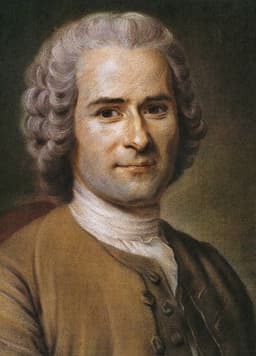
Jean-Jacques Rousseau
Philosopher · Modern
43.5Total
Basic Information
Born
1844
1712
Died
1900
1778
Era
Modern
Modern
Nationality
Germany
France
Occupation
Philosopher
Philosopher
Civilization
Western
Western
Score Comparison
Military (10%)
9.2
9.1
Political (20%)
27.9
33.8
Influence (20%)
88.0
65.0
Legacy (20%)
55.0
40.0
Leadership (15%)
30.7
45.4
Strategy (15%)
43.6
44.4
TOTAL
49.8
43.5
Friedrich Nietzsche — Complete Timeline
1883 AD
Publication of Thus Spoke ZarathustraCultural◆ Major
Nietzsche published the first part of his philosophical novel Thus Spoke Zarathustra, introducing the concepts of the
PhilosophyÜbermenschEternal Recurrence
Impact: globalconstructive
1886 AD
Publication of Beyond Good and EvilCultural◆ Major
Nietzsche published a critique of traditional philosophy, morality, and religion, arguing for a 'revaluation of all values.' He attacked dogmatism, advocated for a 'master morality,' and explored the will to power as a fundamental driving force in human life.
PhilosophyMoralityWill to Power
Impact: globalconstructive
1887 AD
Publication of The Genealogy of MoralsCultural◆ Major
Nietzsche published a genealogical critique of moral concepts, tracing the origins of 'good' and 'evil' to the power dynamics between master and slave moralities. He argued that Christian morality is a 'slave morality' that suppresses human vitality and creativity.
PhilosophyMoralityGenealogy
Impact: globalconstructive
1889 AD
Mental Collapse in TurinOther◆ Major
Nietzsche suffered a mental breakdown in Turin, reportedly embracing a horse being beaten by its owner. He was diagnosed with syphilitic paralysis and spent his remaining years under the care of his mother and sister, unable to write or communicate coherently.
Mental IllnessBreakdownTurin
Impact: nationaltragic
Jean-Jacques Rousseau — Complete Timeline
1755 AD
Publication of Discourse on the Origin and Basis of Inequality Among MenCultural◆ Major
Rousseau argued that human inequality originated with the establishment of private property and civil society, corrupting natural human goodness. This work challenged Enlightenment optimism about progress and laid the groundwork for Romanticism and critiques of modern civilization.
InequalityPhilosophyRomanticism
Impact: globalconstructive
1762 AD
Publication of The Social ContractCultural
Rousseau published his political treatise arguing that legitimate political authority rests on a social contract formed by the general will of the people. The work's ideas of popular sovereignty and direct democracy influenced the French Revolution and modern democratic theory.
Political PhilosophySocial ContractGeneral Will
Impact: globalconstructive
Publication of Émile, or On EducationCultural◆ Major
Rousseau published a treatise on education advocating for natural development and learning through experience rather than rote instruction. The book was condemned by the Paris Parliament and the Catholic Church for its religious views, and Rousseau fled France to avoid arrest.
EducationPhilosophyCensorship
Impact: globalconstructive
1766 AD
Exile in EnglandPolitical Action
After the condemnation of
ExileEnglandParanoia
Impact: nationaltragic
Expert Analysis
Origins
Friedrich Nietzsche was born in 1844 in Röcken, Prussia, into a Lutheran pastor's family. His father died when he was four, leaving him to be raised by his mother and sister. He excelled in classical studies at Schulpforta and later at the University of Bonn and Leipzig, where he was deeply influenced by Schopenhauer's philosophy and Wagner's music. Nietzsche's early philological work earned him a professorship at Basel at age 24, but his health problems (migraines, near-blindness) plagued him throughout life.
Jean-Jacques Rousseau was born in 1712 in Geneva, Switzerland, to a watchmaker father and a mother who died shortly after his birth. He was largely self-taught, apprenticed to an engraver, and fled Geneva at 16. After converting to Catholicism, he wandered through France and Italy, working as a footman, music teacher, and secretary. His formative experiences included a stay with Madame de Warens, who became his patron and lover. Rousseau's lack of formal education shaped his anti-intellectualism and emphasis on natural feeling.
Rise to Power
Nietzsche's rise was intellectual rather than political. His first book, *The Birth of Tragedy* (1872), argued that Greek tragedy arose from the fusion of Apollonian order and Dionysian chaos. The work was poorly received by classical scholars, damaging his reputation. He pivoted to aphoristic style with *Human, All Too Human* (1878), breaking with Wagner and Schopenhauer. His major works—*Thus Spoke Zarathustra* (1883–1885), *Beyond Good and Evil* (1886), and *On the Genealogy of Morals* (1887)—were published at his own expense, with modest sales. Nietzsche never held a political office or led a movement; his influence grew posthumously.
Rousseau rose to prominence in 1750 when his *Discourse on the Arts and Sciences* won the Dijon Academy prize, arguing that civilization corrupted natural virtue. This made him an instant celebrity in Parisian salons. He followed with *Discourse on Inequality* (1755), blaming private property for social ills. His opera *Le Devin du Village* (1752) was performed before Louis XV, who offered him a pension—which Rousseau refused. His novels *Julie, or the New Heloise* (1761) and *Émile* (1762), along with *The Social Contract* (1762), cemented his fame but also provoked censorship and exile. Rousseau's influence peaked during the French Revolution, when his ideas were invoked by Robespierre.
Leadership & Governance
Nietzsche never governed anything. His 'leadership' was purely intellectual: he sought to reshape values through his writings. He advocated for a 'revaluation of all values' and the creation of new, life-affirming values by exceptional individuals ('Übermenschen'). His political thought is anti-democratic, favoring a hierarchical society where creative elites rule. He criticized socialism, nationalism, and democracy as herd morality. His concept of 'will to power' describes a fundamental drive toward growth and dominance, which he saw as the engine of all life.
Rousseau's political philosophy centered on the 'general will'—the collective good of the people. In *The Social Contract*, he argued that legitimate government must be based on a social contract where individuals surrender their rights to the community, which then governs according to the general will. He favored direct democracy (like Geneva's city-state) and was skeptical of representative government. His educational treatise *Émile* proposed learning through nature and experience, free from societal corruption. Rousseau's ideas influenced the French Revolution's Declaration of the Rights of Man and later socialist and democratic movements.
Triumph & Tragedy
Nietzsche's greatest triumph was his profound influence on 20th-century thought: existentialism (Sartre, Camus), postmodernism (Foucault, Derrida), and psychoanalysis (Freud's concepts of repression and sublimation). His aphoristic style and critiques of religion, morality, and truth remain influential. His tragedy was his mental collapse in 1889, likely due to a brain tumor or syphilis, leaving him incapacitated for his last 11 years. During his lifetime, his works were largely ignored; he died in 1900 without seeing his fame. His sister Elisabeth, who married an anti-Semite and later supported the Nazis, distorted his legacy by associating him with fascism.
Rousseau's triumph was his impact on political theory and education. His ideas inspired the French Revolution, Romanticism, and modern concepts of child-centered education. His *Confessions* created the modern autobiography. His tragedy was his personal life: he fathered five children, all sent to foundling homes, which later haunted him. He became paranoid, accusing friends like David Hume of conspiring against him. His later works, like *Reveries of the Solitary Walker*, reflect his isolation. He died in 1778, possibly by suicide, overshadowed by his controversial legacy.
Character & Destiny
Nietzsche was solitary, intense, and physically frail. He suffered from severe migraines and near-blindness, yet produced a vast body of work. His personality was marked by a combative, aphoristic style and a disdain for academic philosophy. His fate—obscurity in life, posthumous fame—was shaped by his uncompromising originality. He rejected all systems, including his own, famously saying, 'I am dynamite.' His character led him to isolate himself from the academic establishment and from friends like Wagner and Lou Salomé.
Rousseau was sensitive, paranoid, and emotionally volatile. He craved intimacy but often felt persecuted. His character—defensive, self-justifying, and theatrical—shaped his destiny: he became a martyr to his own ideas, fleeing from authorities and friends alike. His emphasis on authenticity and feeling over reason made him a precursor to Romanticism. His personal flaws, such as his abandonment of his children, contradicted his moral philosophy, a point his critics (like Voltaire) exploited.
Legacy
Nietzsche's legacy is immense in philosophy, literature, and psychology. His scores reflect this: influence 88.0, legacy 55.0. He reshaped ethics with his genealogical method, challenged Christian morality, and inspired thinkers from Thomas Mann to Michel Foucault. His concepts—Übermensch, eternal recurrence, will to power—remain central to Western thought. However, his association with Nazism (despite his explicit anti-anti-Semitism) taints his legacy. His works are studied globally, and his ideas permeate popular culture.
Rousseau's legacy is equally profound in political theory and education. His influence score of 65.0 reflects his role in shaping modern democracy and Romanticism. The Social Contract is a foundational text of political philosophy, and his ideas on the general will influenced Kant, Hegel, and Marx. His educational reforms impacted John Dewey and Maria Montessori. However, his legacy is also controversial: his ideas were used to justify totalitarianism (by Robespierre) and his personal life undermines his moral authority. Rousseau's legacy score of 40.0 reflects this mixed assessment.
Conclusion
While both philosophers reshaped modern thought, Nietzsche's influence is more extensive and his ideas more radical. With a total score of 49.8 versus Rousseau's 43.5, Nietzsche's impact on philosophy, literature, and psychology surpasses Rousseau's primarily political and educational contributions. Nietzsche's critique of morality and religion anticipated 20th-century existentialism and postmodernism, while Rousseau's social contract theory, though influential, has been modified by later thinkers like John Rawls. Nietzsche's legacy, despite its distortion by the Nazis, remains a vital force in contemporary thought, whereas Rousseau's ideas are often subsumed into broader democratic theory. Therefore, Nietzsche had the greater impact on the trajectory of Western philosophy and culture.
Rankings
🥇
Friedrich NietzscheLeader
Mil: 9.2Pol: 27.9Inf: 88.0
49.8
🥈
Jean-Jacques Rousseau
Mil: 9.1Pol: 33.8Inf: 65.0
43.5
+6.3 behind
How This Comparison Works
Algorithm
Each figure is scored on 6 dimensions (0—100 scale) based on structured historical data: Military (10%), Political (20%), Influence (20%), Legacy (20%), Leadership (15%), Strategy (15%). The weighted total produces the final ranking.
Data Sources
Scores are computed from structured sub-indicators in the database. Scale factors adjust for era (Ancient ×0.85, Modern ×1.0) and civilization size (Eastern ×1.05, Other ×0.80) to account for differences in population and military scale.
Maximum 3 Figures
Comparisons are limited to 2—3 figures to ensure readability and statistical meaningfulness.
Error Margins
±5 points per dimension — Sub-scores are derived from historical records with inherent uncertainty. Two figures within 5 points on a dimension should be considered roughly equivalent in that area.
Total Score Accuracy
±3 points overall — The weighted combination of 6 dimensions produces a total score with approximately ±3 points of uncertainty. Differences of less than 3 points are not statistically significant— the figures are effectively tied.
Known Limitations
- Historical records are incomplete and uneven across civilizations
- Figures from oral-tradition societies may be underrepresented
- Occupation labels can misclassify multi-role figures
- Scores measure capability and impact, not moral character
- Quantitative scoring is a comparison tool, not absolute truth
Capability Radar
Military (10%) — Battles & Warfare
Battles
18
18
Win Rate
19
21
Expansion
21
19
Political (20%) — Governance & Reform
Reform
48
60
Diplomacy
48
64
Economy
53
67
Influence (20%) — Cultural & Global Reach
Cultural
85
85
Global
80
75
Legacy (20%) — Historical Impact
Historical
80
80
Longevity
75
85
Leadership (15%) — Power & Stability
Tenure
43
53
Stability
57
69
Strategy (15%) — Tactics & Innovation
Strategy
25
24
Tactics
25
25
Reform
29
32
Similar Comparisons
Comments & Discussion
No comments yet. Be the first to share your thoughts!