Loading...
Jean de Lattre de Tassigny vs Li Xiucheng
Li Xiucheng leads by 2.2 pts · 2 figures compared
…

Jean de Lattre de Tassigny
General · Modern
61.5Total
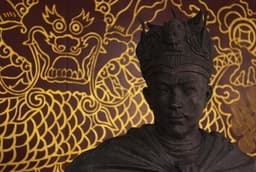
Li Xiucheng
General · Modern
63.7Total
Basic Information
Born
1889
1823
Died
1952
1864
Era
Modern
Modern
Nationality
France
China
Occupation
General
General
Civilization
Western
Eastern
Score Comparison
Military (10%)
67.3
77.2
Political (20%)
62.7
68.0
Influence (20%)
56.7
62.0
Legacy (20%)
50.0
50.0
Leadership (15%)
80.0
74.0
Strategy (15%)
67.2
66.9
TOTAL
61.5
63.7
Jean de Lattre de Tassigny — Complete Timeline
1944 AD
Commanded French First Army in Operation DragoonWar◆ Major
De Lattre commanded the French First Army during the invasion of southern France. His forces liberated Toulon and Marseille, then advanced up the Rhone valley, contributing to the Allied push into Germany.
World War IILiberationFrance
Impact: regionalconstructive
1945 AD
Battle of the Colmar PocketWar◆ Major
De Lattre's French First Army, with US support, eliminated the German-held Colmar Pocket in Alsace. The victory secured the Rhine flank and allowed the Allies to enter Germany.
World War IIAlsaceBattle
Impact: regional
1950 AD
Appointed High Commissioner and Commander-in-Chief in IndochinaPolitical Action◆ Major
De Lattre was appointed to lead French forces in the First Indochina War. He revitalized the French military effort, building the De Lattre Line defensive system and winning the Battle of Vinh Yen.
Indochina WarFrench ColonialCommand
Impact: regional
1951 AD
Battle of Vinh YenWar◆ Major
De Lattre defeated a major Viet Minh offensive at Vinh Yen, using air power and artillery to inflict heavy casualties. The victory temporarily stabilized the French position in Tonkin.
Indochina WarBattleViet Minh
Impact: regional
1952 AD
Died of CancerOther◆ Major
De Lattre died of cancer in Paris, after returning from Indochina for treatment. He was posthumously made a Marshal of France.
Post-WarDeathFrance
Impact: nationaltragic
Li Xiucheng — Complete Timeline
1858 AD
Battle of SanheWar◆ Major
Li Xiucheng led Taiping forces to a decisive victory at the Battle of Sanhe, annihilating a Qing army. This victory revitalized the Taiping cause and secured their control over the lower Yangtze region.
Taiping RebellionBattleVictory
Impact: regional
1860 AD
Second Western ExpeditionWar◆ Major
Li Xiucheng led a major Taiping campaign to capture the lower Yangtze region, including the capture of Suzhou and Hangzhou. The expedition expanded Taiping territory but failed to capture Shanghai due to foreign intervention.
Taiping RebellionCampaignExpansion
Impact: regional
1864 AD
Defense of NanjingWar◆ Major
Li Xiucheng commanded the defense of Nanjing against Qing forces under Zeng Guofan. After the city fell, he was captured and executed, marking the end of the Taiping Rebellion.
Taiping RebellionSiegeDeath
Impact: nationaltragic
Expert Analysis
Origins
Jean de Lattre de Tassigny was born on February 2, 1889, in Mouilleron-en-Pareds, France, into a conservative Catholic family. His father was a local notable. De Lattre attended the École Spéciale Militaire de Saint-Cyr, graduating in 1911, and served in World War I, where he was wounded multiple times. His early career included staff assignments and command of a battalion.
Li Xiucheng was born in 1823 in Teng County, Guangxi, China, into a poor peasant family. He had no formal education and worked as a farmhand. In 1851, he joined the Taiping Rebellion, a massive uprising against the Qing dynasty. Li rose through the ranks due to his military abilities and loyalty to the Heavenly King, Hong Xiuquan.
Rise to Power
De Lattre's rise accelerated during World War II. After commanding a division in 1940, he was captured but escaped. He later led French forces in North Africa and, in August 1944, commanded the French First Army during Operation Dragoon, the invasion of southern France. His forces liberated Toulon and Marseille, then advanced up the Rhône valley. By 1945, he was a key French commander on the Western Front.
Li Xiucheng rose to prominence after the Battle of Sanhe in 1858, where he led Taiping forces to a decisive victory against a Qing army, annihilating 6,000 enemy troops. This victory revitalized the Taiping cause and earned him the title "Loyal Prince." He then led the Second Western Expedition in 1860, capturing Suzhou and Hangzhou, expanding Taiping control in the lower Yangtze region.
Leadership & Governance
De Lattre was a charismatic and demanding leader, known for his energy and attention to detail. He revitalized the French military in Indochina, building the De Lattre Line, a fortified defensive system around Hanoi. He also improved training and morale. However, his governance approach was authoritarian and focused on military solutions, often clashing with civilian authorities. He scored 80.0 in leadership but only 62.7 in political skills.
Li Xiucheng was a pragmatic and humane commander, known for his mercy toward civilians and surrendered enemies. He implemented policies to win popular support, such as reducing taxes and promoting agriculture. However, his leadership was constrained by the Taiping's rigid religious ideology and internal power struggles. His leadership score was 74.0, reflecting his effectiveness in motivating troops and managing campaigns.
Triumph & Tragedy
De Lattre's greatest success was his command in World War II: the liberation of Toulon and Marseille, and the capture of the Colmar Pocket. In Indochina, he achieved a tactical victory at Vinh Yen in January 1951, where he used air power and artillery to defeat a Viet Minh offensive, inflicting over 6,000 casualties. However, his greatest failure was his inability to secure a lasting solution in Indochina; the war continued after his death. He also died of cancer in 1952, just as his efforts were unfolding.
Li Xiucheng's triumphs include the Battle of Sanhe and the Second Western Expedition, which temporarily saved the Taiping from collapse. His defense of Nanjing in 1864 was a heroic but doomed effort. After the city fell, he was captured and executed. His tragedy was that his military skill could not overcome the Taiping's internal divisions and the overwhelming Qing forces led by Zeng Guofan.
Character & Destiny
De Lattre was energetic, ambitious, and often arrogant. His determination to restore French honor drove him, but also led to conflicts with allies and superiors. His character shaped his fate: he achieved rapid promotion but also made enemies. Historians note his "intractable pride" and "unbending will." He was posthumously made a Marshal of France, a rare honor.
Li Xiucheng was loyal, courageous, and compassionate, but also naive in his trust of others. He remained faithful to Hong Xiuquan despite the Heavenly King's erratic rule. His character led him to fight to the end, but also prevented him from seizing power or negotiating a better outcome. He is remembered as a tragic hero.
Legacy
De Lattre's legacy is mixed. In France, he is celebrated as a World War II hero and a symbol of French military revival. The De Lattre Line in Indochina is named after him. However, his policies in Indochina did not prevent the eventual French defeat in 1954. His influence score is 56.7.
Li Xiucheng's legacy is more enduring in China. He is remembered as a brilliant commander and a loyal servant of the Taiping cause. His military tactics are studied, and his story is part of Chinese historical memory. However, the Taiping Rebellion ultimately failed, limiting his long-term impact. His legacy score is 50.0.
Conclusion
While Li Xiucheng scores higher in military (77.2) and total (63.7) compared to de Lattre (67.3 and 61.5), de Lattre's impact on world history was greater. He commanded a major army in World War II, contributed to the defeat of Nazi Germany, and shaped French colonial policy in Indochina. Li Xiucheng, despite his tactical brilliance, fought for a losing cause and his victories were temporary. De Lattre's legacy, though flawed, influenced the post-war order. Therefore, Jean de Lattre de Tassigny had a greater historical impact.
Rankings
🥇
Li XiuchengLeader
Mil: 77.2Pol: 68.0Inf: 62.0
63.7
🥈
Jean de Lattre de Tassigny
Mil: 67.3Pol: 62.7Inf: 56.7
61.5
+2.2 behind
How This Comparison Works
Algorithm
Each figure is scored on 6 dimensions (0—100 scale) based on structured historical data: Military (10%), Political (20%), Influence (20%), Legacy (20%), Leadership (15%), Strategy (15%). The weighted total produces the final ranking.
Data Sources
Scores are computed from structured sub-indicators in the database. Scale factors adjust for era (Ancient ×0.85, Modern ×1.0) and civilization size (Eastern ×1.05, Other ×0.80) to account for differences in population and military scale.
Maximum 3 Figures
Comparisons are limited to 2—3 figures to ensure readability and statistical meaningfulness.
Error Margins
±5 points per dimension — Sub-scores are derived from historical records with inherent uncertainty. Two figures within 5 points on a dimension should be considered roughly equivalent in that area.
Total Score Accuracy
±3 points overall — The weighted combination of 6 dimensions produces a total score with approximately ±3 points of uncertainty. Differences of less than 3 points are not statistically significant— the figures are effectively tied.
Known Limitations
- Historical records are incomplete and uneven across civilizations
- Figures from oral-tradition societies may be underrepresented
- Occupation labels can misclassify multi-role figures
- Scores measure capability and impact, not moral character
- Quantitative scoring is a comparison tool, not absolute truth
Capability Radar
Military (10%) — Battles & Warfare
Battles
75
75
Win Rate
70
70
Expansion
60
72
Political (20%) — Governance & Reform
Reform
50
40
Diplomacy
60
50
Economy
45
35
Influence (20%) — Cultural & Global Reach
Cultural
50
45
Global
45
35
Legacy (20%) — Historical Impact
Historical
55
55
Longevity
40
40
Leadership (15%) — Power & Stability
Tenure
55
55
Stability
40
30
Strategy (15%) — Tactics & Innovation
Strategy
75
78
Tactics
80
80
Reform
65
60
Similar Comparisons
Comments & Discussion
No comments yet. Be the first to share your thoughts!