Loading...
Li Xiucheng vs Napoleon Bonaparte
Napoleon Bonaparte leads by 7.2 pts · 2 figures compared
…
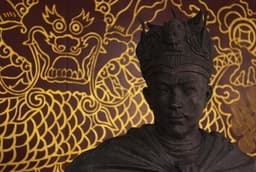
Li Xiucheng
General · Modern
63.7Total

Napoleon Bonaparte
General · Modern
70.9Total
Basic Information
Born
1823
1769
Died
1864
1821
Era
Modern
Modern
Nationality
China
France
Occupation
General
General
Civilization
Eastern
Western
Score Comparison
Military (10%)
77.2
94.0
Political (20%)
68.0
72.0
Influence (20%)
62.0
40.0
Legacy (20%)
50.0
80.0
Leadership (15%)
74.0
78.0
Strategy (15%)
66.9
90.0
TOTAL
63.7
70.9
Li Xiucheng — Complete Timeline
1858 AD
Battle of SanheWar◆ Major
Li Xiucheng led Taiping forces to a decisive victory at the Battle of Sanhe, annihilating a Qing army. This victory revitalized the Taiping cause and secured their control over the lower Yangtze region.
Taiping RebellionBattleVictory
Impact: regional
1860 AD
Second Western ExpeditionWar◆ Major
Li Xiucheng led a major Taiping campaign to capture the lower Yangtze region, including the capture of Suzhou and Hangzhou. The expedition expanded Taiping territory but failed to capture Shanghai due to foreign intervention.
Taiping RebellionCampaignExpansion
Impact: regional
1864 AD
Defense of NanjingWar◆ Major
Li Xiucheng commanded the defense of Nanjing against Qing forces under Zeng Guofan. After the city fell, he was captured and executed, marking the end of the Taiping Rebellion.
Taiping RebellionSiegeDeath
Impact: nationaltragic
Napoleon Bonaparte — Complete Timeline
1799 AD
Coup of 18 BrumaireOther◆ Major
Napoleon Bonaparte, with support from his brother Lucien and key political figures, overthrew the Directory in a bloodless coup. He established the Consulate with himself as First Consul, effectively becoming the ruler of France. This event ended the French Revolution's most unstable period.
French RevolutionCoupRise to Power
Impact: regional
1804 AD
Promulgation of the Napoleonic CodeOther◆ Major
Napoleon enacted the Civil Code of the French, known as the Napoleonic Code, a comprehensive set of laws that replaced the fragmented feudal legal systems. The code established legal equality, protected property rights, and secularized law. It became the basis for legal systems in many European and world countries.
Legal ReformNapoleonic CodeCivil Law
Impact: globalconstructive
1805 AD
Battle of AusterlitzWar◆ Major
Napoleon's Grande Arm
Napoleonic WarsBattleDecisive Victory
Impact: global
1812 AD
Invasion of RussiaWar◆ Major
Napoleon led the Grande Arm
Napoleonic WarsInvasionDisaster
Impact: globaldestructive
1815 AD
Battle of WaterlooWar◆ Major
Napoleon's French army was defeated by the combined forces of the Duke of Wellington's Anglo-Allied army and Gebhard Leberecht von Bl
Napoleonic WarsBattleFinal Defeat
Impact: globaldestructive
Expert Analysis
li-xiucheng-vs-napoleon-bonaparte
# The Conqueror and the Loyal Prince
In the summer of 1864, as Li Xiucheng knelt before his captors in a ruined Nanjing, he must have thought of a different conqueror half a world away. Forty-nine years earlier, Napoleon Bonaparte had stood on the deck of the *Bellerophon*, watching the English coast approach, his empire dissolved into memory. Both men had risen from nothing to command armies that shook continents. Both had seen their worlds collapse. But the paths they took—and the worlds they left behind—could not have been more different.
Origins
Napoleon was born in 1769 on Corsica, an island that had only recently become French. His family was minor nobility, but they were poor, and young Napoleon spoke Italian-accented French that marked him as an outsider. The French Revolution, which erupted when he was twenty, shattered the old order and created opportunities unknown under the monarchy. For a brilliant young artillery officer with nothing to lose, it was a world made for ambition.
Li Xiucheng, born in 1823 in Guangxi province, was a farmer's son who never learned to read or write. China’s Qing Dynasty, though decaying, still maintained its rigid social hierarchy. For a peasant like Li, advancement meant staying alive. When the Taiping Rebellion erupted in 1850, promising a “Heavenly Kingdom of Great Peace” that would overturn the Manchu rulers, it offered something the old world never could: a chance to rise through merit.
Rise to Power
Napoleon’s ascent was swift and spectacular. In 1795, at twenty-six, he saved the revolutionary government from a royalist uprising in Paris. By 1796 he commanded the Army of Italy, and within a year he had crushed Austria and redrawn the map of Europe. Each victory fed the next. He was a man who seemed to bend history to his will, and by 1804 he crowned himself Emperor of the French.
Li’s rise was slower, forged in blood and desperation. He joined the Taiping cause in 1851, at twenty-eight, as a common soldier. He rose through sheer competence, distinguishing himself in battle after battle. By 1858, at the Battle of Sanhe, he led a Taiping force that annihilated a Qing army, reviving a rebellion that had seemed on the verge of collapse. Where Napoleon rode the wave of a revolution that had already succeeded, Li fought to keep a failing dream alive.
Leadership & Governance
Napoleon was a military genius, but he understood that war was only a tool. His Napoleonic Code reformed French law, establishing principles of equality before the law and merit-based advancement that influenced legal systems across Europe. He centralized government, improved education, and negotiated the Concordat with the Catholic Church to stabilize French society. His political score of 75 reflects a man who governed as brilliantly as he conquered.
Li Xiucheng, with a political score of 59, governed in the shadow of the Taiping’s rigid ideology. The movement’s leader, Hong Xiuquan, claimed to be the younger brother of Jesus Christ and imposed a bizarre theocracy that alienated potential supporters. Li tried to moderate this, advocating for pragmatic policies that would win over the peasantry and gentry alike. He wrote letters—dictated to scribes—urging reform and reconciliation, but he was never the master of his own destiny. His military brilliance, with a score of 76.5, was constrained by a political system he could not change.
Triumph & Tragedy
Napoleon’s greatest triumph was the 1805 Battle of Austerlitz, where he crushed the combined armies of Austria and Russia in a masterstroke of deception and maneuver. At its peak, his empire stretched from Spain to Poland. His greatest tragedy came in 1812, when he invaded Russia with 600,000 men and returned with fewer than 100,000. The disaster broke his aura of invincibility, and within two years he was exiled to Elba.
Li’s triumph came in 1860, during his Second Western Expedition, when he captured Suzhou and Hangzhou, the richest cities of the lower Yangtze. These victories gave the Taiping state a brief golden age. His tragedy unfolded in 1864, when he commanded the defense of Nanjing. The city fell after months of siege. Li was captured, and in his final days, he wrote a lengthy confession—dictated to his captors—detailing the rebellion’s mistakes. He was executed that same year, at forty-one.
Character & Destiny
Napoleon was driven by an insatiable ambition that bordered on megalomania. “Impossible is a word to be found only in the dictionary of fools,” he once said. He believed he could shape the world through sheer will, and for a decade, he did. But that same ambition led him to overreach: the invasion of Spain, the Continental System, the Russian campaign. He could not stop, and so he fell.
Li Xiucheng was driven by loyalty—to a cause, to a leader, to a people. His title, “Loyal Prince,” was earned. He could have surrendered earlier, or defected to the Qing as others did. He did not. His tragedy was that his loyalty bound him to a doomed enterprise. “I have done my best,” he reportedly said in his final days, “but the heavens have turned against us.”
Legacy
Napoleon’s legacy is written across Europe. His legal code, his administrative reforms, his military tactics—they shaped the modern world. He is remembered as both a tyrant and a reformer, a man who liberated and enslaved by turns. His total score of 82.4 reflects a figure of towering historical importance.
Li Xiucheng is remembered as a tragic hero in China, a brilliant commander undone by forces beyond his control. His legacy score of 68.3 reflects a narrower fame, but in the long arc of Chinese history, he stands as a symbol of the peasant genius who might have been. The Taiping Rebellion failed, but its memory haunted China for generations, shaping the revolutions to come.
Conclusion
Napoleon and Li Xiucheng were both products of upheaval, men who seized opportunities born from chaos. Napoleon’s revolution succeeded, and he built an empire on its foundations. Li’s revolution failed, and he was crushed by the old order. Yet in their parallel fates, we see the same human truth: that history rewards not just talent, but timing. Napoleon arrived at the right moment, with the right tools, and carved his name into eternity. Li arrived too late, or too early, and his name survives only in the quiet pages of history books. Both were loyal—Napoleon to his own ambition, Li to a dream that was not his own. And both, in the end, were consumed by the fires they had helped to light.
Rankings
🥇
Napoleon BonaparteLeader
Mil: 94.0Pol: 72.0Inf: 40.0
70.9
🥈
Li Xiucheng
Mil: 77.2Pol: 68.0Inf: 62.0
63.7
+7.2 behind
How This Comparison Works
Algorithm
Each figure is scored on 6 dimensions (0—100 scale) based on structured historical data: Military (10%), Political (20%), Influence (20%), Legacy (20%), Leadership (15%), Strategy (15%). The weighted total produces the final ranking.
Data Sources
Scores are computed from structured sub-indicators in the database. Scale factors adjust for era (Ancient ×0.85, Modern ×1.0) and civilization size (Eastern ×1.05, Other ×0.80) to account for differences in population and military scale.
Maximum 3 Figures
Comparisons are limited to 2—3 figures to ensure readability and statistical meaningfulness.
Error Margins
±5 points per dimension — Sub-scores are derived from historical records with inherent uncertainty. Two figures within 5 points on a dimension should be considered roughly equivalent in that area.
Total Score Accuracy
±3 points overall — The weighted combination of 6 dimensions produces a total score with approximately ±3 points of uncertainty. Differences of less than 3 points are not statistically significant— the figures are effectively tied.
Known Limitations
- Historical records are incomplete and uneven across civilizations
- Figures from oral-tradition societies may be underrepresented
- Occupation labels can misclassify multi-role figures
- Scores measure capability and impact, not moral character
- Quantitative scoring is a comparison tool, not absolute truth
Capability Radar
Military (10%) — Battles & Warfare
Battles
75
95
Win Rate
70
90
Expansion
72
95
Political (20%) — Governance & Reform
Reform
40
95
Diplomacy
50
80
Economy
35
85
Influence (20%) — Cultural & Global Reach
Cultural
45
85
Global
35
90
Legacy (20%) — Historical Impact
Historical
55
95
Longevity
40
90
Leadership (15%) — Power & Stability
Tenure
55
85
Stability
30
70
Strategy (15%) — Tactics & Innovation
Strategy
78
95
Tactics
80
98
Reform
60
92
Similar Comparisons
Comments & Discussion
历史深处6/17/2026
拿用拿破仑的滑铁卢败因与李秀成的天京之围对比才有趣。前者败于格鲁希的犹豫,后者亡于洪秀全的猜忌。拿破仑输在战场决策,李秀成输在朝廷分裂。拿氏名言"在战场上没有偶然"——但李的悲剧是偶然的背叛与必然的王朝崩塌共同铸成的。两种失败,各有各的悲凉。
The Weight of Legacy6/17/2026
Both built armies from nothing, but Li built loyalty while Napoleon built mere obedience. Napoleon's Grande Armée disintegrated in 1812 when Parisian fashions mattered more than Moscow snow; Li's troops starved with him in Nanjing, refusing surrender until the end. Napoleon had charisma, but Li had something rarer: the love of men who knew he could not even write their names down. That's command authenticity no emperor can buy.
旧秩序的掘墓人6/17/2026
拿破仑摧毁了旧欧洲的封建体系,李秀成却没能撼动清朝的根基。关键在于:拿破仑有《拿破仑法典》作为制度遗产,李只有一片焦土。法国大革命给了拿破仑重塑社会的武器,而太平天国的神权政治注定无法替代儒家的官僚体系。一个是改变了世界观的人,一个是旧世界崩塌中的昙花。
Historian4276/17/2026
Stop romanticizing the "peasant general." Li Xiucheng never held strategic initiative; he reacted to Qing maneuvers his entire career. Napoleon set the tempo across Europe for a decade. Li's biggest victory—the second rout of the Jiangnan armies—was defensive, expelling an already-corrupt force. Napoleon's Austerlitz was a premeditated trap against Europe's finest. Li was a competent insurgent; Napoleon was a strategic genius. Let's not confuse context with capability.
Chronicler18656/17/2026
Napoleon won through speed and decisive battle; Li Xiucheng won through endurance and siegecraft. The Corsican's 1796 Italian campaign saw him win six battles in a month using interior lines. Li's 1858 defense of Anqing held out for eight months against a besieging force of 50,000, digging tunnels and countermines. One was a master of maneuver, the other of attrition. Different generals for different wars.