Loading...
Alvaro Obregon vs Li Xiucheng
Li Xiucheng leads by 1.3 pts · 2 figures compared
…

Alvaro Obregon
General · Modern
62.4Total
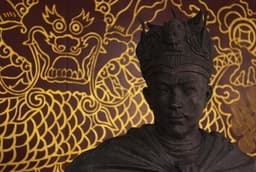
Li Xiucheng
General · Modern
63.7Total
Basic Information
Born
1880
1823
Died
1928
1864
Era
Modern
Modern
Nationality
Mexico
China
Occupation
General
General
Civilization
Western
Eastern
Score Comparison
Military (10%)
82.0
77.2
Political (20%)
55.0
68.0
Influence (20%)
62.0
62.0
Legacy (20%)
56.0
50.0
Leadership (15%)
66.0
74.0
Strategy (15%)
65.4
66.9
TOTAL
62.4
63.7
Alvaro Obregon — Complete Timeline
1915 AD
Battle of CelayaWar
Obregón commanded Constitutionalist forces in a decisive victory over Pancho Villa's Division of the North at Celaya. Using modern trench warfare tactics, he defeated Villa's cavalry, solidifying his reputation as a military strategist and weakening Villa's power.
Mexican RevolutionBattleVilla
Impact: national
1920 AD
Presidency of MexicoPolitical Action◆ Major
Obregón was elected President of Mexico in 1920, serving until 1924. His administration focused on reconstruction after the revolution, implementing land reform, supporting labor unions, and promoting education and cultural nationalism.
PresidencyReconstructionMexican Revolution
Impact: nationalconstructive
1923 AD
Bucareli TreatyPolitical Action◆ Major
Obregón signed the Bucareli Treaty with the United States in 1923, agreeing to compensate American citizens for property losses during the revolution. This agreement secured U.S. diplomatic recognition for his government, stabilizing Mexico's international relations.
TreatyUnited StatesDiplomacy
Impact: national
1928 AD
Re-election and AssassinationPolitical Action
Obregón was re-elected president in 1928 after a constitutional amendment allowed non-consecutive terms. However, he was assassinated on July 17, 1928, by a Catholic radical before taking office, plunging Mexico into a political crisis.
AssassinationRe-electionPolitical Crisis
Impact: nationaltragic
Li Xiucheng — Complete Timeline
1858 AD
Battle of SanheWar◆ Major
Li Xiucheng led Taiping forces to a decisive victory at the Battle of Sanhe, annihilating a Qing army. This victory revitalized the Taiping cause and secured their control over the lower Yangtze region.
Taiping RebellionBattleVictory
Impact: regional
1860 AD
Second Western ExpeditionWar◆ Major
Li Xiucheng led a major Taiping campaign to capture the lower Yangtze region, including the capture of Suzhou and Hangzhou. The expedition expanded Taiping territory but failed to capture Shanghai due to foreign intervention.
Taiping RebellionCampaignExpansion
Impact: regional
1864 AD
Defense of NanjingWar◆ Major
Li Xiucheng commanded the defense of Nanjing against Qing forces under Zeng Guofan. After the city fell, he was captured and executed, marking the end of the Taiping Rebellion.
Taiping RebellionSiegeDeath
Impact: nationaltragic
Expert Analysis
Origins
Alvaro Obregon was born on February 19, 1880, in Huatabampo, Sonora, Mexico, to a poor farming family. He had limited formal education but learned practical skills on the ranch. His early life was marked by hard work and local politics, serving as a municipal president.
Li Xiucheng was born in 1823 in Guangxi, China, into a peasant family. He received little education and worked as a farmer. In 1851, he joined the Taiping Rebellion, drawn by its anti-Qing and Christian-inspired ideology. His military talent emerged rapidly despite his humble origins.
Rise to Power
Obregon rose during the Mexican Revolution. In 1911, he supported Francisco I. Madero against Porfirio Diaz. After Madero's assassination in 1913, Obregon allied with Venustiano Carranza's Constitutionalist forces. His military successes, particularly the capture of key cities, made him a leading general. In 1915, he defeated Pancho Villa at the Battle of Celaya, using trench warfare and machine guns, securing his reputation.
Li Xiucheng rose quickly in the Taiping ranks due to his battlefield successes. In 1858, he won the Battle of Sanhe, annihilating a Qing army and reviving the Taiping cause. He was granted the title 'Loyal Prince' and became the chief military commander. His campaigns in 1860 captured Suzhou and Hangzhou, expanding Taiping control in the lower Yangtze.
Leadership & Governance
Obregon's leadership was pragmatic and modernizing. As president from 1920 to 1924, he focused on reconstruction: land reform, education, and infrastructure. He negotiated the Bucareli Treaty (1923) with the US, compensating American property losses, stabilizing foreign relations. His military leadership was innovative, using modern tactics and technology.
Li Xiucheng's leadership was inspirational but constrained. He was a skilled strategist but lacked political authority within the Taiping leadership. His governance in captured territories was relatively moderate, but he could not implement lasting reforms due to the rebellion's instability. He scored 74.0 in leadership, higher than Obregon's 66.0, reflecting his ability to command loyalty.
Triumph & Tragedy
Obregon's greatest triumph was defeating Villa at Celaya (scoring 82.0 in military) and stabilizing Mexico after the revolution. His presidency enacted reforms that shaped modern Mexico. However, his decision to seek re-election in 1928 led to his assassination by a Catholic radical on July 17, 1928, a tragic end that undermined political stability.
Li Xiucheng's triumphs include the Battle of Sanhe (military 77.2) and the Second Western Expedition, which captured key cities. His greatest tragedy was the failure to save Nanjing in 1864. After the city fell, he was captured and executed. His last testament, written in prison, offers a detailed account of the rebellion but also reveals internal divisions that doomed the Taiping.
Character & Destiny
Obregon was pragmatic, calculating, and ambitious. He used his military success to gain political power, but his assassination showed the limits of post-revolutionary stability. His character was shaped by his rural roots and practical mindset.
Li Xiucheng was loyal and capable, but his destiny was tied to a doomed cause. He remained faithful to the Taiping even as its leadership deteriorated. His military skill could not overcome the rebellion's structural weaknesses. He scored 66.9 in strategy, slightly above Obregon's 65.4.
Legacy
Obregon's legacy is mixed. He is remembered as a key revolutionary general and a president who began reconstruction. However, his assassination and the subsequent Cristero War tarnished his achievements. His influence score is 62.0, equal to Li Xiucheng.
Li Xiucheng is remembered as the most capable Taiping commander, but the rebellion's failure limited his legacy. He is studied for his military campaigns and his detailed prison writings, which provide insight into the Taiping. His legacy score is 50.0, lower than Obregon's 56.0.
Conclusion
While Li Xiucheng had a higher total score (63.7 vs 62.4) and superior leadership, Obregon had greater historical impact. Obregon's military victory at Celaya and his presidency shaped modern Mexico, while Li Xiucheng's achievements were ultimately ephemeral. Obregon's legacy endures in Mexican institutions, whereas Li Xiucheng's is a historical footnote. Thus, Obregon's influence on the course of history was more significant.
Rankings
🥇
Li XiuchengLeader
Mil: 77.2Pol: 68.0Inf: 62.0
63.7
🥈
Alvaro Obregon
Mil: 82.0Pol: 55.0Inf: 62.0
62.4
+1.3 behind
How This Comparison Works
Algorithm
Each figure is scored on 6 dimensions (0—100 scale) based on structured historical data: Military (10%), Political (20%), Influence (20%), Legacy (20%), Leadership (15%), Strategy (15%). The weighted total produces the final ranking.
Data Sources
Scores are computed from structured sub-indicators in the database. Scale factors adjust for era (Ancient ×0.85, Modern ×1.0) and civilization size (Eastern ×1.05, Other ×0.80) to account for differences in population and military scale.
Maximum 3 Figures
Comparisons are limited to 2—3 figures to ensure readability and statistical meaningfulness.
Error Margins
±5 points per dimension — Sub-scores are derived from historical records with inherent uncertainty. Two figures within 5 points on a dimension should be considered roughly equivalent in that area.
Total Score Accuracy
±3 points overall — The weighted combination of 6 dimensions produces a total score with approximately ±3 points of uncertainty. Differences of less than 3 points are not statistically significant— the figures are effectively tied.
Known Limitations
- Historical records are incomplete and uneven across civilizations
- Figures from oral-tradition societies may be underrepresented
- Occupation labels can misclassify multi-role figures
- Scores measure capability and impact, not moral character
- Quantitative scoring is a comparison tool, not absolute truth
Capability Radar
Military (10%) — Battles & Warfare
Battles
75
75
Win Rate
80
70
Expansion
60
72
Political (20%) — Governance & Reform
Reform
70
40
Diplomacy
60
50
Economy
55
35
Influence (20%) — Cultural & Global Reach
Cultural
55
45
Global
45
35
Legacy (20%) — Historical Impact
Historical
60
55
Longevity
50
40
Leadership (15%) — Power & Stability
Tenure
65
55
Stability
50
30
Strategy (15%) — Tactics & Innovation
Strategy
75
78
Tactics
70
80
Reform
65
60
Similar Comparisons
Comments & Discussion
No comments yet. Be the first to share your thoughts!