Loading...
Jayalalithaa vs Napoleon Bonaparte
Napoleon Bonaparte leads by 13.7 pts · 2 figures compared
…
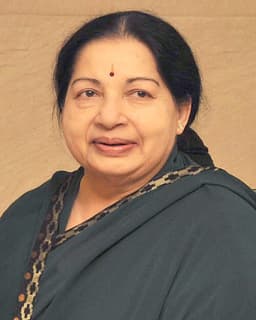
Jayalalithaa
Politician · Modern
57.2Total

Napoleon Bonaparte
General · Modern
70.9Total
Basic Information
Born
1948
1769
Died
—
1821
Era
Modern
Modern
Nationality
India
France
Occupation
Politician
General
Civilization
Indian
Western
Score Comparison
Military (10%)
32.5
94.0
Political (20%)
60.0
72.0
Influence (20%)
55.0
40.0
Legacy (20%)
54.0
80.0
Leadership (15%)
78.0
78.0
Strategy (15%)
60.0
90.0
TOTAL
57.2
70.9
Jayalalithaa — Complete Timeline
1982 AD
Joined AIADMK and became propaganda secretaryPolitical Action◆ Major
Jayalalithaa joined the AIADMK, the party founded by M.G. Ramachandran (MGR). She was appointed propaganda secretary, using her oratory skills to promote the party. This marked her entry into full-time politics after a successful film career.
Political EntryAIADMKTamil Nadu
Impact: regionalconstructive
1991 AD
Became Chief Minister of Tamil Nadu for first timePolitical Action◆ Major
Jayalalithaa led the AIADMK to a landslide victory in the 1991 Tamil Nadu election, winning 164 out of 234 seats. She became Chief Minister for the first time. Her government focused on populist schemes but also faced allegations of corruption and authoritarianism.
Chief MinisterTamil NaduAIADMK
Impact: regionalconstructive
2011 AD
Implemented Amma brand welfare schemesReform◆ Major
Jayalalithaa's government launched a series of subsidized welfare schemes under the 'Amma' brand, including Amma canteens (low-cost meals), Amma water, and Amma pharmacies. These schemes provided affordable services to the poor and became a model for other states.
WelfareAmmaTamil Nadu
Impact: regionalconstructive
2014 AD
Convicted in disproportionate assets case (2014)Political Action◆ Major
Jayalalithaa was convicted by a special court in Bangalore for amassing disproportionate assets worth
CorruptionConvictionDisproportionate Assets
Impact: nationaldestructive
2015 AD
Returned as Chief Minister after acquittal (2015)Political Action◆ Major
After the Karnataka High Court acquitted her in the disproportionate assets case, Jayalalithaa returned as Chief Minister of Tamil Nadu in 2015. She led the AIADMK to victory in the 2016 election, winning a second consecutive term. Her return consolidated her power.
AcquittalChief MinisterTamil Nadu
Impact: regionalconstructive
Napoleon Bonaparte — Complete Timeline
1799 AD
Coup of 18 BrumaireOther◆ Major
Napoleon Bonaparte, with support from his brother Lucien and key political figures, overthrew the Directory in a bloodless coup. He established the Consulate with himself as First Consul, effectively becoming the ruler of France. This event ended the French Revolution's most unstable period.
French RevolutionCoupRise to Power
Impact: regional
1804 AD
Promulgation of the Napoleonic CodeOther◆ Major
Napoleon enacted the Civil Code of the French, known as the Napoleonic Code, a comprehensive set of laws that replaced the fragmented feudal legal systems. The code established legal equality, protected property rights, and secularized law. It became the basis for legal systems in many European and world countries.
Legal ReformNapoleonic CodeCivil Law
Impact: globalconstructive
1805 AD
Battle of AusterlitzWar◆ Major
Napoleon's Grande Arm
Napoleonic WarsBattleDecisive Victory
Impact: global
1812 AD
Invasion of RussiaWar◆ Major
Napoleon led the Grande Arm
Napoleonic WarsInvasionDisaster
Impact: globaldestructive
1815 AD
Battle of WaterlooWar◆ Major
Napoleon's French army was defeated by the combined forces of the Duke of Wellington's Anglo-Allied army and Gebhard Leberecht von Bl
Napoleonic WarsBattleFinal Defeat
Impact: globaldestructive
Expert Analysis
jayalalithaa-vs-napoleon-bonaparte
# The Corsican and the Star: Two Paths to Power
On a rainy June evening in 1815, a defeated emperor sat in a carriage fleeing northward through Belgium, his grand army shattered beyond repair. A century and a half later, on a sweltering May morning in 1991, a former film star stood on the steps of the Tamil Nadu secretariat, having just won 164 of 234 assembly seats. Both had risen from obscurity to command millions. Both had faced imprisonment, betrayal, and the wrath of established powers. But while one conquered a continent and burned out in a blaze of glory, the other built a political dynasty that would outlast her by decades. What separated the Corsican who remade Europe from the actress who remade a state?
Origins
Napoleon Bonaparte was born in 1769 on the rugged Mediterranean island of Corsica, a land that had only become French the year before. His family were minor nobles, scraping by on modest incomes. The boy was short, awkward, and spoke French with a thick Italian accent that would mark him as an outsider for life. He devoured military history and mathematical treatises, driven by a hunger that came from being poor, foreign, and determined to prove himself.
Jayalalithaa Jayaram was born in 1948 in the southern Indian town of Mysore, into a world of cinema and politics. Her mother was a film actress; her father, a lawyer who died when she was two. She was raised in a household of women, learning early that survival meant performing—literally. By age fifteen, she was a leading lady in Tamil cinema, her face plastered on billboards across Madras. But she also studied law, read voraciously, and watched how men in power commanded rooms. Her era was one of post-colonial upheaval, where regional identity and linguistic pride were reshaping Indian democracy.
Both were outsiders to the centers of power they would later dominate. Napoleon came from a newly annexed island; Jayalalithaa came from the world of make-believe, dismissed as a mere actress by the Brahminical elite of Tamil politics. Both turned their otherness into a weapon.
Rise to Power
Napoleon’s ascent was a masterpiece of opportunism and audacity. In 1793, at just twenty-four, he recaptured the port of Toulon from British and royalist forces, earning the rank of brigadier general. The French Revolution had shattered the old order, and a young artillery officer with talent could rise faster than in any monarchy. He survived the political purges of the Reign of Terror, then crushed a royalist uprising in Paris in 1795 with a "whiff of grapeshot." By 1796, he commanded the army of Italy, winning battles that seemed impossible against larger Austrian forces. Each victory was a stepping stone; each defeat, a lesson he rarely repeated.
Jayalalithaa’s path was different but no less dramatic. She entered politics in 1982, joining the AIADMK—the party of M.G. Ramachandran, the legendary actor-politician who had transformed Tamil Nadu. She was appointed propaganda secretary, a role that used her film fame to rally crowds. But MGR’s death in 1987 triggered a brutal succession struggle. Jayalalithaa faced rivals within her own party, accusations of disloyalty, and the condescension of a male-dominated political culture. She was arrested, humiliated, and even physically assaulted during a legislative assembly session in 1989. Yet she held on. In 1991, after MGR’s widow proved unable to hold the party together, Jayalalithaa led the AIADMK to a landslide victory. She was forty-three years old.
The difference in their rises reflects their worlds: Napoleon’s France was a powder keg of revolution, where military brilliance could topple thrones. Jayalalithaa’s India was a democracy, where patience, party machinery, and the slow accumulation of loyalty mattered more than battlefield glory.
Leadership & Governance
Napoleon governed with the same energy he brought to war. He reformed French law into the Napoleonic Code, a system that enshrined equality before the law, protected property rights, and secularized the state. He centralized education, built roads and canals, and established the Bank of France. His military genius was unmatched: at Austerlitz in 1805, he destroyed a combined Russian-Austrian army with a feigned retreat that remains a textbook maneuver. He was a master of logistics, speed, and psychological warfare. But his political wisdom was brittle. He crowned himself emperor in 1804, alienating republicans. He imposed his brothers on European thrones, creating resentment. He invaded Russia in 1812 with 600,000 men; fewer than 100,000 returned.
Jayalalithaa governed through a different calculus. As chief minister of Tamil Nadu, she wielded power not through armies but through welfare schemes that touched every household. Her "Amma" brand—named after the Tamil word for mother—included subsidized canteens, free laptops for students, low-cost medicines, and water bottles sold at one rupee. These programs were not just charity; they were political engineering. By making the state the provider of basic needs, she created a direct bond between herself and the poor, bypassing traditional intermediaries. Her leadership score of 85.5 reflects this ability to command loyalty without military force. Yet her governance was authoritarian: she centralized decision-making, sidelined party elders, and ruled through a cult of personality. Her political score of 72.0 suggests a pragmatist who knew how to win elections but struggled with coalition-building.
Triumph & Tragedy
Napoleon’s greatest moment was perhaps the Battle of Austerlitz in December 1805, where he outmaneuvered the emperors of Austria and Russia. His worst was the retreat from Moscow in 1812, a catastrophe that destroyed his army and his aura of invincibility. He was exiled to Elba in 1814, returned to power for a Hundred Days in 1815, then crushed at Waterloo. His final years were spent in British captivity on Saint Helena, dictating memoirs and blaming others for his fall.
Jayalalithaa’s triumphs were electoral. In 1991, she won a mandate that silenced every critic. But tragedy came in 2014, when she was convicted in a disproportionate assets case, accused of amassing ₹66 crore (roughly $10 million) beyond her known income. She was sentenced to four years in prison, disqualified from office, and forced to resign. Yet she fought back. In 2015, the Karnataka High Court acquitted her, and she returned to power with a vengeance. Her death in 2016, at age sixty-eight, was sudden—she had been hospitalized for fever and dehydration, and rumors of foul play swirled for years.
Both faced the classic arc of hubris: Napoleon’s overreach in Russia, Jayalalithaa’s accumulation of wealth that invited legal scrutiny. But where Napoleon’s fall was final, Jayalalithaa’s was temporary—a testament to the resilience of democratic politics.
Character & Destiny
Napoleon was driven by an insatiable ambition. "I am not a man, but a thing," he once said, meaning he was a force of history. He was brilliant, ruthless, and incapable of rest. His personality—impatient, micromanaging, contemptuous of equals—led him to conquer but also to alienate. He trusted no one fully, and in the end, even his marshals abandoned him.
Jayalalithaa was equally driven, but her ambition was rooted in survival. She had been a child star, a single woman in a patriarchal society, and a politician who had been beaten in the assembly. She learned to trust no one, to centralize power, and to project an image of invincible motherhood. "I am not a woman, I am a leader," she once declared. Her personality—aloof, imperious, fiercely independent—made her a beloved figure to millions but a difficult ally to peers.
Their destinies were shaped by their eras. Napoleon’s world was one of war and revolution, where a man could reshape borders with cannons. Jayalalithaa’s world was one of democracy and media, where a woman could reshape lives with subsidies and symbols.
Legacy
Napoleon’s legacy is global. The Napoleonic Code influenced legal systems from Europe to Latin America to the Middle East. His military tactics are still studied. He reshaped nationalism, spreading the idea that peoples, not kings, should rule. But his legacy is also one of war: millions dead, borders redrawn by force, and a model of authoritarian rule that inspired future dictators.
Jayalalithaa’s legacy is regional but profound. She transformed Tamil Nadu’s welfare state, creating a model that other Indian states copied. Her "Amma" brand became a political trademark, a symbol of how a leader can embed herself in daily life. She broke barriers for women in Indian politics, proving that a former actress could become the most powerful leader in a state. But her governance was also criticized for its cult of personality, its suppression of dissent, and its failure to address long-term economic challenges.
Conclusion
Napoleon and Jayalalithaa never met, never shared a language or a continent. Yet both understood that power is a performance. Napoleon performed on battlefields, Jayalalithaa on stages and in assembly halls. Both were outsiders who remade their worlds, then were consumed by them. Napoleon died alone on an island; Jayalalithaa died surrounded by devotees who called her "Amma." One conquered nations; the other conquered hearts. In the end, both proved that history belongs not to the well-born, but to those who refuse to accept the place assigned to them.
Rankings
🥇
Napoleon BonaparteLeader
Mil: 94.0Pol: 72.0Inf: 40.0
70.9
🥈
Jayalalithaa
Mil: 32.5Pol: 60.0Inf: 55.0
57.2
+13.7 behind
How This Comparison Works
Algorithm
Each figure is scored on 6 dimensions (0—100 scale) based on structured historical data: Military (10%), Political (20%), Influence (20%), Legacy (20%), Leadership (15%), Strategy (15%). The weighted total produces the final ranking.
Data Sources
Scores are computed from structured sub-indicators in the database. Scale factors adjust for era (Ancient ×0.85, Modern ×1.0) and civilization size (Eastern ×1.05, Other ×0.80) to account for differences in population and military scale.
Maximum 3 Figures
Comparisons are limited to 2—3 figures to ensure readability and statistical meaningfulness.
Error Margins
±5 points per dimension — Sub-scores are derived from historical records with inherent uncertainty. Two figures within 5 points on a dimension should be considered roughly equivalent in that area.
Total Score Accuracy
±3 points overall — The weighted combination of 6 dimensions produces a total score with approximately ±3 points of uncertainty. Differences of less than 3 points are not statistically significant— the figures are effectively tied.
Known Limitations
- Historical records are incomplete and uneven across civilizations
- Figures from oral-tradition societies may be underrepresented
- Occupation labels can misclassify multi-role figures
- Scores measure capability and impact, not moral character
- Quantitative scoring is a comparison tool, not absolute truth
Capability Radar
Military (10%) — Battles & Warfare
Battles
42
95
Win Rate
48
90
Expansion
52
95
Political (20%) — Governance & Reform
Reform
70
95
Diplomacy
65
80
Economy
60
85
Influence (20%) — Cultural & Global Reach
Cultural
60
85
Global
45
90
Legacy (20%) — Historical Impact
Historical
65
95
Longevity
50
90
Leadership (15%) — Power & Stability
Tenure
85
85
Stability
55
70
Strategy (15%) — Tactics & Innovation
Strategy
52
95
Tactics
58
98
Reform
56
92
Similar Comparisons
Comments & Discussion
No comments yet. Be the first to share your thoughts!