Loading...
Jawaharlal Nehru vs Napoleon Bonaparte
Napoleon Bonaparte leads by 11.0 pts · 2 figures compared
…
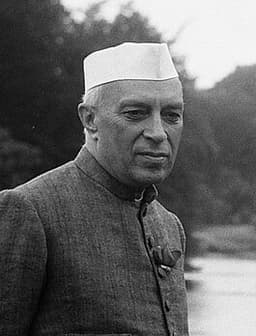
Jawaharlal Nehru
Politician · Modern
59.9Total

Napoleon Bonaparte
General · Modern
70.9Total
Basic Information
Born
1889
1769
Died
1964
1821
Era
Modern
Modern
Nationality
India
France
Occupation
Politician
General
Civilization
Indian
Western
Score Comparison
Military (10%)
10.0
94.0
Political (20%)
78.0
72.0
Influence (20%)
88.0
40.0
Legacy (20%)
40.0
80.0
Leadership (15%)
78.0
78.0
Strategy (15%)
35.0
90.0
TOTAL
59.9
70.9
Jawaharlal Nehru — Complete Timeline
1919 AD
Jallianwala Bagh Massacre ResponsePolitical Action◆ Major
Nehru, deeply affected by the Jallianwala Bagh massacre, joined the Indian independence movement. He became a key leader in the Indian National Congress, advocating for non-violent resistance against British rule.
Independence MovementIndian National CongressNon-violence
Impact: national
1929 AD
Election as Congress President (Lahore Session)Political Action◆ Major
Nehru was elected President of the Indian National Congress at its Lahore session, where he declared Purna Swaraj (complete independence) as the party's goal. This marked a shift from dominion status to full independence.
Indian National CongressIndependencePurna Swaraj
Impact: nationalprogressive
1942 AD
Quit India Movement LeadershipPolitical Action◆ Major
Nehru, alongside Gandhi, led the Quit India Movement, demanding an end to British rule. He was arrested and imprisoned for nearly three years, but the movement intensified pressure on Britain to leave India.
Quit IndiaCivil DisobedienceImprisonment
Impact: nationalprogressive
1947 AD
First Prime Minister of IndiaPolitical Action
Nehru became the first Prime Minister of independent India, delivering his 'Tryst with Destiny' speech. He led the nation through partition, integration of princely states, and the drafting of a secular, democratic constitution.
IndependencePrime MinisterConstitution
Impact: globalconstructive
1961 AD
Founding of the Non-Aligned MovementPolitical Action◆ Major
Nehru co-founded the Non-Aligned Movement with Tito, Nasser, and Sukarno, advocating for a third way during the Cold War. This positioned India as a leader of developing nations, promoting peace and decolonization.
Non-Aligned MovementCold WarForeign Policy
Impact: globalconstructive
Napoleon Bonaparte — Complete Timeline
1799 AD
Coup of 18 BrumaireOther◆ Major
Napoleon Bonaparte, with support from his brother Lucien and key political figures, overthrew the Directory in a bloodless coup. He established the Consulate with himself as First Consul, effectively becoming the ruler of France. This event ended the French Revolution's most unstable period.
French RevolutionCoupRise to Power
Impact: regional
1804 AD
Promulgation of the Napoleonic CodeOther◆ Major
Napoleon enacted the Civil Code of the French, known as the Napoleonic Code, a comprehensive set of laws that replaced the fragmented feudal legal systems. The code established legal equality, protected property rights, and secularized law. It became the basis for legal systems in many European and world countries.
Legal ReformNapoleonic CodeCivil Law
Impact: globalconstructive
1805 AD
Battle of AusterlitzWar◆ Major
Napoleon's Grande Arm
Napoleonic WarsBattleDecisive Victory
Impact: global
1812 AD
Invasion of RussiaWar◆ Major
Napoleon led the Grande Arm
Napoleonic WarsInvasionDisaster
Impact: globaldestructive
1815 AD
Battle of WaterlooWar◆ Major
Napoleon's French army was defeated by the combined forces of the Duke of Wellington's Anglo-Allied army and Gebhard Leberecht von Bl
Napoleonic WarsBattleFinal Defeat
Impact: globaldestructive
Expert Analysis
jawaharlal-nehru-vs-napoleon-bonaparte
# The Emperor and the Architect
On a frozen morning in December 1805, Napoleon Bonaparte stood on the field of Austerlitz, watching his grand army crush the combined forces of Russia and Austria. The sun that broke through the mist that day would forever be known as the Sun of Austerlitz. Nearly a century and a half later, on another continent, a very different leader stood before India's Constituent Assembly on the midnight of August 14, 1947. Jawaharlal Nehru spoke of a "tryst with destiny," of a nation awakening to "life and freedom." One man commanded armies and rewrote borders; the other commanded ideas and rewrote a civilization's future. What drove these two figures—both giants of the modern age—to such radically different outcomes?
Origins
Napoleon Bonaparte was born in 1769 on the island of Corsica, a land recently annexed by France. His family belonged to the minor nobility, but they were poor, and young Napoleon spoke French with a thick Italian accent that marked him as an outsider. The world he entered was one of crumbling monarchies and revolutionary upheaval. He attended military academies in Brienne and Paris, where he devoured history and strategy, often isolating himself from his more aristocratic classmates. The French Revolution, which erupted when he was twenty, would be his ladder.
Jawaharlal Nehru, born in 1889 in Allahabad, India, was the son of Motilal Nehru, a wealthy and Westernized lawyer. Unlike Napoleon's provincial obscurity, Nehru grew up in luxury—in a mansion called Anand Bhavan, surrounded by books, English tutors, and the privileges of the colonial elite. He was sent to Harrow and then Cambridge, where he absorbed the liberal ideals of the British Enlightenment. But it was the Jallianwala Bagh massacre of 1919 that transformed him. The slaughter of unarmed civilians by British troops, under General Dyer, shattered Nehru's faith in empire. "I was filled with a great rage," he later wrote. He joined the independence movement, and his path diverged forever from the comfortable life he might have led.
Rise to Power
Napoleon's ascent was meteoric. In 1793, at just twenty-four, he drove the British out of Toulon and was promoted to brigadier general. Two years later, he saved the revolutionary government from a royalist uprising with a "whiff of grapeshot"—cannon fire into the streets of Paris. Then came the Italian campaign of 1796, where he dazzled Europe with speed and daring, defeating larger Austrian armies. By 1799, he staged a coup d'état and named himself First Consul. By 1804, he crowned himself Emperor. His rise was a product of chaos, ambition, and sheer military genius.
Nehru's path was slower, more patient, and built on moral authority rather than force. He was elected President of the Indian National Congress in 1929 at its Lahore session, where he declared Purna Swaraj—complete independence. But unlike Napoleon, he did not seize power; he earned it through decades of imprisonment, negotiation, and nonviolent struggle. The Quit India Movement of 1942, which he led alongside Mahatma Gandhi, landed him in prison for nearly three years. When independence finally came in 1947, it was not through conquest but through exhaustion of the empire and the weight of a mass movement. Nehru became Prime Minister not by coup but by consensus.
Leadership & Governance
Napoleon ruled with a sword and a code. His greatest domestic achievement was the Napoleonic Code of 1804—a comprehensive legal system that abolished feudalism, established equality before the law, and protected property rights. It spread across Europe and remains influential today. Militarily, his brilliance was unmatched: his campaigns at Austerlitz in 1805 and Jena in 1806 shattered coalitions. But his governance relied on centralization, censorship, and the suppression of dissent. He created a meritocracy, but only if one swore loyalty to him. His political wisdom, scoring a 75, was overshadowed by his military rating of 94.
Nehru governed with a constitution and a vision. He shaped India's parliamentary democracy, its secular framework, and its planned economy. He founded the Non-Aligned Movement in 1961 with Tito, Nasser, and Sukarno, offering a third way during the Cold War. His political score of 79 reflects his skill in building institutions, not armies. Yet his military score of 32 reveals his limitation: he was a man of words, not war. During the 1962 Sino-Indian War, his idealistic trust in diplomacy failed, and China humiliated India. Unlike Napoleon, who conquered, Nehru built—but his building had cracks.
Triumph & Tragedy
Napoleon's greatest triumph was Austerlitz, where he destroyed the Austro-Russian army and forced the Holy Roman Empire to dissolve. His tragedy was the invasion of Russia in 1812, where his Grand Army of over 600,000 men was reduced to a frozen remnant. He was exiled to Elba, returned for the Hundred Days, and was finally defeated at Waterloo in 1815. His death in 1821 on Saint Helena was lonely and bitter.
Nehru's triumph was independence itself—leading a subcontinent of 350 million people out of colonial rule without a civil war (though partition was bloody). His tragedy was the unresolved Kashmir conflict and the 1962 war, which broke his spirit. He died in 1964, still Prime Minister, but disillusioned. His legacy score of 68.7 reflects a mixed record: he built democracy but also sowed the seeds of economic stagnation.
Character & Destiny
Napoleon was driven by an insatiable hunger for glory. "I am not a man, but a thing," he once said. "My life is a flame." His character—restless, brilliant, ruthless—propelled him to dominate Europe but also doomed him to overreach. He could not stop; he had to conquer.
Nehru was driven by a vision of a modern, secular, democratic India. "The light has gone out of our lives," he said upon Gandhi's assassination. He was introspective, intellectual, and idealistic. His character sought harmony, not domination. But his detachment from ground realities—his failure to understand China or economic pragmatism—limited his achievements.
Legacy
Napoleon left a legend. The Napoleonic Code, the metric system, the reorganization of German states—these outlasted his empire. He is remembered as a military genius and a tyrant, a liberator and a conqueror. His total score of 82.4 reflects this complexity.
Nehru left a nation. India's democracy, its secular constitution, its scientific institutes, and its non-aligned foreign policy are his monuments. He is remembered as the architect of modern India, flawed but foundational. His total score of 67.7 is lower, but he built for peace, not war.
Conclusion
Two men, two centuries, two worlds. Napoleon conquered a continent in a decade; Nehru built a nation in a generation. One sought immortality through victory; the other through institutions. And yet, both were outsiders who remade their worlds. Napoleon's flame burned bright and fast; Nehru's light was steady and slow. The question is not which was greater—but which path we, as a species, choose to remember.
Rankings
🥇
Napoleon BonaparteLeader
Mil: 94.0Pol: 72.0Inf: 40.0
70.9
🥈
Jawaharlal Nehru
Mil: 10.0Pol: 78.0Inf: 88.0
59.9
+11.0 behind
How This Comparison Works
Algorithm
Each figure is scored on 6 dimensions (0—100 scale) based on structured historical data: Military (10%), Political (20%), Influence (20%), Legacy (20%), Leadership (15%), Strategy (15%). The weighted total produces the final ranking.
Data Sources
Scores are computed from structured sub-indicators in the database. Scale factors adjust for era (Ancient ×0.85, Modern ×1.0) and civilization size (Eastern ×1.05, Other ×0.80) to account for differences in population and military scale.
Maximum 3 Figures
Comparisons are limited to 2—3 figures to ensure readability and statistical meaningfulness.
Error Margins
±5 points per dimension — Sub-scores are derived from historical records with inherent uncertainty. Two figures within 5 points on a dimension should be considered roughly equivalent in that area.
Total Score Accuracy
±3 points overall — The weighted combination of 6 dimensions produces a total score with approximately ±3 points of uncertainty. Differences of less than 3 points are not statistically significant— the figures are effectively tied.
Known Limitations
- Historical records are incomplete and uneven across civilizations
- Figures from oral-tradition societies may be underrepresented
- Occupation labels can misclassify multi-role figures
- Scores measure capability and impact, not moral character
- Quantitative scoring is a comparison tool, not absolute truth
Capability Radar
Military (10%) — Battles & Warfare
Battles
26
95
Win Rate
28
90
Expansion
32
95
Political (20%) — Governance & Reform
Reform
85
95
Diplomacy
90
80
Economy
70
85
Influence (20%) — Cultural & Global Reach
Cultural
80
85
Global
85
90
Legacy (20%) — Historical Impact
Historical
85
95
Longevity
80
90
Leadership (15%) — Power & Stability
Tenure
85
85
Stability
75
70
Strategy (15%) — Tactics & Innovation
Strategy
35
95
Tactics
37
98
Reform
36
92
Similar Comparisons
Comments & Discussion
AusterlitzArchitect6/17/2026
Comparing Nehru to Napoleon is like comparing a librarian to a gladiator. One conquered Europe through sheer military genius; the other inherited a colonial mess and fumbled through economic policy. Nehru’s "tryst with destiny" speech was eloquent, sure, but try telling that to the millions who starved during his statist Five-Year Plans. Napoleon at least left a legal legacy with the Napoleonic Code—Nehru left us with a license-permit raj.
沉默的统计员6/17/2026
说尼赫鲁像拿破仑?这是在侮辱拿破仑的军事才能。拿破仑翻越阿尔卑斯山时带着4万士兵,而尼赫鲁连印巴分治的边界都没画清楚。数据不会骗人:拿破仑统治法国时经济增长了20%,而尼赫鲁的社会主义经济政策导致印度工业增长停滞在3.5%。一个是改变欧洲版图的天才,另一个只是英国留下的空壳子。
ClassicsSwordsman6/17/2026
Napoleon was a man of action who reshaped Europe in a decade; Nehru was a philosopher-king who wrote letters to his daughter. The Corsican's formula was simple: swift campaigns, meritocracy, and a single code of laws. Nehru’s approach was endless committees, non-alignment lectures, and crackdowns on Kashmir. One forged empires with his sword; the other built bureaucracies with his pen. Give me Austerlitz over a Constituent Assembly any day.
不列颠的毒舌6/17/2026
哈哈,拿尼赫鲁比拿破仑,这简直是拿茶杯比大炮。拿破仑在1796年意大利战役中以3万兵力击溃9万敌军,而尼赫鲁最著名的军事行动是下令入侵果阿,对手是早已衰落的葡萄牙。说白了,尼赫鲁就是个穿着西装的政治学教授,而拿破仑是穿着军装的历史雕刻家。一个改变了现代印度的宪法,另一个改变了整个欧洲的政治版图。
RevisionistHeretic6/17/2026
Let’s stop worshipping Napoleon as a demigod. He was a megalomaniac who lost 400,000 men in Russia, ended up exiled on St. Helena, and restored slavery in the colonies. Nehru, for all his flaws, peacefully unified a diverse subcontinent without a genocide. The "Sun of Austerlitz" was a pyrrhic victory—it blinded Europe to Napoleon’s overreach. Meanwhile, Nehru's non-alignment kept India out of the Cold War meat grinder. Who’s the real architect of a lasting legacy?