Loading...
Jawaharlal Nehru vs Mario Monti
Jawaharlal Nehru leads by 3.8 pts · 2 figures compared
…
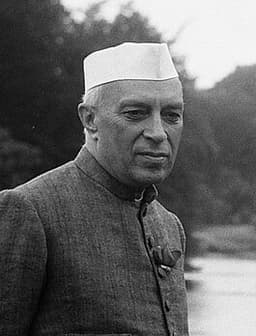
Jawaharlal Nehru
Politician · Modern
59.9Total

Mario Monti
Politician · Modern
56.1Total
Basic Information
Born
1889
1943
Died
1964
—
Era
Modern
Modern
Nationality
India
Italy
Occupation
Politician
Politician
Civilization
Indian
Western
Score Comparison
Military (10%)
10.0
49.9
Political (20%)
78.0
72.0
Influence (20%)
88.0
54.9
Legacy (20%)
40.0
45.0
Leadership (15%)
78.0
74.0
Strategy (15%)
35.0
41.9
TOTAL
59.9
56.1
Jawaharlal Nehru — Complete Timeline
1919 AD
Jallianwala Bagh Massacre ResponsePolitical Action◆ Major
Nehru, deeply affected by the Jallianwala Bagh massacre, joined the Indian independence movement. He became a key leader in the Indian National Congress, advocating for non-violent resistance against British rule.
Independence MovementIndian National CongressNon-violence
Impact: national
1929 AD
Election as Congress President (Lahore Session)Political Action◆ Major
Nehru was elected President of the Indian National Congress at its Lahore session, where he declared Purna Swaraj (complete independence) as the party's goal. This marked a shift from dominion status to full independence.
Indian National CongressIndependencePurna Swaraj
Impact: nationalprogressive
1942 AD
Quit India Movement LeadershipPolitical Action◆ Major
Nehru, alongside Gandhi, led the Quit India Movement, demanding an end to British rule. He was arrested and imprisoned for nearly three years, but the movement intensified pressure on Britain to leave India.
Quit IndiaCivil DisobedienceImprisonment
Impact: nationalprogressive
1947 AD
First Prime Minister of IndiaPolitical Action
Nehru became the first Prime Minister of independent India, delivering his 'Tryst with Destiny' speech. He led the nation through partition, integration of princely states, and the drafting of a secular, democratic constitution.
IndependencePrime MinisterConstitution
Impact: globalconstructive
1961 AD
Founding of the Non-Aligned MovementPolitical Action◆ Major
Nehru co-founded the Non-Aligned Movement with Tito, Nasser, and Sukarno, advocating for a third way during the Cold War. This positioned India as a leader of developing nations, promoting peace and decolonization.
Non-Aligned MovementCold WarForeign Policy
Impact: globalconstructive
Mario Monti — Complete Timeline
1994 AD
Appointed European Commissioner for CompetitionPolitical Action◆ Major
Monti served as European Commissioner for Competition under Jacques Santer, later becoming Commissioner for the Internal Market. He was known for antitrust actions against Microsoft and GE/Honeywell, shaping EU competition policy.
European UnionCompetition PolicyAntitrust
Impact: regionalconstructive
2011 AD
Appointed Prime Minister of ItalyPolitical Action◆ Major
Monti was appointed as a technocratic Prime Minister by President Napolitano, replacing Silvio Berlusconi during the European debt crisis. He formed a government of unelected experts to implement austerity measures and structural reforms.
Debt CrisisTechnocracyAusterity
Impact: national
2012 AD
Implemented Austerity Measures and ReformsReform◆ Major
Monti's government passed a series of austerity budgets, pension reforms, and labor market liberalization (Fornero reform) to reduce Italy's public debt and restore market confidence. These measures sparked protests and social unrest.
Economic ReformAusterityLabor Market
Impact: nationaldestructive
2013 AD
Resigned as Prime MinisterPolitical Action◆ Major
Monti resigned after the center-left coalition led by Pier Luigi Bersani withdrew support, following the 2013 general election where his centrist coalition performed poorly. He was succeeded by Enrico Letta.
Government CrisisElectionTransition
Impact: national
Expert Analysis
Origins
**Jawaharlal Nehru** (1889–1964) was born into a wealthy Kashmiri Brahmin family in Allahabad, India. His father, Motilal Nehru, was a prominent lawyer and early Indian National Congress leader. Nehru was educated at home by British tutors, then at Harrow and Trinity College, Cambridge, where he studied natural sciences. He later qualified as a barrister from Inner Temple, London. His formative years were marked by exposure to Western liberal thought and Indian nationalism, but he remained distant from the masses until he met Mahatma Gandhi in 1916.
**Mario Monti** (born 1943) was born in Varese, Italy, into a middle-class family. His father was a banker. Monti studied economics at Bocconi University in Milan, graduating in 1965, and later at Yale University under Nobel laureate James Tobin. He became a professor of economics at Bocconi and later served as a member of the European Commission from 1995 to 2004. His background was purely academic and technocratic, without any prior electoral experience before becoming prime minister.
Rise to Power
Nehru's political rise began after the Jallianwala Bagh massacre in 1919, which radicalized him. He joined the Indian National Congress and became a close associate of Gandhi. In 1929, he was elected Congress President at the Lahore session, where he declared Purna Swaraj (complete independence) as the party's goal. He led the Quit India Movement in 1942, which resulted in his imprisonment for nearly three years. His rise culminated in 1947 when he became India's first Prime Minister, delivering the iconic 'Tryst with Destiny' speech.
Monti's rise was unconventional. He was a respected economist and European Commissioner for Competition (1999–2004), known for blocking mergers and fining cartels. In 2011, during the European debt crisis, Italy's President Giorgio Napolitano appointed Monti as a technocratic Prime Minister to replace Silvio Berlusconi, who had lost credibility. Monti formed a government of unelected experts, with support from centrist parties. His rise was driven by crisis, not popular mandate.
Leadership & Governance
Nehru's leadership was democratic and visionary. He championed secularism, democracy, and non-alignment. As PM, he oversaw the integration of princely states, established a parliamentary system, and implemented the Five-Year Plans for economic development. He founded the Non-Aligned Movement in 1961 with Tito, Nasser, and Sukarno. However, his economic policies leaned towards socialism, with heavy state intervention, which some argue stifled growth. His leadership score is 78.0, reflecting his ability to unite a diverse nation.
Monti's leadership was technocratic and crisis-driven. He implemented austerity measures, including pension reforms (Fornero reform) and labor market liberalization, to reduce Italy's public debt. He also introduced a property tax and raised the retirement age. His approach was unpopular, leading to protests and his resignation after the 2013 election. His leadership score is 74.0, but his lack of political base limited his effectiveness. Monti's governance was efficient but lacked the transformative vision of Nehru.
Triumph & Tragedy
Nehru's greatest triumph was guiding India through its early years as a democratic republic, integrating over 500 princely states, and establishing a secular constitution. He also successfully navigated the 1962 Sino-Indian War, though it ended in defeat. His greatest tragedy was the 1962 war, which exposed India's military unpreparedness and damaged his reputation. Additionally, his socialist economic policies led to slow growth and corruption. Nehru's military score is 10.0, reflecting his neglect of defense.
Monti's triumph was stabilizing Italy's economy during the debt crisis, reducing the spread on Italian bonds, and passing structural reforms. His tragedy was the political fallout: his technocratic government lacked democratic legitimacy, and his austerity measures deepened the recession, leading to high unemployment. He failed to achieve lasting political reform, and his centrist coalition scored only 8% in the 2013 elections. Monti's influence score is 54.9, indicating limited long-term impact.
Character & Destiny
Nehru was an intellectual, a man of letters, and a democrat at heart. He was idealistic, often clashing with pragmatists like Sardar Patel. His decision to refer the Kashmir issue to the UN in 1948 is criticized as a strategic blunder. His character was shaped by his Western education and his deep bond with Gandhi. He believed in consensus and dialogue, but his indecisiveness during the 1962 war cost India dearly. His political score is 78.0, reflecting his skill in nation-building.
Monti was a technocrat, reserved and analytical. He was nicknamed 'Il Professore' for his academic demeanor. He lacked charisma and political instincts, which made him ineffective in building a lasting political movement. His destiny was tied to the crisis; once it abated, he was discarded. His strategy score is 41.9, reflecting his inability to navigate political dynamics. Both men were products of their times: Nehru a founding father, Monti a crisis manager.
Legacy
Nehru's legacy is immense: he shaped modern India's democratic institutions, secular ethos, and foreign policy of non-alignment. His influence score is 88.0, reflecting his global impact. He is remembered as the architect of modern India, though his economic policies are debated. The Nehru-Gandhi dynasty continues to dominate Indian politics.
Monti's legacy is more modest. He is remembered as the technocrat who saved Italy from default, but his reforms were partially reversed. His influence score is 54.9, limited to Italy's debt crisis. He did not found a political party or movement. His name is associated with austerity, which remains controversial.
Conclusion
Nehru had a far greater impact than Monti. With a total score of 59.9 vs Monti's 56.1, the gap is 3.8 points, but the difference in historical significance is vast. Nehru helped birth a nation of over a billion people, establishing democracy in a poor, diverse country. Monti managed a crisis in an established democracy. Nehru's political and influence scores (78.0 and 88.0) dwarf Monti's (72.0 and 54.9). While Monti was effective in a narrow technocratic role, Nehru's vision shaped the 20th century. The data supports Nehru as the more consequential figure.
Rankings
🥇
Jawaharlal NehruLeader
Mil: 10.0Pol: 78.0Inf: 88.0
59.9
🥈
Mario Monti
Mil: 49.9Pol: 72.0Inf: 54.9
56.1
+3.8 behind
How This Comparison Works
Algorithm
Each figure is scored on 6 dimensions (0—100 scale) based on structured historical data: Military (10%), Political (20%), Influence (20%), Legacy (20%), Leadership (15%), Strategy (15%). The weighted total produces the final ranking.
Data Sources
Scores are computed from structured sub-indicators in the database. Scale factors adjust for era (Ancient ×0.85, Modern ×1.0) and civilization size (Eastern ×1.05, Other ×0.80) to account for differences in population and military scale.
Maximum 3 Figures
Comparisons are limited to 2—3 figures to ensure readability and statistical meaningfulness.
Error Margins
±5 points per dimension — Sub-scores are derived from historical records with inherent uncertainty. Two figures within 5 points on a dimension should be considered roughly equivalent in that area.
Total Score Accuracy
±3 points overall — The weighted combination of 6 dimensions produces a total score with approximately ±3 points of uncertainty. Differences of less than 3 points are not statistically significant— the figures are effectively tied.
Known Limitations
- Historical records are incomplete and uneven across civilizations
- Figures from oral-tradition societies may be underrepresented
- Occupation labels can misclassify multi-role figures
- Scores measure capability and impact, not moral character
- Quantitative scoring is a comparison tool, not absolute truth
Capability Radar
Military (10%) — Battles & Warfare
Battles
26
29
Win Rate
28
29
Expansion
32
38
Political (20%) — Governance & Reform
Reform
85
65
Diplomacy
90
70
Economy
70
75
Influence (20%) — Cultural & Global Reach
Cultural
80
20
Global
85
50
Legacy (20%) — Historical Impact
Historical
85
40
Longevity
80
30
Leadership (15%) — Power & Stability
Tenure
85
30
Stability
75
55
Strategy (15%) — Tactics & Innovation
Strategy
35
36
Tactics
37
43
Reform
36
42
Similar Comparisons
Comments & Discussion
No comments yet. Be the first to share your thoughts!