Loading...
Jaswant Singh of Jodhpur vs Julius Caesar
Julius Caesar leads by 33.4 pts · 2 figures compared
…
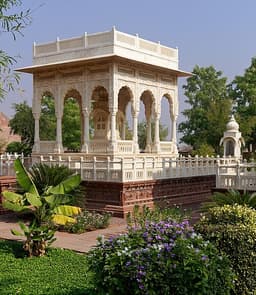
Jaswant Singh of Jodhpur
Emperor · Modern
49.4Total

Julius Caesar
General · Ancient
82.8Total
Basic Information
Born
1629
-100
Died
1678
-44
Era
Modern
Ancient
Nationality
India
Roman Republic
Occupation
Emperor
General
Civilization
Indian
Western
Score Comparison
Military (10%)
10.0
88.0
Political (20%)
61.3
78.0
Influence (20%)
52.5
85.0
Legacy (20%)
43.3
82.0
Leadership (15%)
67.0
80.0
Strategy (15%)
51.7
85.0
TOTAL
49.4
82.8
Jaswant Singh of Jodhpur — Complete Timeline
1658 AD
Battle of DharmatWar◆ Major
Jaswant Singh commanded the Rajput contingent for the Mughal prince Dara Shikoh against Aurangzeb at Dharmat. Aurangzeb's forces won, leading to Dara's downfall and Jaswant's temporary disgrace.
Mughal War of SuccessionBattle
Impact: regional
1659 AD
Battle of KhajwaWar◆ Major
Jaswant Singh fought for Aurangzeb against Dara Shikoh at Khajwa. His support helped Aurangzeb secure victory, and he was rewarded with the governorship of Gujarat.
Mughal War of SuccessionBattle
Impact: regional
1660 AD
Governor of GujaratPolitical Action
Jaswant Singh served as governor of Gujarat under Aurangzeb. He administered the province effectively but faced conflicts with Mughal officials, leading to his recall.
GovernorGujaratMughal Administration
Impact: regionalconstructive
1678 AD
Death in the Battle of JamrudWar◆ Major
Jaswant Singh died while leading a Mughal campaign against the Afghans at Jamrud. His death left Marwar without a strong ruler, leading to a succession crisis and Mughal intervention.
BattleDeathMarwar
Impact: regionaltragic
Julius Caesar — Complete Timeline
58 BC
Gallic WarsWar◆ Major
Caesar, as proconsul of Gaul, launched a series of campaigns that conquered all of Gaul (modern France, Belgium, and parts of Switzerland). He fought numerous battles, including against the Helvetii, the Belgae, and the Gallic chieftain Vercingetorix. The wars brought immense wealth and a loyal army to Caesar.
Gallic WarsConquestRoman Expansion
Impact: regional
49 BC
Crossing the RubiconPolitical Action◆ Major
Caesar led Legio XIII across the Rubicon River into Italy, defying the Roman Senate's order to disband his army. This act triggered a civil war against Pompey and the Optimates, ultimately leading to Caesar's dictatorship and the end of the Roman Republic.
Roman Civil WarEnd of RepublicPower Struggle
Impact: global
48 BC
Battle of PharsalusWar◆ Major
Caesar's outnumbered army defeated the larger forces of Pompey the Great at Pharsalus in Greece. Caesar's tactical use of a reserve line to counter Pompey's cavalry charge proved decisive. Pompey fled to Egypt, where he was assassinated, leaving Caesar as the undisputed master of the Roman world.
Roman Civil WarBattleDecisive Victory
Impact: regional
44 BC
Appointment as Dictator for LifePolitical Action◆ Major
The Roman Senate appointed Caesar dictator perpetuo (dictator for life), granting him unprecedented personal power. This move concentrated military, legislative, and judicial authority in one person, effectively ending the Roman Republic's traditional system of checks and balances and alarming many senators.
DictatorshipEnd of RepublicPower Consolidation
Impact: regionaldestructive
Assassination on the Ides of MarchPolitical Action◆ Major
A group of Roman senators, led by Marcus Junius Brutus and Gaius Cassius Longinus, stabbed Caesar to death at a meeting of the Senate in the Theatre of Pompey. The assassination was intended to restore the Republic, but instead triggered another civil war that led to the rise of the Roman Empire.
AssassinationRoman PoliticsEnd of Republic
Impact: globaldestructive
Expert Analysis
jaswant-singh-of-jodhpur-vs-julius-caesar
# The General and the Vassal: Caesar and Jaswant Singh at the Crossroads of Empire
On a January morning in 49 BCE, Julius Caesar stood at the banks of the Rubicon River, a small stream that marked the boundary between his province and Italy proper. To cross with his legions was an act of war against the Roman Republic. He hesitated, then uttered the famous words, “*Alea iacta est*”—the die is cast—and plunged into history. Five centuries later and thousands of miles east, another general, Jaswant Singh of Jodhpur, faced a different kind of crossing: a choice between loyalty to a Mughal prince he believed in and submission to the emperor who would become his master. He chose one, then the other, and in doing so, wrote a story of survival, not transformation. Why did one man reshape the world while the other merely endured it?
Origins
Caesar was born into the patrician Julian clan, a family of ancient lineage but modest political clout in the late Republic. His youth unfolded amid civil wars between Marius and Sulla, and he learned early that power was a knife’s edge. He was captured by pirates as a young man, laughed at their ransom demand, and later crucified them—a glimpse of the audacity that would define him. The Republic was decaying; its institutions were hollowed by corruption and ambition. Caesar absorbed this lesson: the old rules were dead, and a new order could be seized by the bold.
Jaswant Singh came from the Rathore dynasty of Marwar, a Rajput kingdom in the harsh deserts of Rajasthan. Born in 1629, he inherited a tradition of warrior honor and vassalage. His father had served the Mughal emperor Shah Jahan, and Jaswant was raised in a world where Rajput kings were both proud rulers and obedient servants of the Mughal throne. The Mughal Empire under Aurangzeb was expanding, centralizing, and demanding submission. Unlike Caesar, who saw a crumbling system ripe for conquest, Jaswant saw a system that demanded accommodation. His universe was one of oaths and obligations, not revolutions.
Rise to Power
Caesar’s path was a masterclass in calculated risk. He climbed the Roman political ladder—quaestor, aedile, praetor—then secured the governorship of Gaul in 58 BCE. Over eight years, he conquered the entire region, amassing wealth, a loyal army, and a reputation as Rome’s greatest general. His *Commentaries on the Gallic War* were not just history but propaganda, crafted to make him a legend in his own time. When the Senate ordered him to disband his army, he refused. The Rubicon crossing was the final gamble: he chose civil war over submission.
Jaswant Singh’s rise was more constrained. He became king of Marwar in 1638, but his power was always circumscribed by Mughal authority. In 1658, the Mughal succession war erupted between Dara Shikoh and Aurangzeb. Jaswant commanded the Rajput contingent for Dara at the Battle of Dharmat, but Aurangzeb’s forces crushed them. The score of 52.2 for military strategy reflects a commander who fought bravely but lost decisively. Then came the Battle of Khajwa in 1659: Jaswant switched sides, fighting for Aurangzeb against Dara. His support helped secure Aurangzeb’s victory, and he was rewarded with the governorship of Gujarat. But this was not a rise—it was a survival move. Where Caesar broke the system, Jaswant bent to it.
Leadership & Governance
Caesar’s rule as dictator was a whirlwind of reforms. He reorganized the calendar, granted citizenship to Gauls, initiated public works, and centralized authority. His military genius—scored at 88.0—was matched by a political vision that saw the Republic’s transformation into an empire. He pardoned former enemies, including Brutus, and attempted to build a coalition of elites and plebeians. But his leadership, scored at 82.0, was autocratic: he accepted the title “dictator for life,” and his political score of 78.0 reflects the resentment this bred. He governed as a conqueror, not a conciliator.
Jaswant Singh’s governance of Gujarat from 1660 was efficient but fraught. He administered the province effectively, but his score of 73.9 for leadership shows a man who managed within constraints, not one who redefined them. He faced conflict with Mughal officials and local nobles, and his efforts were always overshadowed by Aurangzeb’s suspicion. His political score of 60.7 reveals a vassal king whose authority was borrowed, not owned. Where Caesar built a new order, Jaswant maintained an old one—and barely.
Triumph & Tragedy
Caesar’s greatest moment was his triumph over Pompey at the Battle of Pharsalus in 48 BCE, where he defeated a larger army through tactical brilliance. He became master of the Roman world. His tragedy came on the Ides of March, 44 BCE, when senators stabbed him to death in the Curia of Pompey. He had centralized power but failed to secure loyalty; his assassination plunged Rome into another civil war, though his adopted heir, Octavian, would complete his work.
Jaswant Singh’s triumph was survival: he navigated the treacherous Mughal court, retained his throne, and even governed a province. His tragedy was his death in 1678 at the Battle of Jamrud, leading a Mughal campaign against the Afghans. He died fighting for the very empire that had subjugated his kingdom. His death left Marwar without a strong leader, and his legacy—scored at 58.1—faded into the footnotes of Mughal history. Where Caesar’s death sparked a revolution, Jaswant’s death ended a chapter.
Character & Destiny
Caesar was audacious, ruthless, and visionary. He saw the Republic’s death and chose to be its executioner. His personality—charismatic yet cold, generous yet calculating—drove him to gamble everything on a new world. His destiny was to be the bridge between Republic and Empire, a role he embraced with terrifying clarity.
Jaswant Singh was honorable, cautious, and trapped. He was a Rathore king who served a Mughal emperor, a warrior who fought for his master’s enemies and then for his master. His character—loyal to a fault, pragmatic to a weakness—reflected a world where independence was impossible. His destiny was to be a cog in a machine he could not break. The score disparity—Caesar’s military at 88.0 versus Jaswant’s at 52.2—is not just about skill but about context: one man commanded armies that conquered continents, the other commanded armies that served an empire.
Legacy
Caesar’s legacy is monumental: his name became synonymous with imperial power, his reforms shaped Western civilization, and his life inspired Shakespeare, Napoleon, and countless others. His score of 82.0 for legacy reflects a man who did not just change history—he became history. The Roman Empire, Christianity, and the Renaissance all trace threads back to him.
Jaswant Singh’s legacy is local and ambiguous. He is remembered in Rajasthan as a king who preserved Marwar’s honor under difficult circumstances, but his score of 58.1 shows a figure who did not transform his world. He is a footnote in the story of Aurangzeb’s reign, a Rajput prince who fought for a Mughal emperor and died in a distant battle. His legacy is one of duty, not destiny.
Conclusion
Caesar and Jaswant Singh both stood at crossroads, but their paths diverged because their worlds were different. Caesar lived in a crumbling Republic where a single man could seize the future. Jaswant lived in a stable empire where survival meant service. The die Caesar cast changed the world; the oath Jaswant swore bound him to it. Their stories remind us that history rewards not just brilliance but the moment in which it is exercised. One man became a legend; the other became a lesson. And in that difference lies the whole drama of human ambition, constraint, and chance.
Rankings
🥇
Julius CaesarLeader
Mil: 88.0Pol: 78.0Inf: 85.0
82.8
🥈
Jaswant Singh of Jodhpur
Mil: 10.0Pol: 61.3Inf: 52.5
49.4
+33.4 behind
How This Comparison Works
Algorithm
Each figure is scored on 6 dimensions (0—100 scale) based on structured historical data: Military (10%), Political (20%), Influence (20%), Legacy (20%), Leadership (15%), Strategy (15%). The weighted total produces the final ranking.
Data Sources
Scores are computed from structured sub-indicators in the database. Scale factors adjust for era (Ancient ×0.85, Modern ×1.0) and civilization size (Eastern ×1.05, Other ×0.80) to account for differences in population and military scale.
Maximum 3 Figures
Comparisons are limited to 2—3 figures to ensure readability and statistical meaningfulness.
Error Margins
±5 points per dimension — Sub-scores are derived from historical records with inherent uncertainty. Two figures within 5 points on a dimension should be considered roughly equivalent in that area.
Total Score Accuracy
±3 points overall — The weighted combination of 6 dimensions produces a total score with approximately ±3 points of uncertainty. Differences of less than 3 points are not statistically significant— the figures are effectively tied.
Known Limitations
- Historical records are incomplete and uneven across civilizations
- Figures from oral-tradition societies may be underrepresented
- Occupation labels can misclassify multi-role figures
- Scores measure capability and impact, not moral character
- Quantitative scoring is a comparison tool, not absolute truth
Capability Radar
Military (10%) — Battles & Warfare
Battles
45
95
Win Rate
40
92
Expansion
35
97
Political (20%) — Governance & Reform
Reform
30
90
Diplomacy
50
85
Economy
35
82
Influence (20%) — Cultural & Global Reach
Cultural
35
88
Global
20
94
Legacy (20%) — Historical Impact
Historical
40
95
Longevity
30
96
Leadership (15%) — Power & Stability
Tenure
40
75
Stability
30
60
Strategy (15%) — Tactics & Innovation
Strategy
45
94
Tactics
50
96
Reform
30
88
Similar Comparisons
Comments & Discussion
TheCrossingPoint6/17/2026
Caesar and Jaspant Singh both crossed rivers, but one remade the world while the other made a deal with it. Caesar crossing the Rubicon was a revolution in real-time—he shattered the Republic's taboo against a general keeping his army in Italy. Jaspant's crossing of the Luni River to submit to Shah Jahan was a survival tactic. Military historians treat the two as parallel because they involve oaths, but they're opposites: Caesar broke the law to change history; Jaspant kept peace to stay in it.
RiverSkeptic6/17/2026
The Rubicon is a three-mile stream you could wade through in summer. The Luni is a seasonal river in Rajasthan that goes dry six months of the year. I'm supposed to believe both generals faced "profound decisions" because they got their feet wet? Spare me the poetic symmetry. Caesar's choice was about constitutional crisis and civil war; Jaspant's was about court politics and keeping his zamindari. The comparison inflates Jaspant's significance to keep multicultural history books balanced. He's
反叛的校尉6/17/2026
说两人都是“跨越者”简直是对历史的降维打击。凯撒跨卢比孔河时,元老院已经宣布他是公敌,他面对的是整个罗马体系的反击。贾斯旺特•辛格呢?他跨过卢尼河去投降沙贾汗,回头又效忠了奥朗则布——一个为了活命的朝秦暮楚者也配与征服高卢的人并论?凯撒改写的是西方文明的宪法框架,贾斯旺特保全的不过是拉杰普特一个小邦的世袭领地。层次差了十个量级。
经典搬运工6/17/2026
说贾斯旺特•辛格与凯撒对比,就跟把地方戏和莎士比亚硬捆一起谈悲剧深度一样不靠谱。凯撒在《高卢战记》里写自己“来了,看见了,征服了”,这个“来见征”的三段式撑起了西方军事叙事的骨架。贾斯旺特辛格呢?他在1625年支持赫瓦贾起义反对沙贾汗,后来又转投沙贾汗,最后臣服奥朗则布。这不是命运的抉择,是一个土王的自我流放。把“运气好活下来”包装成“历史性跨越”,这比历史虚无主义还难堪。
德干老骑兵6/17/2026
我听了这个比较就想笑。凯撒的生涯里有过一次真正的赌博:在高卢遇到日耳曼人时,他下令朝自己军队里逃窜的罗马士兵挥舞军旗,把恐惧压回去,然后反冲锋。那是拿命换战局。贾斯旺特·辛格呢?162