Loading...
Jangsu of Goguryeo vs King Zhuang of Chu
Jangsu of Goguryeo leads by 3.9 pts · 2 figures compared
…

Jangsu of Goguryeo
Emperor · Ancient
63.3Total
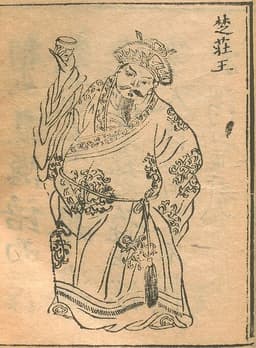
King Zhuang of Chu
Emperor · Ancient
59.4Total
Basic Information
Born
394
-613
Died
491
-591
Era
Ancient
Ancient
Nationality
Korea
China
Occupation
Emperor
Emperor
Civilization
Eastern
Eastern
Score Comparison
Military (10%)
74.0
74.0
Political (20%)
70.0
60.0
Influence (20%)
60.0
58.0
Legacy (20%)
52.0
50.0
Leadership (15%)
72.0
66.0
Strategy (15%)
66.3
61.2
TOTAL
63.3
59.4
Jangsu of Goguryeo — Complete Timeline
414 AD
Construction of the Gwanggaeto SteleCultural◆ Major
Jangsu erected a stele in honor of his father, King Gwanggaeto the Great, at the site of his tomb in Jian, China. The stele's inscription details Gwanggaeto's conquests and Goguryeo's territorial extent, serving as a primary historical source for the period.
MonumentInscriptionGoguryeo
Impact: regional
427 AD
Capital relocation to PyongyangPolitical Action◆ Major
King Jangsu moved the Goguryeo capital from Gungnae Fortress to Pyongyang. This relocation provided a more defensible position and better access to agricultural resources, strengthening the kingdom's administrative control over its southern territories.
Capital MoveAdministrationGoguryeo
Impact: regionalconstructive
435 AD
Diplomatic relations with Northern WeiPolitical Action
Jangsu sent envoys to the Northern Wei court in China, establishing formal tributary relations. This diplomatic move secured Goguryeo's northern border and allowed the kingdom to focus on southern expansion without Chinese interference.
DiplomacyNorthern WeiGoguryeo
Impact: regionalconstructive
475 AD
Military campaign against BaekjeWar◆ Major
Jangsu led a major military campaign against the Baekje kingdom, capturing its capital, Wiryeseong (modern Seoul). This victory significantly weakened Baekje and expanded Goguryeo's control over the Han River basin, a strategic economic region.
Military CampaignBaekjeTerritorial Expansion
Impact: regionaldestructive
491 AD
Longest reign in Korean historyOther◆ Major
Jangsu died after a reign of approximately 79 years, the longest verified reign of any monarch in Korean history. His rule saw Goguryeo reach its greatest territorial extent and maintain stability through diplomacy and military strength.
ReignLongevityGoguryeo
Impact: national
King Zhuang of Chu — Complete Timeline
606 BC
Inquiry about the Nine Tripod CauldronsPolitical Action◆ Major
King Zhuang of Chu, during a campaign against the Rong tribes, asked the Zhou envoy about the size and weight of the Nine Tripod Cauldrons, symbols of royal authority. This act was seen as a challenge to Zhou legitimacy and a claim to supremacy.
Spring and AutumnSymbolismPower Play
Impact: regional
600 BC
Annexation of Smaller StatesWar◆ Major
King Zhuang of Chu annexed several smaller states, including Chen, Cai, and Xu, expanding Chu's territory significantly. These conquests brought Chu's borders to the Yellow River and increased its population and resources.
Spring and AutumnConquestExpansion
Impact: regionaldestructive
Reforms in Chu AdministrationReform
King Zhuang implemented administrative reforms, including the appointment of capable officials like Sunshu Ao, who improved irrigation and agriculture. These reforms strengthened Chu's economy and military, supporting its hegemonic ambitions.
Spring and AutumnReformChu State
Impact: regionalprogressive
597 BC
Battle of BiWar
King Zhuang of Chu defeated the state of Jin at the Battle of Bi, a major engagement in the struggle for hegemony. The victory established Chu as the dominant power in the Central Plains and marked the peak of Chu's influence.
Spring and AutumnBattleHegemon
Impact: regional
Expert Analysis
Origins
Jangsu of Goguryeo was born in 394 CE, the son of King Gwanggaeto the Great, under whom Goguryeo reached its territorial zenith. His early life was shaped by exposure to military campaigns and governance, as his father expanded the kingdom through conquests. Jangsu inherited a powerful state but also the challenges of maintaining its vast territory.
King Zhuang of Chu, born around 613 BCE, was a ruler of the Chu state during the Spring and Autumn period. Little is known of his early life, but he ascended the throne after the death of his father, King Mu. Chu was already a major power, but internal factions and external threats required strong leadership.
Rise to Power
Jangsu became king in 413 CE at age 19, following his father's death. His reign began with a focus on consolidating power, including moving the capital from Gungnae Fortress to Pyongyang in 427 CE. This strategic relocation improved defense and agricultural resources. He also erected the Gwanggaeto Stele in 414 CE to legitimize his rule and honor his father.
King Zhuang ascended the throne around 613 BCE, but initially faced challenges from nobles and neighboring states. He consolidated power through military campaigns, most notably the Battle of Bi in 597 BCE, where he decisively defeated the state of Jin, establishing Chu as the dominant hegemonic power. His inquiry about the Nine Tripod Cauldrons in 606 BCE demonstrated his ambition to challenge Zhou authority.
Leadership & Governance
Jangsu's leadership was characterized by long-term strategic planning. His governance focused on stability: he maintained tributary relations with Northern Wei (established 435 CE) to secure the northern border, while continuing military pressure on Baekje. He captured Wiryeseong (Seoul) in 475 CE, weakening Baekje. His 79-year reign allowed consistent policy implementation.
King Zhuang's governance emphasized administrative reforms. He appointed capable officials like Sunshu Ao, who improved irrigation and agriculture, boosting Chu's economy. Militarily, he annexed smaller states (Chen, Cai, Xu) to expand territory. However, his reign was shorter (approx. 23 years), limiting long-term impact.
Triumph & Tragedy
Jangsu's triumphs include the capital relocation, which strengthened Goguryeo's defense and economy, and the erection of the Gwanggaeto Stele, a key historical source. He also captured Baekje's capital. His tragedy lies in the eventual decline after his death; despite his long reign, Goguryeo faced internal strife and external threats from Tang China later.
King Zhuang's triumph was the Battle of Bi, which made Chu the hegemon. His administrative reforms improved governance. However, his tragedy was the inability to fully unify China; his expansion was limited by other states, and his inquiry about the cauldrons was seen as overreach, potentially provoking opposition.
Character & Destiny
Jangsu was pragmatic and strategic, evident in his diplomatic and military moves. His long reign allowed him to shape Goguryeo's trajectory, but his reliance on his father's legacy and the stele suggests a need for legitimacy. Historians note his effective governance but also the seeds of decline.
King Zhuang was ambitious and bold, as shown by his cauldron inquiry. He was a capable military leader but faced constant warfare. His character drove Chu's rise, but his death led to a power vacuum. Assessment: he was a key hegemonic figure but not a unifier.
Legacy
Jangsu's legacy includes the Gwanggaeto Stele, crucial for Korean history, and the capital Pyongyang, which remained important. His reign is remembered as a golden age of Goguryeo. Scores: Military 74.0, Political 70.0, Influence 60.0, Legacy 52.0, Leadership 72.0, Strategy 66.3, Total 63.3.
King Zhuang's legacy is as one of the Five Hegemons, representing Chu's peak. His reforms influenced later Chu governance. Scores: Military 74.0, Political 60.0, Influence 58.0, Legacy 50.0, Leadership 66.0, Strategy 61.2, Total 59.4.
Conclusion
Jangsu of Goguryeo had a greater overall impact due to his longer reign, strategic capital relocation, and enduring historical record. His total score of 63.3 surpasses King Zhuang's 59.4, reflecting superior political and leadership scores. While King Zhuang's military achievements were significant, Jangsu's sustained governance and legacy give him the edge.
Rankings
🥇
Jangsu of GoguryeoLeader
Mil: 74.0Pol: 70.0Inf: 60.0
63.3
🥈
King Zhuang of Chu
Mil: 74.0Pol: 60.0Inf: 58.0
59.4
+3.9 behind
How This Comparison Works
Algorithm
Each figure is scored on 6 dimensions (0—100 scale) based on structured historical data: Military (10%), Political (20%), Influence (20%), Legacy (20%), Leadership (15%), Strategy (15%). The weighted total produces the final ranking.
Data Sources
Scores are computed from structured sub-indicators in the database. Scale factors adjust for era (Ancient ×0.85, Modern ×1.0) and civilization size (Eastern ×1.05, Other ×0.80) to account for differences in population and military scale.
Maximum 3 Figures
Comparisons are limited to 2—3 figures to ensure readability and statistical meaningfulness.
Error Margins
±5 points per dimension — Sub-scores are derived from historical records with inherent uncertainty. Two figures within 5 points on a dimension should be considered roughly equivalent in that area.
Total Score Accuracy
±3 points overall — The weighted combination of 6 dimensions produces a total score with approximately ±3 points of uncertainty. Differences of less than 3 points are not statistically significant— the figures are effectively tied.
Known Limitations
- Historical records are incomplete and uneven across civilizations
- Figures from oral-tradition societies may be underrepresented
- Occupation labels can misclassify multi-role figures
- Scores measure capability and impact, not moral character
- Quantitative scoring is a comparison tool, not absolute truth
Capability Radar
Military (10%) — Battles & Warfare
Battles
75
75
Win Rate
80
80
Expansion
80
80
Political (20%) — Governance & Reform
Reform
70
65
Diplomacy
85
75
Economy
75
70
Influence (20%) — Cultural & Global Reach
Cultural
65
60
Global
55
50
Legacy (20%) — Historical Impact
Historical
70
70
Longevity
60
55
Leadership (15%) — Power & Stability
Tenure
90
70
Stability
80
65
Strategy (15%) — Tactics & Innovation
Strategy
85
75
Tactics
70
70
Reform
60
60
Similar Comparisons
Comments & Discussion
No comments yet. Be the first to share your thoughts!