Loading...
Dangun Wanggeom vs King Zhuang of Chu
King Zhuang of Chu leads by 7.6 pts · 2 figures compared
…

Dangun Wanggeom
Emperor · Ancient
51.8Total
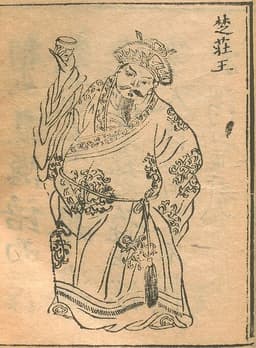
King Zhuang of Chu
Emperor · Ancient
59.4Total
Basic Information
Born
-2333
-613
Died
-2200
-591
Era
Ancient
Ancient
Nationality
Gojoseon
China
Occupation
Emperor
Emperor
Civilization
Eastern
Eastern
Score Comparison
Military (10%)
19.6
74.0
Political (20%)
26.4
60.0
Influence (20%)
58.3
58.0
Legacy (20%)
72.0
50.0
Leadership (15%)
48.4
66.0
Strategy (15%)
60.0
61.2
TOTAL
51.8
59.4
Dangun Wanggeom — Complete Timeline
2333 BC
Foundation of GojoseonPolitical Action
According to Korean legend, Dangun Wanggeom founded the first Korean kingdom, Gojoseon, at Asadal. He is said to have been born from a bear-woman and a heavenly prince, and his rule established Korean civilization.
FoundationLegendary OriginKorean Civilization
Impact: nationalconstructive
2320 BC
Introduction of Agriculture and CultureCultural
Dangun is traditionally said to have introduced agriculture, sericulture, and other cultural practices to the Korean people. These innovations supported the development of settled communities and economic stability.
AgricultureCultural DevelopmentGojoseon
Impact: nationalconstructive
2300 BC
Establishment of Code of LawsReform
Dangun is credited with instituting a code of laws and moral principles for the people of Gojoseon. These laws aimed to promote social order and harmony, forming the basis of early Korean governance.
Legal CodeGovernanceGojoseon
Impact: nationalconstructive
King Zhuang of Chu — Complete Timeline
606 BC
Inquiry about the Nine Tripod CauldronsPolitical Action◆ Major
King Zhuang of Chu, during a campaign against the Rong tribes, asked the Zhou envoy about the size and weight of the Nine Tripod Cauldrons, symbols of royal authority. This act was seen as a challenge to Zhou legitimacy and a claim to supremacy.
Spring and AutumnSymbolismPower Play
Impact: regional
600 BC
Annexation of Smaller StatesWar◆ Major
King Zhuang of Chu annexed several smaller states, including Chen, Cai, and Xu, expanding Chu's territory significantly. These conquests brought Chu's borders to the Yellow River and increased its population and resources.
Spring and AutumnConquestExpansion
Impact: regionaldestructive
Reforms in Chu AdministrationReform
King Zhuang implemented administrative reforms, including the appointment of capable officials like Sunshu Ao, who improved irrigation and agriculture. These reforms strengthened Chu's economy and military, supporting its hegemonic ambitions.
Spring and AutumnReformChu State
Impact: regionalprogressive
597 BC
Battle of BiWar
King Zhuang of Chu defeated the state of Jin at the Battle of Bi, a major engagement in the struggle for hegemony. The victory established Chu as the dominant power in the Central Plains and marked the peak of Chu's influence.
Spring and AutumnBattleHegemon
Impact: regional
Expert Analysis
Origins
Dangun Wanggeom, according to Korean legend, was born in 2333 BCE as the son of Hwanung, a heavenly prince, and a bear transformed into a woman. This mythic origin places him as the founder of Gojoseon, the first Korean kingdom. No contemporary records exist; the earliest account appears in the 13th-century "Samguk Yusa." In contrast, King Zhuang of Chu (died 591 BCE) was a historical figure, the ruler of the state of Chu during the Spring and Autumn period of China. He ascended the throne around 613 BCE, inheriting a powerful but turbulent state. His father, King Mu, had expanded Chu's territory, but internal strife marked Zhuang's early reign.
Rise to Power
Dangun's rise is purely legendary: he established Gojoseon at Asadal, introducing a code of laws, agriculture, and sericulture. These actions are credited with civilizing the Korean people, but no specific dates or events are verifiable. King Zhuang, by contrast, rose through political acumen and military force. Initially, he faced a rebellion from the noble Ruo'ao clan, which he crushed in 612 BCE. He then appointed capable ministers like Sunshu Ao, who reformed administration and irrigation. His turning point came at the Battle of Bi (597 BCE), where he decisively defeated the state of Jin, securing Chu's hegemony. This victory, against a numerically superior enemy, showcased his strategic skill.
Leadership & Governance
Dangun's governance is idealized: he is said to have ruled with moral principles, promoting harmony and agriculture. His political score of 26.4 reflects the lack of concrete reforms. King Zhuang, scoring 60.0 in politics, implemented substantive changes. He appointed Sunshu Ao to build the Shaopi irrigation system, boosting agricultural output. He also centralized power by suppressing noble factions and promoting merit-based appointments. His leadership style was pragmatic; he famously asked about the Nine Tripod Cauldrons (symbols of Zhou authority), indicating his ambition to challenge the central power. However, he ultimately respected the Zhou king, showing strategic restraint.
Triumph & Tragedy
Dangun's greatest success is the foundation of Gojoseon, which became the basis for Korean national identity. His legacy score of 72.0 reflects this enduring symbolic importance. His failure lies in his lack of historical evidence; his story is myth, not fact, limiting his measurable impact. King Zhuang's triumphs include the Battle of Bi (military score 74.0) and the annexation of states like Chen, Cai, and Xu, expanding Chu's territory. His tragedy was that his hegemony did not last; after his death, Chu declined, eventually being conquered by Qin in 223 BCE. He also failed to fully integrate conquered territories, leading to instability.
Character & Destiny
Dangun is portrayed as a wise, benevolent founder, a semi-divine figure whose character is more archetype than individual. His destiny is tied to Korea's origin myth. King Zhuang, in contrast, is a complex historical figure. He was known for his patience and decisiveness, as illustrated by the story of the "three-year silence"—he pretended to be inactive for three years to identify loyal ministers. His strategic score of 61.2 shows his calculated approach. However, his ambition sometimes overreached, as when he asked about the cauldrons, risking conflict with the Zhou. Historical assessments note his consolidation of Chu power but also his reliance on personal leadership.
Legacy
Dangun's legacy is immense in Korea: he is celebrated as the founder of the nation, with a shrine and a holiday (Gaecheonjeol). His influence score of 58.3 comes from his cultural impact, not historical fact. King Zhuang's legacy is more concrete: he is remembered as one of the Five Hegemons, a model of a strong ruler. His military and administrative reforms influenced later Chinese states. However, his legacy score of 50.0 is lower because his achievements were overshadowed by later dynasties. The score gap of 7.6 points favors King Zhuang overall, but Dangun's cultural legacy is unique.
Conclusion
Who had greater impact? King Zhuang of Chu, with a total score of 59.4 versus Dangun's 51.8, had a more demonstrable and measurable impact on history. His military victories, political reforms, and territorial expansions are documented and influenced the trajectory of Chinese civilization. Dangun's impact is purely symbolic and cultural, important for Korean identity but lacking historical substance. While Dangun's legacy endures in mythology, King Zhuang's actions shaped the power dynamics of ancient China. Therefore, King Zhuang of Chu was greater in terms of historical impact.
Rankings
🥇
King Zhuang of ChuLeader
Mil: 74.0Pol: 60.0Inf: 58.0
59.4
🥈
Dangun Wanggeom
Mil: 19.6Pol: 26.4Inf: 58.3
51.8
+7.6 behind
How This Comparison Works
Algorithm
Each figure is scored on 6 dimensions (0—100 scale) based on structured historical data: Military (10%), Political (20%), Influence (20%), Legacy (20%), Leadership (15%), Strategy (15%). The weighted total produces the final ranking.
Data Sources
Scores are computed from structured sub-indicators in the database. Scale factors adjust for era (Ancient ×0.85, Modern ×1.0) and civilization size (Eastern ×1.05, Other ×0.80) to account for differences in population and military scale.
Maximum 3 Figures
Comparisons are limited to 2—3 figures to ensure readability and statistical meaningfulness.
Error Margins
±5 points per dimension — Sub-scores are derived from historical records with inherent uncertainty. Two figures within 5 points on a dimension should be considered roughly equivalent in that area.
Total Score Accuracy
±3 points overall — The weighted combination of 6 dimensions produces a total score with approximately ±3 points of uncertainty. Differences of less than 3 points are not statistically significant— the figures are effectively tied.
Known Limitations
- Historical records are incomplete and uneven across civilizations
- Figures from oral-tradition societies may be underrepresented
- Occupation labels can misclassify multi-role figures
- Scores measure capability and impact, not moral character
- Quantitative scoring is a comparison tool, not absolute truth
Capability Radar
Military (10%) — Battles & Warfare
Battles
32
75
Win Rate
36
80
Expansion
38
80
Political (20%) — Governance & Reform
Reform
20
65
Diplomacy
20
75
Economy
20
70
Influence (20%) — Cultural & Global Reach
Cultural
70
60
Global
40
50
Legacy (20%) — Historical Impact
Historical
70
70
Longevity
80
55
Leadership (15%) — Power & Stability
Tenure
30
70
Stability
30
65
Strategy (15%) — Tactics & Innovation
Strategy
44
75
Tactics
44
70
Reform
47
60
Similar Comparisons
Comments & Discussion
No comments yet. Be the first to share your thoughts!