Loading...
Cheng Tang of Shang vs King Zhuang of Chu
King Zhuang of Chu leads by 1.1 pts · 2 figures compared
…
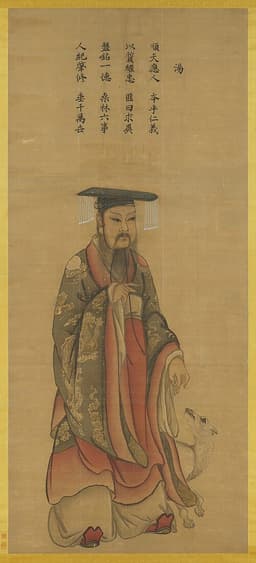
Cheng Tang of Shang
Emperor · Ancient
58.3Total
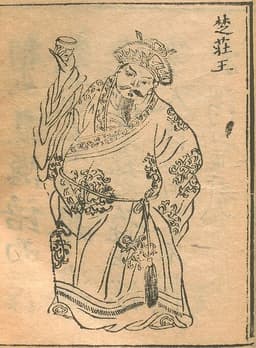
King Zhuang of Chu
Emperor · Ancient
59.4Total
Basic Information
Born
-1675
-613
Died
-1646
-591
Era
Ancient
Ancient
Nationality
Shang China
China
Occupation
Emperor
Emperor
Civilization
Eastern
Eastern
Score Comparison
Military (10%)
63.3
74.0
Political (20%)
68.0
60.0
Influence (20%)
57.2
58.0
Legacy (20%)
58.0
50.0
Leadership (15%)
53.2
66.0
Strategy (15%)
50.0
61.2
TOTAL
58.3
59.4
Cheng Tang of Shang — Complete Timeline
1675 BC
Battle of MingtiaoWar
Cheng Tang led a coalition of tribes against the Xia dynasty at Mingtiao. The Shang forces defeated the Xia army, leading to the overthrow of King Jie. This battle established Cheng Tang as the first king of the Shang dynasty.
Founding BattleDynastic ChangeXia-Shang Transition
Impact: regional
Establishment of Shang Capital at BoPolitical Action◆ Major
After defeating the Xia, Cheng Tang established his capital at Bo (near modern-day Shangqiu, Henan). This city became the political and ritual center of the early Shang state, consolidating control over the Central Plains.
Capital FoundationState Building
Impact: regionalconstructive
Promulgation of Tang's EdictPolitical Action◆ Major
Cheng Tang issued a public edict justifying the overthrow of the Xia dynasty, accusing King Jie of moral depravity and misrule. This document established the concept of the 'Mandate of Heaven' as a justification for dynastic change.
Political PhilosophyMandate of HeavenPropaganda
Impact: regionalconstructive
1660 BC
Institution of Ritual ReformsCultural
Cheng Tang implemented new state rituals and sacrifices to Shangdi (the high god) and ancestral spirits. These reforms standardized religious practices across the Shang domain, reinforcing the king's role as chief priest.
ReligionRitualState Religion
Impact: regionalconstructive
King Zhuang of Chu — Complete Timeline
606 BC
Inquiry about the Nine Tripod CauldronsPolitical Action◆ Major
King Zhuang of Chu, during a campaign against the Rong tribes, asked the Zhou envoy about the size and weight of the Nine Tripod Cauldrons, symbols of royal authority. This act was seen as a challenge to Zhou legitimacy and a claim to supremacy.
Spring and AutumnSymbolismPower Play
Impact: regional
600 BC
Annexation of Smaller StatesWar◆ Major
King Zhuang of Chu annexed several smaller states, including Chen, Cai, and Xu, expanding Chu's territory significantly. These conquests brought Chu's borders to the Yellow River and increased its population and resources.
Spring and AutumnConquestExpansion
Impact: regionaldestructive
Reforms in Chu AdministrationReform
King Zhuang implemented administrative reforms, including the appointment of capable officials like Sunshu Ao, who improved irrigation and agriculture. These reforms strengthened Chu's economy and military, supporting its hegemonic ambitions.
Spring and AutumnReformChu State
Impact: regionalprogressive
597 BC
Battle of BiWar
King Zhuang of Chu defeated the state of Jin at the Battle of Bi, a major engagement in the struggle for hegemony. The victory established Chu as the dominant power in the Central Plains and marked the peak of Chu's influence.
Spring and AutumnBattleHegemon
Impact: regional
Expert Analysis
Origins
Cheng Tang, born around 1675 BCE, was the leader of the Shang tribe, a vassal state under the Xia dynasty. His early life is shrouded in legend, but historical records suggest he was a capable administrator and military leader. He inherited a well-organized tribe with a strong military tradition. Tang's formative experiences included observing the decadence of the Xia court and building alliances with disaffected tribes.
King Zhuang of Chu, born around 613 BCE, was a member of the Mi clan, rulers of the southern state of Chu. He ascended the throne at a young age, initially appearing weak and indulgent. His early years were marked by internal strife and a lack of focus on governance. However, with guidance from ministers like Sunshu Ao, he transformed into a decisive ruler.
Rise to Power
Cheng Tang's rise culminated in the Battle of Mingtiao (c. 1600 BCE). He led a coalition of eleven tribes against King Jie of Xia, the last ruler of the Xia dynasty. The Shang forces decisively defeated the Xia army, leading to Jie's exile and the establishment of the Shang dynasty. Tang's success was built on careful planning, propaganda (the 'Tang's Edict' justifying rebellion), and military strategy. He scored 63.3 in military, reflecting his effective use of coalition warfare.
King Zhuang of Chu rose to prominence through military campaigns and diplomatic maneuvering. His major turning point was the Battle of Bi (597 BCE), where Chu defeated the powerful state of Jin, securing hegemony over the Central Plains. Zhuang also famously inquired about the Nine Tripod Cauldrons, symbols of Zhou authority, signaling his ambition. His military score of 74.0 reflects his aggressive expansion and tactical victories.
Leadership & Governance
Cheng Tang's governance focused on consolidating power through ritual reforms. He instituted new state rituals to Shangdi and ancestral spirits, standardizing religious practice to unify his realm. He also established the capital at Bo, a political and ritual center. Tang's leadership score of 53.2 is modest; his governance was effective but not transformative in administrative terms.
King Zhuang of Chu implemented administrative reforms, appointing capable officials like Sunshu Ao, who improved irrigation and agriculture. He annexed smaller states (Chen, Cai, Xu), expanding Chu's territory significantly. Zhuang's leadership score of 66.0 reflects his ability to delegate and modernize Chu's bureaucracy. However, his political score (60.0) is lower than Tang's (68.0) because his expansionist policies sometimes alienated allies.
Triumph & Tragedy
Cheng Tang's greatest triumph was overthrowing the Xia dynasty and founding the Shang, which lasted over 500 years. His edict set a precedent for justifying rebellion against corrupt rulers. However, his tragedy lies in the lack of detailed records; much of his legacy is mythologized. He scored 58.0 in legacy.
King Zhuang's triumphs include the Battle of Bi and the annexation of multiple states, making Chu the dominant power. His tragedy is that Chu's hegemony was short-lived; after his death, Chu declined and was eventually conquered by Qin. His legacy score of 50.0 reflects this ephemeral impact.
Character & Destiny
Cheng Tang is portrayed as a virtuous ruler who overthrew a tyrant, embodying the 'Mandate of Heaven' concept. His character was decisive and principled, but his destiny was to found a dynasty that would later be overthrown by the Zhou using the same justification.
King Zhuang is often depicted as a cunning and ambitious leader. His early pretense of weakness to identify loyal ministers shows strategic patience. His destiny was to elevate Chu to its peak, but his overreach in questioning the Zhou symbols may have sown seeds of future conflict.
Legacy
Cheng Tang's legacy is foundational: the Shang dynasty established early Chinese civilization, advanced bronze technology, and developed writing. The concept of the Mandate of Heaven, first articulated in Tang's edict, influenced Chinese political thought for millennia. His influence score of 57.2 reflects this deep ideological impact.
King Zhuang's legacy is more regional. He is remembered as one of the Five Hegemons, a model of strong leadership. His administrative reforms and territorial expansions shaped Chu's identity, but his influence waned after the Zhou period. His influence score is 58.0, slightly higher than Tang's, but his total score (59.4) is only 1.1 points higher.
Conclusion
While King Zhuang of Chu scores higher overall (59.4 vs 58.3), Cheng Tang's impact on Chinese civilization is more profound. Tang's establishment of the Shang dynasty and the Mandate of Heaven concept created a political and ideological framework that endured for centuries. Zhuang's achievements, though impressive in military and administrative terms, were more ephemeral and regionally confined. Therefore, Cheng Tang had greater long-term impact, despite the numerical score gap.
Rankings
🥇
King Zhuang of ChuLeader
Mil: 74.0Pol: 60.0Inf: 58.0
59.4
🥈
Cheng Tang of Shang
Mil: 63.3Pol: 68.0Inf: 57.2
58.3
+1.1 behind
How This Comparison Works
Algorithm
Each figure is scored on 6 dimensions (0—100 scale) based on structured historical data: Military (10%), Political (20%), Influence (20%), Legacy (20%), Leadership (15%), Strategy (15%). The weighted total produces the final ranking.
Data Sources
Scores are computed from structured sub-indicators in the database. Scale factors adjust for era (Ancient ×0.85, Modern ×1.0) and civilization size (Eastern ×1.05, Other ×0.80) to account for differences in population and military scale.
Maximum 3 Figures
Comparisons are limited to 2—3 figures to ensure readability and statistical meaningfulness.
Error Margins
±5 points per dimension — Sub-scores are derived from historical records with inherent uncertainty. Two figures within 5 points on a dimension should be considered roughly equivalent in that area.
Total Score Accuracy
±3 points overall — The weighted combination of 6 dimensions produces a total score with approximately ±3 points of uncertainty. Differences of less than 3 points are not statistically significant— the figures are effectively tied.
Known Limitations
- Historical records are incomplete and uneven across civilizations
- Figures from oral-tradition societies may be underrepresented
- Occupation labels can misclassify multi-role figures
- Scores measure capability and impact, not moral character
- Quantitative scoring is a comparison tool, not absolute truth
Capability Radar
Military (10%) — Battles & Warfare
Battles
60
75
Win Rate
70
80
Expansion
60
80
Political (20%) — Governance & Reform
Reform
60
65
Diplomacy
55
75
Economy
50
70
Influence (20%) — Cultural & Global Reach
Cultural
55
60
Global
50
50
Legacy (20%) — Historical Impact
Historical
70
70
Longevity
65
55
Leadership (15%) — Power & Stability
Tenure
65
70
Stability
55
65
Strategy (15%) — Tactics & Innovation
Strategy
65
75
Tactics
55
70
Reform
50
60
Similar Comparisons
Comments & Discussion
No comments yet. Be the first to share your thoughts!