Loading...
Al-Mamun vs James IV of Scotland
James IV of Scotland leads by 1.7 pts · 2 figures compared
…
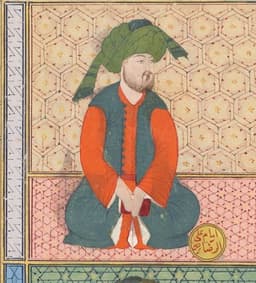
Al-Mamun
Emperor · Medieval
56.6Total
James IV of Scotland
Emperor · Medieval
58.3Total
Basic Information
Born
786
1473
Died
833
1513
Era
Medieval
Medieval
Nationality
Abbasid Caliphate
Scotland
Occupation
Emperor
Emperor
Civilization
Middle Eastern
Western
Score Comparison
Military (10%)
30.0
50.0
Political (20%)
70.3
60.0
Influence (20%)
40.0
59.0
Legacy (20%)
65.0
48.3
Leadership (15%)
77.2
72.0
Strategy (15%)
52.5
66.3
TOTAL
56.6
58.3
Al-Mamun — Complete Timeline
813 AD
Victory in the Abbasid Civil WarWar◆ Major
Al-Mamun defeated his brother Al-Amin in a civil war over succession, culminating in the siege of Baghdad. Al-Amin was killed, and Al-Mamun became the sole caliph, but the conflict devastated the city and weakened the caliphate's authority.
Civil WarSuccessionBaghdad
Impact: regionaldestructive
830 AD
Military Campaigns Against the Byzantine EmpireWar
Al-Mamun led multiple campaigns into Byzantine territory, capturing several fortresses including Loulon. These campaigns, though not decisive, secured the eastern frontier and demonstrated Abbasid military capability.
Byzantine WarsMilitary CampaignFrontier
Impact: regional
Foundation of the House of WisdomCultural
Al-Mamun established the Bayt al-Hikma (House of Wisdom) in Baghdad as an academy and library. It became the leading center for translation, research, and scholarship, attracting scholars from diverse backgrounds and advancing mathematics, astronomy, and medicine.
House of WisdomScienceTranslation
Impact: globalconstructive
Astronomical Observations at ShammasiyyaInvention◆ Major
Al-Mamun ordered the construction of an observatory in the Shammasiyya district of Baghdad. Astronomers there made precise measurements of the solar year and planetary movements, improving the accuracy of astronomical tables and influencing later Islamic and European science.
AstronomyObservatoryScience
Impact: globalconstructive
833 AD
Introduction of the Mihna (Inquisition)Political Action◆ Major
Al-Mamun instituted the Mihna, a religious inquisition that required scholars to affirm the doctrine of the createdness of the Quran. This policy persecuted traditionalist scholars like Ahmad ibn Hanbal and created deep divisions within Islamic society.
MihnaReligious PersecutionTheology
Impact: regionaldestructive
James IV of Scotland — Complete Timeline
1495 AD
Foundation of the University of AberdeenCultural
James IV issued a papal bull to found the University of Aberdeen, Scotland's third university. The university was established to promote education and learning in the north of Scotland, reflecting James's interest in Renaissance humanism.
FoundationEducationRenaissance
Impact: nationalconstructive
1496 AD
Support for Perkin WarbeckPolitical Action
James IV supported the pretender Perkin Warbeck, who claimed to be Richard of Shrewsbury, by invading northern England. The invasion failed, and James later abandoned Warbeck, but the episode strained relations with England.
InvasionPretenderAnglo-Scottish Relations
Impact: regionaldestructive
1503 AD
Marriage to Margaret TudorPolitical Action◆ Major
James IV married Margaret Tudor, daughter of Henry VII of England, under the Treaty of Perpetual Peace. The marriage united the Scottish and English royal houses and later gave James VI a claim to the English throne.
MarriageTreatyUnion of Crowns
Impact: nationalconstructive
1511 AD
Construction of the Great MichaelOther
James IV commissioned the construction of the Great Michael, the largest warship in Europe at the time. The ship was built at Newhaven and cost a fortune, but it was sold to France after Flodden and never saw significant action.
ShipbuildingNavyExpense
Impact: national
1513 AD
Battle of FloddenWar
James IV led a Scottish invasion of England but was defeated at the Battle of Flodden Field near Branxton, Northumberland. James IV was killed along with many Scottish nobles, making it one of Scotland's worst military defeats.
BattleDefeatDeath
Impact: nationaltragic
Expert Analysis
Origins
Al-Mamun (born 786 CE) was the son of Harun al-Rashid, the fifth Abbasid caliph, and a Persian concubine. He grew up in Baghdad, the glittering capital of the Abbasid Caliphate, and received a thorough education in Islamic sciences, philosophy, and astronomy. His half-brother Al-Amin, born of a pure Arab mother, was the designated heir, but Al-Mamun's intellectual inclinations set him apart early.
James IV of Scotland (born 1473) was the son of James III and Margaret of Denmark. He was raised in Stirling Castle and educated by humanist scholars, reflecting the Renaissance spirit. He spoke several languages, including Latin, French, and Gaelic, and had interests in medicine and alchemy. His father's unpopular reign and death in battle shaped James's early determination to rule effectively.
Rise to Power
Al-Mamun's path to power was violent. After Harun al-Rashid's death in 809, Al-Amin became caliph, but tensions escalated into civil war. Al-Mamun, based in Khurasan, built a loyal army and marched on Baghdad. In 813, after a siege, Baghdad fell; Al-Amin was captured and executed. Al-Mamun became caliph, but his victory was marred by the destruction of the capital and lingering resentment. He initially remained in Merv, not Baghdad, until 819.
James IV ascended peacefully in 1488 after his father's death at the Battle of Sauchieburn, where James was nominally a figurehead for rebels. Despite his involvement, he reportedly regretted his father's death and did penance. He quickly consolidated power, subduing rebellious nobles and asserting royal authority. He also married Margaret Tudor in 1503, securing the Treaty of Perpetual Peace with England—a diplomatic triumph.
Leadership & Governance
Al-Mamun's governance blended intellectual patronage with religious orthodoxy. He founded the House of Wisdom (Bayt al-Hikma) in Baghdad, where scholars translated Greek, Persian, and Indian works into Arabic. This institution became a beacon of learning, fostering advances in mathematics, astronomy, medicine, and philosophy. However, his imposition of the Mihna (829 CE), an inquisition forcing scholars to accept the Mu'tazilite doctrine of the Quran's createdness, alienated traditionalists and damaged his legacy. Politically, he scored 70.3, reflecting his effective centralization but flawed religious policy.
James IV governed as a Renaissance monarch. He improved royal finances, administered justice personally, and promoted education. In 1495, he founded the University of Aberdeen, Scotland's third university. He also built a formidable navy, commissioning the Great Michael (commissioned 1506), the largest warship in Europe. His leadership score of 72.0 reflects his competence, but his governance was marred by overambition in foreign policy, particularly his support for the pretender Perkin Warbeck (1496-1497) and the ultimately disastrous invasion of England in 1513.
Triumph & Tragedy
Al-Mamun's greatest triumph was the House of Wisdom, which catalyzed the Islamic Golden Age. His patronage of astronomy led to improved measurements of the solar year and the Earth's circumference. His military score of 30.0 is low, but his campaigns against Byzantium, though not decisive, secured border fortresses like Loulon. His tragedy was the Mihna: it tarnished his image as a tolerant patron and provoked resistance that outlasted his reign. The civil war also left Baghdad damaged and divided.
James IV's triumph was the cultural and economic flourishing of Scotland during his reign. He sponsored literature, built palaces, and maintained a court that rivaled those of Europe. His marriage to Margaret Tudor brought a long peace with England (broken only by his own invasion). His tragedy was the Battle of Flodden (1513), where he led a poorly coordinated invasion, was defeated, and killed along with many nobles. His military score of 50.0 reflects this disastrous end. The Great Michael, his pride, was sold to France after his death.
Character & Destiny
Al-Mamun was intellectually curious and confident, but also ruthless and dogmatic. His support for rational theology (Mu'tazilism) and the Mihna reflected a desire to control religious discourse, but it backfired. His character—brilliant but inflexible—shaped his legacy: he advanced knowledge but alienated the orthodox. Historians note that his reign marked a high point in Abbasid power, but the seeds of decline were sown by his policies.
James IV was charismatic, energetic, and cultured. He was known for his justice and accessibility, but also for his rashness in war. His decision to invade England in 1513, despite a truce, was driven by chivalric ideals and the Auld Alliance with France. His fatal charge at Flodden—leading from the front—was typical of his personal bravery but poor strategy. His character ensured a dramatic end that cut short a promising reign.
Legacy
Al-Mamun's legacy is immense in the history of science and philosophy. The House of Wisdom inspired later translations and works that influenced Europe via Al-Andalus. His political score of 70.3 and influence score of 40.0 reflect his impact on Islamic civilization, though his religious policies are criticized. He is remembered as a scholar-caliph, but the Mihna remains a cautionary tale.
James IV's legacy is mixed. He is remembered as a Renaissance king who modernized Scotland, but his death at Flodden overshadowed his achievements. The university he founded still exists, and his patronage of the arts is noted. However, his political score of 60.0 and legacy score of 48.3 indicate a reign cut short. Scotland's subsequent minority rule and instability can be traced to his death.
Conclusion
While James IV scored slightly higher overall (58.3 vs 56.6), Al-Mamun's impact on global intellectual history is more profound. The House of Wisdom was a catalyst for the transmission of knowledge that eventually sparked the European Renaissance. James IV's achievements were significant but largely confined to Scotland and ended in catastrophe. Al-Mamun's patronage of learning, despite his flaws, had a lasting influence on world civilization. Therefore, Al-Mamun had greater long-term impact.
Rankings
🥇
James IV of ScotlandLeader
Mil: 50.0Pol: 60.0Inf: 59.0
58.3
🥈
Al-Mamun
Mil: 30.0Pol: 70.3Inf: 40.0
56.6
+1.7 behind
How This Comparison Works
Algorithm
Each figure is scored on 6 dimensions (0—100 scale) based on structured historical data: Military (10%), Political (20%), Influence (20%), Legacy (20%), Leadership (15%), Strategy (15%). The weighted total produces the final ranking.
Data Sources
Scores are computed from structured sub-indicators in the database. Scale factors adjust for era (Ancient ×0.85, Modern ×1.0) and civilization size (Eastern ×1.05, Other ×0.80) to account for differences in population and military scale.
Maximum 3 Figures
Comparisons are limited to 2—3 figures to ensure readability and statistical meaningfulness.
Error Margins
±5 points per dimension — Sub-scores are derived from historical records with inherent uncertainty. Two figures within 5 points on a dimension should be considered roughly equivalent in that area.
Total Score Accuracy
±3 points overall — The weighted combination of 6 dimensions produces a total score with approximately ±3 points of uncertainty. Differences of less than 3 points are not statistically significant— the figures are effectively tied.
Known Limitations
- Historical records are incomplete and uneven across civilizations
- Figures from oral-tradition societies may be underrepresented
- Occupation labels can misclassify multi-role figures
- Scores measure capability and impact, not moral character
- Quantitative scoring is a comparison tool, not absolute truth
Capability Radar
Military (10%) — Battles & Warfare
Battles
45
55
Win Rate
50
40
Expansion
35
45
Political (20%) — Governance & Reform
Reform
85
75
Diplomacy
75
65
Economy
80
70
Influence (20%) — Cultural & Global Reach
Cultural
90
55
Global
75
30
Legacy (20%) — Historical Impact
Historical
85
50
Longevity
80
40
Leadership (15%) — Power & Stability
Tenure
70
70
Stability
65
60
Strategy (15%) — Tactics & Innovation
Strategy
60
50
Tactics
55
60
Reform
40
65
Similar Comparisons
Comments & Discussion
No comments yet. Be the first to share your thoughts!