Loading...
Iyasu I vs Julius Caesar
Julius Caesar leads by 21.4 pts · 2 figures compared
…
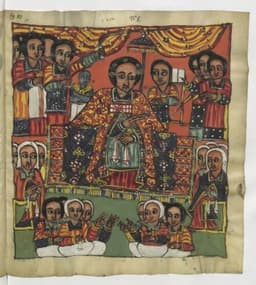
Iyasu I
Emperor · Modern
61.4Total

Julius Caesar
General · Ancient
82.8Total
Basic Information
Born
1654
-100
Died
1706
-44
Era
Modern
Ancient
Nationality
Ethiopia
Roman Republic
Occupation
Emperor
General
Civilization
Other
Western
Score Comparison
Military (10%)
50.0
88.0
Political (20%)
78.0
78.0
Influence (20%)
59.0
85.0
Legacy (20%)
52.0
82.0
Leadership (15%)
78.0
80.0
Strategy (15%)
52.5
85.0
TOTAL
61.4
82.8
Iyasu I — Complete Timeline
1685 AD
Campaign against the OromoWar
Iyasu I led a military campaign against the Oromo peoples who were raiding into Ethiopian territory. His forces achieved several victories, pushing back the Oromo and securing the borders of the empire for a period.
Military CampaignBorder SecurityOromo
Impact: regional
1690 AD
Administrative Reforms of Iyasu IReform◆ Major
Iyasu I implemented comprehensive administrative reforms to centralize imperial authority. He reorganized the provincial governance system, standardized tax collection, and strengthened the role of the central bureaucracy, reducing the power of regional nobles.
CentralizationTaxationBureaucracy
Impact: nationalconstructive
Construction of the Church of Debre Berhan SelassieCultural
Iyasu I commissioned the construction of the Church of Debre Berhan Selassie in Gondar. The church became renowned for its intricate ceiling paintings of angels and is considered a masterpiece of Ethiopian religious art.
ChurchArtArchitecture
Impact: nationalconstructive
Julius Caesar — Complete Timeline
58 BC
Gallic WarsWar◆ Major
Caesar, as proconsul of Gaul, launched a series of campaigns that conquered all of Gaul (modern France, Belgium, and parts of Switzerland). He fought numerous battles, including against the Helvetii, the Belgae, and the Gallic chieftain Vercingetorix. The wars brought immense wealth and a loyal army to Caesar.
Gallic WarsConquestRoman Expansion
Impact: regional
49 BC
Crossing the RubiconPolitical Action◆ Major
Caesar led Legio XIII across the Rubicon River into Italy, defying the Roman Senate's order to disband his army. This act triggered a civil war against Pompey and the Optimates, ultimately leading to Caesar's dictatorship and the end of the Roman Republic.
Roman Civil WarEnd of RepublicPower Struggle
Impact: global
48 BC
Battle of PharsalusWar◆ Major
Caesar's outnumbered army defeated the larger forces of Pompey the Great at Pharsalus in Greece. Caesar's tactical use of a reserve line to counter Pompey's cavalry charge proved decisive. Pompey fled to Egypt, where he was assassinated, leaving Caesar as the undisputed master of the Roman world.
Roman Civil WarBattleDecisive Victory
Impact: regional
44 BC
Appointment as Dictator for LifePolitical Action◆ Major
The Roman Senate appointed Caesar dictator perpetuo (dictator for life), granting him unprecedented personal power. This move concentrated military, legislative, and judicial authority in one person, effectively ending the Roman Republic's traditional system of checks and balances and alarming many senators.
DictatorshipEnd of RepublicPower Consolidation
Impact: regionaldestructive
Assassination on the Ides of MarchPolitical Action◆ Major
A group of Roman senators, led by Marcus Junius Brutus and Gaius Cassius Longinus, stabbed Caesar to death at a meeting of the Senate in the Theatre of Pompey. The assassination was intended to restore the Republic, but instead triggered another civil war that led to the rise of the Roman Empire.
AssassinationRoman PoliticsEnd of Republic
Impact: globaldestructive
Expert Analysis
iyasu-i-vs-julius-caesar
# The General and the Reformer: Two Paths to Power in Ancient Rome and Gondarine Ethiopia
On a January morning in 49 BCE, Julius Caesar stood at the Rubicon River, a small stream that marked the boundary of his legal command. To cross with his army was treason, a declaration of civil war against the Roman Senate. He hesitated, then uttered a phrase that would echo through millennia: *“Alea iacta est”*—the die is cast. Half a world away and seventeen centuries later, another ruler faced his own Rubicon. Iyasu I, Emperor of Ethiopia, had already crossed his—not a river of conquest, but a sea of parchment. While Caesar’s crossing shattered a republic, Iyasu’s reforms sought to save an empire from within. What drove these two men, both brilliant in their own right, to such different destinies?
Origins
Julius Caesar was born into the patrician Julian clan, but the family’s glory had faded. Rome of the 1st century BCE was a cauldron of ambition—civil wars, populist uprisings, and a Senate that clung to crumbling traditions. Young Caesar learned early that in this world, survival meant audacity. He was captured by pirates as a young man, laughed at their ransom demand, and later crucified them—after first having their throats cut out of mercy. It was a preview of the man: ruthless, calculating, and utterly convinced of his own star.
Iyasu I entered the world in 1654, in a very different kind of empire. Gondarine Ethiopia was a Christian kingdom perched on the highlands of Africa, surrounded by Muslim sultanates and Oromo pastoralists. His father, Emperor Yohannes I, had spent his reign fighting religious schisms and external threats. Iyasu grew up in the shadow of Gondar’s stone castles—built by his predecessors—and in the pages of the Kebra Nagast, the epic that traced Ethiopian kingship back to Solomon and Sheba. Where Caesar’s Rome was a restless sea, Iyasu’s Ethiopia was a mountain fortress: isolated, ancient, and deeply pious.
Rise to Power
Caesar’s path was a ladder of political alliances and military commands. He served as quaestor in Spain, then forged the First Triumvirate with Pompey and Crassus—a backroom deal that made him consul in 59 BCE. But his true springboard was Gaul. Between 58 and 50 BCE, he conquered a territory larger than Italy, winning victories at Alesia and against the Helvetii. The Gallic Wars made him the richest man in Rome and gave him a loyal army that worshipped him. When the Senate demanded he disband his legions, Caesar refused—and marched on Rome.
Iyasu’s ascent was quieter, but no less decisive. He became emperor in 1682, inheriting a realm bleeding from Oromo raids and administrative decay. Unlike Caesar, he did not need to conquer a foreign land to prove himself; his battlefield was the court. In 1685, he led a campaign against the Oromo, but his greatest victory came not from swords but from scrolls. In 1690, he launched comprehensive administrative reforms, reorganizing provinces and centralizing authority. He also commissioned the Church of Debre Berhan Selassie in Gondar, whose ceiling is still painted with the faces of angels—a testament to a ruler who believed power flowed from God, not from legions.
Leadership & Governance
Caesar governed as a military genius who understood that politics was war by other means. As dictator, he reformed the calendar (creating the Julian calendar still used today), granted citizenship to provincials, and launched public works to employ the poor. But his rule rested on one pillar: the army. He paid his soldiers handsomely, promoted talent over birth, and never forgot a favor or an enemy. His political score of 78 reflects a man who could manipulate the Senate but never trusted it—and it never trusted him.
Iyasu ruled as a reformer-priest-king. His military score of 41.5 shows he was no Caesar on the battlefield, but his leadership score of 82.4 reveals a different strength: he governed through consensus and piety. He reorganized tax collection to reduce corruption, settled disputes between monastic factions, and presented himself as a Solomon-like judge. Where Caesar centralized power through fear, Iyasu did so through legitimacy—his authority was sacred, not secular. The Church of Debre Berhan Selassie was not just a building; it was a statement that the emperor’s throne was an altar.
Triumph & Tragedy
Caesar’s triumph was Gaul and the crossing of the Rubicon—moments that reshaped the Western world. His tragedy was the Ides of March, 44 BCE, when sixty senators stabbed him to death in the Senate chamber. He had ignored the warnings of his wife and a soothsayer, believing his luck would hold. It didn’t. His death plunged Rome into another civil war, but his legacy—the Empire—survived.
Iyasu’s triumph was the peace he brought to Ethiopia. The Oromo raids diminished, the treasury stabilized, and Gondar flourished as a cultural capital. But his tragedy came in 1706, when his own son Tekle Haymanot—backed by courtiers resentful of reform—forced him from the throne. Iyasu fled to an island monastery on Lake Tana, where he was later murdered, possibly by his son’s agents. Like Caesar, he was killed by those closest to him. But where Caesar’s death opened an imperial age, Iyasu’s death closed one: after him, Gondarine Ethiopia spiraled into decline.
Character & Destiny
Caesar was a gambler. He staked everything on his own genius, and when the dice came up, he won—until they didn’t. His personality was a blend of charm and cold calculation; he could weep over a fallen enemy while ordering the massacre of a Gallic tribe. He believed in fate, but he made his own.
Iyasu was a builder. He believed in order, tradition, and the slow work of reform. His personality was introspective, even melancholic—the chronicles describe him as a man who prayed often and brooded on justice. He did not gamble; he consolidated. But in a world where power was personal and violent, his cautious nature left him vulnerable to palace intrigue. Caesar died because he was too bold; Iyasu died because he was not bold enough.
Legacy
Caesar’s legacy is the Roman Empire and, through it, the shape of Western civilization. His name became a title—Kaiser, Tsar—and his writings, the *Commentaries*, are still studied in military academies. He is remembered as a man who bent history to his will.
Iyasu’s legacy is quieter but no less profound. The Church of Debre Berhan Selassie still stands, its angels gazing down on worshippers. His administrative reforms influenced Ethiopian governance for generations. Yet his story is little known outside Ethiopia—a reminder that history’s spotlight falls unevenly. He is remembered as a saintly king who tried to save a kingdom that was already fading.
Conclusion
Standing at their respective crossroads, Caesar and Iyasu chose different paths. One crossed a river and changed the world; the other built a church and tried to preserve one. Both were murdered by those they trusted. But perhaps the deepest difference is this: Caesar’s story is about ambition unleashed, while Iyasu’s is about duty restrained. In the end, the die is cast for every ruler—but not every hand throws it with the same force.
Rankings
🥇
Julius CaesarLeader
Mil: 88.0Pol: 78.0Inf: 85.0
82.8
🥈
Iyasu I
Mil: 50.0Pol: 78.0Inf: 59.0
61.4
+21.4 behind
How This Comparison Works
Algorithm
Each figure is scored on 6 dimensions (0—100 scale) based on structured historical data: Military (10%), Political (20%), Influence (20%), Legacy (20%), Leadership (15%), Strategy (15%). The weighted total produces the final ranking.
Data Sources
Scores are computed from structured sub-indicators in the database. Scale factors adjust for era (Ancient ×0.85, Modern ×1.0) and civilization size (Eastern ×1.05, Other ×0.80) to account for differences in population and military scale.
Maximum 3 Figures
Comparisons are limited to 2—3 figures to ensure readability and statistical meaningfulness.
Error Margins
±5 points per dimension — Sub-scores are derived from historical records with inherent uncertainty. Two figures within 5 points on a dimension should be considered roughly equivalent in that area.
Total Score Accuracy
±3 points overall — The weighted combination of 6 dimensions produces a total score with approximately ±3 points of uncertainty. Differences of less than 3 points are not statistically significant— the figures are effectively tied.
Known Limitations
- Historical records are incomplete and uneven across civilizations
- Figures from oral-tradition societies may be underrepresented
- Occupation labels can misclassify multi-role figures
- Scores measure capability and impact, not moral character
- Quantitative scoring is a comparison tool, not absolute truth
Capability Radar
Military (10%) — Battles & Warfare
Battles
55
95
Win Rate
60
92
Expansion
45
97
Political (20%) — Governance & Reform
Reform
80
90
Diplomacy
65
85
Economy
70
82
Influence (20%) — Cultural & Global Reach
Cultural
55
88
Global
40
94
Legacy (20%) — Historical Impact
Historical
60
95
Longevity
50
96
Leadership (15%) — Power & Stability
Tenure
70
75
Stability
60
60
Strategy (15%) — Tactics & Innovation
Strategy
55
94
Tactics
50
96
Reform
65
88
Similar Comparisons
Comments & Discussion
No comments yet. Be the first to share your thoughts!