Loading...
Iwakura Tomomi vs Radovan Karadzic
Iwakura Tomomi leads by 11.4 pts · 2 figures compared
…
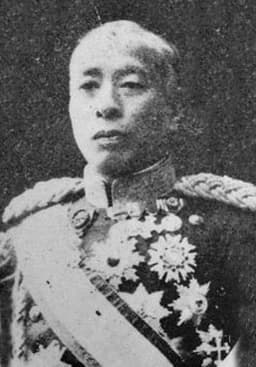
Iwakura Tomomi
Politician · Modern
52.0Total
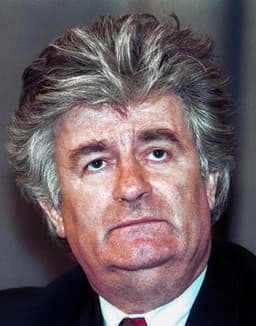
Radovan Karadzic
Politician · Modern
40.6Total
Basic Information
Born
1825
1945
Died
1883
—
Era
Modern
Modern
Nationality
Japan
Bosnia
Occupation
Politician
Politician
Civilization
Eastern
Western
Score Comparison
Military (10%)
10.4
14.9
Political (20%)
59.3
25.0
Influence (20%)
58.3
50.2
Legacy (20%)
52.0
38.3
Leadership (15%)
72.0
51.9
Strategy (15%)
37.1
54.8
TOTAL
52.0
40.6
Iwakura Tomomi — Complete Timeline
1868 AD
Role in the Meiji RestorationPolitical Action◆ Major
Iwakura Tomomi was a key court noble who supported the imperial restoration. He helped coordinate the overthrow of the Tokugawa shogunate and the establishment of the Meiji government, serving as a bridge between the court and the samurai rebels.
Meiji RestorationPolitical change
Impact: nationalconstructive
1871 AD
Leadership of the Iwakura MissionPolitical Action
Iwakura Tomomi led the Iwakura Mission, a diplomatic tour of the United States and Europe. The mission studied Western political, economic, and military systems, providing crucial knowledge for Japan's modernization.
DiplomacyModernization
Impact: nationalconstructive
1880 AD
Suppression of the Freedom and People's Rights MovementPolitical Action
Iwakura Tomomi supported the suppression of the Freedom and People's Rights Movement, which demanded democratic reforms. He believed in gradual reform under imperial authority, leading to the arrest of activists and restrictions on political speech.
Political repressionDemocracy
Impact: nationaldestructive
1881 AD
Drafting of the Meiji ConstitutionPolitical Action◆ Major
Iwakura Tomomi chaired the committee that drafted the Meiji Constitution. He advocated for a strong imperial system with limited parliamentary powers, influencing the final document that established Japan's modern government.
ConstitutionGovernment
Impact: nationalconstructive
Radovan Karadzic — Complete Timeline
1990 AD
Founding of the Serb Democratic Party (SDS)Political Action◆ Major
Karadžić co-founded the Serb Democratic Party (SDS) in Bosnia and Herzegovina in 1990. The party advocated for the unification of Bosnian Serb territories with Serbia and played a key role in the Bosnian War, promoting ethnic separation and conflict.
Political PartyNationalismBosnian War
Impact: regionaldestructive
1992 AD
Siege of SarajevoWar◆ Major
As leader of the Bosnian Serbs, Karad
SiegeWar CrimesSarajevo
Impact: regionaldestructive
1995 AD
Srebrenica GenocideWar◆ Major
Karadžić was found responsible for the Srebrenica genocide in July 1995, where Bosnian Serb forces killed over 8,000 Bosniak men and boys. The massacre was the worst atrocity in Europe since World War II and led to his indictment for genocide.
GenocideSrebrenicaWar Crimes
Impact: globaldestructive
2008 AD
Arrest and Extradition to The HaguePolitical Action◆ Major
Karadžić was arrested in Belgrade on July 21, 2008, after 13 years as a fugitive. He had been living under the alias Dragan Dabić, working as a New Age healer. He was extradited to the ICTY in The Hague to face trial for war crimes.
ArrestFugitiveICTY
Impact: global
2016 AD
Conviction for Genocide by ICTYPolitical Action◆ Major
Radovan Karad
War CrimesGenocideICTY
Impact: globaldestructive
Expert Analysis
Origins
Iwakura Tomomi (1825-1883) was born into a lower-ranking court noble family in Kyoto, Japan. His early life was steeped in the traditions of the imperial court, but he was exposed to the political turmoil surrounding the arrival of Commodore Perry in 1853. He studied Confucian classics and was influenced by the growing movement to restore imperial rule. Radovan Karadzic (1945-) was born in Petnjica, Montenegro, then part of Yugoslavia. He studied medicine at the University of Sarajevo, becoming a psychiatrist. His early career was in medicine, but he entered politics in the late 1980s as nationalism surged in Yugoslavia. Karadzic co-founded the Serb Democratic Party (SDS) in 1990, advocating for Bosnian Serb interests.
Rise to Power
Iwakura rose to prominence as a court noble supporting the imperial restoration. He was a key figure in the 1868 Meiji Restoration, which ended the Tokugawa shogunate. He served as a vice-chairman of the Council of State and led the Iwakura Mission (1871-1873), a diplomatic tour of the US and Europe to study Western institutions. This mission was a turning point, as it shaped Japan's modernization. Karadzic's rise came during the breakup of Yugoslavia. In 1992, he became the president of the self-proclaimed Republika Srpska, leading Bosnian Serb forces during the Bosnian War. His political power was based on ethnic nationalism and military control.
Leadership & Governance
Iwakura's leadership style was cautious and pragmatic. He chaired the committee drafting the Meiji Constitution (1889), advocating for a strong imperial system with limited parliamentary powers. He supported gradual reform, suppressing the Freedom and People's Rights Movement to maintain stability. In contrast, Karadzic's governance was authoritarian and ethnocentric. He ordered the siege of Sarajevo (1992-1996), a brutal campaign of shelling and sniping that killed over 10,000 civilians. He also orchestrated the Srebrenica genocide (1995), where over 8,000 Bosniak men and boys were killed. Karadzic's leadership was marked by war crimes and ethnic cleansing.
Triumph & Tragedy
Iwakura's greatest success was the Iwakura Mission, which brought back knowledge that helped Japan modernize rapidly. He also played a key role in drafting the Meiji Constitution, establishing a framework for Japan's imperial system. However, his suppression of democratic movements limited political freedoms. Karadzic's achievements are overshadowed by his crimes. He successfully led the Bosnian Serb war effort, but his legacy is defined by the Srebrenica genocide and his conviction for genocide and crimes against humanity by the ICTY in 2016. His prosecution was a triumph for international justice.
Character & Destiny
Iwakura was known for his diplomatic skill and patience. He believed in gradual change and loyalty to the emperor. His character shaped Japan's path to modernization without revolution. Karadzic was charismatic but ruthless, using ethnic nationalism to mobilize support. His destiny was to become a fugitive for 13 years before capture. His conviction sealed his fate as a war criminal.
Legacy
Iwakura's legacy is positive: he helped transform Japan into a modern industrial power. The Meiji Constitution endured until 1947, and his mission's reports influenced policy. His total score is 52.0, with political 59.3 and leadership 72.0. Karadzic's legacy is negative: he is remembered as a genocidal leader. His actions led to the establishment of the ICTY and strengthened international humanitarian law. His total score is 40.6, with influence 50.2 and leadership 51.9. The score gap of 11.4 points reflects their differing impacts.
Conclusion
Iwakura Tomomi had a greater impact on history, as his work shaped a nation's modernization and stability. Karadzic's influence was destructive and ultimately led to his conviction. While both were political leaders, Iwakura's legacy of reform and institution-building surpasses Karadzic's legacy of war and genocide. The data supports this: Iwakura scores higher in political, leadership, and total metrics. Thus, Iwakura Tomomi is the more significant historical figure.
Rankings
🥇
Iwakura TomomiLeader
Mil: 10.4Pol: 59.3Inf: 58.3
52.0
🥈
Radovan Karadzic
Mil: 14.9Pol: 25.0Inf: 50.2
40.6
+11.4 behind
How This Comparison Works
Algorithm
Each figure is scored on 6 dimensions (0—100 scale) based on structured historical data: Military (10%), Political (20%), Influence (20%), Legacy (20%), Leadership (15%), Strategy (15%). The weighted total produces the final ranking.
Data Sources
Scores are computed from structured sub-indicators in the database. Scale factors adjust for era (Ancient ×0.85, Modern ×1.0) and civilization size (Eastern ×1.05, Other ×0.80) to account for differences in population and military scale.
Maximum 3 Figures
Comparisons are limited to 2—3 figures to ensure readability and statistical meaningfulness.
Error Margins
±5 points per dimension — Sub-scores are derived from historical records with inherent uncertainty. Two figures within 5 points on a dimension should be considered roughly equivalent in that area.
Total Score Accuracy
±3 points overall — The weighted combination of 6 dimensions produces a total score with approximately ±3 points of uncertainty. Differences of less than 3 points are not statistically significant— the figures are effectively tied.
Known Limitations
- Historical records are incomplete and uneven across civilizations
- Figures from oral-tradition societies may be underrepresented
- Occupation labels can misclassify multi-role figures
- Scores measure capability and impact, not moral character
- Quantitative scoring is a comparison tool, not absolute truth
Capability Radar
Military (10%) — Battles & Warfare
Battles
15
20
Win Rate
17
15
Expansion
23
15
Political (20%) — Governance & Reform
Reform
75
10
Diplomacy
80
20
Economy
55
10
Influence (20%) — Cultural & Global Reach
Cultural
50
15
Global
60
25
Legacy (20%) — Historical Impact
Historical
70
30
Longevity
65
10
Leadership (15%) — Power & Stability
Tenure
60
40
Stability
65
5
Strategy (15%) — Tactics & Innovation
Strategy
20
20
Tactics
27
25
Reform
27
10
Similar Comparisons
Comments & Discussion
No comments yet. Be the first to share your thoughts!