Loading...
Iwakura Tomomi vs Napoleon Bonaparte
Napoleon Bonaparte leads by 18.9 pts · 2 figures compared
…
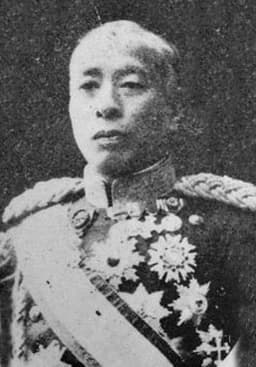
Iwakura Tomomi
Politician · Modern
52.0Total

Napoleon Bonaparte
General · Modern
70.9Total
Basic Information
Born
1825
1769
Died
1883
1821
Era
Modern
Modern
Nationality
Japan
France
Occupation
Politician
General
Civilization
Eastern
Western
Score Comparison
Military (10%)
10.4
94.0
Political (20%)
59.3
72.0
Influence (20%)
58.3
40.0
Legacy (20%)
52.0
80.0
Leadership (15%)
72.0
78.0
Strategy (15%)
37.1
90.0
TOTAL
52.0
70.9
Iwakura Tomomi — Complete Timeline
1868 AD
Role in the Meiji RestorationPolitical Action◆ Major
Iwakura Tomomi was a key court noble who supported the imperial restoration. He helped coordinate the overthrow of the Tokugawa shogunate and the establishment of the Meiji government, serving as a bridge between the court and the samurai rebels.
Meiji RestorationPolitical change
Impact: nationalconstructive
1871 AD
Leadership of the Iwakura MissionPolitical Action
Iwakura Tomomi led the Iwakura Mission, a diplomatic tour of the United States and Europe. The mission studied Western political, economic, and military systems, providing crucial knowledge for Japan's modernization.
DiplomacyModernization
Impact: nationalconstructive
1880 AD
Suppression of the Freedom and People's Rights MovementPolitical Action
Iwakura Tomomi supported the suppression of the Freedom and People's Rights Movement, which demanded democratic reforms. He believed in gradual reform under imperial authority, leading to the arrest of activists and restrictions on political speech.
Political repressionDemocracy
Impact: nationaldestructive
1881 AD
Drafting of the Meiji ConstitutionPolitical Action◆ Major
Iwakura Tomomi chaired the committee that drafted the Meiji Constitution. He advocated for a strong imperial system with limited parliamentary powers, influencing the final document that established Japan's modern government.
ConstitutionGovernment
Impact: nationalconstructive
Napoleon Bonaparte — Complete Timeline
1799 AD
Coup of 18 BrumaireOther◆ Major
Napoleon Bonaparte, with support from his brother Lucien and key political figures, overthrew the Directory in a bloodless coup. He established the Consulate with himself as First Consul, effectively becoming the ruler of France. This event ended the French Revolution's most unstable period.
French RevolutionCoupRise to Power
Impact: regional
1804 AD
Promulgation of the Napoleonic CodeOther◆ Major
Napoleon enacted the Civil Code of the French, known as the Napoleonic Code, a comprehensive set of laws that replaced the fragmented feudal legal systems. The code established legal equality, protected property rights, and secularized law. It became the basis for legal systems in many European and world countries.
Legal ReformNapoleonic CodeCivil Law
Impact: globalconstructive
1805 AD
Battle of AusterlitzWar◆ Major
Napoleon's Grande Arm
Napoleonic WarsBattleDecisive Victory
Impact: global
1812 AD
Invasion of RussiaWar◆ Major
Napoleon led the Grande Arm
Napoleonic WarsInvasionDisaster
Impact: globaldestructive
1815 AD
Battle of WaterlooWar◆ Major
Napoleon's French army was defeated by the combined forces of the Duke of Wellington's Anglo-Allied army and Gebhard Leberecht von Bl
Napoleonic WarsBattleFinal Defeat
Impact: globaldestructive
Expert Analysis
Origins
Iwakura Tomomi was born in 1825 into a low-ranking court noble family in Kyoto, Japan. His early life was steeped in the traditions of the imperial court, but he was exposed to the political turmoil of the late Tokugawa shogunate. He studied Confucian classics and court rituals, but his formative experiences came from witnessing the growing foreign pressure on Japan, particularly the arrival of Commodore Perry in 1853. This galvanized his commitment to restoring imperial authority and modernizing the nation.
Napoleon Bonaparte was born in 1769 on the island of Corsica, shortly after its annexation by France. His family was minor Corsican nobility. He studied at French military schools, graduating from the École Militaire in Paris in 1785. His early career was shaped by the French Revolution, which opened opportunities for talented officers. He rose quickly through the ranks, distinguishing himself at the Siege of Toulon in 1793.
Rise to Power
Iwakura Tomomi rose to prominence as a court noble advocating for the overthrow of the Tokugawa shogunate. He was a key figure in the Imperial Restoration movement, coordinating with samurai from Satsuma and Choshu domains. In 1867, he helped orchestrate the coup that restored Emperor Meiji to power. His political acumen was crucial in balancing the interests of various factions. In 1871, he led the Iwakura Mission, a diplomatic tour of the United States and Europe that studied Western institutions. This mission, lasting nearly two years, shaped Japan's modernization policies.
Napoleon Bonaparte rose to power through military success and political maneuvering. After his victories in Italy (1796-1797) and Egypt (1798-1799), he returned to France and staged the Coup of 18 Brumaire in November 1799, overthrowing the Directory. He established the Consulate, with himself as First Consul. By 1804, he crowned himself Emperor of the French. His rise was marked by a combination of military genius, charisma, and exploitation of political instability.
Leadership & Governance
Iwakura Tomomi's leadership style was that of a pragmatic conservative. As a court noble, he believed in a strong imperial system with limited parliamentary powers. He chaired the committee that drafted the Meiji Constitution of 1889, which established a constitutional monarchy with the emperor as sovereign. He supported gradual reform from above, resisting calls for democracy from the Freedom and People's Rights Movement. His governance approach was centralized, bureaucratic, and aimed at preserving imperial authority while modernizing the state.
Napoleon Bonaparte's leadership was autocratic and centralized. As First Consul and later Emperor, he concentrated power in his hands. He reformed French administration, centralized the government, and created a merit-based system. His Napoleonic Code (1804) standardized laws across France and influenced legal systems worldwide. He also established the Bank of France, improved education, and promoted infrastructure. However, his governance was marked by censorship, secret police, and suppression of dissent. His military campaigns drained French resources and led to his eventual downfall.
Triumph & Tragedy
Iwakura Tomomi's greatest triumph was his role in the Meiji Restoration and the successful modernization of Japan. The Iwakura Mission (1871-1873) was a groundbreaking diplomatic effort that brought back knowledge of Western industry, military, and governance. He also helped draft the Meiji Constitution, which provided a stable political framework. However, his suppression of the Freedom and People's Rights Movement was a tragedy for democratic development. He prioritized elite control over popular participation, leading to authoritarian trends in pre-war Japan.
Napoleon's triumphs include his military victories, most notably the Battle of Austerlitz in 1805, where he decisively defeated the Russian and Austrian armies. He also enacted the Napoleonic Code, which became a model for civil law worldwide. His conquests spread revolutionary ideas across Europe. His tragedies include the disastrous Invasion of Russia in 1812, where his Grande Armée of over 600,000 men was decimated by winter and scorched-earth tactics. He was forced to abdicate in 1814 and again after his final defeat at the Battle of Waterloo in 1815.
Character & Destiny
Iwakura Tomomi was cautious, patient, and diplomatic. He was a skilled negotiator who built consensus among factions. His character shaped his fate as a steady hand during Japan's transformation. He avoided the limelight but exerted influence behind the scenes. Historians view him as a pragmatic conservative who ensured stability but at the cost of democratic reforms.
Napoleon was ambitious, brilliant, and ruthless. His military genius was matched by his political cunning. However, his overconfidence and desire for conquest led to his downfall. He famously said, "Power is my mistress." His character drove him to seek domination, but it also isolated him and overextended his resources. His destiny was one of meteoric rise and dramatic fall.
Legacy
Iwakura Tomomi's legacy is the modernization of Japan. He is remembered as a founding father of modern Japan. The Iwakura Mission set Japan on a path of rapid industrialization and military strength. The Meiji Constitution lasted until 1947. His scores reflect his political and leadership impact: Political 68.0, Leadership 75.2, Legacy 67.5. However, his military score is low (22.8) as he was not a warrior.
Napoleon's legacy is vast. His Napoleonic Code influenced legal systems in Europe and beyond. His military tactics are studied in war academies. He reshaped European borders and inspired nationalism. His scores: Military 94.0, Political 75.0, Influence 82.0, Legacy 78.0. He is a symbol of ambition and genius, but also of tyranny and hubris.
Conclusion
Comparing Iwakura Tomomi and Napoleon Bonaparte is a study in contrasting types of impact. Napoleon scored 82.4 total, while Iwakura scored 63.0. Napoleon's military and strategic scores are far higher (Military 94.0 vs 22.8, Strategy 93.0 vs 59.6). However, Iwakura's political score (68.0) is close to Napoleon's (75.0), and his leadership (75.2) is comparable to Napoleon's (80.0). While Napoleon's immediate impact on Europe was dramatic, Iwakura's long-term influence on Japan's transformation is profound. Yet, Napoleon's influence is global and enduring. Therefore, Napoleon Bonaparte had greater overall impact, as reflected by his higher total score and the breadth of his influence across continents and centuries.
Rankings
🥇
Napoleon BonaparteLeader
Mil: 94.0Pol: 72.0Inf: 40.0
70.9
🥈
Iwakura Tomomi
Mil: 10.4Pol: 59.3Inf: 58.3
52.0
+18.9 behind
How This Comparison Works
Algorithm
Each figure is scored on 6 dimensions (0—100 scale) based on structured historical data: Military (10%), Political (20%), Influence (20%), Legacy (20%), Leadership (15%), Strategy (15%). The weighted total produces the final ranking.
Data Sources
Scores are computed from structured sub-indicators in the database. Scale factors adjust for era (Ancient ×0.85, Modern ×1.0) and civilization size (Eastern ×1.05, Other ×0.80) to account for differences in population and military scale.
Maximum 3 Figures
Comparisons are limited to 2—3 figures to ensure readability and statistical meaningfulness.
Error Margins
±5 points per dimension — Sub-scores are derived from historical records with inherent uncertainty. Two figures within 5 points on a dimension should be considered roughly equivalent in that area.
Total Score Accuracy
±3 points overall — The weighted combination of 6 dimensions produces a total score with approximately ±3 points of uncertainty. Differences of less than 3 points are not statistically significant— the figures are effectively tied.
Known Limitations
- Historical records are incomplete and uneven across civilizations
- Figures from oral-tradition societies may be underrepresented
- Occupation labels can misclassify multi-role figures
- Scores measure capability and impact, not moral character
- Quantitative scoring is a comparison tool, not absolute truth
Capability Radar
Military (10%) — Battles & Warfare
Battles
15
95
Win Rate
17
90
Expansion
23
95
Political (20%) — Governance & Reform
Reform
75
95
Diplomacy
80
80
Economy
55
85
Influence (20%) — Cultural & Global Reach
Cultural
50
85
Global
60
90
Legacy (20%) — Historical Impact
Historical
70
95
Longevity
65
90
Leadership (15%) — Power & Stability
Tenure
60
85
Stability
65
70
Strategy (15%) — Tactics & Innovation
Strategy
20
95
Tactics
27
98
Reform
27
92
Similar Comparisons
Comments & Discussion
No comments yet. Be the first to share your thoughts!