Loading...
This comparison has not been analyzed yet.
One-time AI generation (~1 minute). Scores and timeline are already available below.
Ivan I Kalita vs Vikramaditya I
Ivan I Kalita leads by 2.4 pts · 2 figures compared
…
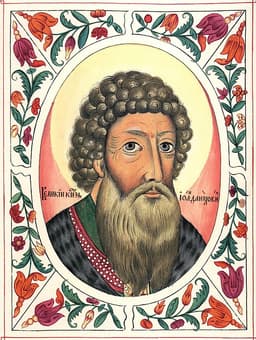
Ivan I Kalita
Emperor · Medieval
52.6Total

Vikramaditya I
Emperor · Medieval
50.2Total
Basic Information
Born
1288
655
Died
1341
680
Era
Medieval
Medieval
Nationality
Muscovy
India
Occupation
Emperor
Emperor
Civilization
Western
Indian
Score Comparison
Military (10%)
25.9
50.0
Political (20%)
72.0
40.8
Influence (20%)
51.8
51.8
Legacy (20%)
48.3
43.3
Leadership (15%)
68.0
62.2
Strategy (15%)
39.6
60.0
TOTAL
52.6
50.2
Ivan I Kalita — Complete Timeline
1325 AD
Appointed as Grand Prince of MoscowPolitical Action◆ Major
Ivan I became Grand Prince of Moscow after his brother Yuri's death. He secured the title by cooperating with the Mongol Golden Horde, using his position to collect tribute from other Russian principalities on behalf of the Khan.
MoscowGolden HordeTribute
Impact: regional
1326 AD
Moved the Metropolitan See to MoscowPolitical Action◆ Major
Ivan I persuaded Metropolitan Peter to move his residence from Vladimir to Moscow. This made Moscow the ecclesiastical center of the Russian Orthodox Church, greatly enhancing its political and religious authority.
MoscowOrthodox ChurchMetropolitan
Impact: regionalconstructive
1327 AD
Suppressed the Tver UprisingWar◆ Major
When Tver rebelled against Mongol tax collectors, Ivan I led a Mongol-Muscovite army to crush the uprising. The destruction of Tver eliminated Moscow's main rival for supremacy in northeastern Russia.
TverGolden HordeUprising
Impact: regionaldestructive
1328 AD
Acquired the title of Grand Prince of VladimirPolitical Action◆ Major
Ivan I obtained the yarlyk (patent) for the Grand Principality of Vladimir from the Mongol Khan Uzbek. This made Moscow the primary collector of tribute for the Horde and the most powerful Russian principality.
MoscowGolden HordeVladimir
Impact: regional
Vikramaditya I — Complete Timeline
655 AD
Recapture of Badami from the PallavasWar◆ Major
Vikramaditya I recaptured the Chalukya capital Badami from the Pallava king Narasimhavarman I, who had occupied it after defeating Pulakeshin II. This victory restored Chalukya sovereignty and marked the revival of the dynasty.
Military VictoryBadamiChalukya Revival
Impact: regionalconstructive
660 AD
Restoration of Chalukya powerPolitical Action◆ Major
After recapturing Badami, Vikramaditya I re-established Chalukya authority over their former territories in the Deccan. He issued inscriptions and patronized temples, signaling the dynasty's return to power.
RestorationChalukyaDeccan
Impact: regionalconstructive
This comparison has not been analyzed yet.
One-time AI generation (~1 minute). Scores and timeline are already available below.
Rankings
🥇
Ivan I KalitaLeader
Mil: 25.9Pol: 72.0Inf: 51.8
52.6
🥈
Vikramaditya I
Mil: 50.0Pol: 40.8Inf: 51.8
50.2
+2.4 behind
How This Comparison Works
Algorithm
Each figure is scored on 6 dimensions (0—100 scale) based on structured historical data: Military (10%), Political (20%), Influence (20%), Legacy (20%), Leadership (15%), Strategy (15%). The weighted total produces the final ranking.
Data Sources
Scores are computed from structured sub-indicators in the database. Scale factors adjust for era (Ancient ×0.85, Modern ×1.0) and civilization size (Eastern ×1.05, Other ×0.80) to account for differences in population and military scale.
Maximum 3 Figures
Comparisons are limited to 2—3 figures to ensure readability and statistical meaningfulness.
Error Margins
±5 points per dimension — Sub-scores are derived from historical records with inherent uncertainty. Two figures within 5 points on a dimension should be considered roughly equivalent in that area.
Total Score Accuracy
±3 points overall — The weighted combination of 6 dimensions produces a total score with approximately ±3 points of uncertainty. Differences of less than 3 points are not statistically significant— the figures are effectively tied.
Known Limitations
- Historical records are incomplete and uneven across civilizations
- Figures from oral-tradition societies may be underrepresented
- Occupation labels can misclassify multi-role figures
- Scores measure capability and impact, not moral character
- Quantitative scoring is a comparison tool, not absolute truth
Capability Radar
Military (10%) — Battles & Warfare
Battles
10
55
Win Rate
10
60
Expansion
20
45
Political (20%) — Governance & Reform
Reform
55
30
Diplomacy
70
45
Economy
75
35
Influence (20%) — Cultural & Global Reach
Cultural
30
30
Global
20
20
Legacy (20%) — Historical Impact
Historical
50
35
Longevity
40
25
Leadership (15%) — Power & Stability
Tenure
60
40
Stability
65
40
Strategy (15%) — Tactics & Innovation
Strategy
15
55
Tactics
5
50
Reform
5
30
Similar Comparisons
Comments & Discussion
No comments yet. Be the first to share your thoughts!