Loading...
Ivan Alexander vs Philip IV the Fair
Philip IV the Fair leads by 4.6 pts · 2 figures compared
…
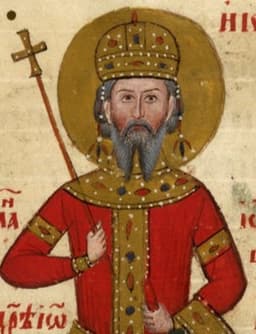
Ivan Alexander
Emperor · Medieval
54.7Total
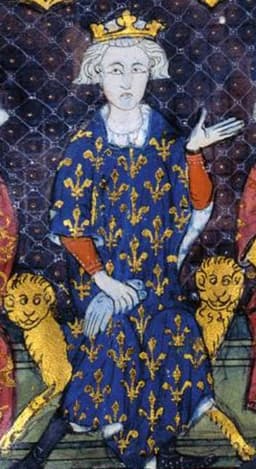
Philip IV the Fair
Emperor · Medieval
59.3Total
Basic Information
Born
1300
1268
Died
1371
1314
Era
Medieval
Medieval
Nationality
Bulgaria
France
Occupation
Emperor
Emperor
Civilization
Western
Western
Score Comparison
Military (10%)
10.0
50.0
Political (20%)
68.0
72.0
Influence (20%)
56.7
60.0
Legacy (20%)
50.0
56.0
Leadership (15%)
74.0
68.0
Strategy (15%)
57.5
43.3
TOTAL
54.7
59.3
Ivan Alexander — Complete Timeline
1331 AD
Coronation as TsarPolitical Action◆ Major
Ivan Alexander was crowned Tsar of Bulgaria after overthrowing his predecessor. His reign marked the last period of cultural and political flourishing before the Ottoman conquest.
CoronationReignBulgarian Empire
Impact: nationalconstructive
1340 AD
Compilation of the Law CodeReform◆ Major
Ivan Alexander oversaw the compilation of a comprehensive law code, the 'Zakonik' (Law of the Tsar). This codified Byzantine and Bulgarian legal traditions, strengthening central authority.
Law CodeReformLegal System
Impact: nationalconstructive
1350 AD
Patronage of the Tarnovo Literary SchoolCultural◆ Major
Ivan Alexander patronized the Tarnovo Literary School, which produced illuminated manuscripts like the 'Manasses Chronicle' and the 'Gospels of Tsar Ivan Alexander'. This was the peak of medieval Bulgarian culture.
CulturalManuscriptsTarnovo School
Impact: regionalconstructive
1355 AD
Division of the EmpirePolitical Action◆ Major
Ivan Alexander divided Bulgaria between his two sons, Ivan Shishman and Ivan Sratsimir, weakening the state. This fragmentation facilitated the later Ottoman conquest.
DivisionSuccessionWeakening
Impact: nationaldestructive
Philip IV the Fair — Complete Timeline
1302 AD
Conflict with Pope Boniface VIIIPolitical Action◆ Major
Philip IV clashed with Pope Boniface VIII over taxation of clergy and royal authority. He sent troops to arrest the pope at Anagni, leading to Boniface's death. This conflict asserted French royal supremacy over papal power.
Papal ConflictPower StruggleCapetian
Impact: globaldestructive
Convocation of the Estates GeneralPolitical Action◆ Major
Philip IV convened the first Estates General of France, bringing together clergy, nobility, and commoners to gain support for his conflict with the papacy. This established a precedent for representative assemblies in France.
Estates GeneralGovernanceCapetian
Impact: nationalconstructive
1306 AD
Expulsion of the Jews from FrancePolitical Action◆ Major
Philip IV ordered the expulsion of Jews from France and confiscated their property. This action was motivated by financial need and religious intolerance, and it deprived the kingdom of a significant economic community.
ExpulsionAnti-SemitismCapetian
Impact: nationaldestructive
1307 AD
Suppression of the Knights TemplarPolitical Action
Philip IV ordered the mass arrest of Knights Templar in France on charges of heresy, blasphemy, and corruption. He pressured Pope Clement V to disband the order, seizing their wealth and lands, which enriched the French crown.
Knights TemplarPersecutionPower
Impact: globaldestructive
Expert Analysis
Origins
Ivan Alexander (born circa 1301) was a member of the Shishman dynasty, a branch of the Asen dynasty. He ascended to the Bulgarian throne in 1331 after overthrowing his predecessor, Ivan Stephen, with the support of the nobility. His early life was shaped by the declining Second Bulgarian Empire, which had lost much of its former territory to Serbia and Byzantium. He was educated in the traditions of the Bulgarian Orthodox Church and Byzantine imperial culture.
Philip IV the Fair (born April–June 1268) was the son of King Philip III of France and Isabella of Aragon. He inherited a strong, centralized kingdom and was raised in the Capetian tradition of royal authority. His education emphasized legal and theological principles, preparing him to assert dominance over both the church and the nobility.
Rise to Power
Ivan Alexander's rise to power came through a coup in 1331, when he led a rebellion against his cousin Ivan Stephen, who had proven unpopular. He secured his position by marrying Theodora, a Wallachian princess, and later Sarah, a Jewish convert, to build alliances. His reign initially saw military successes against the Byzantines and Serbs, but he failed to reclaim lost territories permanently.
Philip IV became king at age 17 in 1285 after his father's death. He quickly asserted authority by surrounding himself with skilled legists like Guillaume de Nogaret, who helped him expand royal jurisdiction. His conflict with Pope Boniface VIII (1296–1303) over taxation of the clergy marked a turning point: he convened the first Estates General in 1302 to gain public support, and his agents captured the pope at Anagni in 1303, leading to Boniface's death. This solidified Philip's supremacy over the French church.
Leadership & Governance
Ivan Alexander ruled as a traditional medieval monarch, relying on the boyar aristocracy and the Orthodox Church. He compiled a law code, the 'Zakonik' (Law of the Tsar), which blended Byzantine and Bulgarian legal traditions, aiming to centralize justice. He also patronized the Tarnovo Literary School, sponsoring illuminated manuscripts like the 'Manasses Chronicle' and the 'Gospels of Tsar Ivan Alexander'. However, his governance was undermined by his decision to divide the empire between his two sons, Ivan Shishman and Ivan Sratsimir, in the 1360s, weakening the state against Ottoman threats.
Philip IV transformed French governance by expanding royal bureaucracy and using legal fictions to assert control. He systematically taxed the clergy, expelled the Jews in 1306 (confiscating their property), and suppressed the Knights Templar in 1307 to seize their wealth. He convened the Estates General as a tool to legitimize his policies. His leadership scored 68.0 in political skill, reflecting his ability to manipulate institutions. However, his military score of 50.0 indicates limited personal involvement in warfare.
Triumph & Tragedy
Ivan Alexander's greatest triumph was the cultural flowering of the Tarnovo Literary School, producing masterpieces like the Tetraevangelia of Tsar Ivan Alexander. He also successfully defended Bulgaria against early Ottoman raids. His tragedy was the division of the empire: after his death in 1371, the fragmented Bulgarian states fell to the Ottomans by 1396. His law code, though progressive, failed to prevent the empire's collapse.
Philip IV's triumph was the destruction of the Knights Templar, which eliminated a powerful rival and filled his coffers. He also forced the papacy to relocate to Avignon (1309), beginning the Avignon Papacy and increasing French influence. His tragedy was the financial instability his policies caused; his expulsions and confiscations provided short-term gains but damaged the economy. His death in 1314 left a legacy of debt and resentment.
Character & Destiny
Ivan Alexander was a patron of culture but a poor strategist. His decision to divide the empire scored low in strategy (57.5), as it directly enabled Ottoman conquest. He was pragmatic in religion (converting his wife to Christianity) but overly trusting of his sons. Historians describe him as the last great Bulgarian ruler, but his inability to centralize power sealed his country's fate.
Philip IV was cold, calculating, and ruthless. He used legal pretexts for political ends, as in the Templar trials. His character scored high in leadership (68.0) but low in strategy (43.3) because his aggressive financial policies often backfired. He was called 'the Fair' for his appearance, not his justice. His reign set France on a path toward absolutism but also sowed the seeds of the Hundred Years' War.
Legacy
Ivan Alexander's legacy is cultural: the Tarnovo Literary School influenced Slavic literature and art. His law code is a key source for medieval Bulgarian law. However, his political legacy is negative—his division of the empire is blamed for the Ottoman conquest. His total score of 54.7 reflects a moderate impact.
Philip IV's legacy is monumental: he centralized French monarchy, established the Estates General, and weakened the papacy. The suppression of the Templars and expulsion of Jews set precedents for state-sponsored persecution. His actions contributed to the development of modern state sovereignty. His total score of 59.3 reflects a slightly higher impact due to his influence on European political structures.
Conclusion
Philip IV the Fair had a greater impact than Ivan Alexander. Despite Ivan's cultural achievements, his political missteps led to Bulgaria's downfall. Philip's centralization of power and conflict with the papacy reshaped the medieval European order. With a total score of 59.3 versus Ivan's 54.7, Philip's influence on the development of the modern state outweighs Ivan's cultural patronage. Ivan's reign was the last gasp of a dying empire; Philip's was the birth of absolutist monarchy.
Rankings
🥇
Philip IV the FairLeader
Mil: 50.0Pol: 72.0Inf: 60.0
59.3
🥈
Ivan Alexander
Mil: 10.0Pol: 68.0Inf: 56.7
54.7
+4.6 behind
How This Comparison Works
Algorithm
Each figure is scored on 6 dimensions (0—100 scale) based on structured historical data: Military (10%), Political (20%), Influence (20%), Legacy (20%), Leadership (15%), Strategy (15%). The weighted total produces the final ranking.
Data Sources
Scores are computed from structured sub-indicators in the database. Scale factors adjust for era (Ancient ×0.85, Modern ×1.0) and civilization size (Eastern ×1.05, Other ×0.80) to account for differences in population and military scale.
Maximum 3 Figures
Comparisons are limited to 2—3 figures to ensure readability and statistical meaningfulness.
Error Margins
±5 points per dimension — Sub-scores are derived from historical records with inherent uncertainty. Two figures within 5 points on a dimension should be considered roughly equivalent in that area.
Total Score Accuracy
±3 points overall — The weighted combination of 6 dimensions produces a total score with approximately ±3 points of uncertainty. Differences of less than 3 points are not statistically significant— the figures are effectively tied.
Known Limitations
- Historical records are incomplete and uneven across civilizations
- Figures from oral-tradition societies may be underrepresented
- Occupation labels can misclassify multi-role figures
- Scores measure capability and impact, not moral character
- Quantitative scoring is a comparison tool, not absolute truth
Capability Radar
Military (10%) — Battles & Warfare
Battles
45
20
Win Rate
40
25
Expansion
35
15
Political (20%) — Governance & Reform
Reform
55
75
Diplomacy
50
65
Economy
60
60
Influence (20%) — Cultural & Global Reach
Cultural
65
50
Global
30
50
Legacy (20%) — Historical Impact
Historical
55
65
Longevity
40
55
Leadership (15%) — Power & Stability
Tenure
60
70
Stability
45
55
Strategy (15%) — Tactics & Innovation
Strategy
55
35
Tactics
50
30
Reform
40
40
Similar Comparisons
Comments & Discussion
No comments yet. Be the first to share your thoughts!