Loading...
Alexander III of Scotland vs Philip IV the Fair
Philip IV the Fair leads by 3.9 pts · 2 figures compared
…
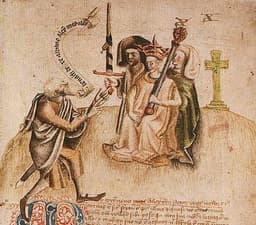
Alexander III of Scotland
Emperor · Medieval
55.4Total
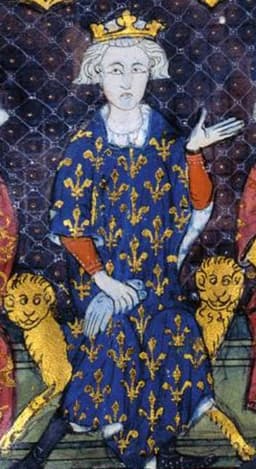
Philip IV the Fair
Emperor · Medieval
59.3Total
Basic Information
Born
1241
1268
Died
1286
1314
Era
Medieval
Medieval
Nationality
Scotland
France
Occupation
Emperor
Emperor
Civilization
Western
Western
Score Comparison
Military (10%)
50.0
50.0
Political (20%)
68.0
72.0
Influence (20%)
54.1
60.0
Legacy (20%)
49.2
56.0
Leadership (15%)
72.0
68.0
Strategy (15%)
35.7
43.3
TOTAL
55.4
59.3
Alexander III of Scotland — Complete Timeline
1251 AD
Marriage to Margaret of EnglandPolitical Action
Alexander III married Margaret, daughter of Henry III of England, at York Minster. The marriage was intended to secure peace between Scotland and England, but it also gave English kings a claim to interfere in Scottish affairs.
MarriageDiplomacyAnglo-Scottish Relations
Impact: national
1263 AD
Battle of LargsWar◆ Major
Alexander III's forces repelled a Norwegian invasion led by King Haakon IV at Largs in Ayrshire. The battle was indecisive but marked the end of Norwegian attempts to control the Hebrides and the Isle of Man.
BattleNorwegian InvasionHebrides
Impact: regionalconstructive
1266 AD
Treaty of PerthPolitical Action
Alexander III signed the Treaty of Perth with Norway, purchasing the Hebrides and the Isle of Man for 4,000 marks plus an annual payment of 100 marks. This extended Scottish sovereignty over the Western Isles.
TreatyTerritorial ExpansionHebrides
Impact: regionalconstructive
1286 AD
Death of Alexander IIIOther
Alexander III died after falling from his horse while riding from Edinburgh to Kinghorn in Fife during a storm. His death left no surviving legitimate children, triggering a succession crisis that led to the Wars of Scottish Independence.
DeathSuccession CrisisWars of Independence
Impact: nationaltragic
Philip IV the Fair — Complete Timeline
1302 AD
Conflict with Pope Boniface VIIIPolitical Action◆ Major
Philip IV clashed with Pope Boniface VIII over taxation of clergy and royal authority. He sent troops to arrest the pope at Anagni, leading to Boniface's death. This conflict asserted French royal supremacy over papal power.
Papal ConflictPower StruggleCapetian
Impact: globaldestructive
Convocation of the Estates GeneralPolitical Action◆ Major
Philip IV convened the first Estates General of France, bringing together clergy, nobility, and commoners to gain support for his conflict with the papacy. This established a precedent for representative assemblies in France.
Estates GeneralGovernanceCapetian
Impact: nationalconstructive
1306 AD
Expulsion of the Jews from FrancePolitical Action◆ Major
Philip IV ordered the expulsion of Jews from France and confiscated their property. This action was motivated by financial need and religious intolerance, and it deprived the kingdom of a significant economic community.
ExpulsionAnti-SemitismCapetian
Impact: nationaldestructive
1307 AD
Suppression of the Knights TemplarPolitical Action
Philip IV ordered the mass arrest of Knights Templar in France on charges of heresy, blasphemy, and corruption. He pressured Pope Clement V to disband the order, seizing their wealth and lands, which enriched the French crown.
Knights TemplarPersecutionPower
Impact: globaldestructive
Expert Analysis
Origins
Alexander III of Scotland was born in 1241, the son of Alexander II and his second wife Marie de Coucy. He inherited the throne at age seven in 1249, with a regency that included powerful nobles like the Comyns. His early years were marked by the need to assert royal authority over a fragmented kingdom. Philip IV the Fair was born in 1268 at Fontainebleau, the second son of Philip III and Isabella of Aragon. He became heir after his older brother's death and was educated in law and theology, preparing him for a reign that would redefine the French monarchy. His upbringing in the Capetian court instilled a sense of divine right and administrative efficiency.
Rise to Power
Alexander III's rise was largely hereditary, but he solidified his rule through strategic marriage and diplomacy. In 1251, he married Margaret, daughter of Henry III of England, at York Minster, a union intended to secure peace. He took full control of government in 1262 at age 21. His key turning point was the Treaty of Perth in 1266, following the Norwegian defeat at the Battle of Largs (1263). For 4,000 marks and an annual payment of 100 marks, he purchased the Hebrides and the Isle of Man, ending Norwegian sovereignty in the region. Philip IV ascended the throne in 1285 at age 17 after his father's death. He immediately centralized power, surrounding himself with legists (legal experts) who expanded royal jurisdiction. His rise to dominance was marked by conflicts with the papacy: in 1302, he convened the first Estates General to gain support against Pope Boniface VIII, and in 1303, his agents arrested the pope at Anagni, leading to Boniface's death. This audacious move established Philip's supremacy over the Church in France.
Leadership & Governance
Alexander III's leadership was characterized by stability and territorial consolidation. He maintained peace with England through his marriage and focused on internal governance, strengthening royal justice and expanding the authority of sheriffs. His political score of 68.0 reflects his ability to navigate feudal loyalties and secure the western isles. In contrast, Philip IV governed through absolutism and legal centralization. He intensified royal administration, appointed baillis and seneschals to enforce royal decrees, and manipulated the Estates General to legitimize his policies. His political score of 72.0 is higher than Alexander's, indicating a more aggressive expansion of royal power. However, his methods were often ruthless: he expelled the Jews from France in 1306, seizing their property, and suppressed the Knights Templar from 1307 onward, using heresy charges to confiscate their wealth. Alexander's governance was more consensual, relying on treaties and marriage alliances, while Philip's was coercive, using law and force to subdue opposition.
Triumph & Tragedy
Alexander III's greatest triumph was the Treaty of Perth, which secured Scotland's western seaboard and ended centuries of Norse influence. His reign saw relative peace and economic growth. His tragedy was his sudden death in 1286, falling from his horse while riding from Edinburgh to Kinghorn during a storm. He left no surviving legitimate children, plunging Scotland into a succession crisis that led to the Wars of Independence. Philip IV's triumphs include the destruction of the Knights Templar, which filled his coffers, and his victory over Pope Boniface VIII, which established royal control over the French Church. He also expanded French territory through marriage and war. His tragedies include the financial strain of his conflicts, which led to the debasement of coinage and popular unrest. His expulsion of the Jews and persecution of the Templars were morally dubious and left a legacy of religious intolerance. Both leaders faced crises after their deaths: Alexander's death led to war, while Philip's sons died young, ending the Capetian line in 1328.
Character & Destiny
Alexander III was known for his diplomacy and restraint. He avoided unnecessary wars, focusing on consolidating his realm. His character was that of a peacemaker, but his destiny was cut short by accident. His leadership score of 72.0 and strategy score of 35.7 suggest he was more a manager than a military strategist. Philip IV, by contrast, was calculating and relentless. He was called 'the Fair' for his handsome appearance, but his actions were cold and pragmatic. His strategy score of 43.3 is higher than Alexander's, reflecting his ability to plan long-term moves against the Church and the Templars. His destiny was to create a centralized French state, but his methods sowed seeds of future conflict. Historian Joseph Strayer noted that Philip's reign 'transformed the French monarchy from a feudal suzerainty into a sovereign state.'
Legacy
Alexander III's legacy is tied to Scottish independence and territorial integrity. The Treaty of Perth remained in effect until the 15th century, and his reign is seen as a golden age of peace. His death triggered the succession crisis that led to the Wars of Independence, making him a tragic figure in Scottish history. His influence score of 54.1 reflects his limited impact beyond Scotland. Philip IV's legacy is more profound and controversial. He established the Estates General, which influenced French governance for centuries. His destruction of the Templars and conflict with the papacy accelerated the decline of papal authority and the rise of national monarchies. His legacy score of 56.0 is slightly higher than Alexander's. The French state he built became a model for absolutism, but his anti-Semitic policies and financial exploitation left a dark mark.
Conclusion
Philip IV the Fair had greater impact than Alexander III of Scotland. While Alexander secured Scotland's borders and maintained peace, his achievements were regional and his death led to chaos. Philip's actions reshaped the relationship between church and state, centralized royal power, and set precedents for absolutism that influenced Europe for centuries. His total score of 59.3 surpasses Alexander's 55.4, reflecting his broader influence on political structures. Alexander's legacy is important for Scottish history, but Philip's impact on the development of the modern state is more significant.
Rankings
🥇
Philip IV the FairLeader
Mil: 50.0Pol: 72.0Inf: 60.0
59.3
🥈
Alexander III of Scotland
Mil: 50.0Pol: 68.0Inf: 54.1
55.4
+3.9 behind
How This Comparison Works
Algorithm
Each figure is scored on 6 dimensions (0—100 scale) based on structured historical data: Military (10%), Political (20%), Influence (20%), Legacy (20%), Leadership (15%), Strategy (15%). The weighted total produces the final ranking.
Data Sources
Scores are computed from structured sub-indicators in the database. Scale factors adjust for era (Ancient ×0.85, Modern ×1.0) and civilization size (Eastern ×1.05, Other ×0.80) to account for differences in population and military scale.
Maximum 3 Figures
Comparisons are limited to 2—3 figures to ensure readability and statistical meaningfulness.
Error Margins
±5 points per dimension — Sub-scores are derived from historical records with inherent uncertainty. Two figures within 5 points on a dimension should be considered roughly equivalent in that area.
Total Score Accuracy
±3 points overall — The weighted combination of 6 dimensions produces a total score with approximately ±3 points of uncertainty. Differences of less than 3 points are not statistically significant— the figures are effectively tied.
Known Limitations
- Historical records are incomplete and uneven across civilizations
- Figures from oral-tradition societies may be underrepresented
- Occupation labels can misclassify multi-role figures
- Scores measure capability and impact, not moral character
- Quantitative scoring is a comparison tool, not absolute truth
Capability Radar
Military (10%) — Battles & Warfare
Battles
20
20
Win Rate
25
25
Expansion
15
15
Political (20%) — Governance & Reform
Reform
55
75
Diplomacy
65
65
Economy
60
60
Influence (20%) — Cultural & Global Reach
Cultural
30
50
Global
25
50
Legacy (20%) — Historical Impact
Historical
55
65
Longevity
40
55
Leadership (15%) — Power & Stability
Tenure
60
70
Stability
70
55
Strategy (15%) — Tactics & Innovation
Strategy
20
35
Tactics
15
30
Reform
10
40
Similar Comparisons
Comments & Discussion
No comments yet. Be the first to share your thoughts!