Loading...
This comparison has not been analyzed yet.
One-time AI generation (~1 minute). Scores and timeline are already available below.
Ishida Mitsunari vs Rifaat al-Assad
Ishida Mitsunari leads by 13.3 pts · 2 figures compared
…

Ishida Mitsunari
General · Modern
50.7Total
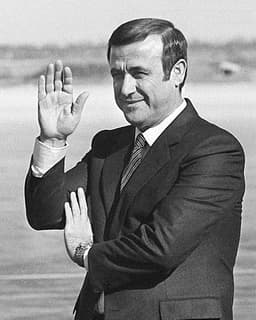
Rifaat al-Assad
General · Modern
37.4Total
Basic Information
Born
1560
1937
Died
1600
—
Era
Modern
Modern
Nationality
Japan
Syria
Occupation
General
General
Civilization
Eastern
Middle Eastern
Score Comparison
Military (10%)
40.0
25.9
Political (20%)
48.0
26.4
Influence (20%)
53.3
48.6
Legacy (20%)
48.3
38.3
Leadership (15%)
54.2
40.4
Strategy (15%)
60.0
30.3
TOTAL
50.7
37.4
Ishida Mitsunari — Complete Timeline
1600 AD
Battle of SekigaharaWar
Ishida Mitsunari commanded the Western Army at Sekigahara against Tokugawa Ieyasu. His forces were defeated due to defections and tactical errors, leading to the establishment of the Tokugawa shogunate.
Sengoku PeriodBattleWestern Army
Impact: nationaldestructive
Siege of Fushimi CastleWar◆ Major
Ishida Mitsunari besieged Fushimi Castle, held by Torii Mototada for Tokugawa Ieyasu. The castle fell after a fierce defense, but the siege delayed the Western Army's movements.
Sengoku PeriodSiegeFushimi
Impact: regionaldestructive
Execution of Ishida MitsunariOther◆ Major
After the Battle of Sekigahara, Ishida Mitsunari was captured by Tokugawa forces. He was executed by beheading in Kyoto, ending his role as a leading opponent of Tokugawa Ieyasu.
Sengoku PeriodExecutionSekigahara
Impact: nationaltragic
Formation of the Western ArmyPolitical Action◆ Major
Ishida Mitsunari formed the Western Army, an alliance of daimyo opposed to Tokugawa Ieyasu. He gathered support from powerful clans like the Mori, Shimazu, and Ukita to challenge Tokugawa's dominance.
Sengoku PeriodAllianceWestern Army
Impact: national
Rifaat al-Assad — Complete Timeline
1982 AD
Led the Hama MassacreWar
Rifaat al-Assad, as commander of the Defense Companies, led a military campaign to crush an uprising by the Muslim Brotherhood in the city of Hama in February 1982. The operation resulted in the deaths of tens of thousands of civilians and the destruction of large parts of the city. The massacre solidified the Assad family's grip on power.
Hama MassacreMuslim BrotherhoodAssad
Impact: nationaldestructive
1984 AD
Attempted Coup Against Hafez al-AssadPolitical Action◆ Major
In 1984, while President Hafez al-Assad was ill, Rifaat attempted to seize power by deploying his Defense Companies in Damascus. The coup attempt failed after Hafez recovered and consolidated his control. Rifaat was subsequently exiled, first to the Soviet Union and later to France, ending his political ambitions in Syria.
Coup AttemptHafez al-AssadPower Struggle
Impact: nationaldestructive
2020 AD
Convicted in Absentia for Hama MassacrePolitical Action◆ Major
In 2020, a German court convicted Rifaat al-Assad in absentia for crimes against humanity for his role in the Hama massacre. The trial was brought by survivors and human rights groups. He was sentenced to life in prison, though he remained in France and was not extradited. The conviction was largely symbolic.
War CrimesHama MassacreInternational Justice
Impact: globaldestructive
This comparison has not been analyzed yet.
One-time AI generation (~1 minute). Scores and timeline are already available below.
Rankings
🥇
Ishida MitsunariLeader
Mil: 40.0Pol: 48.0Inf: 53.3
50.7
🥈
Rifaat al-Assad
Mil: 25.9Pol: 26.4Inf: 48.6
37.4
+13.3 behind
How This Comparison Works
Algorithm
Each figure is scored on 6 dimensions (0—100 scale) based on structured historical data: Military (10%), Political (20%), Influence (20%), Legacy (20%), Leadership (15%), Strategy (15%). The weighted total produces the final ranking.
Data Sources
Scores are computed from structured sub-indicators in the database. Scale factors adjust for era (Ancient ×0.85, Modern ×1.0) and civilization size (Eastern ×1.05, Other ×0.80) to account for differences in population and military scale.
Maximum 3 Figures
Comparisons are limited to 2—3 figures to ensure readability and statistical meaningfulness.
Error Margins
±5 points per dimension — Sub-scores are derived from historical records with inherent uncertainty. Two figures within 5 points on a dimension should be considered roughly equivalent in that area.
Total Score Accuracy
±3 points overall — The weighted combination of 6 dimensions produces a total score with approximately ±3 points of uncertainty. Differences of less than 3 points are not statistically significant— the figures are effectively tied.
Known Limitations
- Historical records are incomplete and uneven across civilizations
- Figures from oral-tradition societies may be underrepresented
- Occupation labels can misclassify multi-role figures
- Scores measure capability and impact, not moral character
- Quantitative scoring is a comparison tool, not absolute truth
Capability Radar
Military (10%) — Battles & Warfare
Battles
45
15
Win Rate
30
10
Expansion
25
5
Political (20%) — Governance & Reform
Reform
40
5
Diplomacy
30
10
Economy
35
5
Influence (20%) — Cultural & Global Reach
Cultural
30
10
Global
20
10
Legacy (20%) — Historical Impact
Historical
45
20
Longevity
35
10
Leadership (15%) — Power & Stability
Tenure
35
30
Stability
20
5
Strategy (15%) — Tactics & Innovation
Strategy
40
15
Tactics
55
20
Reform
20
5
Similar Comparisons
Comments & Discussion
No comments yet. Be the first to share your thoughts!