Loading...
Irene of Athens vs James V of Scotland
Irene of Athens leads by 7.2 pts · 2 figures compared
…
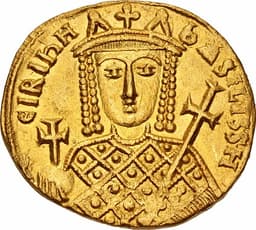
Irene of Athens
Emperor · Medieval
47.9Total
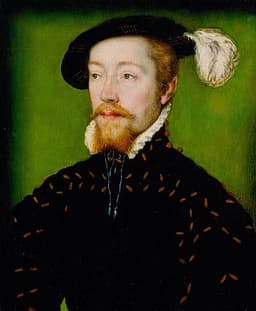
James V of Scotland
Emperor · Medieval
40.7Total
Basic Information
Born
752
1512
Died
803
1542
Era
Medieval
Medieval
Nationality
Byzantine Empire
Scotland
Occupation
Emperor
Emperor
Civilization
Western
Western
Score Comparison
Military (10%)
14.9
22.6
Political (20%)
43.7
36.5
Influence (20%)
54.9
48.6
Legacy (20%)
49.2
40.0
Leadership (15%)
62.2
48.4
Strategy (15%)
45.0
35.7
TOTAL
47.9
40.7
Irene of Athens — Complete Timeline
780 AD
Regency for Constantine VI (780-790)Political Action◆ Major
After the death of Leo IV, Irene became regent for her 10-year-old son Constantine VI. She ruled the Byzantine Empire effectively, reversing iconoclast policies and restoring icon veneration at the Second Council of Nicaea in 787.
RegencyIconoclasmChurch Council
Impact: regionalconstructive
787 AD
Second Council of Nicaea (787)Political Action
Irene convened the Second Council of Nicaea, which condemned iconoclasm and restored the veneration of icons in the Byzantine Church. This council is considered the Seventh Ecumenical Council by the Eastern Orthodox Church.
Ecumenical CouncilIconoclasmReligious Policy
Impact: globalconstructive
797 AD
Blinding and Imprisonment of Constantine VI (797)Political Action◆ Major
Irene ordered the blinding of her son Constantine VI, who had attempted to assert his own rule. He was imprisoned and died shortly after. This act allowed Irene to become sole ruler, but it was widely condemned as tyrannical and unnatural.
UsurpationViolenceFamily
Impact: regionaltragic
Sole Rule as Empress (797-802)Political Action◆ Major
After blinding her son, Irene ruled as sole empress, the first woman to do so in Byzantine history. She used the title 'basileus' (emperor) rather than 'basilissa' (empress), asserting her authority as a male ruler.
Female RuleImperial Title
Impact: regional
802 AD
Overthrow and Exile (802)Political Action◆ Major
Irene was overthrown by a conspiracy led by Nikephoros, the logothete (finance minister). She was exiled to the island of Lesbos and forced to support herself by spinning wool. She died the following year.
CoupExile
Impact: regionaltragic
James V of Scotland — Complete Timeline
1538 AD
Marriage to Mary of GuisePolitical Action◆ Major
James V married Mary of Guise, a French noblewoman, as his second wife. The marriage strengthened the Auld Alliance with France and produced a daughter, Mary, who would become Mary Queen of Scots.
MarriageAuld AllianceFrance
Impact: nationalconstructive
1540 AD
Execution of James Hamilton of FinnartPolitical Action
James V executed James Hamilton of Finnart, a powerful noble and former regent, for treason. The execution was part of James's policy to curb noble power and centralize royal authority, but it created lasting enmity with the Hamilton family.
ExecutionNoble PurgeCentralization
Impact: nationaldestructive
Suppression of the Lords of the IslesPolitical Action◆ Major
James V conducted a campaign to suppress the Lords of the Isles, who had long held semi-independent power in the Highlands and Islands. He executed the last Lord of the Isles, Donald Dubh, and annexed their territories to the crown.
SuppressionHighlandsCentralization
Impact: regionaldestructive
1542 AD
Battle of Solway MossWar
James V's Scottish army was routed by a smaller English force at Solway Moss near the River Esk. The defeat was a humiliating disaster, with many Scottish nobles captured. James V died shortly after, reportedly of despair.
BattleDefeatDeath
Impact: nationaltragic
Expert Analysis
Origins
Irene of Athens was born around 752 into an Athenian noble family. Her background is obscure, but she was chosen as a bride for Leo IV, the Byzantine emperor, in 768. This marriage elevated her to the imperial court, where she quickly learned the intricacies of Byzantine politics. James V of Scotland was born on April 10, 1512, at Linlithgow Palace, the son of King James IV and Margaret Tudor. He inherited the throne at just 17 months old after his father's death at the Battle of Flodden in 1513. His early years were marked by a regency council and struggles among the nobility.
Rise to Power
Irene became regent for her 10-year-old son Constantine VI after Leo IV's death in 780. She skillfully navigated court factions and reversed the iconoclast policies of her predecessors, convening the Second Council of Nicaea in 787, which restored the veneration of icons. This act strengthened her position as a defender of Orthodoxy. As Constantine grew older, tensions between mother and son escalated. In 797, Irene orchestrated a coup, having Constantine blinded and imprisoned. She then became the first woman to rule the Byzantine Empire in her own right, using the title 'basileus' (emperor). James V's rise was more turbulent. After a long minority dominated by regents, he assumed personal rule in 1528. He immediately moved to curb the power of the nobility, executing James Hamilton of Finnart in 1540 and suppressing the Lords of the Isles through military campaigns. He also strengthened the Auld Alliance with France by marrying Mary of Guise in 1538, securing French support against England.
Leadership & Governance
Irene's leadership was marked by religious reform and centralization. She restored icon veneration, which boosted her popularity among the populace and clergy. However, her governance relied heavily on court intrigue and manipulation. She was cautious in military matters, avoiding major campaigns, which contributed to her low military score of 14.9. James V governed through a combination of force and diplomacy. He aggressively reduced noble power, executing prominent figures and confiscating lands. His marriage to Mary of Guise strengthened ties with France, but his heavy-handed tactics alienated many nobles. His political score of 36.5 reflects his struggles with internal cohesion. Both leaders faced challenges from powerful factions, but Irene's political score of 43.7 is higher due to her ability to maintain control for over two decades.
Triumph & Tragedy
Irene's greatest triumph was the Second Council of Nicaea, which ended the first iconoclastic period and solidified her role as a defender of Orthodoxy. She also successfully ruled as sole empress for five years, a unique achievement for a woman in Byzantine history. Her greatest tragedy was the blinding of her son, an act that horrified contemporaries and ultimately led to her downfall. In 802, she was overthrown by Nikephoros, her finance minister, and exiled to Lesbos, where she died in poverty. James V's triumph was his suppression of the Lords of the Isles, which brought the Highlands under royal control. He also secured the French alliance through his marriage. However, his tragedy was the Battle of Solway Moss in 1542, where a smaller English force routed his army. The defeat humiliated him, and he died shortly after, reportedly of despair, leaving his infant daughter Mary, Queen of Scots, as his heir. His legacy score of 40.0 reflects the instability that followed his death.
Character & Destiny
Irene was ambitious and ruthless, willing to sacrifice her own son for power. Her decision to blind Constantine VI showed a cold pragmatism, but it also alienated key supporters. She was a skilled diplomat and religious leader, but her inability to secure a stable succession led to her overthrow. James V was determined and authoritarian, but his harsh treatment of nobles bred resentment. His death from despair after Solway Moss underscores his emotional fragility. Historians note that his character combined stubbornness with a lack of strategic foresight, leading to his military score of 22.6. Both rulers' fates were shaped by their inability to balance power with legitimacy.
Legacy
Irene's legacy is mixed. She is remembered as the first woman to rule the Byzantine Empire in her own right, paving the way for later empresses. The Second Council of Nicaea had a lasting impact on Orthodox theology. However, her violent act against her son tarnished her reputation. Her total score of 47.9 reflects these contradictions. James V's legacy is overshadowed by the tragic reign of his daughter, Mary, Queen of Scots. His efforts to centralize power were undone by his early death. The Auld Alliance with France continued, but Scotland remained unstable. His total score of 40.7 places him below Irene in overall impact.
Conclusion
Irene of Athens had a greater impact than James V of Scotland. Her total score of 47.9 versus James's 40.7 reflects her higher influence and leadership scores. Irene's religious reforms shaped Byzantine Orthodoxy for centuries, while James's reign was a prelude to the chaotic minority of his daughter. Irene's unique position as a female emperor broke gender barriers, even if her methods were brutal. James's failure at Solway Moss and his inability to secure a stable succession limited his legacy. While neither ruler was among the greatest, Irene's actions had longer-lasting consequences. Therefore, Irene of Athens is the more significant historical figure.
Rankings
🥇
Irene of AthensLeader
Mil: 14.9Pol: 43.7Inf: 54.9
47.9
🥈
James V of Scotland
Mil: 22.6Pol: 36.5Inf: 48.6
40.7
+7.2 behind
How This Comparison Works
Algorithm
Each figure is scored on 6 dimensions (0—100 scale) based on structured historical data: Military (10%), Political (20%), Influence (20%), Legacy (20%), Leadership (15%), Strategy (15%). The weighted total produces the final ranking.
Data Sources
Scores are computed from structured sub-indicators in the database. Scale factors adjust for era (Ancient ×0.85, Modern ×1.0) and civilization size (Eastern ×1.05, Other ×0.80) to account for differences in population and military scale.
Maximum 3 Figures
Comparisons are limited to 2—3 figures to ensure readability and statistical meaningfulness.
Error Margins
±5 points per dimension — Sub-scores are derived from historical records with inherent uncertainty. Two figures within 5 points on a dimension should be considered roughly equivalent in that area.
Total Score Accuracy
±3 points overall — The weighted combination of 6 dimensions produces a total score with approximately ±3 points of uncertainty. Differences of less than 3 points are not statistically significant— the figures are effectively tied.
Known Limitations
- Historical records are incomplete and uneven across civilizations
- Figures from oral-tradition societies may be underrepresented
- Occupation labels can misclassify multi-role figures
- Scores measure capability and impact, not moral character
- Quantitative scoring is a comparison tool, not absolute truth
Capability Radar
Military (10%) — Battles & Warfare
Battles
10
15
Win Rate
5
10
Expansion
5
10
Political (20%) — Governance & Reform
Reform
40
30
Diplomacy
50
35
Economy
30
30
Influence (20%) — Cultural & Global Reach
Cultural
40
20
Global
30
10
Legacy (20%) — Historical Impact
Historical
55
25
Longevity
40
15
Leadership (15%) — Power & Stability
Tenure
60
40
Stability
20
20
Strategy (15%) — Tactics & Innovation
Strategy
5
15
Tactics
5
20
Reform
5
10
Similar Comparisons
Comments & Discussion
No comments yet. Be the first to share your thoughts!