Loading...
Henry Bolingbroke vs James V of Scotland
Henry Bolingbroke leads by 11.9 pts · 2 figures compared
…
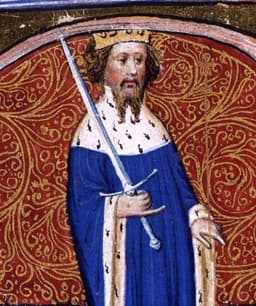
Henry Bolingbroke
Emperor · Medieval
52.6Total
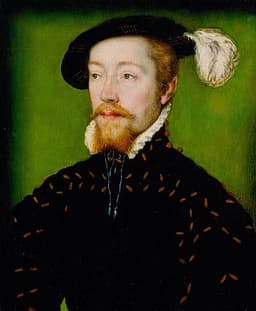
James V of Scotland
Emperor · Medieval
40.7Total
Basic Information
Born
1367
1512
Died
1413
1542
Era
Medieval
Medieval
Nationality
England
Scotland
Occupation
Emperor
Emperor
Civilization
Western
Western
Score Comparison
Military (10%)
25.0
22.6
Political (20%)
48.0
36.5
Influence (20%)
58.0
48.6
Legacy (20%)
50.0
40.0
Leadership (15%)
65.7
48.4
Strategy (15%)
60.0
35.7
TOTAL
52.6
40.7
Henry Bolingbroke — Complete Timeline
1398 AD
Exiled by Richard IIPolitical Action◆ Major
Henry Bolingbroke was exiled from England by King Richard II following a dispute with Thomas de Mowbray. The exile was initially for ten years, later commuted to life, stripping Henry of his inheritance and prompting his return to claim the throne.
ExilePower StruggleLancaster
Impact: nationaldestructive
1399 AD
Returned from Exile and Deposed Richard IIPolitical Action
Henry landed at Ravenspur in Yorkshire with a small force while Richard II was in Ireland. He gathered support from nobles, captured Richard, and forced his abdication. Parliament then accepted Henry as King Henry IV, establishing the Lancastrian dynasty.
CoupDepositionLancastrian Dynasty
Impact: national
1403 AD
Battle of ShrewsburyWar◆ Major
Henry IV's forces defeated a rebellion led by Henry Percy (Hotspur) and the Earl of Worcester. The battle was the first major engagement between English armies using longbows. Hotspur was killed, ending the Percy rebellion and securing Henry's throne.
RebellionBattlePercy
Impact: nationaldestructive
1409 AD
Suppressed the Welsh RebellionWar◆ Major
Henry IV's forces captured Harlech Castle, the headquarters of Owain Glynd
Welsh RebellionMilitary Campaign
Impact: regionaldestructive
1412 AD
Suffered from Illness and Political InstabilityOther
Henry IV suffered from a debilitating illness, possibly leprosy or epilepsy, which weakened his ability to govern. Factional struggles between his son Prince Henry and Archbishop Arundel intensified. The king's health declined further, leading to his death in 1413.
IllnessSuccession Crisis
Impact: nationaltragic
James V of Scotland — Complete Timeline
1538 AD
Marriage to Mary of GuisePolitical Action◆ Major
James V married Mary of Guise, a French noblewoman, as his second wife. The marriage strengthened the Auld Alliance with France and produced a daughter, Mary, who would become Mary Queen of Scots.
MarriageAuld AllianceFrance
Impact: nationalconstructive
1540 AD
Execution of James Hamilton of FinnartPolitical Action
James V executed James Hamilton of Finnart, a powerful noble and former regent, for treason. The execution was part of James's policy to curb noble power and centralize royal authority, but it created lasting enmity with the Hamilton family.
ExecutionNoble PurgeCentralization
Impact: nationaldestructive
Suppression of the Lords of the IslesPolitical Action◆ Major
James V conducted a campaign to suppress the Lords of the Isles, who had long held semi-independent power in the Highlands and Islands. He executed the last Lord of the Isles, Donald Dubh, and annexed their territories to the crown.
SuppressionHighlandsCentralization
Impact: regionaldestructive
1542 AD
Battle of Solway MossWar
James V's Scottish army was routed by a smaller English force at Solway Moss near the River Esk. The defeat was a humiliating disaster, with many Scottish nobles captured. James V died shortly after, reportedly of despair.
BattleDefeatDeath
Impact: nationaltragic
Expert Analysis
Origins
Henry Bolingbroke, born in 1367 at Bolingbroke Castle, was the son of John of Gaunt, Duke of Lancaster, and Blanche of Lancaster. He was educated in chivalry and politics, and his early life was marked by his father's immense wealth and influence. His grandfather, Edward III, was king, making Henry a cousin to Richard II. James V, born in 1512 at Linlithgow Palace, was the son of James IV of Scotland and Margaret Tudor, sister of Henry VIII. His father died at the Battle of Flodden in 1513, leaving James as an infant king. He was raised under regents, experiencing a turbulent childhood marked by factional conflict between pro-English and pro-French nobles.
Rise to Power
Henry Bolingbroke's rise was dramatic. In 1398, he was exiled by Richard II after a dispute with Thomas de Mowbray. When his father died in 1399, Richard confiscated the Lancastrian inheritance. Henry returned to England while Richard was in Ireland, gathering support from nobles disaffected by Richard's rule. He captured Richard and forced his abdication, claiming the throne as Henry IV. He was crowned on October 13, 1399, establishing the Lancastrian dynasty. James V's rise was more conventional but fraught. He was crowned at age one, and his minority was dominated by regents. He assumed personal rule in 1524, aged 12. He sought to strengthen the crown against the nobility, emulating the French model of absolutism. He married Madeleine of France in 1537, and after her death, Mary of Guise in 1538, securing the Auld Alliance.
Leadership & Governance
Henry IV's leadership was characterized by constant struggle. He faced rebellions from the Percys (Battle of Shrewsbury, 1403), the Welsh under Owain Glyndŵr, and the Earl of Northumberland. His governance relied on managing fractious nobles and Parliament, which grew in power during his reign. He was forced to make concessions, such as granting the Commons the right to audit royal finances. James V adopted a more authoritarian approach. He suppressed the Lords of the Isles, executing their leaders, and executed James Hamilton of Finnart, a powerful noble. He used the church to bolster his authority, collecting revenues from ecclesiastical benefices. However, his heavy-handedness alienated many nobles, who resisted his demands for military service. In terms of political score, Henry IV scored 48.0, while James V scored 36.5, reflecting Henry's more effective, albeit troubled, governance.
Triumph & Tragedy
Henry IV's greatest triumph was securing the throne and founding a dynasty that would last until 1461. He also suppressed major rebellions, notably at Shrewsbury, where his forces defeated Henry Hotspur. His tragedy was his failing health (possibly leprosy or epilepsy) and the constant instability that plagued his reign. He died in 1413, worn out by the burden of rule. James V's triumph was strengthening royal authority in the Highlands and maintaining the Auld Alliance with France. His tragedy was the catastrophic defeat at Solway Moss in 1542, where a smaller English force routed his army. He died shortly after, reportedly of despair, leaving his infant daughter Mary, Queen of Scots. His legacy was a vulnerable kingdom and a prolonged minority.
Character & Destiny
Henry IV was a pragmatic ruler, but his usurpation created a legitimacy problem that haunted him. He was cautious and often indecisive, which contributed to political instability. His character was shaped by his sense of entitlement and the need to defend his crown. James V was more impulsive and authoritarian, with a tendency to trust French advisors over his own nobles. His desire to emulate French absolutism led to conflict with the Scottish nobility, who were less willing to submit. Historians assess that James's personality—secretive and vengeful—alienated potential allies. In leadership scores, Henry IV scored 65.7, while James V scored 48.4, indicating Henry's greater resilience.
Legacy
Henry IV's legacy is mixed: he established the Lancastrian line, but his reign set a precedent for deposition that would be used against his own grandson, Henry VI. He also strengthened Parliament's role. James V's legacy is overshadowed by the disaster of Solway Moss and the subsequent English invasion. His daughter Mary's reign would be marked by religious turmoil and eventual deposition. James's policies of centralization laid groundwork for the later Stewart absolutism, but his immediate impact was negative. In legacy scores, Henry IV scored 50.0, James V scored 40.0.
Conclusion
Henry Bolingbroke had a greater impact than James V, as evidenced by his total score of 52.6 against 40.7. Henry's usurpation altered the English succession and led to the Wars of the Roses, a pivotal period in English history. James V's reign, while significant in Scottish history, ended in disaster that left Scotland vulnerable. Henry's political acumen, despite his challenges, secured the throne for his family, whereas James's failures precipitated a crisis. Therefore, Henry Bolingbroke is the more consequential figure.
Rankings
🥇
Henry BolingbrokeLeader
Mil: 25.0Pol: 48.0Inf: 58.0
52.6
🥈
James V of Scotland
Mil: 22.6Pol: 36.5Inf: 48.6
40.7
+11.9 behind
How This Comparison Works
Algorithm
Each figure is scored on 6 dimensions (0—100 scale) based on structured historical data: Military (10%), Political (20%), Influence (20%), Legacy (20%), Leadership (15%), Strategy (15%). The weighted total produces the final ranking.
Data Sources
Scores are computed from structured sub-indicators in the database. Scale factors adjust for era (Ancient ×0.85, Modern ×1.0) and civilization size (Eastern ×1.05, Other ×0.80) to account for differences in population and military scale.
Maximum 3 Figures
Comparisons are limited to 2—3 figures to ensure readability and statistical meaningfulness.
Error Margins
±5 points per dimension — Sub-scores are derived from historical records with inherent uncertainty. Two figures within 5 points on a dimension should be considered roughly equivalent in that area.
Total Score Accuracy
±3 points overall — The weighted combination of 6 dimensions produces a total score with approximately ±3 points of uncertainty. Differences of less than 3 points are not statistically significant— the figures are effectively tied.
Known Limitations
- Historical records are incomplete and uneven across civilizations
- Figures from oral-tradition societies may be underrepresented
- Occupation labels can misclassify multi-role figures
- Scores measure capability and impact, not moral character
- Quantitative scoring is a comparison tool, not absolute truth
Capability Radar
Military (10%) — Battles & Warfare
Battles
45
15
Win Rate
50
10
Expansion
20
10
Political (20%) — Governance & Reform
Reform
40
30
Diplomacy
50
35
Economy
45
30
Influence (20%) — Cultural & Global Reach
Cultural
40
20
Global
40
10
Legacy (20%) — Historical Impact
Historical
55
25
Longevity
50
15
Leadership (15%) — Power & Stability
Tenure
55
40
Stability
30
20
Strategy (15%) — Tactics & Innovation
Strategy
45
15
Tactics
40
20
Reform
30
10
Similar Comparisons
Comments & Discussion
No comments yet. Be the first to share your thoughts!