Loading...
This comparison has not been analyzed yet.
One-time AI generation (~1 minute). Scores and timeline are already available below.
Idrieus vs Nicomedes IV
Idrieus leads by 3.1 pts · 2 figures compared
…
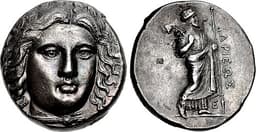
Idrieus
Emperor · Ancient
40.6Total

Nicomedes IV
Emperor · Ancient
37.5Total
Basic Information
Born
-380
-94
Died
-344
-74
Era
Ancient
Ancient
Nationality
Caria
Bithynia
Occupation
Emperor
Emperor
Civilization
Middle Eastern
Western
Score Comparison
Military (10%)
50.0
27.0
Political (20%)
30.8
25.0
Influence (20%)
44.8
47.9
Legacy (20%)
34.2
40.0
Leadership (15%)
48.4
33.6
Strategy (15%)
39.6
40.2
TOTAL
40.6
37.5
Idrieus — Complete Timeline
353 BC
Succeeded Mausolus as ruler of CariaPolitical Action◆ Major
Upon the death of his brother Mausolus, Idrieus became the Hecatomnid ruler of Caria. He continued the policies of his predecessors, maintaining Carian autonomy under Persian suzerainty and overseeing the region's administration.
SuccessionCarian Dynasty
Impact: regional
Construction of the Mausoleum at HalicarnassusCultural◆ Major
Idrieus and his sister-wife Ada completed the construction of the Mausoleum at Halicarnassus, the tomb of Mausolus. This structure became one of the Seven Wonders of the Ancient World, showcasing Carian wealth and Hellenistic architectural influence.
ArchitectureWonder of the World
Impact: globalconstructive
351 BC
Supported the Persian satrap revoltWar
Idrieus provided military support to the Persian satrap Artabazus of Phrygia during his revolt against Artaxerxes III. This action demonstrated Caria's complex relationship with the Achaemenid Empire, balancing autonomy with loyalty.
RevoltPersian Empire
Impact: regional
344 BC
Death and succession by AdaPolitical Action
Idrieus died in 344 BC, after ruling Caria for approximately nine years. His sister-wife Ada succeeded him as ruler, continuing the Hecatomnid dynasty's control over Caria until the arrival of Alexander the Great.
SuccessionCarian Dynasty
Impact: regional
Nicomedes IV — Complete Timeline
90 BC
Restoration by Roman SenatePolitical Action◆ Major
After being driven from his throne by Mithridates VI of Pontus, Nicomedes IV was restored to power by a Roman commission led by Manius Aquillius. This intervention deepened Roman involvement in Anatolia and provoked the First Mithridatic War.
Mithridatic WarsRoman InterventionRestoration
Impact: regionalconstructive
88 BC
Alliance with Rome against MithridatesPolitical Action◆ Major
Nicomedes IV, under Roman pressure, attacked Mithridates VI's territory, raiding as far as Amastris. This aggression gave Mithridates a casus belli for his invasion of the Roman province of Asia, leading to the First Mithridatic War.
Mithridatic WarsProvocationRoman Policy
Impact: regionaldestructive
74 BC
Bequest of Bithynia to RomePolitical Action
Nicomedes IV died without a legitimate heir and bequeathed his kingdom of Bithynia to the Roman Republic in his will. This act made Bithynia a Roman province, ending the independent kingdom and triggering the Third Mithridatic War.
Roman AnnexationProvinceMithridatic Wars
Impact: regional
This comparison has not been analyzed yet.
One-time AI generation (~1 minute). Scores and timeline are already available below.
Rankings
🥇
IdrieusLeader
Mil: 50.0Pol: 30.8Inf: 44.8
40.6
🥈
Nicomedes IV
Mil: 27.0Pol: 25.0Inf: 47.9
37.5
+3.1 behind
How This Comparison Works
Algorithm
Each figure is scored on 6 dimensions (0—100 scale) based on structured historical data: Military (10%), Political (20%), Influence (20%), Legacy (20%), Leadership (15%), Strategy (15%). The weighted total produces the final ranking.
Data Sources
Scores are computed from structured sub-indicators in the database. Scale factors adjust for era (Ancient ×0.85, Modern ×1.0) and civilization size (Eastern ×1.05, Other ×0.80) to account for differences in population and military scale.
Maximum 3 Figures
Comparisons are limited to 2—3 figures to ensure readability and statistical meaningfulness.
Error Margins
±5 points per dimension — Sub-scores are derived from historical records with inherent uncertainty. Two figures within 5 points on a dimension should be considered roughly equivalent in that area.
Total Score Accuracy
±3 points overall — The weighted combination of 6 dimensions produces a total score with approximately ±3 points of uncertainty. Differences of less than 3 points are not statistically significant— the figures are effectively tied.
Known Limitations
- Historical records are incomplete and uneven across civilizations
- Figures from oral-tradition societies may be underrepresented
- Occupation labels can misclassify multi-role figures
- Scores measure capability and impact, not moral character
- Quantitative scoring is a comparison tool, not absolute truth
Capability Radar
Military (10%) — Battles & Warfare
Battles
10
7
Win Rate
10
7
Expansion
15
11
Political (20%) — Governance & Reform
Reform
20
10
Diplomacy
30
30
Economy
25
15
Influence (20%) — Cultural & Global Reach
Cultural
15
10
Global
10
15
Legacy (20%) — Historical Impact
Historical
15
30
Longevity
10
20
Leadership (15%) — Power & Stability
Tenure
30
20
Stability
30
10
Strategy (15%) — Tactics & Innovation
Strategy
10
13
Tactics
10
17
Reform
5
19
Similar Comparisons
Comments & Discussion
No comments yet. Be the first to share your thoughts!