Loading...
Analysis will be generated on first visit.
Scores and timeline are available below. The page will refresh automatically when ready.
Hun Sen vs Napoleon Bonaparte
Napoleon Bonaparte leads by 13.5 pts · 2 figures compared
…

Hun Sen
Politician · Modern
68.9Total
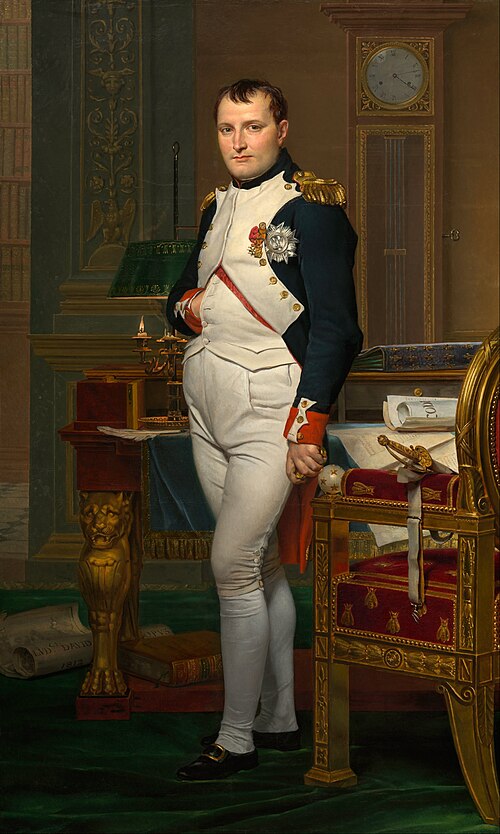
Napoleon Bonaparte
General · Modern
82.4Total
Basic Information
Born
1952
1769
Died
—
1821
Era
Modern
Modern
Nationality
Cambodia
France
Occupation
Politician
General
Civilization
Eastern
Western
Score Comparison
Military (10%)
45.4
94.0
Political (20%)
72.0
75.0
Influence (20%)
73.9
82.0
Legacy (20%)
67.1
78.0
Leadership (15%)
86.0
80.0
Strategy (15%)
59.2
93.0
TOTAL
68.9
82.4
Rankings
🥇
Napoleon BonaparteLeader
Mil: 94.0Pol: 75.0Inf: 82.0
82.4
🥈
Hun Sen
Mil: 45.4Pol: 72.0Inf: 73.9
68.9
+13.5 behind
How This Comparison Works
Algorithm
Each figure is scored on 6 dimensions (0—100 scale) based on structured historical data: Military (10%), Political (20%), Influence (20%), Legacy (20%), Leadership (15%), Strategy (15%). The weighted total produces the final ranking.
Data Sources
Scores are computed from structured sub-indicators in the database. Scale factors adjust for era (Ancient ×0.85, Modern ×1.0) and civilization size (Eastern ×1.05, Other ×0.80) to account for differences in population and military scale.
Maximum 3 Figures
Comparisons are limited to 2—3 figures to ensure readability and statistical meaningfulness.
Error Margins
±5 points per dimension — Sub-scores are derived from historical records with inherent uncertainty. Two figures within 5 points on a dimension should be considered roughly equivalent in that area.
Total Score Accuracy
±3 points overall — The weighted combination of 6 dimensions produces a total score with approximately ±3 points of uncertainty. Differences of less than 3 points are not statistically significant— the figures are effectively tied.
Known Limitations
- Historical records are incomplete and uneven across civilizations
- Figures from oral-tradition societies may be underrepresented
- Occupation labels can misclassify multi-role figures
- Scores measure capability and impact, not moral character
- Quantitative scoring is a comparison tool, not absolute truth
Capability Radar
Military (10%) — Battles & Warfare
Battles
15
95
Win Rate
20
90
Expansion
5
95
Political (20%) — Governance & Reform
Reform
40
95
Diplomacy
60
80
Economy
45
85
Influence (20%) — Cultural & Global Reach
Cultural
30
85
Global
40
90
Legacy (20%) — Historical Impact
Historical
50
95
Longevity
60
90
Leadership (15%) — Power & Stability
Tenure
95
85
Stability
30
70
Strategy (15%) — Tactics & Innovation
Strategy
15
95
Tactics
10
98
Reform
10
92
Analysis will be generated on first visit.
Scores and timeline are available below. The page will refresh automatically when ready.
Hun Sen — Complete Timeline
1970 AD
Joined Khmer RougePolitical Action
Hun Sen joined the Khmer Rouge as a soldier, fighting against the Lon Nol government. He was wounded and lost an eye during the conflict, an injury that became a lifelong mark.
Khmer RougeCivil warInjury
Impact: national
1977 AD
Defection from Khmer RougePolitical Action◆ Major
Hun Sen defected from the Khmer Rouge to Vietnam, fleeing purges within the regime. He joined Vietnamese-backed forces that later overthrew the Khmer Rouge government in 1979.
DefectionVietnamKhmer Rouge
Impact: national
1985 AD
Appointed Prime MinisterPolitical Action◆ Major
Hun Sen was appointed Prime Minister of the People's Republic of Kampuchea, becoming the youngest head of government in the world at age 33. He began consolidating power within the Vietnamese-backed regime.
Prime MinisterYoungestKampuchea
Impact: nationalconstructive
1991 AD
Paris Peace AccordsPolitical Action◆ Major
Hun Sen signed the Paris Peace Accords, ending the Cambodian-Vietnamese War and establishing a UN transitional authority. The accords led to a ceasefire and paved the way for elections in 1993.
Paris AccordsPeaceUN
Impact: regionalconstructive
1997 AD
1997 coup against RanariddhPolitical Action◆ Major
Hun Sen staged a coup against co-Prime Minister Prince Norodom Ranariddh, seizing sole power. The coup led to international condemnation and a temporary suspension of foreign aid to Cambodia.
CoupRanariddhPower seizure
Impact: nationaldestructive
2017 AD
Crackdown on oppositionPolitical Action◆ Major
Hun Sen's government dissolved the main opposition party, the Cambodia National Rescue Party, and banned its leaders from politics. This move effectively ended multi-party democracy in Cambodia and consolidated his one-party rule.
OppressionCNRPOne-party rule
Impact: nationaldestructive
Similar Comparisons
Comments & Discussion
No comments yet. Be the first to share your thoughts!