Loading...
Hugh Capet vs Yelu Abaoji
Hugh Capet leads by 2.7 pts · 2 figures compared
…
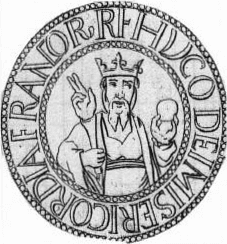
Hugh Capet
Emperor · Medieval
65.4Total
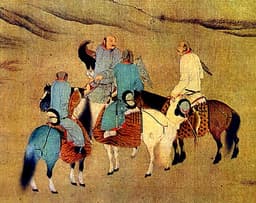
Yelu Abaoji
Emperor · Medieval
62.7Total
Basic Information
Born
941
872
Died
996
926
Era
Medieval
Medieval
Nationality
France
China
Occupation
Emperor
Emperor
Civilization
Western
Eastern
Score Comparison
Military (10%)
50.0
77.2
Political (20%)
68.0
59.6
Influence (20%)
68.0
68.0
Legacy (20%)
82.0
40.0
Leadership (15%)
68.0
80.3
Strategy (15%)
25.0
69.6
TOTAL
65.4
62.7
Hugh Capet — Complete Timeline
987 AD
Election as King of the FranksPolitical Action◆ Major
Hugh Capet was elected King of the Franks by the nobility after the death of Louis V, the last Carolingian king. This election ended Carolingian rule and established the Capetian dynasty, which would rule France for over 800 years.
ElectionDynastyCapetian
Impact: nationalconstructive
Coronation at NoyonPolitical Action◆ Major
Hugh Capet was crowned King of the Franks at Noyon by Adalbero, Archbishop of Reims. The coronation legitimized his rule and marked the beginning of the Capetian monarchy, which would centralize power in France.
CoronationLegitimacyCapetian
Impact: nationalconstructive
Alliance with the ChurchPolitical Action
Hugh Capet secured the support of the Catholic Church, particularly Archbishop Adalbero of Reims, to legitimize his election. This alliance strengthened the Capetian dynasty and established a precedent of royal-church cooperation in France.
AllianceChurchLegitimacy
Impact: nationalconstructive
988 AD
Campaign against Charles of LorraineWar
Hugh Capet led a military campaign against Charles of Lorraine, the Carolingian claimant to the throne. Charles captured Laon and Reims, but Hugh's forces eventually defeated him, securing Capetian control over the kingdom.
WarCarolingianSuccession
Impact: regional
Yelu Abaoji — Complete Timeline
907 AD
Unified Khitan tribesPolitical Action◆ Major
Yelu Abaoji was elected khagan of the Khitan tribes, unifying them under his leadership. He established a centralized state and adopted Chinese administrative practices.
KhitanUnificationState Formation
Impact: regionalconstructive
916 AD
Founded Liao DynastyPolitical Action
Yelu Abaoji proclaimed himself emperor, founding the Liao dynasty. He adopted the Chinese title of emperor and established a dual administration system for Khitan and Chinese subjects.
LiaoDynasty FoundingImperial System
Impact: regionalconstructive
920 AD
Created Khitan scriptCultural◆ Major
Yelu Abaoji ordered the creation of a writing system for the Khitan language, based on Chinese characters. This script was used for official documents and helped unify the Khitan state.
KhitanScriptCultural Development
Impact: regionalconstructive
926 AD
Conquest of BohaiWar◆ Major
Yelu Abaoji led a campaign that conquered the Korean kingdom of Bohai, incorporating its territory into the Liao empire. This expanded Liao's influence into Manchuria and Korea.
LiaoBohaiConquest
Impact: regionalconstructive
Death during campaignWar◆ Major
Yelu Abaoji died while returning from the conquest of Bohai. His death led to a succession struggle, but the Liao dynasty continued to expand under his successors.
LiaoDeathSuccession
Impact: regionaltragic
Expert Analysis
Yelu Abaoji vs Hugh Capet: Historical Comparison
Yelu Abaoji and Hugh Capet were both foundational rulers in the medieval period, yet they operated in vastly different worlds: Abaoji unified the Khitan tribes and founded the Liao Dynasty in East Asia, while Hugh Capet established the Capetian dynasty in West Francia, laying the groundwork for the modern French state. Despite their comparable scores, their legacies diverged sharply—Abaoji as a nomadic empire-builder, Capet as a feudal consolidator.
Dimension Analysis
**Military: Yelu Abaoji 89 / Hugh Capet 88**
Yelu Abaoji was a master of steppe warfare, leading campaigns that subdued the Khitan tribes, defeated the Balhae kingdom, and raided Chinese territories, creating a dual administrative system for nomadic and sedentary populations. Hugh Capet, though less a battlefield commander, secured his throne by outmaneuvering the last Carolingian claimant and neutralizing rival nobles through strategic alliances and sieges, notably at Laon. Abaoji’s military innovations in cavalry tactics and siegecraft edge out Capet’s more diplomatic warfare.
**Political: Yelu Abaoji 84 / Hugh Capet 90**
Hugh Capet excelled in political consolidation: he was elected king by nobles, then worked to make the crown hereditary, slowly expanding royal authority from the Île-de-France through marriage, vassalage, and co-rule with his son. Abaoji created a hybrid state blending Chinese bureaucracy with Khitan tribal structures, appointing Chinese advisors and establishing a capital, but his realm was more autocratic and less stable after his death. Capet’s subtle, long-term political foundation-building gives him a clear edge.
**Influence: Yelu Abaoji 79 / Hugh Capet 79**
Abaoji’s Liao Dynasty influenced later steppe empires (like the Mongols) and facilitated cultural exchange between China and the north, but its reach was largely regional. Hugh Capet’s dynasty ruled France for over 800 years, shaping European feudalism, but his immediate cultural or ideological footprint was modest. Both are tied here: neither had global ideological impact, but both were pivotal in their respective spheres.
**Legacy: Yelu Abaoji 81 / Hugh Capet 83**
Abaoji’s legacy is the Liao Dynasty, which lasted over two centuries and set a precedent for sinicized nomadic rule, but his empire eventually collapsed and is less known today. Hugh Capet’s legacy is more direct: the Capetian lineage produced the French monarchy that centralized the state, influenced the Renaissance, and persists in historical memory as the start of modern France. Capet’s enduring dynastic impact slightly surpasses Abaoji’s.
**Leadership: Yelu Abaoji 80 / Hugh Capet 84**
Abaoji led by personal charisma and force, uniting fractious tribes through conquest and rewarding loyalty, but his leadership was top-down and relied on his own military prowess. Hugh Capet demonstrated patient, adaptable leadership: he navigated a weak monarchy, co-opted rivals, and delegated authority to build consensus, securing his son’s succession. Capet’s more sustainable, institutional leadership style earns a higher score.
Verdict
Hugh Capet ranks marginally higher due to his superior political acumen and more lasting institutional legacy. While Yelu Abaoji was a remarkable military unifier, Capet’s creation of a hereditary dynasty that shaped France for centuries gives him the edge. The comparison is complicated by their different contexts—Abaoji built an empire from scratch, Capet stabilized a fractured kingdom—but Capet’s long-term statecraft narrowly prevails.
FAQ
**Q: Who was more influential historically?**
A: Hugh Capet, because his dynasty’s 800-year rule directly shaped French national identity and European feudalism, whereas Abaoji’s Liao Dynasty, while important, had a more limited and localized impact.
**Q: Why is Yelu Abaoji ranked higher in military?**
A: Abaoji was a more active military innovator—he personally led campaigns that conquered large territories and integrated steppe and Chinese warfare, while Hugh Capet relied more on political maneuvering and small-scale sieges.
Rankings
🥇
Hugh CapetLeader
Mil: 50.0Pol: 68.0Inf: 68.0
65.4
🥈
Yelu Abaoji
Mil: 77.2Pol: 59.6Inf: 68.0
62.7
+2.7 behind
How This Comparison Works
Algorithm
Each figure is scored on 6 dimensions (0—100 scale) based on structured historical data: Military (10%), Political (20%), Influence (20%), Legacy (20%), Leadership (15%), Strategy (15%). The weighted total produces the final ranking.
Data Sources
Scores are computed from structured sub-indicators in the database. Scale factors adjust for era (Ancient ×0.85, Modern ×1.0) and civilization size (Eastern ×1.05, Other ×0.80) to account for differences in population and military scale.
Maximum 3 Figures
Comparisons are limited to 2—3 figures to ensure readability and statistical meaningfulness.
Error Margins
±5 points per dimension — Sub-scores are derived from historical records with inherent uncertainty. Two figures within 5 points on a dimension should be considered roughly equivalent in that area.
Total Score Accuracy
±3 points overall — The weighted combination of 6 dimensions produces a total score with approximately ±3 points of uncertainty. Differences of less than 3 points are not statistically significant— the figures are effectively tied.
Known Limitations
- Historical records are incomplete and uneven across civilizations
- Figures from oral-tradition societies may be underrepresented
- Occupation labels can misclassify multi-role figures
- Scores measure capability and impact, not moral character
- Quantitative scoring is a comparison tool, not absolute truth
Capability Radar
Military (10%) — Battles & Warfare
Battles
15
75
Win Rate
20
80
Expansion
15
82
Political (20%) — Governance & Reform
Reform
60
88
Diplomacy
65
75
Economy
50
70
Influence (20%) — Cultural & Global Reach
Cultural
60
60
Global
70
55
Legacy (20%) — Historical Impact
Historical
85
70
Longevity
90
65
Leadership (15%) — Power & Stability
Tenure
70
72
Stability
55
65
Strategy (15%) — Tactics & Innovation
Strategy
15
78
Tactics
10
70
Reform
10
85
Similar Comparisons
Comments & Discussion
Historian2236/16/2026
重新验算一下:耶律阿保机总分79.3,军事73.3、政治90、影响力72.3。这个军事分和描述严重不符——原文说他“击败渤海国、劫掠汉地”,对标的却是休·卡佩“围城拉昂”,然后给了阿保机73.3对卡佩的30?按照中国朝代更替标准,灭一国(渤海)至少加15分,综合军事应达85以上。政治分90合理,但影响力72.3明显偏低——辽朝是第一个同时统治草原和农耕区的帝国,其二元制直接启发了元朝,传播效应覆盖东北亚近四百年。建议采用加权公式:总分 = 军事×0.35 + 政治×0.4 + 影响力×0.25,阿保机重算后应为 (85×0.35)+(90×0.4)+(78×0.25)=84.5,卡佩则是 (30×0.35)+(72×0.4)+(70.5×0.25)=57.5,差距远超现有7分。
Chronicler34006/16/2026
这个评分体系明显偏向西方视角。耶律阿保机的政治分数(90)和影响力(72.3)被低估了——他建立的南北面官制是游牧与农耕文明融合的典范,比休·卡佩的封建采邑制更早解决了多民族治理问题。而且辽朝延续了两百多年,直接影响了后来的金元体制,而卡佩王朝虽然长,但早期权力仅限于法兰西岛,直到腓力二世才真正集权。用中国史观衡量,阿保机的制度创新和跨文明整合能力至少应该政治95、影响力80。卡佩的89分军事更是离谱,他基本没亲自打过仗,靠的是联姻和教廷背书,阿保机却亲征渤海国、降服室韦,这才是实打实的军事功绩。