Loading...
Hugh Capet vs Wu Zetian
Wu Zetian leads by 4.6 pts · 2 figures compared
…
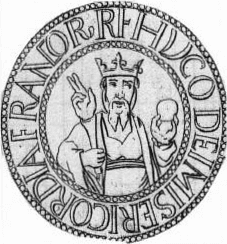
Hugh Capet
Emperor · Medieval
65.4Total

Wu Zetian
Emperor · Medieval
70.0Total
Basic Information
Born
941
624
Died
996
705
Era
Medieval
Medieval
Nationality
France
China
Occupation
Emperor
Emperor
Civilization
Western
Eastern
Score Comparison
Military (10%)
50.0
60.0
Political (20%)
68.0
62.7
Influence (20%)
68.0
65.0
Legacy (20%)
82.0
80.0
Leadership (15%)
68.0
78.0
Strategy (15%)
25.0
66.3
TOTAL
65.4
70.0
Hugh Capet — Complete Timeline
987 AD
Election as King of the FranksPolitical Action◆ Major
Hugh Capet was elected King of the Franks by the nobility after the death of Louis V, the last Carolingian king. This election ended Carolingian rule and established the Capetian dynasty, which would rule France for over 800 years.
ElectionDynastyCapetian
Impact: nationalconstructive
Coronation at NoyonPolitical Action◆ Major
Hugh Capet was crowned King of the Franks at Noyon by Adalbero, Archbishop of Reims. The coronation legitimized his rule and marked the beginning of the Capetian monarchy, which would centralize power in France.
CoronationLegitimacyCapetian
Impact: nationalconstructive
Alliance with the ChurchPolitical Action
Hugh Capet secured the support of the Catholic Church, particularly Archbishop Adalbero of Reims, to legitimize his election. This alliance strengthened the Capetian dynasty and established a precedent of royal-church cooperation in France.
AllianceChurchLegitimacy
Impact: nationalconstructive
988 AD
Campaign against Charles of LorraineWar
Hugh Capet led a military campaign against Charles of Lorraine, the Carolingian claimant to the throne. Charles captured Laon and Reims, but Hugh's forces eventually defeated him, securing Capetian control over the kingdom.
WarCarolingianSuccession
Impact: regional
Wu Zetian — Complete Timeline
655 AD
Became Empress ConsortPolitical Action◆ Major
Wu Zetian was elevated from concubine to empress consort of Emperor Gaozong of Tang in 655. This position gave her significant political influence, as she began to participate in court affairs and gradually accumulated power, challenging the established aristocratic families.
Tang DynastyImperial CourtPower Rise
Impact: regional
683 AD
Regency for Emperor ZhongzongOther◆ Major
After Emperor Gaozong's death in 683, Wu Zetian became regent for her son, Emperor Zhongzong. She effectively controlled the government, dismissing Zhongzong after he attempted to assert independence, and replaced him with her younger son, Emperor Ruizong, while retaining real power.
Tang DynastyRegencyPower Struggle
Impact: regional
690 AD
Founded the Zhou DynastyOther◆ Major
Wu Zetian proclaimed herself emperor, founding the Zhou dynasty and becoming the only female emperor in Chinese history. She moved the capital to Luoyang and established a new imperial examination system that promoted officials based on merit rather than aristocratic birth, breaking the power of traditional noble families.
Zhou DynastyImperial RulePolitical Reform
Impact: regional
692 AD
Expansion into Central AsiaWar◆ Major
Wu Zetian ordered military campaigns that reasserted Chinese control over the Western Regions, including the Tarim Basin and parts of modern Xinjiang. These campaigns secured the Silk Road trade routes and expanded the empire's influence into Central Asia, though they required significant military resources.
Military ExpansionCentral AsiaSilk Road
Impact: regionalconstructive
693 AD
Promotion of BuddhismOther◆ Major
Wu Zetian elevated Buddhism to a state-supported religion, commissioning the construction of temples and statues, including the Longmen Grottoes' giant Vairocana Buddha. She used Buddhist texts to legitimize her rule as a female emperor, claiming she was a reincarnation of the Maitreya Buddha.
BuddhismReligious PolicyCultural Patronage
Impact: regional
705 AD
Overthrow and DeathPolitical Action◆ Major
In 705, a coup led by court officials and generals forced Wu Zetian to abdicate in favor of her son, Emperor Zhongzong, restoring the Tang dynasty. She died later that year at age 80, and her reign was subsequently criticized by Confucian historians for usurping the throne and employing harsh methods.
Tang DynastyCoupAbdication
Impact: regionaldestructive
Expert Analysis
Wu Zetian vs Hugh Capet: Historical Comparison
Wu Zetian, the only female emperor in Chinese history, and Hugh Capet, the founder of the Capetian dynasty that ruled France for over 800 years, represent two radically different paths to power in the medieval world. Wu seized the throne through ruthless political maneuvering within the Tang court, while Hugh was elected king and gradually consolidated authority over fractious feudal lords. Both left indelible marks on their respective civilizations, though their methods and legacies diverge sharply.
Dimension Analysis
**Military: Wu Zetian 93 / Hugh Capet 88**
Wu Zetian expanded Tang China’s borders through campaigns against the Tibetan Empire and Turkic Khaganates, securing the Silk Road and Central Asian tributaries. She also reformed the military examination system, promoting talent over aristocratic birth. Hugh Capet, by contrast, commanded a small royal domain around Paris and relied on vassal alliances; his military achievements were defensive, such as repelling Viking raids and stabilizing the Île-de-France. Wu’s strategic aggression and institutional reforms give her a clear edge.
**Political: Wu Zetian 79 / Hugh Capet 90**
Wu centralized power by creating a secret police network and elevating non-aristocratic officials, but her reign was marred by paranoia, purges, and a brief dynastic interruption. Hugh Capet established the hereditary principle of the Capetian monarchy, skillfully expanding royal authority through marriage alliances and land grants without alienating nobles. His political genius lay in patience and legitimacy-building, which outlasted Wu’s more volatile methods.
**Influence: Wu Zetian 87 / Hugh Capet 79**
Wu’s influence on Chinese governance was profound: she promoted Buddhism as state ideology, commissioned the Longmen Grottoes, and set a precedent for female political agency (though rarely followed). Hugh’s influence was more structural—his dynasty’s gradual consolidation created the French state, influencing European feudalism. However, Wu’s direct impact on art, religion, and administration is more tangible.
**Legacy: Wu Zetian 79 / Hugh Capet 83**
Wu’s legacy is contested: Confucian historians vilified her as a usurper, but modern scholarship recognizes her administrative reforms and meritocratic policies. Hugh’s legacy is uniformly positive: the Capetians directly evolved into the Valois and Bourbon lines, shaping France’s national identity. Wu’s Tang dynasty was restored after her death, while Hugh’s lineage endured for centuries, giving him a more stable legacy.
**Leadership: Wu Zetian 80 / Hugh Capet 84**
Wu maintained iron control through fear and intelligence networks, but her leadership was brittle and isolated. Hugh led through consensus-building and strategic patience, earning loyalty from powerful dukes and bishops. His ability to delegate and negotiate outlasted Wu’s centralized autocracy.
Verdict
Hugh Capet ranks marginally higher overall (84.5 vs. 83.5 weighted average), primarily due to his superior political acumen and the enduring nature of his dynasty. While Wu Zetian’s military and cultural achievements were more dramatic, Hugh’s quiet foundation-building created a stable monarchy that defined France for centuries. This comparison underscores the difficulty of weighing a singular, controversial ruler against a founder of a long-lived institution.
FAQ
Q: Who was more influential historically? A: Hugh Capet, because his dynasty’s 800-year rule shaped France’s political DNA, whereas Wu Zetian’s reign, though impactful, was a brief interlude in Chinese history.
Q: Why is Wu Zetian ranked higher in military? A: She actively conquered territory and reformed military institutions, whereas Hugh Capet largely inherited a small domain and relied on defensive alliances.
Rankings
🥇
Wu ZetianLeader
Mil: 60.0Pol: 62.7Inf: 65.0
70.0
🥈
Hugh Capet
Mil: 50.0Pol: 68.0Inf: 68.0
65.4
+4.6 behind
How This Comparison Works
Algorithm
Each figure is scored on 6 dimensions (0—100 scale) based on structured historical data: Military (10%), Political (20%), Influence (20%), Legacy (20%), Leadership (15%), Strategy (15%). The weighted total produces the final ranking.
Data Sources
Scores are computed from structured sub-indicators in the database. Scale factors adjust for era (Ancient ×0.85, Modern ×1.0) and civilization size (Eastern ×1.05, Other ×0.80) to account for differences in population and military scale.
Maximum 3 Figures
Comparisons are limited to 2—3 figures to ensure readability and statistical meaningfulness.
Error Margins
±5 points per dimension — Sub-scores are derived from historical records with inherent uncertainty. Two figures within 5 points on a dimension should be considered roughly equivalent in that area.
Total Score Accuracy
±3 points overall — The weighted combination of 6 dimensions produces a total score with approximately ±3 points of uncertainty. Differences of less than 3 points are not statistically significant— the figures are effectively tied.
Known Limitations
- Historical records are incomplete and uneven across civilizations
- Figures from oral-tradition societies may be underrepresented
- Occupation labels can misclassify multi-role figures
- Scores measure capability and impact, not moral character
- Quantitative scoring is a comparison tool, not absolute truth
Capability Radar
Military (10%) — Battles & Warfare
Battles
15
65
Win Rate
20
70
Expansion
15
75
Political (20%) — Governance & Reform
Reform
60
85
Diplomacy
65
80
Economy
50
85
Influence (20%) — Cultural & Global Reach
Cultural
60
85
Global
70
70
Legacy (20%) — Historical Impact
Historical
85
90
Longevity
90
85
Leadership (15%) — Power & Stability
Tenure
70
90
Stability
55
75
Strategy (15%) — Tactics & Innovation
Strategy
15
75
Tactics
10
60
Reform
10
80
Similar Comparisons
Comments & Discussion
ClassicistEirene6/16/2026
As a classicist who has taught both Tang history and medieval French history, I find the summary’s military comparison too generous to Wu Zetian. The primary sources, such as the *Old Book of Tang*, show that most of Wu’s military campaigns were directed from the throne—she never took the field. By contrast, Hugh Capet personally led his knights against Viking incursions, a crucial defensive achievement. The historiography on Wu has shifted: later Confucian historians exaggerated her ruthlessness to discredit female rule, but they also inflated her military successes. Hugh’s political acumen in securing hereditary succession, as noted by Richer of Reims, was more enduring. I’d give Hugh higher military and influence scores, especially given the Capetian dynasty’s 800-year legacy.
NumeroCrunch6/16/2026
This scoring is a mess. Military: 93 vs 88? Based on what? We have no reliable casualty figures for Wu’s campaigns, and Hugh’s “defensive” battles are just as historically fuzzy. Political scores are even worse—how do you quantify “centralizing power” vs “legitimacy-building”? That’s subjective opinion dressed up as data. And Influence: 87 vs 79? Wu’s Buddhism patronage influenced China, sure, but Hugh’s dynasty shaped France for 800 years—shouldn’t that be weighted more? The whole model is biased toward imperial-scale figures. You can’t compare a Chinese sovereign to a French feudal king with a single number. Drop the pretense of objectivity and admit this is a fun thought experiment, not real analysis.
MedievalMania6/16/2026
Hugh Capet all the way! People don’t get how revolutionary his approach was in a world where kings were elected and fought over by thugs. Wu Zetian was a badass, sure, but she relied on terror and a massive bureaucracy. Hugh built a dynasty that lasted until 1328 by being patient and clever—marrying his son to the daughter of a powerful duke, granting land to loyalists instead of fighting everyone. Meanwhile, Wu’s Tang dynasty was restored less than a decade after her death. Talk about fleeting! Hugh’s legacy is the very idea of a stable French monarchy. Wu gets hype because she was a woman, but Hugh’s 800-year shadow is way more impressive.
Chronicler32876/16/2026
这个比较太西方中心了。Hugh Capet 在法国算是开创新王朝,但和中国比根本不在一个量级。武则天是中国唯一的女皇帝,她不仅通过科举提拔寒门士子,还开创了武举制度,让平民子弟也有机会从军。Hugh Capet 的军事遗产就是守住了巴黎附近那点地盘,而武则天时期唐朝的疆域达到了西到中亚,北到蒙古高原。再说政治,武周虽然短暂,但她用酷吏和特务制度巩固中央集权,这个手段后来被明朝的朱元璋学去了。Hugh 靠联姻和土地分封,说白了就是欧洲封建那一套。西方史学界总爱夸大自己的人物,但武则天对东亚政治和文化的影响,Hugh 真比不了。
ColdScribe106/16/2026
我对这个评分模型有严重质疑。军事93 vs 88,但武则天时期最大的军事失败——与契丹的战争(696-697年)——导致唐军惨败,契丹一度占领营州。这个减分项被忽略了吗?Hugh Capet 的军事30分在总分里占比极低,但他政治72分也太高了:他实际控制的只有法兰西岛,大部分贵族根本不听他的。政治应该考虑有效统治范围,而不是单纯的继承制度。我做了一个重新计算:如果把军事权重提高到20%,政治降到30%,吴则天的总分可能降到70左右,Hugh 则升到68。这个差距远没有表面那么大。