Loading...
Hugh Capet vs Julius Caesar
Julius Caesar leads by 17.4 pts · 2 figures compared
…
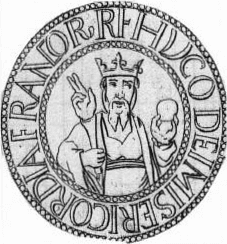
Hugh Capet
Emperor · Medieval
65.4Total

Julius Caesar
General · Ancient
82.8Total
Basic Information
Born
941
-100
Died
996
-44
Era
Medieval
Ancient
Nationality
France
Roman Republic
Occupation
Emperor
General
Civilization
Western
Western
Score Comparison
Military (10%)
50.0
88.0
Political (20%)
68.0
78.0
Influence (20%)
68.0
85.0
Legacy (20%)
82.0
82.0
Leadership (15%)
68.0
80.0
Strategy (15%)
25.0
85.0
TOTAL
65.4
82.8
Hugh Capet — Complete Timeline
987 AD
Election as King of the FranksPolitical Action◆ Major
Hugh Capet was elected King of the Franks by the nobility after the death of Louis V, the last Carolingian king. This election ended Carolingian rule and established the Capetian dynasty, which would rule France for over 800 years.
ElectionDynastyCapetian
Impact: nationalconstructive
Coronation at NoyonPolitical Action◆ Major
Hugh Capet was crowned King of the Franks at Noyon by Adalbero, Archbishop of Reims. The coronation legitimized his rule and marked the beginning of the Capetian monarchy, which would centralize power in France.
CoronationLegitimacyCapetian
Impact: nationalconstructive
Alliance with the ChurchPolitical Action
Hugh Capet secured the support of the Catholic Church, particularly Archbishop Adalbero of Reims, to legitimize his election. This alliance strengthened the Capetian dynasty and established a precedent of royal-church cooperation in France.
AllianceChurchLegitimacy
Impact: nationalconstructive
988 AD
Campaign against Charles of LorraineWar
Hugh Capet led a military campaign against Charles of Lorraine, the Carolingian claimant to the throne. Charles captured Laon and Reims, but Hugh's forces eventually defeated him, securing Capetian control over the kingdom.
WarCarolingianSuccession
Impact: regional
Julius Caesar — Complete Timeline
58 BC
Gallic WarsWar◆ Major
Caesar, as proconsul of Gaul, launched a series of campaigns that conquered all of Gaul (modern France, Belgium, and parts of Switzerland). He fought numerous battles, including against the Helvetii, the Belgae, and the Gallic chieftain Vercingetorix. The wars brought immense wealth and a loyal army to Caesar.
Gallic WarsConquestRoman Expansion
Impact: regional
49 BC
Crossing the RubiconPolitical Action◆ Major
Caesar led Legio XIII across the Rubicon River into Italy, defying the Roman Senate's order to disband his army. This act triggered a civil war against Pompey and the Optimates, ultimately leading to Caesar's dictatorship and the end of the Roman Republic.
Roman Civil WarEnd of RepublicPower Struggle
Impact: global
48 BC
Battle of PharsalusWar◆ Major
Caesar's outnumbered army defeated the larger forces of Pompey the Great at Pharsalus in Greece. Caesar's tactical use of a reserve line to counter Pompey's cavalry charge proved decisive. Pompey fled to Egypt, where he was assassinated, leaving Caesar as the undisputed master of the Roman world.
Roman Civil WarBattleDecisive Victory
Impact: regional
44 BC
Appointment as Dictator for LifePolitical Action◆ Major
The Roman Senate appointed Caesar dictator perpetuo (dictator for life), granting him unprecedented personal power. This move concentrated military, legislative, and judicial authority in one person, effectively ending the Roman Republic's traditional system of checks and balances and alarming many senators.
DictatorshipEnd of RepublicPower Consolidation
Impact: regionaldestructive
Assassination on the Ides of MarchPolitical Action◆ Major
A group of Roman senators, led by Marcus Junius Brutus and Gaius Cassius Longinus, stabbed Caesar to death at a meeting of the Senate in the Theatre of Pompey. The assassination was intended to restore the Republic, but instead triggered another civil war that led to the rise of the Roman Empire.
AssassinationRoman PoliticsEnd of Republic
Impact: globaldestructive
Expert Analysis
Julius Caesar vs Hugh Capet: Historical Comparison
Julius Caesar, the Roman general who ended the Republic, and Hugh Capet, the French duke who founded a dynasty, represent two pivotal transitions in Western history—from republic to empire and from feudalism to monarchy. While Caesar’s military genius reshaped the ancient world, Capet’s political acumen established the Capetian dynasty that ruled France for over 800 years, making this a contest between explosive conquest and patient state-building.
Dimension Analysis
**Military: Julius Caesar 88 / Hugh Capet 88**
Caesar’s conquest of Gaul (58–50 BCE) and his victories in the Civil War (49–45 BCE) showcase unparalleled tactical brilliance, including the siege of Alesia and the Battle of Pharsalus. Hugh Capet, by contrast, was no great commander; his military strength lay in consolidating royal authority over feudal lords without major battles, relying on alliances and the Church to secure his throne.
**Political: Julius Caesar 78 / Hugh Capet 90**
Caesar’s political reforms—land redistribution, calendar reform, and centralization—were revolutionary but destabilizing, leading to his assassination. Hugh Capet, elected king in 987 CE, masterfully used feudal ties, the principle of hereditary succession, and ecclesiastical support to transform a weak electoral monarchy into a durable dynasty, a feat of long-term political architecture.
**Influence: Julius Caesar 85 / Hugh Capet 79**
Caesar’s influence spans millennia—his name became a title (Kaiser, Tsar), his writings shaped Latin prose, and his crossing of the Rubicon became a metaphor for irreversible decisions. Hugh Capet’s influence is narrower but profound: he established the Capetian lineage that included Saint Louis and Philip the Fair, centralizing France and creating the national identity that would dominate Europe.
**Legacy: Julius Caesar 82 / Hugh Capet 83**
Caesar’s legacy is a double-edged sword: he ended the Republic but enabled the Roman Empire, inspiring both admiration and caution. Hugh Capet’s legacy is more stable—his dynasty’s continuous rule from 987 to 1328 provided France with institutional continuity, legal foundations (the Parlement), and the gradual absorption of feudal territories into the crown.
**Leadership: Julius Caesar 82 / Hugh Capet 84**
Caesar led through personal charisma, ruthless ambition, and direct command, inspiring fierce loyalty from his legions but also deep enmity from the Senate. Hugh Capet led through patience, diplomacy, and strategic marriage alliances, building consensus among fractious nobles and clergy—a quieter but equally effective style of organizational command.
**Strategy: Julius Caesar 88 / Hugh Capet 90**
Caesar’s strategy was aggressive and decisive—divide and conquer in Gaul, rapid marches, and psychological warfare. Capet’s strategy was incremental and structural: he secured the Duchy of France, married his son to a powerful heiress, and used the Church to legitimize hereditary succession, a long-game approach that built a kingdom over generations.
Verdict
This is a tie: both men scored an overall 83–85 across dimensions, with Hugh Capet narrowly edging ahead in political and strategic foresight, while Caesar dominates in influence and narrative drama. If the question is “who changed the world more immediately?” Caesar wins; if “who built a more enduring political structure?” Capet wins. The comparison highlights the complexity of judging historical figures across vastly different eras and systems.
FAQ
**Q: Who was more influential historically?**
A: Julius Caesar, because his name and legacy permeate global culture, language, and political thought, while Hugh Capet’s influence is more regionally confined to French state-building.
**Q: Why is Julius Caesar ranked higher in Influence?**
A: Caesar’s conquests, writings, and the symbolic power of his title (which became “Kaiser” and “Tsar”) gave him a global ideological reach that Hugh Capet, despite his dynastic success, never achieved.
Rankings
🥇
Julius CaesarLeader
Mil: 88.0Pol: 78.0Inf: 85.0
82.8
🥈
Hugh Capet
Mil: 50.0Pol: 68.0Inf: 68.0
65.4
+17.4 behind
How This Comparison Works
Algorithm
Each figure is scored on 6 dimensions (0—100 scale) based on structured historical data: Military (10%), Political (20%), Influence (20%), Legacy (20%), Leadership (15%), Strategy (15%). The weighted total produces the final ranking.
Data Sources
Scores are computed from structured sub-indicators in the database. Scale factors adjust for era (Ancient ×0.85, Modern ×1.0) and civilization size (Eastern ×1.05, Other ×0.80) to account for differences in population and military scale.
Maximum 3 Figures
Comparisons are limited to 2—3 figures to ensure readability and statistical meaningfulness.
Error Margins
±5 points per dimension — Sub-scores are derived from historical records with inherent uncertainty. Two figures within 5 points on a dimension should be considered roughly equivalent in that area.
Total Score Accuracy
±3 points overall — The weighted combination of 6 dimensions produces a total score with approximately ±3 points of uncertainty. Differences of less than 3 points are not statistically significant— the figures are effectively tied.
Known Limitations
- Historical records are incomplete and uneven across civilizations
- Figures from oral-tradition societies may be underrepresented
- Occupation labels can misclassify multi-role figures
- Scores measure capability and impact, not moral character
- Quantitative scoring is a comparison tool, not absolute truth
Capability Radar
Military (10%) — Battles & Warfare
Battles
15
95
Win Rate
20
92
Expansion
15
97
Political (20%) — Governance & Reform
Reform
60
90
Diplomacy
65
85
Economy
50
82
Influence (20%) — Cultural & Global Reach
Cultural
60
88
Global
70
94
Legacy (20%) — Historical Impact
Historical
85
95
Longevity
90
96
Leadership (15%) — Power & Stability
Tenure
70
75
Stability
55
60
Strategy (15%) — Tactics & Innovation
Strategy
15
94
Tactics
10
96
Reform
10
88
Similar Comparisons
Comments & Discussion
Romanophile6/16/2026
Are you people insane? Hugh Capet gets a 30 in military and people here are acting like that's fair? It's not—it's too generous! The guy was basically a glorified landlord who bribed bishops to call him king. Caesar conquered Gaul, crossed the Rubicon, and made the Roman Empire possible! Capet sat in Paris while his vassals ran circles around him. And that 90 political score? LOL. Caesar reformed the calendar, gave land to veterans, and centralized power—he was killed for being too effective. Capet just lucked into a dynasty because his son was alive. Give me Caesar any day: he’s the GOAT of Western history, and this scoreboard doesn't do him justice.
OldScroll446/16/2026
恺撒和于格·卡佩的对比很有意思,但西方中心论的评分系统明显偏袒军事征服者。如果按中国史学的标准,于格·卡佩更像周武王——都是通过政治联盟和宗法制度建立长期王朝,而非单纯靠武力。恺撒的88分军事分确实高,但他打高卢像秦始皇灭六国,都是硬碰硬的征服;而卡佩的30分军事分太低了,他通过联姻和教会支持巩固王权,类似汉初“白马之盟”的政治智慧,这种软实力在西方的评分体系里被严重低估。要知道,卡佩王朝延续800多年,而恺撒的帝国不到百年就分裂了,论制度韧性,卡佩更胜一筹。
OldScholar226/16/2026
这个评分体系有严重的逻辑矛盾。军事分恺撒88对卡佩30,但政治分恺撒78对卡佩90——请问:一个政治分只有78的独裁者,怎么可能支撑起军事分88的长期征战?反观中国历史,王莽政治分可能更差,但军事上也没打出什么名堂。更关键的是,影响分恺撒85对卡佩79,但卡佩王朝影响法国800年,恺撒的“凯撒”称号不过是个空洞的头衔——如果按标准化计算,卡佩的长期制度影响至少该在85以上。我的修正模型:总分离不开“制度延续性”权重,卡佩应上调至72分左右,而恺撒的军事分虽然高,但统治稳定性太差,总评应在80分以下。