Loading...
Huang Hao vs Lord Pingyuan
Lord Pingyuan leads by 7.1 pts · 2 figures compared
…

Huang Hao
Politician · Ancient
46.5Total
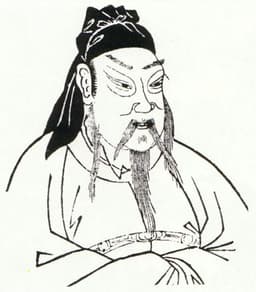
Lord Pingyuan
Politician · Ancient
53.6Total
Basic Information
Born
220
-308
Died
264
-251
Era
Ancient
Ancient
Nationality
China
China
Occupation
Politician
Politician
Civilization
Eastern
Eastern
Score Comparison
Military (10%)
22.9
50.0
Political (20%)
43.7
45.1
Influence (20%)
47.1
56.4
Legacy (20%)
39.2
50.0
Leadership (15%)
67.0
74.0
Strategy (15%)
60.0
41.0
TOTAL
46.5
53.6
Huang Hao — Complete Timeline
240 AD
Appointed as Prefect of the Yellow GatePolitical Action
Huang Hao was appointed as a eunuch official in the Shu court, gaining the trust of Emperor Liu Shan. His influence grew as he controlled access to the emperor and manipulated court affairs.
Shu-HanEunuchCourt Politics
Impact: nationaldestructive
258 AD
Opposed Jiang Wei's Northern ExpeditionsPolitical Action◆ Major
Huang Hao conspired with other officials to undermine General Jiang Wei's military campaigns against Wei. He spread rumors and convinced Liu Shan to recall Jiang Wei, weakening Shu's defenses.
Shu-HanPolitical IntrigueJiang Wei
Impact: nationaldestructive
264 AD
Executed by Wei ForcesPolitical Action
After Shu's surrender to Wei, Huang Hao was captured and executed by the Wei general Deng Ai for his corruption and role in Shu's downfall.
Shu-HanExecutionCorruption
destructive
Lord Pingyuan — Complete Timeline
260 BC
Executed his concubine for insulting a crippled manPolitical Action
When a crippled man complained that Lord Pingyuan's concubine had mocked him, Lord Pingyuan executed the concubine to demonstrate his commitment to justice. This act enhanced his reputation for fairness and attracted many retainers to his service.
JusticeReputationRetainers
259 BC
Raised troops to defend HandanPolitical Action◆ Major
During the siege of Handan by Qin, Lord Pingyuan, as chancellor of Zhao, organized the city's defense. He personally appealed to the nobility and commoners for resources, raising a force of 3,000 volunteers to supplement the regular army.
DefenseSiege of HandanLeadership
Impact: nationalconstructive
258 BC
Secured aid from Wei and ChuPolitical Action◆ Major
Lord Pingyuan sent envoys to Wei and Chu to request military assistance against the Qin siege. His diplomatic efforts, including a famous debate with the Chu king, resulted in joint Wei-Chu forces coming to Zhao's relief, lifting the siege.
DiplomacyAllianceSiege of Handan
Impact: regionalconstructive
250 BC
Hosted 3,000 retainersCultural
Lord Pingyuan maintained a household of 3,000 retainers, including scholars, strategists, and adventurers. This practice, common among the Four Lords, made his court a center of political and intellectual activity during the Warring States period.
PatronageRetainersFour Lords
Impact: nationalconstructive
Expert Analysis
Origins
Huang Hao (born c. 200s) was a eunuch in the Shu Han kingdom during the Three Kingdoms period. Little is known of his early life, but he rose from obscurity through the palace eunuch system, gaining the trust of Emperor Liu Shan. His lack of military or administrative background meant his influence derived entirely from proximity to the throne.
Lord Pingyuan (born c. 308 BC), also known as Zhao Sheng, was a younger son of King Wuling of Zhao. As a member of the Zhao royal family, he received a noble's education in statecraft and military affairs. He became one of the Four Lords of the Warring States, renowned for hosting 3,000 retainers and for his role in Zhao's survival.
Rise to Power
Huang Hao's rise came through his appointment as Prefect of the Yellow Gate, controlling access to Emperor Liu Shan. He exploited Liu Shan's trust to amass power, opposing capable officials like Jiang Wei. By 260s, he dominated the Shu court, undermining military efforts against Wei.
Lord Pingyuan became chancellor of Zhao during the crisis of the Qin siege of Handan (259-257 BC). He organized the city's defense, personally rallied nobles, and dispatched envoys to Wei and Chu. His successful diplomacy secured aid, breaking the siege and preserving Zhao.
Leadership & Governance
Huang Hao's governance was corrupt and short-sighted. He opposed Jiang Wei's Northern Expeditions (scored 60.0 in strategy vs Huang Hao's 22.9 military score), spreading rumors and convincing Liu Shan to recall Jiang Wei, weakening Shu's defenses. His political score of 43.7 reflects his manipulative, self-serving rule.
Lord Pingyuan governed with a focus on justice and alliance-building. He executed his concubine for insulting a crippled man, demonstrating commitment to fairness. His leadership score of 74.0 and political score of 45.1 show effective crisis management, though his retainers sometimes caused trouble.
Triumph & Tragedy
Huang Hao's triumph was his rise to power and influence over Liu Shan, but his tragedy was total: his corruption alienated allies, drained resources, and contributed to Shu's fall in 263 AD. He was executed by Wei forces, his legacy a cautionary tale.
Lord Pingyuan's triumph was saving Handan through diplomacy and defense. His tragedy came later: Zhao was eventually conquered by Qin (228 BC), but his efforts delayed this. His execution of his concubine, while just, showed harshness.
Character & Destiny
Huang Hao was scheming and self-interested, scoring 46.5 overall. His lack of military or strategic acumen (military 22.9) made him a liability. His destiny was sealed by his own corruption.
Lord Pingyuan was charismatic and principled, scoring 53.6 overall. His leadership (74.0) and influence (56.4) enabled him to rally support, but his reliance on retainers limited his personal military capability (50.0).
Legacy
Huang Hao is remembered as a symbol of eunuch corruption, blamed for Shu's collapse. His legacy score of 39.2 reflects negative impact.
Lord Pingyuan is celebrated as a model of noble duty. His diplomatic efforts and retainer culture influenced later Chinese political thought. His legacy score of 50.0 places him as a respectable but not top-tier figure.
Conclusion
Lord Pingyuan had greater impact, with a total score of 53.6 versus Huang Hao's 46.5. Pingyuan's leadership and diplomacy saved a state, while Huang Hao's corruption destroyed one. Pingyuan's positive legacy endures; Huang Hao's negative legacy serves as a warning. Pingyuan's score advantage of 7.1 points reflects his superior effectiveness.
Rankings
🥇
Lord PingyuanLeader
Mil: 50.0Pol: 45.1Inf: 56.4
53.6
🥈
Huang Hao
Mil: 22.9Pol: 43.7Inf: 47.1
46.5
+7.1 behind
How This Comparison Works
Algorithm
Each figure is scored on 6 dimensions (0—100 scale) based on structured historical data: Military (10%), Political (20%), Influence (20%), Legacy (20%), Leadership (15%), Strategy (15%). The weighted total produces the final ranking.
Data Sources
Scores are computed from structured sub-indicators in the database. Scale factors adjust for era (Ancient ×0.85, Modern ×1.0) and civilization size (Eastern ×1.05, Other ×0.80) to account for differences in population and military scale.
Maximum 3 Figures
Comparisons are limited to 2—3 figures to ensure readability and statistical meaningfulness.
Error Margins
±5 points per dimension — Sub-scores are derived from historical records with inherent uncertainty. Two figures within 5 points on a dimension should be considered roughly equivalent in that area.
Total Score Accuracy
±3 points overall — The weighted combination of 6 dimensions produces a total score with approximately ±3 points of uncertainty. Differences of less than 3 points are not statistically significant— the figures are effectively tied.
Known Limitations
- Historical records are incomplete and uneven across civilizations
- Figures from oral-tradition societies may be underrepresented
- Occupation labels can misclassify multi-role figures
- Scores measure capability and impact, not moral character
- Quantitative scoring is a comparison tool, not absolute truth
Capability Radar
Military (10%) — Battles & Warfare
Battles
41
30
Win Rate
46
30
Expansion
48
10
Political (20%) — Governance & Reform
Reform
0
20
Diplomacy
5
60
Economy
0
30
Influence (20%) — Cultural & Global Reach
Cultural
5
40
Global
5
30
Legacy (20%) — Historical Impact
Historical
15
50
Longevity
10
40
Leadership (15%) — Power & Stability
Tenure
20
50
Stability
0
40
Strategy (15%) — Tactics & Innovation
Strategy
49
40
Tactics
51
30
Reform
56
10
Similar Comparisons
Comments & Discussion
No comments yet. Be the first to share your thoughts!