Loading...
This comparison has not been analyzed yet.
One-time AI generation (~1 minute). Scores and timeline are already available below.
Hosokawa Gracia vs Piet de Jong
Piet de Jong leads by 10.1 pts · 2 figures compared
…
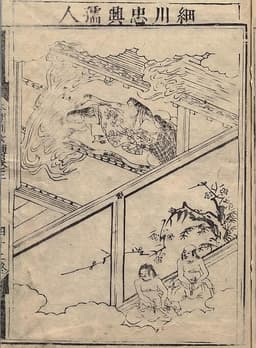
Hosokawa Gracia
Politician · Modern
35.7Total

Piet de Jong
Politician · Modern
45.8Total
Basic Information
Born
1563
1915
Died
1600
2016
Era
Modern
Modern
Nationality
Japan
Netherlands
Occupation
Politician
Politician
Civilization
Eastern
Western
Score Comparison
Military (10%)
11.6
10.2
Political (20%)
29.3
45.0
Influence (20%)
50.2
53.3
Legacy (20%)
40.8
45.0
Leadership (15%)
31.2
66.0
Strategy (15%)
27.1
35.7
TOTAL
35.7
45.8
Hosokawa Gracia — Complete Timeline
1578 AD
Marriage to Hosokawa TadaokiPolitical Action
Gracia married Hosokawa Tadaoki, a powerful daimyo under Oda Nobunaga and Toyotomi Hideyoshi. The marriage was arranged to strengthen political alliances between the Hosokawa and Akechi clans.
MarriagePolitical AllianceHosokawa
Impact: regional
1587 AD
Conversion to ChristianityCultural◆ Major
Hosokawa Gracia converted to Christianity under the influence of Jesuit missionaries. She was baptized with the name Gracia. Her conversion was kept secret from her husband, Hosokawa Tadaoki, who was a Buddhist.
ChristianityConversionReligion
Impact: national
1590 AD
Patronage of Christian MissionsCultural
Gracia used her influence to support Christian missionaries in Japan, providing them with protection and resources. She corresponded with Jesuit leaders and helped spread Christianity among the samurai class.
ChristianityPatronageMissions
Impact: regionalconstructive
1600 AD
Death at Osaka CastleOther◆ Major
During the Sekigahara campaign, Gracia was held hostage at Osaka Castle by Ishida Mitsunari's forces. To avoid being used as a bargaining chip, she ordered a retainer to kill her. Her death prevented her capture and preserved her honor.
DeathHostageHonor
Impact: nationaltragic
Piet de Jong — Complete Timeline
1944 AD
World War II Submarine CommandWar◆ Major
Piet de Jong served as commanding officer of the Dutch submarine HNLMS O 24 from 1944 to 1945. He conducted patrols in the North Sea and Atlantic against German forces, contributing to Allied naval operations.
World War IISubmarine Warfare
Impact: regional
1967 AD
Appointed Prime Minister of the NetherlandsPolitical Action◆ Major
Piet de Jong became Prime Minister of the Netherlands on April 5, 1967, leading a coalition government of the Catholic People's Party, Anti-Revolutionary Party, Christian Historical Union, and People's Party for Freedom and Democracy.
Prime MinistershipCoalition Government
Impact: national
1971 AD
Introduction of the Wet op de OndernemingsradenReform◆ Major
De Jong's government introduced the Works Councils Act, which strengthened the rights of employees to participate in decision-making in companies. This was a major reform in Dutch labor relations.
Labor ReformWorks Councils
Impact: nationalconstructive
Resignation as Prime MinisterPolitical Action◆ Major
De Jong resigned as Prime Minister on July 6, 1971, after his coalition lost seats in the 1971 election. He was succeeded by Barend Biesheuvel. His tenure was marked by economic growth and social reforms.
ResignationEnd of Term
Impact: national
This comparison has not been analyzed yet.
One-time AI generation (~1 minute). Scores and timeline are already available below.
Rankings
🥇
Piet de JongLeader
Mil: 10.2Pol: 45.0Inf: 53.3
45.8
🥈
Hosokawa Gracia
Mil: 11.6Pol: 29.3Inf: 50.2
35.7
+10.1 behind
How This Comparison Works
Algorithm
Each figure is scored on 6 dimensions (0—100 scale) based on structured historical data: Military (10%), Political (20%), Influence (20%), Legacy (20%), Leadership (15%), Strategy (15%). The weighted total produces the final ranking.
Data Sources
Scores are computed from structured sub-indicators in the database. Scale factors adjust for era (Ancient ×0.85, Modern ×1.0) and civilization size (Eastern ×1.05, Other ×0.80) to account for differences in population and military scale.
Maximum 3 Figures
Comparisons are limited to 2—3 figures to ensure readability and statistical meaningfulness.
Error Margins
±5 points per dimension — Sub-scores are derived from historical records with inherent uncertainty. Two figures within 5 points on a dimension should be considered roughly equivalent in that area.
Total Score Accuracy
±3 points overall — The weighted combination of 6 dimensions produces a total score with approximately ±3 points of uncertainty. Differences of less than 3 points are not statistically significant— the figures are effectively tied.
Known Limitations
- Historical records are incomplete and uneven across civilizations
- Figures from oral-tradition societies may be underrepresented
- Occupation labels can misclassify multi-role figures
- Scores measure capability and impact, not moral character
- Quantitative scoring is a comparison tool, not absolute truth
Capability Radar
Military (10%) — Battles & Warfare
Battles
14
20
Win Rate
19
25
Expansion
20
10
Political (20%) — Governance & Reform
Reform
5
50
Diplomacy
15
60
Economy
5
55
Influence (20%) — Cultural & Global Reach
Cultural
20
30
Global
10
30
Legacy (20%) — Historical Impact
Historical
25
40
Longevity
20
30
Leadership (15%) — Power & Stability
Tenure
10
55
Stability
5
60
Strategy (15%) — Tactics & Innovation
Strategy
24
30
Tactics
28
35
Reform
30
10
Similar Comparisons
Comments & Discussion
No comments yet. Be the first to share your thoughts!