Loading...
Hosokawa Gracia vs Napoleon Bonaparte
Napoleon Bonaparte leads by 35.2 pts · 2 figures compared
…
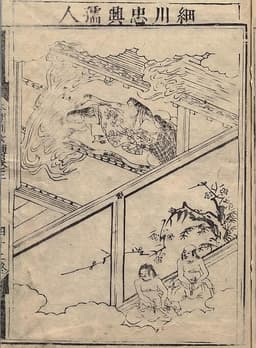
Hosokawa Gracia
Politician · Modern
35.7Total

Napoleon Bonaparte
General · Modern
70.9Total
Basic Information
Born
1563
1769
Died
1600
1821
Era
Modern
Modern
Nationality
Japan
France
Occupation
Politician
General
Civilization
Eastern
Western
Score Comparison
Military (10%)
11.6
94.0
Political (20%)
29.3
72.0
Influence (20%)
50.2
40.0
Legacy (20%)
40.8
80.0
Leadership (15%)
31.2
78.0
Strategy (15%)
27.1
90.0
TOTAL
35.7
70.9
Hosokawa Gracia — Complete Timeline
1578 AD
Marriage to Hosokawa TadaokiPolitical Action
Gracia married Hosokawa Tadaoki, a powerful daimyo under Oda Nobunaga and Toyotomi Hideyoshi. The marriage was arranged to strengthen political alliances between the Hosokawa and Akechi clans.
MarriagePolitical AllianceHosokawa
Impact: regional
1587 AD
Conversion to ChristianityCultural◆ Major
Hosokawa Gracia converted to Christianity under the influence of Jesuit missionaries. She was baptized with the name Gracia. Her conversion was kept secret from her husband, Hosokawa Tadaoki, who was a Buddhist.
ChristianityConversionReligion
Impact: national
1590 AD
Patronage of Christian MissionsCultural
Gracia used her influence to support Christian missionaries in Japan, providing them with protection and resources. She corresponded with Jesuit leaders and helped spread Christianity among the samurai class.
ChristianityPatronageMissions
Impact: regionalconstructive
1600 AD
Death at Osaka CastleOther◆ Major
During the Sekigahara campaign, Gracia was held hostage at Osaka Castle by Ishida Mitsunari's forces. To avoid being used as a bargaining chip, she ordered a retainer to kill her. Her death prevented her capture and preserved her honor.
DeathHostageHonor
Impact: nationaltragic
Napoleon Bonaparte — Complete Timeline
1799 AD
Coup of 18 BrumaireOther◆ Major
Napoleon Bonaparte, with support from his brother Lucien and key political figures, overthrew the Directory in a bloodless coup. He established the Consulate with himself as First Consul, effectively becoming the ruler of France. This event ended the French Revolution's most unstable period.
French RevolutionCoupRise to Power
Impact: regional
1804 AD
Promulgation of the Napoleonic CodeOther◆ Major
Napoleon enacted the Civil Code of the French, known as the Napoleonic Code, a comprehensive set of laws that replaced the fragmented feudal legal systems. The code established legal equality, protected property rights, and secularized law. It became the basis for legal systems in many European and world countries.
Legal ReformNapoleonic CodeCivil Law
Impact: globalconstructive
1805 AD
Battle of AusterlitzWar◆ Major
Napoleon's Grande Arm
Napoleonic WarsBattleDecisive Victory
Impact: global
1812 AD
Invasion of RussiaWar◆ Major
Napoleon led the Grande Arm
Napoleonic WarsInvasionDisaster
Impact: globaldestructive
1815 AD
Battle of WaterlooWar◆ Major
Napoleon's French army was defeated by the combined forces of the Duke of Wellington's Anglo-Allied army and Gebhard Leberecht von Bl
Napoleonic WarsBattleFinal Defeat
Impact: globaldestructive
Expert Analysis
hosokawa-gracia-vs-napoleon-bonaparte
# The Corsican and the Christian: Two Paths Through the Storm of History
On a June morning in 1815, Napoleon Bonaparte stood on a muddy field near Waterloo, watching his Imperial Guard march into cannon fire. Twenty-five years earlier, in a castle outside Osaka, a samurai’s wife named Hosokawa Gracia faced a different kind of end—not with armies, but with a dagger. One man sought to remake the world through conquest; one woman chose to erase herself rather than be used as a pawn. Both were children of upheaval, yet their stories could not have diverged more sharply. What drove them to such different fates, and what do their lives tell us about the forces that shape history?
Origins
Napoleon was born in 1769 on Corsica, an island that had just been sold to France by Genoa. His family belonged to the minor nobility, but they were poor and resentful of French rule. Young Napoleon spoke Italian-accented French and carried the chip of an outsider on his shoulder. He entered military school at nine, where classmates mocked his accent and his poverty. The French Revolution, erupting when he was twenty, shattered the old order and opened paths that birth alone could not have given him. He was a child of chaos, and chaos became his element.
Hosokawa Gracia was born in 1563 as Akechi Tama, daughter of Akechi Mitsuhide, a samurai lord who would later betray his master, Oda Nobunaga. The year of her birth fell in the midst of Japan’s Sengoku period—the Warring States era—when daimyo fought for supremacy and entire provinces changed hands in a season. Her world was one of rigid codes and sudden violence, where a woman’s value was measured by her marriage and her obedience. At fifteen, in 1578, she was married to Hosokawa Tadaoki, a powerful daimyo allied with Nobunaga. It was an arranged match, as all such matches were, and she entered it as a transaction.
Rise to Power
Napoleon’s ascent was meteoric and military. At twenty-four, in 1793, he drove the British out of Toulon and was promoted to brigadier general. By 1796, at twenty-six, he commanded the Army of Italy, where he defeated larger Austrian forces through speed and audacity. His Italian campaign of 1796–1797 made him a national hero. In 1799, he returned from a failed Egyptian expedition to find France in chaos, and in the coup of 18 Brumaire, he seized power as First Consul. By 1804, he crowned himself Emperor, placing the crown on his own head—a gesture that declared he owed nothing to God or man.
Gracia’s rise was not of her making. She became a figure of influence only through crisis. In 1582, her father, Akechi Mitsuhide, assassinated Oda Nobunaga at Honno-ji Temple. When Mitsuhide was himself killed days later, Gracia’s husband, Tadaoki, had every reason to divorce her—her family was now a curse. But Tadaoki kept her, perhaps because she had already proven useful. In 1587, she converted to Christianity, taking the name Gracia. This was a dangerous act in a land where Buddhism and Shinto held sway, but it gave her a network of Jesuit missionaries and a cause larger than her household. She became a patron of the Christian missions in 1590, using her influence to protect missionaries and provide resources. It was not power in the Napoleonic sense—she commanded no armies—but it was influence, wielded quietly within the walls of a samurai castle.
Leadership & Governance
Napoleon governed as he conquered: with relentless energy and a vision of rational order. His Napoleonic Code, enacted in 1804, standardized French law, abolished feudal privileges, and enshrined principles of meritocracy and property rights. He built roads, founded banks, and reorganized education. But he also centralized power absolutely, suppressed dissent, and placed his brothers on thrones across Europe. His military genius was undeniable—his strategy scores of 93 and military rating of 94 reflect a mind that could read a battlefield like a chessboard. He won sixty battles, from Austerlitz in 1805 to Wagram in 1809, by striking fast and concentrating force at the decisive point.
Gracia led through example, not decree. Her political score of 40.3 reflects a limited sphere of action, but within that sphere, she was effective. She used her status as a daimyo’s wife to shield Christians during persecution, and she corresponded with Jesuit leaders across Japan. Her strategy score of 59.6 suggests a mind attuned to survival in a world of shifting alliances. She could not reform laws or command armies, but she could choose whom to protect and how to die.
Triumph & Tragedy
Napoleon’s greatest triumph was Austerlitz in 1805, where he destroyed a combined Russian and Austrian army and forced the Holy Roman Empire to dissolve. His greatest tragedy was the invasion of Russia in 1812. He marched 600,000 men into the snow; fewer than 100,000 returned. The disaster broke his aura of invincibility. He was exiled to Elba in 1814, escaped in 1815, and met final defeat at Waterloo. He died in 1821 on Saint Helena, a British prisoner.
Gracia’s triumph was subtler. She lived as a Christian in a hostile land, protected her faith, and built a legacy of quiet defiance. Her tragedy came in 1600, during the Sekigahara campaign. Her husband, Tadaoki, fought for Tokugawa Ieyasu, leaving Gracia at Osaka Castle. Ishida Mitsunari’s forces seized her as a hostage, intending to use her against Tadaoki. To prevent this, Gracia ordered a servant to kill her. She was thirty-seven. It was not a battlefield death, but it was a death of choice—a samurai’s wife refusing to become a weapon.
Character & Destiny
Napoleon was driven by ambition that bordered on mania. He once said, “Power is my mistress.” He trusted his own genius above all else, and that confidence carried him to glory and ruin. He could not stop, because stopping meant admitting limits. His character was his destiny: he conquered Europe because he believed he could, and he lost everything because he believed he must always win.
Gracia was driven by faith and duty. She converted to Christianity at twenty-four, in 1587, when it was already dangerous. She knew that her husband could divorce her, that her family could disown her, that she could be killed. Yet she persisted. Her character was shaped by the code of *bushido* and the teachings of the Jesuits: honor mattered more than life, and salvation mattered more than power. When the moment came, she chose death over dishonor. It was the logical end of a life lived in service to something beyond herself.
Legacy
Napoleon’s legacy is monumental. His legal code influences civil law across Europe and the world. His military campaigns are still studied at war colleges. He reshaped the map of Europe, ended the Holy Roman Empire, and spread nationalism as a force that would later consume his own conquests. His influence score of 82 and legacy score of 78 reflect a man who changed the course of history, for better and for worse.
Gracia’s legacy is quieter but enduring. She is remembered in Japan as a symbol of Christian faith and samurai honor. Novels, films, and plays tell her story. Her influence score of 70.9 is remarkable for a woman who never held political office. She represents a path not taken—a Japan that might have embraced Christianity, a world where women could choose their fates. Her legacy is not in laws or borders but in the memory of a woman who, when trapped between two armies, chose to be neither hostage nor victim but master of her own death.
Conclusion
Napoleon and Gracia never met. Their worlds were separated by continents, cultures, and centuries of difference. Yet both faced the same fundamental question: when history closes in, what do you do? Napoleon answered with ambition, building an empire that collapsed under its own weight. Gracia answered with faith, building a legacy that outlasted the war that killed her. One changed the world through force; the other changed it through example. In the end, perhaps the question is not who was greater, but who understood the limits of power. Napoleon, for all his genius, never did. Gracia, in her silent castle, understood them perfectly.
Rankings
🥇
Napoleon BonaparteLeader
Mil: 94.0Pol: 72.0Inf: 40.0
70.9
🥈
Hosokawa Gracia
Mil: 11.6Pol: 29.3Inf: 50.2
35.7
+35.2 behind
How This Comparison Works
Algorithm
Each figure is scored on 6 dimensions (0—100 scale) based on structured historical data: Military (10%), Political (20%), Influence (20%), Legacy (20%), Leadership (15%), Strategy (15%). The weighted total produces the final ranking.
Data Sources
Scores are computed from structured sub-indicators in the database. Scale factors adjust for era (Ancient ×0.85, Modern ×1.0) and civilization size (Eastern ×1.05, Other ×0.80) to account for differences in population and military scale.
Maximum 3 Figures
Comparisons are limited to 2—3 figures to ensure readability and statistical meaningfulness.
Error Margins
±5 points per dimension — Sub-scores are derived from historical records with inherent uncertainty. Two figures within 5 points on a dimension should be considered roughly equivalent in that area.
Total Score Accuracy
±3 points overall — The weighted combination of 6 dimensions produces a total score with approximately ±3 points of uncertainty. Differences of less than 3 points are not statistically significant— the figures are effectively tied.
Known Limitations
- Historical records are incomplete and uneven across civilizations
- Figures from oral-tradition societies may be underrepresented
- Occupation labels can misclassify multi-role figures
- Scores measure capability and impact, not moral character
- Quantitative scoring is a comparison tool, not absolute truth
Capability Radar
Military (10%) — Battles & Warfare
Battles
14
95
Win Rate
19
90
Expansion
20
95
Political (20%) — Governance & Reform
Reform
5
95
Diplomacy
15
80
Economy
5
85
Influence (20%) — Cultural & Global Reach
Cultural
20
85
Global
10
90
Legacy (20%) — Historical Impact
Historical
25
95
Longevity
20
90
Leadership (15%) — Power & Stability
Tenure
10
85
Stability
5
70
Strategy (15%) — Tactics & Innovation
Strategy
24
95
Tactics
28
98
Reform
30
92
Similar Comparisons
Comments & Discussion
數據狂魔6/17/2026
数据说话:拿破仑活了51岁,动员了超过200万士兵,但最终法国人口减少7%。Gracia只活了37岁,但她保住了细川家3万石领地。谁的效率更高?军事扩张是负和游戏,个人牺牲反而创造了正和。马基雅维利和孟子,选一个吧。
Sengokuガール6/17/2026
我来撕个标签:拿破仑是“英雄”,Gracia是“烈女”?太刻板了!他失败了就逃到厄尔巴岛,她失败了就用刀自决。你们西方人总把侵略者浪漫化,却把自杀者圣化。她如果生在法国,可能会当圣女贞德第二;他如果生在日本,早晚也是切腹的下场。历史不过是运气分配不均的游戏。
炮口下的稻妻6/17/2026
拿破仑的滑铁卢战役确实壮烈,但仔细看数据:他损失了25000人,赢了也是惨胜。Gracia用一把匕首结束的不仅是生命,更是一场可能引发细川家绝嗣的政治危机。她死前留下的和歌“消えぬと思ふ心こそ, 迷ひの種なりけれ”,比拿破仑任何战报都有穿透力。他在史册上留下帝国的骨架,她在文化里留下信仰的活水。
Historian9466/17/2026
As a revisionist critic, I'd argue both were pawns of larger forces. Napoleon thought he was reshaping Europe, but really he was just accelerating what the Industrial Revolution would do anyway. Gracia's famous "death by dagger" was less honor, more forced suicide by a husband who valued political expediency over her. She was a hostage, not a martyr.
Historian5476/17/2026
Classic scholar here - Napoleon's dream was always about building a new Rome, but Gracia understood history's real lesson: empire fades, faith endures. His 1815 Waterloo defeat teaches us about hubris, but her 1600 suicide shows the deeper tragedy of honor systems collapsing. He conquers, she transcends.