Loading...
Hosokawa Gracia vs Milan Kucan
Milan Kucan leads by 18.3 pts · 2 figures compared
…
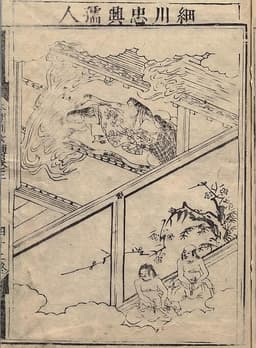
Hosokawa Gracia
Politician · Modern
35.7Total
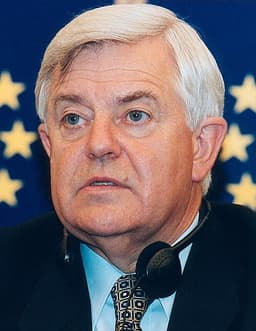
Milan Kucan
Politician · Modern
54.0Total
Basic Information
Born
1563
1941
Died
1600
—
Era
Modern
Modern
Nationality
Japan
Slovenia
Occupation
Politician
Politician
Civilization
Eastern
Western
Score Comparison
Military (10%)
11.6
50.0
Political (20%)
29.3
62.7
Influence (20%)
50.2
53.3
Legacy (20%)
40.8
45.0
Leadership (15%)
31.2
72.0
Strategy (15%)
27.1
41.8
TOTAL
35.7
54.0
Hosokawa Gracia — Complete Timeline
1578 AD
Marriage to Hosokawa TadaokiPolitical Action
Gracia married Hosokawa Tadaoki, a powerful daimyo under Oda Nobunaga and Toyotomi Hideyoshi. The marriage was arranged to strengthen political alliances between the Hosokawa and Akechi clans.
MarriagePolitical AllianceHosokawa
Impact: regional
1587 AD
Conversion to ChristianityCultural◆ Major
Hosokawa Gracia converted to Christianity under the influence of Jesuit missionaries. She was baptized with the name Gracia. Her conversion was kept secret from her husband, Hosokawa Tadaoki, who was a Buddhist.
ChristianityConversionReligion
Impact: national
1590 AD
Patronage of Christian MissionsCultural
Gracia used her influence to support Christian missionaries in Japan, providing them with protection and resources. She corresponded with Jesuit leaders and helped spread Christianity among the samurai class.
ChristianityPatronageMissions
Impact: regionalconstructive
1600 AD
Death at Osaka CastleOther◆ Major
During the Sekigahara campaign, Gracia was held hostage at Osaka Castle by Ishida Mitsunari's forces. To avoid being used as a bargaining chip, she ordered a retainer to kill her. Her death prevented her capture and preserved her honor.
DeathHostageHonor
Impact: nationaltragic
Milan Kucan — Complete Timeline
1991 AD
Ten-Day WarWar◆ Major
As president, Ku
War of IndependenceYugoslav Wars
Impact: regionalconstructive
Election as President of SloveniaPolitical Action
Kučan was elected the first president of independent Slovenia after the country declared independence from Yugoslavia. He led the nation through the Ten-Day War and the transition to democracy.
IndependenceSlovenia
Impact: regionalconstructive
2002 AD
End of PresidencyPolitical Action
Kučan completed his second term as president and stepped down, having served two five-year terms. He was succeeded by Janez Drnovšek.
PresidencyTransition
Impact: national
Expert Analysis
Origins
Hosokawa Gracia was born in 1563 as Akechi Tama, daughter of Akechi Mitsuhide, a samurai lord who famously betrayed Oda Nobunaga. Her early life was shaped by the violent politics of Japan's Sengoku period. After her father's defeat and death in 1582, she was married to Hosokawa Tadaoki, a daimyo allied with Toyotomi Hideyoshi. Despite her father's treason, she maintained her position through her husband's influence. Gracia's conversion to Christianity around 1587, under Jesuit guidance, introduced a new spiritual dimension to her life, though it remained secret for years due to persecution.
Milan Kučan was born on January 14, 1941, in Križevci, Slovenia, then part of Yugoslavia. His family background was modest; his father was a teacher. Kučan studied law at the University of Ljubljana, graduating in 1965. He became active in the League of Communists of Slovenia, rising through the ranks. His early political career focused on youth and cultural affairs, reflecting his commitment to socialist ideals.
Rise to Power
Gracia's rise was indirect, through her marriage to Hosokawa Tadaoki in 1579. The alliance secured her status, but her influence grew after she openly embraced Christianity in 1596. She used her position to protect missionaries and correspond with Jesuit leaders, notably Alessandro Valignano. Her faith became a source of personal authority, though it also made her a target during anti-Christian campaigns.
Kučan's rise was methodical within the Yugoslav communist system. He became president of the League of Communists of Slovenia in 1986, advocating for gradual reform. In 1990, as Yugoslavia disintegrated, he led Slovenia's push for independence. He was elected president of the republic in April 1990, winning 58.4% of the vote. His leadership during the 1991 Ten-Day War solidified his role as a national founder.
Leadership & Governance
Gracia's governance was informal but influential. She managed her household as a center of Christian activity, providing shelter and resources. Her correspondence with Jesuits shows strategic thinking: she balanced her faith with the need to protect her family. When Ishida Mitsunari ordered her hostage in 1600, she chose death over surrender, instructing a servant to kill her before she could be captured. This act preserved her honor and her husband's political integrity.
Kučan's leadership was formal and constitutional. As president, he focused on democratic transition and European integration. He oversaw the adoption of a new constitution in 1991 and Slovenia's entry into the UN in 1992. His governance style was consensus-building; he scored 72.0 in leadership, reflecting his ability to unite factions. However, his strategy score of 41.8 indicates less emphasis on military planning, though he managed the Ten-Day War effectively.
Triumph & Tragedy
Gracia's greatest triumph was her steadfast faith and martyrdom. By choosing death over hostage, she denied her enemies leverage and became a symbol of Christian resistance. Her tragedy was the suppression of Christianity in Japan after her death; the Tokugawa shogunate intensified persecution, and many converts were executed. Her legacy was preserved by the Catholic Church, but her personal sacrifice did not alter Japan's religious policies.
Kučan's triumph was leading Slovenia to independence with minimal bloodshed. The Ten-Day War (June 27-July 7, 1991) resulted in only 19 Slovenian and 44 Yugoslav casualties. His tragedy was the inability to prevent the subsequent Yugoslav Wars; Slovenia's secession triggered conflicts in Croatia and Bosnia. Some critics argue he could have done more to mediate, though his priority was national survival.
Character & Destiny
Gracia's character was defined by faith and courage. She scored 50.2 in influence, reflecting her moral authority. Her decision to convert in a hostile environment shows conviction. Her destiny was shaped by the Tokugawa unification; as a Christian and daughter of a traitor, she was vulnerable. Her death preserved her autonomy and made her a martyr, but limited her political impact.
Kučan's character was pragmatic and diplomatic. His political score of 62.7 indicates effective navigation of complex politics. He avoided extremist rhetoric and sought peaceful solutions. His destiny was to be a founding father; he stepped down after two terms, ensuring democratic succession. Historians rate him highly for stability but note his cautious approach during the Yugoslav crisis.
Legacy
Gracia's legacy is primarily religious and cultural. She is venerated as a Servant of God in the Catholic Church, with beatification processes ongoing. Her story appears in literature, film, and art. However, her impact on Japanese politics was minimal; she scored 40.8 in legacy. No political institutions or reforms are attributed to her.
Kučan's legacy is foundational for Slovenia. He is remembered as the first president who guided the country through transition. Slovenia's stable democracy and EU membership (2004) are part of his legacy. He scored 45.0 in legacy, reflecting his enduring influence on national identity. However, his role in the Yugoslav wars remains debated.
Conclusion
Milan Kučan had greater impact on history. His total score of 54.0 exceeds Gracia's 35.7 by 18.3 points. While Gracia's sacrifice is inspirational, it did not alter political trajectories. Kučan's leadership directly created a sovereign nation that thrives today. His political and leadership scores (62.7 and 72.0) demonstrate tangible governance achievements. Gracia's influence was moral and personal; Kučan's was structural and lasting. In the balance of historical effect, the president who built a state surpasses the samurai wife who died for her faith.
Rankings
🥇
Milan KucanLeader
Mil: 50.0Pol: 62.7Inf: 53.3
54.0
🥈
Hosokawa Gracia
Mil: 11.6Pol: 29.3Inf: 50.2
35.7
+18.3 behind
How This Comparison Works
Algorithm
Each figure is scored on 6 dimensions (0—100 scale) based on structured historical data: Military (10%), Political (20%), Influence (20%), Legacy (20%), Leadership (15%), Strategy (15%). The weighted total produces the final ranking.
Data Sources
Scores are computed from structured sub-indicators in the database. Scale factors adjust for era (Ancient ×0.85, Modern ×1.0) and civilization size (Eastern ×1.05, Other ×0.80) to account for differences in population and military scale.
Maximum 3 Figures
Comparisons are limited to 2—3 figures to ensure readability and statistical meaningfulness.
Error Margins
±5 points per dimension — Sub-scores are derived from historical records with inherent uncertainty. Two figures within 5 points on a dimension should be considered roughly equivalent in that area.
Total Score Accuracy
±3 points overall — The weighted combination of 6 dimensions produces a total score with approximately ±3 points of uncertainty. Differences of less than 3 points are not statistically significant— the figures are effectively tied.
Known Limitations
- Historical records are incomplete and uneven across civilizations
- Figures from oral-tradition societies may be underrepresented
- Occupation labels can misclassify multi-role figures
- Scores measure capability and impact, not moral character
- Quantitative scoring is a comparison tool, not absolute truth
Capability Radar
Military (10%) — Battles & Warfare
Battles
14
29
Win Rate
19
31
Expansion
20
35
Political (20%) — Governance & Reform
Reform
5
55
Diplomacy
15
65
Economy
5
50
Influence (20%) — Cultural & Global Reach
Cultural
20
30
Global
10
30
Legacy (20%) — Historical Impact
Historical
25
40
Longevity
20
30
Leadership (15%) — Power & Stability
Tenure
10
60
Stability
5
60
Strategy (15%) — Tactics & Innovation
Strategy
24
38
Tactics
28
40
Reform
30
42
Similar Comparisons
Comments & Discussion
No comments yet. Be the first to share your thoughts!