Loading...
This comparison has not been analyzed yet.
One-time AI generation (~1 minute). Scores and timeline are already available below.
Hibatullah Akhundzada vs Louis XVIII
Louis XVIII leads by 10.8 pts · 2 figures compared
…
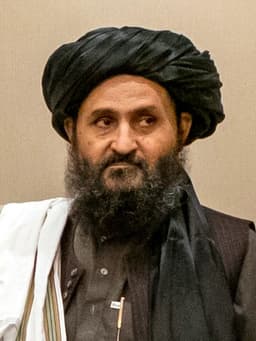
Hibatullah Akhundzada
Emperor · Modern
38.7Total
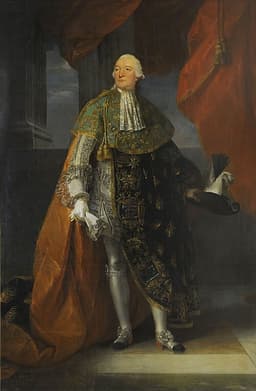
Louis XVIII
Emperor · Modern
49.5Total
Basic Information
Born
1961
1755
Died
—
1824
Era
Modern
Modern
Nationality
Afghanistan
France
Occupation
Emperor
Emperor
Civilization
Middle Eastern
Western
Score Comparison
Military (10%)
21.2
17.2
Political (20%)
27.9
68.0
Influence (20%)
52.5
51.0
Legacy (20%)
40.8
43.3
Leadership (15%)
40.0
55.3
Strategy (15%)
30.3
56.8
TOTAL
38.7
49.5
Hibatullah Akhundzada — Complete Timeline
2016 AD
Appointed Supreme Leader of the TalibanPolitical Action
Hibatullah Akhundzada was appointed Supreme Leader of the Taliban in 2016 after the death of Akhtar Mansour. He assumed leadership of the insurgency, guiding the Taliban's military and political strategy during the war against the Afghan government and coalition forces.
AfghanistanTalibanLeadership
Impact: global
2021 AD
Led Taliban to Military Victory in 2021War
Under Hibatullah Akhundzada's leadership, the Taliban launched a major offensive in 2021, capturing Kabul on August 15. This resulted in the collapse of the Afghan government and the Taliban's return to power, ending the 20-year war.
AfghanistanWarTaliban Victory
Impact: global
Imposed Restrictions on Women's RightsPolitical Action◆ Major
Under Hibatullah Akhundzada's leadership, the Taliban imposed severe restrictions on women's rights, including banning girls from secondary education and women from most employment. These policies drew widespread international condemnation.
AfghanistanWomen's RightsHuman Rights
Impact: nationaldestructive
2022 AD
Issued Decree Banning Opium Poppy CultivationReform◆ Major
Hibatullah Akhundzada issued a decree banning the cultivation of opium poppies in Afghanistan. The ban aimed to reduce drug production, but it devastated the rural economy, as poppy farming was a major source of income for many farmers.
AfghanistanDrug PolicyEconomy
Impact: national
Louis XVIII — Complete Timeline
1814 AD
Charter of 1814Reform◆ Major
Louis XVIII granted the Charter of 1814, a constitution that preserved many Napoleonic legal and administrative reforms while restoring the monarchy. It established a hereditary monarchy, a bicameral legislature, and guaranteed civil liberties such as freedom of religion and press.
ConstitutionReformBourbon Restoration
Impact: nationalconstructive
Restoration of the Bourbon MonarchyPolitical Action
After Napoleon's abdication, Louis XVIII was installed as King of France by the Allied powers. He issued the Charter of 1814, establishing a constitutional monarchy with a bicameral parliament. This restored the Bourbon dynasty but under limited sovereignty.
RestorationConstitutional MonarchyBourbon
Impact: nationalconstructive
1815 AD
Hundred Days and Second RestorationPolitical Action◆ Major
Napoleon escaped from Elba and returned to power, forcing Louis XVIII to flee to Ghent. After Napoleon's defeat at Waterloo, Louis returned to the throne in July 1815. The second restoration was marked by the White Terror, a wave of reprisals against Bonapartists and republicans.
Napoleonic WarsRestorationWhite Terror
Impact: nationaldestructive
Congress of ViennaPolitical Action◆ Major
Louis XVIII's representatives participated in the Congress of Vienna, which redrew European borders after Napoleon's defeat. France was reduced to its 1792 borders and required to pay an indemnity. The congress aimed to restore the balance of power and legitimize the Bourbon monarchy.
DiplomacyPost-NapoleonicBalance of Power
Impact: global
1824 AD
Death of Louis XVIIIOther
Louis XVIII died on September 16, 1824, after a reign of nearly ten years. He was succeeded by his brother, Charles X, whose ultra-royalist policies would lead to the July Revolution of 1830. Louis XVIII's reign was marked by relative stability and constitutional governance.
SuccessionMonarchyEnd of Reign
Impact: national
This comparison has not been analyzed yet.
One-time AI generation (~1 minute). Scores and timeline are already available below.
Rankings
🥇
Louis XVIIILeader
Mil: 17.2Pol: 68.0Inf: 51.0
49.5
🥈
Hibatullah Akhundzada
Mil: 21.2Pol: 27.9Inf: 52.5
38.7
+10.8 behind
How This Comparison Works
Algorithm
Each figure is scored on 6 dimensions (0—100 scale) based on structured historical data: Military (10%), Political (20%), Influence (20%), Legacy (20%), Leadership (15%), Strategy (15%). The weighted total produces the final ranking.
Data Sources
Scores are computed from structured sub-indicators in the database. Scale factors adjust for era (Ancient ×0.85, Modern ×1.0) and civilization size (Eastern ×1.05, Other ×0.80) to account for differences in population and military scale.
Maximum 3 Figures
Comparisons are limited to 2—3 figures to ensure readability and statistical meaningfulness.
Error Margins
±5 points per dimension — Sub-scores are derived from historical records with inherent uncertainty. Two figures within 5 points on a dimension should be considered roughly equivalent in that area.
Total Score Accuracy
±3 points overall — The weighted combination of 6 dimensions produces a total score with approximately ±3 points of uncertainty. Differences of less than 3 points are not statistically significant— the figures are effectively tied.
Known Limitations
- Historical records are incomplete and uneven across civilizations
- Figures from oral-tradition societies may be underrepresented
- Occupation labels can misclassify multi-role figures
- Scores measure capability and impact, not moral character
- Quantitative scoring is a comparison tool, not absolute truth
Capability Radar
Military (10%) — Battles & Warfare
Battles
10
34
Win Rate
15
42
Expansion
15
42
Political (20%) — Governance & Reform
Reform
10
30
Diplomacy
30
55
Economy
10
40
Influence (20%) — Cultural & Global Reach
Cultural
20
20
Global
35
25
Legacy (20%) — Historical Impact
Historical
30
40
Longevity
25
30
Leadership (15%) — Power & Stability
Tenure
55
15
Stability
40
35
Strategy (15%) — Tactics & Innovation
Strategy
25
48
Tactics
20
49
Reform
10
50
Similar Comparisons
Comments & Discussion
No comments yet. Be the first to share your thoughts!