Loading...
This comparison has not been analyzed yet.
One-time AI generation (~1 minute). Scores and timeline are already available below.
Henry VII of Luxembourg vs Isaac II Angelos
Henry VII of Luxembourg leads by 9.8 pts · 2 figures compared
…
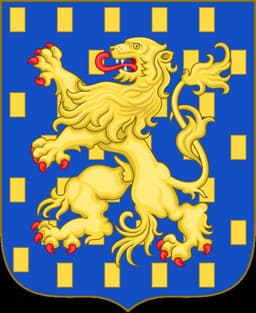
Henry VII of Luxembourg
Emperor · Medieval
45.2Total
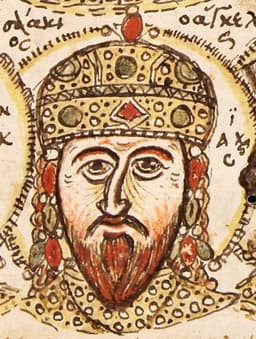
Isaac II Angelos
Emperor · Medieval
35.4Total
Basic Information
Born
1275
1156
Died
1313
1204
Era
Medieval
Medieval
Nationality
Holy Roman Empire
Byzantine Empire
Occupation
Emperor
Emperor
Civilization
Western
Western
Score Comparison
Military (10%)
10.0
10.2
Political (20%)
43.7
32.1
Influence (20%)
55.7
45.5
Legacy (20%)
45.8
38.3
Leadership (15%)
51.9
31.2
Strategy (15%)
45.0
39.6
TOTAL
45.2
35.4
Henry VII of Luxembourg — Complete Timeline
1308 AD
Election as King of GermanyPolitical Action◆ Major
Henry, Count of Luxembourg, was elected King of Germany after the assassination of Albert I. His election was supported by the Archbishop of Mainz and marked the rise of the Luxembourg dynasty.
ElectionLuxembourg Dynasty
Impact: national
1310 AD
Italian Campaign and Coronation as Holy Roman EmperorPolitical Action
Henry VII led an expedition to Italy to be crowned Holy Roman Emperor. He was crowned King of Italy in Milan in 1311 and Holy Roman Emperor in Rome in 1312, but faced opposition from Guelph factions and King Robert of Naples.
CoronationItalian Campaign
Impact: global
1313 AD
Death near SienaOther◆ Major
Henry VII died suddenly near Siena, Italy, possibly from malaria or poison. His death ended his campaign to restore imperial authority in Italy and left the empire without a clear successor.
DeathUnfinished Campaign
Impact: regionaltragic
Isaac II Angelos — Complete Timeline
1185 AD
Accession as emperor after overthrowing Andronikos IPolitical Action◆ Major
Isaac II Angelos led a popular revolt that overthrew Andronikos I Komnenos, and was proclaimed emperor. His accession ended the Komnenian dynasty's rule and began the Angelid dynasty, but the empire was weakened by internal strife and external threats.
RevoltDynastic ChangePopular Uprising
Impact: national
1190 AD
Defeat at the Battle of TryavnaWar◆ Major
Isaac II led a campaign against the Bulgarian rebels under Ivan Asen I and Peter IV. The Byzantine army was ambushed and defeated at Tryavna, with Isaac barely escaping. The defeat solidified the Second Bulgarian Empire's independence from Byzantine rule.
Byzantine-Bulgarian WarsMilitary DefeatRebellion
Impact: regionaldestructive
1195 AD
Blinding and deposition by Alexios III AngelosPolitical Action◆ Major
Isaac II was overthrown and blinded by his brother Alexios III Angelos in a palace coup. Isaac was imprisoned, and Alexios III seized the throne. The blinding was a traditional Byzantine punishment for usurpers, but it left Isaac incapacitated and the empire divided.
CoupDynastic ConflictBlinding
Impact: nationaltragic
1203 AD
Restoration and flight during the Fourth CrusadePolitical Action◆ Major
Isaac II was restored to the throne by the Fourth Crusade, alongside his son Alexios IV Angelos, after the crusaders besieged Constantinople. However, the restored regime failed to pay the promised rewards to the crusaders, leading to renewed conflict and Isaac's death in prison in 1204.
Fourth CrusadeRestorationSiege of Constantinople
Impact: regionaltragic
This comparison has not been analyzed yet.
One-time AI generation (~1 minute). Scores and timeline are already available below.
Rankings
🥇
Henry VII of LuxembourgLeader
Mil: 10.0Pol: 43.7Inf: 55.7
45.2
🥈
Isaac II Angelos
Mil: 10.2Pol: 32.1Inf: 45.5
35.4
+9.8 behind
How This Comparison Works
Algorithm
Each figure is scored on 6 dimensions (0—100 scale) based on structured historical data: Military (10%), Political (20%), Influence (20%), Legacy (20%), Leadership (15%), Strategy (15%). The weighted total produces the final ranking.
Data Sources
Scores are computed from structured sub-indicators in the database. Scale factors adjust for era (Ancient ×0.85, Modern ×1.0) and civilization size (Eastern ×1.05, Other ×0.80) to account for differences in population and military scale.
Maximum 3 Figures
Comparisons are limited to 2—3 figures to ensure readability and statistical meaningfulness.
Error Margins
±5 points per dimension — Sub-scores are derived from historical records with inherent uncertainty. Two figures within 5 points on a dimension should be considered roughly equivalent in that area.
Total Score Accuracy
±3 points overall — The weighted combination of 6 dimensions produces a total score with approximately ±3 points of uncertainty. Differences of less than 3 points are not statistically significant— the figures are effectively tied.
Known Limitations
- Historical records are incomplete and uneven across civilizations
- Figures from oral-tradition societies may be underrepresented
- Occupation labels can misclassify multi-role figures
- Scores measure capability and impact, not moral character
- Quantitative scoring is a comparison tool, not absolute truth
Capability Radar
Military (10%) — Battles & Warfare
Battles
40
10
Win Rate
35
10
Expansion
45
5
Political (20%) — Governance & Reform
Reform
30
10
Diplomacy
55
10
Economy
35
10
Influence (20%) — Cultural & Global Reach
Cultural
30
5
Global
35
5
Legacy (20%) — Historical Impact
Historical
45
20
Longevity
30
10
Leadership (15%) — Power & Stability
Tenure
40
30
Stability
25
5
Strategy (15%) — Tactics & Innovation
Strategy
40
10
Tactics
30
10
Reform
20
5
Similar Comparisons
Comments & Discussion
No comments yet. Be the first to share your thoughts!