Loading...
Henry the Fowler vs Zhu Wen
Henry the Fowler leads by 10.6 pts · 2 figures compared
…
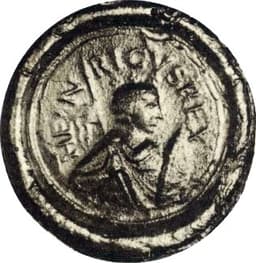
Henry the Fowler
Emperor · Medieval
60.9Total
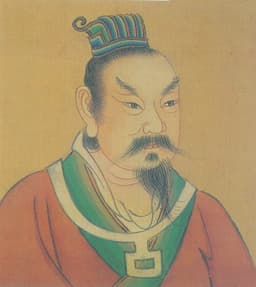
Zhu Wen
Emperor · Medieval
50.3Total
Basic Information
Born
876
852
Died
936
912
Era
Medieval
Medieval
Nationality
East Francia
China
Occupation
Emperor
Emperor
Civilization
Western
Eastern
Score Comparison
Military (10%)
70.0
72.5
Political (20%)
59.3
35.1
Influence (20%)
55.0
53.3
Legacy (20%)
52.0
45.8
Leadership (15%)
85.0
48.4
Strategy (15%)
55.0
57.5
TOTAL
60.9
50.3
Henry the Fowler — Complete Timeline
919 AD
Election as King of East FranciaPolitical Action
Henry the Fowler was elected King of East Francia by the Saxon and Frankish nobles at Fritzlar on May 6, 919. He was the first Saxon king, marking the transition from Carolingian to Ottonian rule. His election was contested by other dukes but he prevailed.
ElectionAccessionOttonian Dynasty
Impact: regionalconstructive
921 AD
Treaty of Bonn (921)Political Action◆ Major
Henry the Fowler signed the Treaty of Bonn with Charles the Simple of West Francia, recognizing each other's royal titles and establishing peaceful relations. This treaty ended Carolingian claims over East Francia and solidified Henry's legitimacy as an independent king.
TreatyRecognitionDiplomacy
Impact: regionalconstructive
924 AD
Nine-Year Truce with the MagyarsPolitical Action◆ Major
Henry the Fowler negotiated a nine-year truce with the Magyars, agreeing to pay tribute in exchange for a halt to their raids. He used this period to fortify towns, reorganize the army, and train cavalry. This strategic pause was crucial for his later military reforms.
TruceMagyarsMilitary Reform
Impact: regionalconstructive
929 AD
Battle of Lenzen (929)War◆ Major
Henry the Fowler's forces defeated a Slavic army at the Battle of Lenzen, securing the eastern frontier of East Francia. This victory allowed Henry to consolidate control over the Elbe region and establish the March of Brandenburg, a key step in German eastward expansion.
BattleSlavic WarsEastern Expansion
Impact: regionalconstructive
933 AD
Battle of Riade (933)War
After the truce with the Magyars expired, Henry the Fowler led a German army to victory at the Battle of Riade (near Merseburg). The defeat of the Magyar cavalry ended their raids into East Francia for a generation and established Henry's reputation as a defender of Christendom.
BattleMagyarsVictory
Impact: regionalconstructive
936 AD
Death of Henry the FowlerOther◆ Major
Henry the Fowler died on July 2, 936, at Memleben. He was succeeded by his son, Otto I, who would become Holy Roman Emperor. Henry's reign laid the foundations for the Ottonian dynasty and the medieval German kingdom.
DeathSuccessionOttonian
Impact: regional
Zhu Wen — Complete Timeline
881 AD
Rebellion against TangWar◆ Major
Zhu Wen, originally a rebel under Huang Chao, defected to the Tang dynasty in 882. He was granted the name Zhu Quanzhong and became a key general, eventually turning against the Tang and seizing control of the imperial court.
Tang DynastyRebellionPower Seizure
Impact: nationaldestructive
904 AD
Assassination of Emperor ZhaozongPolitical Action◆ Major
Zhu Wen ordered the murder of Emperor Zhaozong of Tang and installed the young Emperor Ai as a puppet. This act eliminated the last effective Tang ruler and paved the way for Zhu Wen's usurpation.
Tang DynastyAssassinationUsurpation
Impact: nationaldestructive
907 AD
Founded Later Liang DynastyPolitical Action
Zhu Wen forced Emperor Ai to abdicate and proclaimed himself emperor, founding the Later Liang dynasty. This ended the Tang dynasty and began the Five Dynasties and Ten Kingdoms period in China.
Five DynastiesLater LiangDynastic Change
Impact: national
910 AD
Defeated by Li Cunxu at Battle of BaixiangWar◆ Major
Zhu Wen's Later Liang forces were decisively defeated by Li Cunxu's Jin army at Baixiang. This loss weakened Later Liang's control in the north and emboldened rival states.
Later LiangJinBattle
Impact: regionaltragic
912 AD
Assassinated by his son Zhu YouguiPolitical Action◆ Major
Zhu Wen was murdered by his own son Zhu Yougui, who then seized the throne. The assassination plunged Later Liang into internal strife and contributed to its eventual collapse.
Later LiangAssassinationDynastic Crisis
Impact: nationaltragic
Expert Analysis
Henry the Fowler vs Zhu Wen
# The Emperor and the King: Two Paths from Chaos
On a summer day in 912, the founder of the Later Liang dynasty lay dying in his palace, stabbed by his own son. Just twenty-four years earlier, in the autumn of 936, Henry the Fowler passed away peacefully at Memleben, surrounded by his family, knowing his son Otto would inherit a kingdom he had built from ruin. Both men rose from the ashes of collapsing empires—the Tang dynasty in China, the Carolingian order in Europe. Both seized power in times of profound uncertainty. Yet one died a usurper’s death, his dynasty crumbling within a decade, while the other founded a royal house that would shape the Holy Roman Empire for generations. What made the difference?
Origins
Zhu Wen was born in 852 into a world of decay. The Tang dynasty, once the most sophisticated civilization on earth, was rotting from within—corrupt officials, regional warlords, and peasant rebellions gnawing at its foundations. Zhu’s family were poor farmers in Shaanxi, and when famine struck, he joined the rebel army of Huang Chao, a failed examination candidate who had turned to banditry. For Zhu, survival meant violence. He learned war in the crucible of rebellion, where loyalty was fleeting and betrayal a tool.
Henry the Fowler was born in 876, the son of Otto the Illustrious, Duke of Saxony. East Francia, the eastern fragment of Charlemagne’s empire, was under siege from all sides: Viking raids from the north, Magyar horsemen from the east, and Slavic tribes pressing against its borders. Yet Henry grew up in a world of local lords and tribal loyalties, where power was personal and land was the currency of kingship. He inherited a duchy, not a sword for hire.
The difference in their origins cannot be overstated. Zhu Wen rose from nothing, his hands stained by the blood of rebellion. Henry was born into the Saxon nobility, where legitimacy mattered as much as force. One climbed from the mud; the other stepped onto a throne that already existed.
Rise to Power
Zhu Wen’s ascent was a masterpiece of opportunism. In 881, he was a rebel under Huang Chao, storming the Tang capital of Chang’an. But in 882, he saw the tide turning and defected to the Tang court. The emperor, desperate for allies, granted him the name Zhu Quanzhong—“Zhu the Loyal.” It was a name he would betray. Over the next two decades, Zhu methodically eliminated rivals, seized control of the imperial court, and in 904 ordered the assassination of Emperor Zhaozong. He installed the child Emperor Ai as a puppet, then in 907 forced the boy to abdicate. The Tang dynasty, which had ruled for nearly three centuries, was dead. Zhu Wen proclaimed himself emperor of the Later Liang.
Henry’s path was slower, more deliberate. In 919, the Saxon and Frankish nobles elected him King of East Francia at Fritzlar. He was not crowned by a pope, nor did he seek imperial grandeur. The Magyar threat loomed, and Henry knew his kingdom was too weak to fight. In 924, he negotiated a nine-year truce, paying tribute to buy time. While the Magyars raided elsewhere, Henry fortified towns, trained cavalry, and built a network of alliances. In 921, he signed the Treaty of Bonn with Charles the Simple of West Francia, recognizing each other’s titles—a diplomatic stroke that stabilized his western flank.
Zhu Wen seized power by destroying the old order. Henry built power by preserving what remained and strengthening it from within.
Leadership & Governance
As emperor, Zhu Wen ruled through fear. He rewarded defectors, purged rivals, and kept his generals on a short leash. But his military record was uneven. In 910, his forces were crushed by Li Cunxu at the Battle of Baixiang, a defeat that exposed the fragility of his regime. Zhu Wen was a competent commander—his military score of 73.4 reflects tactical skill—but he lacked the strategic vision to consolidate his gains. His Later Liang dynasty controlled only parts of northern China, surrounded by rival kingdoms that had no reason to respect his throne.
Henry the Fowler governed differently. His political score of 74.5 suggests a master of consensus. He did not rule by decree but by negotiation, binding the Saxon, Frankish, Swabian, and Bavarian dukes through marriage alliances and shared purpose. In 929, his forces defeated the Slavic army at the Battle of Lenzen, securing the eastern frontier. When the nine-year truce with the Magyars expired in 933, Henry was ready. At the Battle of Riade, he led a German army to victory, shattering the myth of Magyar invincibility. He did not pursue total war; he fought to defend, not to conquer.
Zhu Wen’s political wisdom was overshadowed by his cruelty. Henry’s was rooted in patience.
Triumph & Tragedy
Zhu Wen’s greatest moment was his founding of the Later Liang in 907, the act that ended the Tang dynasty. It was a triumph of will, but also a tragedy: he had destroyed the very legitimacy he sought to claim. His assassination in 912 by his son Zhu Yougui was a fitting end—a dynasty born in betrayal, dying by it.
Henry’s triumph was the Battle of Riade in 933, where he proved that the Germans could defend themselves. His tragedy was that he did not live to see the crowning of his son Otto as Holy Roman Emperor in 962, the culmination of everything he had built. But Henry died in 936 knowing his kingdom was secure, his dynasty founded.
Character & Destiny
Zhu Wen was a man of relentless ambition, shaped by chaos. He trusted no one, and no one trusted him. His leadership score of 76.9 suggests charisma, but it was the charisma of the predator. He could inspire loyalty, but only as long as he was winning. When he lost at Baixiang, his empire began to crumble.
Henry the Fowler was a builder, not a destroyer. His military score of 60.1 is lower than Zhu’s, but his strategy score of 55.2 reflects a different kind of warfare: defensive, patient, aimed at long-term stability. He was called “the Fowler” because he was supposedly setting bird traps when told of his election as king—a legend that captures his character. He was a man of the land, not the court.
Legacy
Zhu Wen’s legacy is the Five Dynasties and Ten Kingdoms period, a half-century of fragmentation that followed the Tang. His Later Liang lasted only sixteen years. His total score of 69.0 reflects a figure remembered as a usurper, a destroyer of worlds.
Henry the Fowler’s legacy is the Ottonian dynasty, which produced Otto the Great and laid the foundations for the Holy Roman Empire. His total score of 68.2 is nearly identical to Zhu’s, but the direction of history was different. Henry built a kingdom that endured; Zhu built a dynasty that collapsed.
Conclusion
Both men faced the same challenge: an old order dying, a new one struggling to be born. Zhu Wen chose to tear down the walls. Henry chose to repair them. One died in a pool of blood, his own son’s knife in his back. The other died in bed, his son ready to inherit a throne that was not stolen, but earned. The difference was not in their ambition—both wanted power—but in their understanding of what power required. Zhu Wen thought it required only strength. Henry knew it required trust, time, and the patience to build something that would outlast him. In the end, the builder outlasted the destroyer, as builders always do.
Rankings
🥇
Henry the FowlerLeader
Mil: 70.0Pol: 59.3Inf: 55.0
60.9
🥈
Zhu Wen
Mil: 72.5Pol: 35.1Inf: 53.3
50.3
+10.6 behind
How This Comparison Works
Algorithm
Each figure is scored on 6 dimensions (0—100 scale) based on structured historical data: Military (10%), Political (20%), Influence (20%), Legacy (20%), Leadership (15%), Strategy (15%). The weighted total produces the final ranking.
Data Sources
Scores are computed from structured sub-indicators in the database. Scale factors adjust for era (Ancient ×0.85, Modern ×1.0) and civilization size (Eastern ×1.05, Other ×0.80) to account for differences in population and military scale.
Maximum 3 Figures
Comparisons are limited to 2—3 figures to ensure readability and statistical meaningfulness.
Error Margins
±5 points per dimension — Sub-scores are derived from historical records with inherent uncertainty. Two figures within 5 points on a dimension should be considered roughly equivalent in that area.
Total Score Accuracy
±3 points overall — The weighted combination of 6 dimensions produces a total score with approximately ±3 points of uncertainty. Differences of less than 3 points are not statistically significant— the figures are effectively tied.
Known Limitations
- Historical records are incomplete and uneven across civilizations
- Figures from oral-tradition societies may be underrepresented
- Occupation labels can misclassify multi-role figures
- Scores measure capability and impact, not moral character
- Quantitative scoring is a comparison tool, not absolute truth
Capability Radar
Military (10%) — Battles & Warfare
Battles
55
65
Win Rate
60
60
Expansion
60
55
Political (20%) — Governance & Reform
Reform
75
25
Diplomacy
70
35
Economy
65
30
Influence (20%) — Cultural & Global Reach
Cultural
55
25
Global
40
15
Legacy (20%) — Historical Impact
Historical
65
45
Longevity
60
20
Leadership (15%) — Power & Stability
Tenure
70
40
Stability
70
20
Strategy (15%) — Tactics & Innovation
Strategy
65
60
Tactics
50
55
Reform
70
30
Similar Comparisons
Comments & Discussion
No comments yet. Be the first to share your thoughts!