Loading...
Henry the Fowler vs Yuwen Yong
Yuwen Yong leads by 6.3 pts · 2 figures compared
…
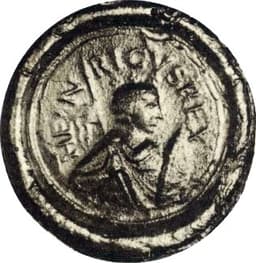
Henry the Fowler
Emperor · Medieval
60.9Total
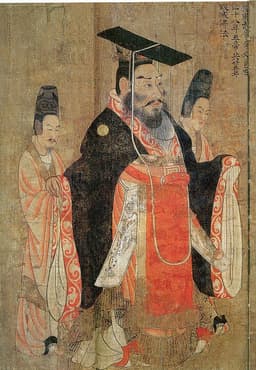
Yuwen Yong
Emperor · Medieval
67.2Total
Basic Information
Born
876
543
Died
936
578
Era
Medieval
Medieval
Nationality
East Francia
China
Occupation
Emperor
Emperor
Civilization
Western
Eastern
Score Comparison
Military (10%)
70.0
78.0
Political (20%)
59.3
78.0
Influence (20%)
55.0
58.0
Legacy (20%)
52.0
54.0
Leadership (15%)
85.0
85.0
Strategy (15%)
55.0
69.1
TOTAL
60.9
67.2
Henry the Fowler — Complete Timeline
919 AD
Election as King of East FranciaPolitical Action
Henry the Fowler was elected King of East Francia by the Saxon and Frankish nobles at Fritzlar on May 6, 919. He was the first Saxon king, marking the transition from Carolingian to Ottonian rule. His election was contested by other dukes but he prevailed.
ElectionAccessionOttonian Dynasty
Impact: regionalconstructive
921 AD
Treaty of Bonn (921)Political Action◆ Major
Henry the Fowler signed the Treaty of Bonn with Charles the Simple of West Francia, recognizing each other's royal titles and establishing peaceful relations. This treaty ended Carolingian claims over East Francia and solidified Henry's legitimacy as an independent king.
TreatyRecognitionDiplomacy
Impact: regionalconstructive
924 AD
Nine-Year Truce with the MagyarsPolitical Action◆ Major
Henry the Fowler negotiated a nine-year truce with the Magyars, agreeing to pay tribute in exchange for a halt to their raids. He used this period to fortify towns, reorganize the army, and train cavalry. This strategic pause was crucial for his later military reforms.
TruceMagyarsMilitary Reform
Impact: regionalconstructive
929 AD
Battle of Lenzen (929)War◆ Major
Henry the Fowler's forces defeated a Slavic army at the Battle of Lenzen, securing the eastern frontier of East Francia. This victory allowed Henry to consolidate control over the Elbe region and establish the March of Brandenburg, a key step in German eastward expansion.
BattleSlavic WarsEastern Expansion
Impact: regionalconstructive
933 AD
Battle of Riade (933)War
After the truce with the Magyars expired, Henry the Fowler led a German army to victory at the Battle of Riade (near Merseburg). The defeat of the Magyar cavalry ended their raids into East Francia for a generation and established Henry's reputation as a defender of Christendom.
BattleMagyarsVictory
Impact: regionalconstructive
936 AD
Death of Henry the FowlerOther◆ Major
Henry the Fowler died on July 2, 936, at Memleben. He was succeeded by his son, Otto I, who would become Holy Roman Emperor. Henry's reign laid the foundations for the Ottonian dynasty and the medieval German kingdom.
DeathSuccessionOttonian
Impact: regional
Yuwen Yong — Complete Timeline
574 AD
Suppression of Buddhism in Northern ZhouReform◆ Major
Emperor Wu of Northern Zhou (Yuwen Yong) ordered the suppression of Buddhism, confiscating monastic lands, forcing monks and nuns to return to lay life, and destroying temples. He aimed to increase state revenue and military manpower, strengthening the state.
Northern ZhouBuddhist PersecutionReform
Impact: nationaldestructive
577 AD
Conquest of Northern QiWar
Emperor Wu led a successful campaign against the rival Northern Qi dynasty, conquering its territory and unifying northern China under Northern Zhou. This victory ended the division of the north and set the stage for the Sui dynasty's unification of all China.
Northern ZhouUnificationNorthern Qi
Impact: regionalconstructive
578 AD
Death during campaign against the TurksWar◆ Major
Emperor Wu died of illness while leading a campaign against the G
Northern ZhouMilitary CampaignDeath
Impact: regionaltragic
Expert Analysis
Yuwen Yong vs Henry the Fowler
# The Unfinished Emperors
In the summer of 936, Henry the Fowler lay dying at Memleben, a royal palace in Saxony. As he gathered his sons around his bed, he reportedly told them that he had done what he could—secured the realm, tamed the frontiers, and bought time. Across the world, in the spring of 578, Yuwen Yong, Emperor Wu of Northern Zhou, was struck down by illness while marching against the Göktürks. He was thirty-four years old, at the height of his power, his army still hungry for conquest. Both men had risen from turbulent times to forge new dynasties. Both died before they could finish what they started. Yet the paths they walked, the choices they made, and the worlds they left behind could not have been more different.
Origins
Henry the Fowler was born in 876 into a Saxon noble family that had long resisted the Carolingian emperors. The ninth century had been brutal for East Francia—Viking raids, Magyar invasions, and the slow collapse of Charlemagne’s legacy. Henry’s father, Otto the Illustrious, had carved out a duchy in Saxony by sheer tenacity. Henry grew up in a world where power was local, loyalty was personal, and survival depended on one’s ability to negotiate with swords. He was no scholar; his nickname, “the Fowler,” reportedly came from his love of hunting birds. But he understood the rhythms of the land and the men who worked it.
Yuwen Yong was born in 543, into a different kind of chaos. Northern China had been splintered for centuries since the fall of the Han dynasty. The Yuwen clan were sinicized Xianbei, a steppe people who had adopted Chinese customs while retaining their military prowess. Yuwen Yong’s father had founded the Northern Zhou dynasty, but the court was a snake pit of regents, generals, and Buddhist monasteries that wielded immense wealth and influence. As a child, Yuwen Yong watched his elder brother, the emperor, be poisoned by a rival. He learned early that trust was a luxury, and power was a weapon.
Rise to Power
Henry’s rise was almost reluctant. In 919, when the Saxon and Frankish nobles gathered at Fritzlar to elect a new king, they chose Henry not because he was the strongest candidate, but because he was the least threatening. The Dukes of Bavaria and Swabia had refused to even attend. Henry accepted the crown on May 6, 919, but he did not claim the title of emperor. He knew that a king who reached too far would only break his back. Instead, he spent his first years consolidating what he had—making peace with the dukes, securing the loyalty of the Church, and building a network of alliances that would outlast him.
Yuwen Yong’s path was far more violent. He became emperor of Northern Zhou in 560, but for years he was a puppet. The real power lay with his cousin Yuwen Hu, a regent who had already murdered two emperors. Yuwen Yong smiled, bowed, and waited. In 572, he struck. With a handful of trusted eunuchs, he ambushed Yuwen Hu in the palace and killed him with a jade tablet. It was a bloody, intimate act of ambition. From that moment, Yuwen Yong ruled alone—and he ruled with the cold precision of a man who had seen what hesitation costs.
Leadership & Governance
Henry the Fowler governed through patience and pragmatism. His military score of 60.1 reflects a man who preferred fortifications to pitched battles. When the Magyars—the most feared raiders in Europe—swept into his lands, Henry did not meet them in the field. In 924, he negotiated a nine-year truce, paying tribute to buy time. While the Magyars took his silver, Henry built a network of fortified towns and trained a new cavalry. When the truce expired in 933, he was ready. At the Battle of Riade, his army crushed the Magyar raiders. It was a turning point for Germany, but Henry did not pursue the fleeing enemy. He had won what he needed: security, not glory.
Yuwen Yong governed through will and ruthlessness. His strategy score of 81.8 marks him as one of the great military minds of his age. In 574, he ordered the suppression of Buddhism across Northern Zhou. It was not a religious crusade—it was a political calculation. The monasteries had grown rich, hoarding land and tax exemptions. By confiscating their wealth, Yuwen Yong filled his treasury and broke a power center that rivaled the throne. In 577, he turned his attention to the Northern Qi dynasty, a decadent regime that had long plagued his borders. He conquered it in a single, brilliantly planned campaign, unifying northern China for the first time in decades.
Triumph & Tragedy
Henry’s greatest triumph was the Battle of Lenzen in 929, where his forces annihilated a Slavic army and secured the eastern frontier. For a man who had spent his life defending, it was a rare moment of offensive glory. But his tragedy was the same as his triumph: he never pushed further. He died in 936, leaving his son Otto a kingdom that was stable but still fragile, surrounded by enemies who remembered the taste of defeat.
Yuwen Yong’s triumph was the conquest of Northern Qi in 577, a campaign that made him master of the north. His tragedy was his death in 578, on the eve of an even greater war. He was marching against the Göktürks, a steppe empire that threatened his northern borders, when illness took him. He left behind a unified realm, a full treasury, and a son who was only six years old. Within three years, the Northern Zhou dynasty had fallen to a usurper, and Yuwen Yong’s dream of a united China was inherited by the Sui and Tang.
Character & Destiny
Henry the Fowler was a builder. His leadership score of 75.7 reflects a man who understood that power is not seized but constructed, brick by brick, alliance by alliance. He was cautious to the point of modesty—he never even called himself emperor. But his caution was wisdom. He gave his son Otto the foundation for what would become the Holy Roman Empire.
Yuwen Yong was a destroyer and a unifier. His leadership score of 76.9 is almost identical to Henry’s, but his temperament was entirely different. He burned what he could not control, crushed what he could not use, and died with his hand still on the sword. His tragedy was not that he failed, but that he succeeded too quickly. He built an empire that depended entirely on him, and when he vanished, so did his work.
Legacy
Henry’s legacy score of 65.7 is modest, but it understates his importance. He founded the Ottonian dynasty, which would dominate Europe for a century. His son Otto I would be crowned Holy Roman Emperor in 962, reviving Charlemagne’s empire. Henry’s cautious statecraft—his truces, his fortresses, his refusal to overreach—became the template for German kings for generations.
Yuwen Yong’s legacy score of 68.6 is slightly higher, but his memory is more ambiguous. He is remembered as a ruthless reformer who crushed Buddhism and conquered the north, but his dynasty vanished within a decade of his death. Yet his work did not die. The Sui and Tang dynasties that followed built on his foundations—his military reforms, his administrative centralization, his unification of the north. In a sense, Yuwen Yong was the architect of China’s golden age, even if he never lived to see it.
Conclusion
Standing at the graves of these two men, one in the misty fields of Saxony, the other on the arid plains of northern China, we see two different answers to the same question: What does it take to build a lasting order? Henry answered with patience, compromise, and the slow accumulation of trust. Yuwen Yong answered with speed, force, and the willingness to burn everything that stood in his way. Both succeeded. Both failed. And both remind us that history does not reward the perfect plan—it rewards the man who understands his time, his people, and his own limits. Henry knew his limits and lived to see his work endure. Yuwen Yong did not know his, and died before his work could be completed. In that difference lies the entire story of their ages.
Rankings
🥇
Yuwen YongLeader
Mil: 78.0Pol: 78.0Inf: 58.0
67.2
🥈
Henry the Fowler
Mil: 70.0Pol: 59.3Inf: 55.0
60.9
+6.3 behind
How This Comparison Works
Algorithm
Each figure is scored on 6 dimensions (0—100 scale) based on structured historical data: Military (10%), Political (20%), Influence (20%), Legacy (20%), Leadership (15%), Strategy (15%). The weighted total produces the final ranking.
Data Sources
Scores are computed from structured sub-indicators in the database. Scale factors adjust for era (Ancient ×0.85, Modern ×1.0) and civilization size (Eastern ×1.05, Other ×0.80) to account for differences in population and military scale.
Maximum 3 Figures
Comparisons are limited to 2—3 figures to ensure readability and statistical meaningfulness.
Error Margins
±5 points per dimension — Sub-scores are derived from historical records with inherent uncertainty. Two figures within 5 points on a dimension should be considered roughly equivalent in that area.
Total Score Accuracy
±3 points overall — The weighted combination of 6 dimensions produces a total score with approximately ±3 points of uncertainty. Differences of less than 3 points are not statistically significant— the figures are effectively tied.
Known Limitations
- Historical records are incomplete and uneven across civilizations
- Figures from oral-tradition societies may be underrepresented
- Occupation labels can misclassify multi-role figures
- Scores measure capability and impact, not moral character
- Quantitative scoring is a comparison tool, not absolute truth
Capability Radar
Military (10%) — Battles & Warfare
Battles
55
75
Win Rate
60
80
Expansion
60
80
Political (20%) — Governance & Reform
Reform
75
85
Diplomacy
70
70
Economy
65
75
Influence (20%) — Cultural & Global Reach
Cultural
55
40
Global
40
40
Legacy (20%) — Historical Impact
Historical
65
65
Longevity
60
50
Leadership (15%) — Power & Stability
Tenure
70
60
Stability
70
70
Strategy (15%) — Tactics & Innovation
Strategy
65
75
Tactics
50
70
Reform
70
85
Similar Comparisons
Comments & Discussion
SaxonHammer6/16/2026
Henry the Fowler was basically a medieval survivalist who got lucky—his greatest "achievement" was dying before the Magyars steamrolled his kingdom at Lechfeld. Meanwhile, Yuwen Yong was an actual military reformer who crushed the Northern Qi and had his army terrified of discipline. One guy hunted birds; the other hunted empires. The comparison flatters Henry way too much. Give me a ruler who actually finished campaigns, not one who dodged bullets by expiring.
铁血骑兵6/16/2026
宇文邕的军事改革才是真本事,灭了北齐统一北方,全靠府兵制的纪律和严格训练。亨利一世呢?说难听点,就是个运气好的地方领主,靠和谈拖延马扎尔人九年。真正有头脑的帝王会在死前安排好继承人,宇文邕至少把关陇集团牢牢控制住了,而亨利一死,奥托一世差点被诸侯架空。明显是宇文邕更狠。
ChronosMapper6/16/2026
The numbers don't lie: Henry reigned 18 years, expanded eastward by 15%, and died in bed. Yuwen reigned 12 years, doubled his territory, and died on campaign. Henry's "legacy" is mostly Otto I's work—the Lechfeld victory, the Imperial coronation, that's all son's glory. Yuwen left a unified north ready for Yang Jian to exploit. Henry bought time; Yuwen built a springboard. I know who I'd rather have leading my army.
府兵叛徒6/16/2026
你们吹宇文邕的,别忘了北周在他死后第二年就被杨坚篡了。亨利一世至少让自己的家族稳稳坐住东法兰克王位,奥托一世还能加冕为帝。宇文邕的"宏伟统一"根本就是为隋朝铺路,他自己儿子宇文赟是个昏君,直接把江山作没了。稳定传承才是硬道理,亨利在这一点上完胜。宇文邕死得太早,留下的权力真空太大。
EagleEyeReviser6/16/2026
Classic historiography bias: Western sources treat Henry as a "founder" because he stopped the Magyar threat diplomatically, while ignoring that Yuwen Yong actually annihilated a rival kingdom in three years. The difference is narrative framing. Henry's "nine-year tribute" was just paying off raiders—temporary at best. Yuwen's conquest of Northern Qi was permanent. If we're comparing unfinished emperors, Yuwen had far more concrete achievements per year of rule.
黄河守陵人6/16/2026
你们都在谈军事和疆域,但忽略了根本区别:亨利一世是在九世纪西欧的铁血贵族文化中成长起来的,他有自己的领地和扈从,权力基础扎实。宇文邕是个傀儡皇帝翻身,靠的是宇文护被杀后的政治清洗。亨利证明了自己能从零开始建立王权,而