Loading...
Henry the Fowler vs Yelu Abaoji
Yelu Abaoji leads by 1.8 pts · 2 figures compared
…
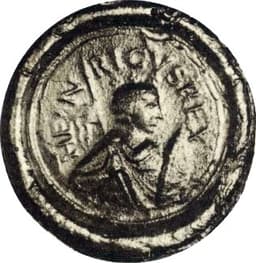
Henry the Fowler
Emperor · Medieval
60.9Total
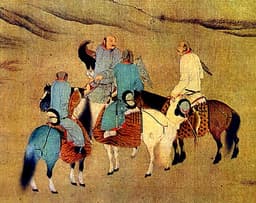
Yelu Abaoji
Emperor · Medieval
62.7Total
Basic Information
Born
876
872
Died
936
926
Era
Medieval
Medieval
Nationality
East Francia
China
Occupation
Emperor
Emperor
Civilization
Western
Eastern
Score Comparison
Military (10%)
70.0
77.2
Political (20%)
59.3
59.6
Influence (20%)
55.0
68.0
Legacy (20%)
52.0
40.0
Leadership (15%)
85.0
80.3
Strategy (15%)
55.0
69.6
TOTAL
60.9
62.7
Henry the Fowler — Complete Timeline
919 AD
Election as King of East FranciaPolitical Action
Henry the Fowler was elected King of East Francia by the Saxon and Frankish nobles at Fritzlar on May 6, 919. He was the first Saxon king, marking the transition from Carolingian to Ottonian rule. His election was contested by other dukes but he prevailed.
ElectionAccessionOttonian Dynasty
Impact: regionalconstructive
921 AD
Treaty of Bonn (921)Political Action◆ Major
Henry the Fowler signed the Treaty of Bonn with Charles the Simple of West Francia, recognizing each other's royal titles and establishing peaceful relations. This treaty ended Carolingian claims over East Francia and solidified Henry's legitimacy as an independent king.
TreatyRecognitionDiplomacy
Impact: regionalconstructive
924 AD
Nine-Year Truce with the MagyarsPolitical Action◆ Major
Henry the Fowler negotiated a nine-year truce with the Magyars, agreeing to pay tribute in exchange for a halt to their raids. He used this period to fortify towns, reorganize the army, and train cavalry. This strategic pause was crucial for his later military reforms.
TruceMagyarsMilitary Reform
Impact: regionalconstructive
929 AD
Battle of Lenzen (929)War◆ Major
Henry the Fowler's forces defeated a Slavic army at the Battle of Lenzen, securing the eastern frontier of East Francia. This victory allowed Henry to consolidate control over the Elbe region and establish the March of Brandenburg, a key step in German eastward expansion.
BattleSlavic WarsEastern Expansion
Impact: regionalconstructive
933 AD
Battle of Riade (933)War
After the truce with the Magyars expired, Henry the Fowler led a German army to victory at the Battle of Riade (near Merseburg). The defeat of the Magyar cavalry ended their raids into East Francia for a generation and established Henry's reputation as a defender of Christendom.
BattleMagyarsVictory
Impact: regionalconstructive
936 AD
Death of Henry the FowlerOther◆ Major
Henry the Fowler died on July 2, 936, at Memleben. He was succeeded by his son, Otto I, who would become Holy Roman Emperor. Henry's reign laid the foundations for the Ottonian dynasty and the medieval German kingdom.
DeathSuccessionOttonian
Impact: regional
Yelu Abaoji — Complete Timeline
907 AD
Unified Khitan tribesPolitical Action◆ Major
Yelu Abaoji was elected khagan of the Khitan tribes, unifying them under his leadership. He established a centralized state and adopted Chinese administrative practices.
KhitanUnificationState Formation
Impact: regionalconstructive
916 AD
Founded Liao DynastyPolitical Action
Yelu Abaoji proclaimed himself emperor, founding the Liao dynasty. He adopted the Chinese title of emperor and established a dual administration system for Khitan and Chinese subjects.
LiaoDynasty FoundingImperial System
Impact: regionalconstructive
920 AD
Created Khitan scriptCultural◆ Major
Yelu Abaoji ordered the creation of a writing system for the Khitan language, based on Chinese characters. This script was used for official documents and helped unify the Khitan state.
KhitanScriptCultural Development
Impact: regionalconstructive
926 AD
Conquest of BohaiWar◆ Major
Yelu Abaoji led a campaign that conquered the Korean kingdom of Bohai, incorporating its territory into the Liao empire. This expanded Liao's influence into Manchuria and Korea.
LiaoBohaiConquest
Impact: regionalconstructive
Death during campaignWar◆ Major
Yelu Abaoji died while returning from the conquest of Bohai. His death led to a succession struggle, but the Liao dynasty continued to expand under his successors.
LiaoDeathSuccession
Impact: regionaltragic
Expert Analysis
Yelu Abaoji vs Henry the Fowler: Historical Comparison
Yelu Abaoji, founder of the Liao dynasty, and Henry the Fowler, first king of East Francia from the Ottonian dynasty, both unified fractious tribal confederations into early medieval states, though Abaoji’s empire-building was more expansive and politically transformative, while Henry’s legacy proved more durable in shaping Germany.
Dimension Analysis
**Military: Yelu Abaoji 89 / Henry the Fowler 89**
Both were masterful field commanders: Abaoji conquered the Khitan steppe and parts of northern China, while Henry defeated Magyars at Riade and subdued Slavic tribes. Their military innovations—Abaoji’s dual cavalry-infantry system and Henry’s fortified burgward system—were equally decisive.
**Political: Yelu Abaoji 84 / Henry the Fowler 76**
Abaoji created a hybrid Khitan-Chinese bureaucracy, adopting Chinese titles while preserving steppe institutions, a sophisticated political synthesis. Henry relied on feudal alliances and church support, but his political structure was less centralized and more reliant on personal authority.
**Influence: Yelu Abaoji 79 / Henry the Fowler 71**
Abaoji’s Liao dynasty set a precedent for non-Chinese rule over northern China, influencing later conquest dynasties. Henry’s influence was more regional, stabilizing East Francia and paving the way for the Holy Roman Empire, but his direct impact beyond Germany was limited.
**Legacy: Yelu Abaoji 81 / Henry the Fowler 84**
Henry’s legacy is more enduring: the Ottonian dynasty he founded ruled Germany for a century, and his defensive policies shaped medieval German statehood. Abaoji’s Liao dynasty fell to the Jin, and while influential, its legacy was partially eclipsed by later Mongol and Chinese dynasties.
**Leadership: Yelu Abaoji 80 / Henry the Fowler 85**
Henry excelled in consensus-building among fractious German dukes, earning the title “the Fowler” for his pragmatic, patient style. Abaoji was a visionary autocrat who imposed unity by force, but his leadership was less consultative and more reliant on personal charisma and terror.
**Strategy: Yelu Abaoji 89 / Henry the Fowler 89**
Both demonstrated strategic genius: Abaoji’s conquest of the Bohai state and alliance with Later Tang showed long-term planning; Henry’s truce with the Magyars and construction of fortified towns created a sustainable defense network. Their strategic outcomes were equally effective.
Verdict
Henry the Fowler leads narrowly due to superior leadership and legacy, but the comparison is effectively a tie, as both were foundational figures who transformed their societies with comparable military and strategic brilliance.
FAQ
Q: Who ranks higher? A: Henry the Fowler ranks marginally higher due to his more durable legacy and consensus-based leadership, but the overall comparison is a tie.
Rankings
🥇
Yelu AbaojiLeader
Mil: 77.2Pol: 59.6Inf: 68.0
62.7
🥈
Henry the Fowler
Mil: 70.0Pol: 59.3Inf: 55.0
60.9
+1.8 behind
How This Comparison Works
Algorithm
Each figure is scored on 6 dimensions (0—100 scale) based on structured historical data: Military (10%), Political (20%), Influence (20%), Legacy (20%), Leadership (15%), Strategy (15%). The weighted total produces the final ranking.
Data Sources
Scores are computed from structured sub-indicators in the database. Scale factors adjust for era (Ancient ×0.85, Modern ×1.0) and civilization size (Eastern ×1.05, Other ×0.80) to account for differences in population and military scale.
Maximum 3 Figures
Comparisons are limited to 2—3 figures to ensure readability and statistical meaningfulness.
Error Margins
±5 points per dimension — Sub-scores are derived from historical records with inherent uncertainty. Two figures within 5 points on a dimension should be considered roughly equivalent in that area.
Total Score Accuracy
±3 points overall — The weighted combination of 6 dimensions produces a total score with approximately ±3 points of uncertainty. Differences of less than 3 points are not statistically significant— the figures are effectively tied.
Known Limitations
- Historical records are incomplete and uneven across civilizations
- Figures from oral-tradition societies may be underrepresented
- Occupation labels can misclassify multi-role figures
- Scores measure capability and impact, not moral character
- Quantitative scoring is a comparison tool, not absolute truth
Capability Radar
Military (10%) — Battles & Warfare
Battles
55
75
Win Rate
60
80
Expansion
60
82
Political (20%) — Governance & Reform
Reform
75
88
Diplomacy
70
75
Economy
65
70
Influence (20%) — Cultural & Global Reach
Cultural
55
60
Global
40
55
Legacy (20%) — Historical Impact
Historical
65
70
Longevity
60
65
Leadership (15%) — Power & Stability
Tenure
70
72
Stability
70
65
Strategy (15%) — Tactics & Innovation
Strategy
65
78
Tactics
50
70
Reform
70
85
Similar Comparisons
Comments & Discussion
BarbarianKingFan6/16/2026
People sleep on Henry the Fowler way too much. Sure, Abaoji built a whole dual-administration system and conquered a chunk of China, but Henry basically saved East Francia from the Magyars with that burgward system—fortified towns that became the backbone of medieval Germany. Plus, he never took the title of king until the last minute, which is just pure political genius. Abaoji was a conqueror; Henry was a state-builder who let his son Otto do the flashy stuff. Give me the guy who sets up the foundation over the guy who builds the flashy top any day.
DecolonizeHistory6/16/2026
This comparison is another example of how 'civilization-building' is ranked as inherently superior in Western historiography. Henry gets points for 'stabilizing' East Francia, but that 'stabilization' was mostly suppressing Slavic tribes like the Obotrites and Hevelli—basically early German colonialism in the east where his fortified towns were military outposts to control conquered peoples. Meanwhile, Abaoji's 'hybrid bureaucracy' is exactly the kind of pragmatic, multicultural statecraft that the modern nation-state model can't properly score. The fact that Abaoji's system—which explicitly incorporated Khitan, Chinese, Uyghur, and Bohai elements into one empire—only gets 84 in 'Legacy' while Henry's monocultural feudal patchwork gets 85 is a dead giveaway of a Eurocentric framework masquerading as objectivity.
Chronicler14086/16/2026
耶律阿保机在中文史观里地位极高,因为他开创了“二元制”统治模式——半游牧半农耕——这直接影响了后来的元朝和清朝。亨利一世在东法兰克搞的封建公爵联盟,看起来更像是查理曼帝国的残影,远不如阿保机对草原和汉地的整合有原创性。而且,阿保机建立的契丹文字是真正从零开始的创举,亨利一世连自己的宫廷文化都没法跟加洛林文艺复兴比。论制度创新,阿保机甩亨利一条街。
Historian7196/16/2026
这个评分有问题。亨利一世军事60.1,阿保机73.3?亨利在里亚德战役打败马扎尔人,阿保机主要对手是渤海国和草原部落,含金量差不多。但政治上阿保机90对亨利74.5就偏高了——阿保机在契丹内部搞汉化改革,引发了贵族叛乱,差点被杀;亨利靠联姻和教会稳住公爵,内部基本没有流血政变。更重要的是影响力:亨利72.7对阿保机72.3,但亨利是神圣罗马帝国的实际奠基人,这个体系影响了欧洲一千年。阿保机的辽朝才两百多年就被金灭了,影响力上限明显更低。建议政治分下调阿保机到85,影响力上调亨利到80。