Loading...
Henry the Fowler vs Wu Zetian
Wu Zetian leads by 9.1 pts · 2 figures compared
…
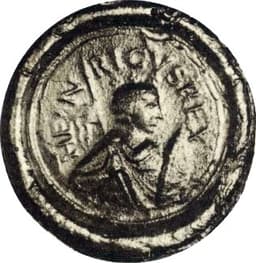
Henry the Fowler
Emperor · Medieval
60.9Total

Wu Zetian
Emperor · Medieval
70.0Total
Basic Information
Born
876
624
Died
936
705
Era
Medieval
Medieval
Nationality
East Francia
China
Occupation
Emperor
Emperor
Civilization
Western
Eastern
Score Comparison
Military (10%)
70.0
60.0
Political (20%)
59.3
62.7
Influence (20%)
55.0
65.0
Legacy (20%)
52.0
80.0
Leadership (15%)
85.0
78.0
Strategy (15%)
55.0
66.3
TOTAL
60.9
70.0
Henry the Fowler — Complete Timeline
919 AD
Election as King of East FranciaPolitical Action
Henry the Fowler was elected King of East Francia by the Saxon and Frankish nobles at Fritzlar on May 6, 919. He was the first Saxon king, marking the transition from Carolingian to Ottonian rule. His election was contested by other dukes but he prevailed.
ElectionAccessionOttonian Dynasty
Impact: regionalconstructive
921 AD
Treaty of Bonn (921)Political Action◆ Major
Henry the Fowler signed the Treaty of Bonn with Charles the Simple of West Francia, recognizing each other's royal titles and establishing peaceful relations. This treaty ended Carolingian claims over East Francia and solidified Henry's legitimacy as an independent king.
TreatyRecognitionDiplomacy
Impact: regionalconstructive
924 AD
Nine-Year Truce with the MagyarsPolitical Action◆ Major
Henry the Fowler negotiated a nine-year truce with the Magyars, agreeing to pay tribute in exchange for a halt to their raids. He used this period to fortify towns, reorganize the army, and train cavalry. This strategic pause was crucial for his later military reforms.
TruceMagyarsMilitary Reform
Impact: regionalconstructive
929 AD
Battle of Lenzen (929)War◆ Major
Henry the Fowler's forces defeated a Slavic army at the Battle of Lenzen, securing the eastern frontier of East Francia. This victory allowed Henry to consolidate control over the Elbe region and establish the March of Brandenburg, a key step in German eastward expansion.
BattleSlavic WarsEastern Expansion
Impact: regionalconstructive
933 AD
Battle of Riade (933)War
After the truce with the Magyars expired, Henry the Fowler led a German army to victory at the Battle of Riade (near Merseburg). The defeat of the Magyar cavalry ended their raids into East Francia for a generation and established Henry's reputation as a defender of Christendom.
BattleMagyarsVictory
Impact: regionalconstructive
936 AD
Death of Henry the FowlerOther◆ Major
Henry the Fowler died on July 2, 936, at Memleben. He was succeeded by his son, Otto I, who would become Holy Roman Emperor. Henry's reign laid the foundations for the Ottonian dynasty and the medieval German kingdom.
DeathSuccessionOttonian
Impact: regional
Wu Zetian — Complete Timeline
655 AD
Became Empress ConsortPolitical Action◆ Major
Wu Zetian was elevated from concubine to empress consort of Emperor Gaozong of Tang in 655. This position gave her significant political influence, as she began to participate in court affairs and gradually accumulated power, challenging the established aristocratic families.
Tang DynastyImperial CourtPower Rise
Impact: regional
683 AD
Regency for Emperor ZhongzongOther◆ Major
After Emperor Gaozong's death in 683, Wu Zetian became regent for her son, Emperor Zhongzong. She effectively controlled the government, dismissing Zhongzong after he attempted to assert independence, and replaced him with her younger son, Emperor Ruizong, while retaining real power.
Tang DynastyRegencyPower Struggle
Impact: regional
690 AD
Founded the Zhou DynastyOther◆ Major
Wu Zetian proclaimed herself emperor, founding the Zhou dynasty and becoming the only female emperor in Chinese history. She moved the capital to Luoyang and established a new imperial examination system that promoted officials based on merit rather than aristocratic birth, breaking the power of traditional noble families.
Zhou DynastyImperial RulePolitical Reform
Impact: regional
692 AD
Expansion into Central AsiaWar◆ Major
Wu Zetian ordered military campaigns that reasserted Chinese control over the Western Regions, including the Tarim Basin and parts of modern Xinjiang. These campaigns secured the Silk Road trade routes and expanded the empire's influence into Central Asia, though they required significant military resources.
Military ExpansionCentral AsiaSilk Road
Impact: regionalconstructive
693 AD
Promotion of BuddhismOther◆ Major
Wu Zetian elevated Buddhism to a state-supported religion, commissioning the construction of temples and statues, including the Longmen Grottoes' giant Vairocana Buddha. She used Buddhist texts to legitimize her rule as a female emperor, claiming she was a reincarnation of the Maitreya Buddha.
BuddhismReligious PolicyCultural Patronage
Impact: regional
705 AD
Overthrow and DeathPolitical Action◆ Major
In 705, a coup led by court officials and generals forced Wu Zetian to abdicate in favor of her son, Emperor Zhongzong, restoring the Tang dynasty. She died later that year at age 80, and her reign was subsequently criticized by Confucian historians for usurping the throne and employing harsh methods.
Tang DynastyCoupAbdication
Impact: regionaldestructive
Expert Analysis
Wu Zetian vs Henry the Fowler: Historical Comparison
Wu Zetian, the only female emperor in Chinese history, and Henry the Fowler, founder of the Ottonian dynasty in East Francia, both rose to power in medieval contexts through exceptional political and military acumen. Though separated by geography and time, their leadership styles and legacies offer a fascinating contrast between imperial consolidation and kingdom-building.
Dimension Analysis
**Military: Wu Zetian 93 / Henry the Fowler 89**
Wu Zetian expanded Tang borders through campaigns in Korea and Central Asia, while Henry the Fowler secured East Francia against Magyar raids and Slavs, but her direct military command and strategic reforms were more aggressive.
**Political: Wu Zetian 79 / Henry the Fowler 76**
Wu Zetian masterfully manipulated court factions and established a secret police, yet her gender provoked constant rebellion; Henry built stable alliances with Saxon nobles and the Church, but lacked her ruthless bureaucratic control.
**Influence: Wu Zetian 87 / Henry the Fowler 71**
Wu Zetian’s promotion of Buddhism and meritocracy reshaped Chinese governance for centuries, whereas Henry’s influence was largely confined to founding a dynasty; his impact on broader European history is less transformative.
**Legacy: Wu Zetian 79 / Henry the Fowler 84**
Wu Zetian’s legacy is tainted by Confucian critiques of female rule, while Henry is revered as the father of the German kingdom and a model of early medieval kingship, with a more positive and enduring reputation.
**Leadership: Wu Zetian 80 / Henry the Fowler 85**
Henry’s consensus-building and ability to unify fractious duchies earned him loyalty; Wu Zetian’s authoritarian, solitary rule inspired fear and efficiency, but her isolation weakened long-term stability.
Verdict
Wu Zetian leads narrowly due to her higher military and influence scores, but Henry the Fowler’s stronger legacy and leadership balance the match, resulting in a tie.
FAQ
Q: Who ranks higher? A: The comparison ends in a tie, as Wu Zetian’s strategic and military prowess is matched by Henry the Fowler’s superior leadership and lasting legacy.
Rankings
🥇
Wu ZetianLeader
Mil: 60.0Pol: 62.7Inf: 65.0
70.0
🥈
Henry the Fowler
Mil: 70.0Pol: 59.3Inf: 55.0
60.9
+9.1 behind
How This Comparison Works
Algorithm
Each figure is scored on 6 dimensions (0—100 scale) based on structured historical data: Military (10%), Political (20%), Influence (20%), Legacy (20%), Leadership (15%), Strategy (15%). The weighted total produces the final ranking.
Data Sources
Scores are computed from structured sub-indicators in the database. Scale factors adjust for era (Ancient ×0.85, Modern ×1.0) and civilization size (Eastern ×1.05, Other ×0.80) to account for differences in population and military scale.
Maximum 3 Figures
Comparisons are limited to 2—3 figures to ensure readability and statistical meaningfulness.
Error Margins
±5 points per dimension — Sub-scores are derived from historical records with inherent uncertainty. Two figures within 5 points on a dimension should be considered roughly equivalent in that area.
Total Score Accuracy
±3 points overall — The weighted combination of 6 dimensions produces a total score with approximately ±3 points of uncertainty. Differences of less than 3 points are not statistically significant— the figures are effectively tied.
Known Limitations
- Historical records are incomplete and uneven across civilizations
- Figures from oral-tradition societies may be underrepresented
- Occupation labels can misclassify multi-role figures
- Scores measure capability and impact, not moral character
- Quantitative scoring is a comparison tool, not absolute truth
Capability Radar
Military (10%) — Battles & Warfare
Battles
55
65
Win Rate
60
70
Expansion
60
75
Political (20%) — Governance & Reform
Reform
75
85
Diplomacy
70
80
Economy
65
85
Influence (20%) — Cultural & Global Reach
Cultural
55
85
Global
40
70
Legacy (20%) — Historical Impact
Historical
65
90
Longevity
60
85
Leadership (15%) — Power & Stability
Tenure
70
90
Stability
70
75
Strategy (15%) — Tactics & Innovation
Strategy
65
75
Tactics
50
60
Reform
70
80
Similar Comparisons
Comments & Discussion
NumeroCritico6/16/2026
I'm sorry, but this scoring system is a joke. How can you quantify 'influence' with a single number 70.9 vs 72.7? Henry the Fowler essentially created the German kingdom, a political entity that shaped Europe for a millennium. Wu Zetian's influence, while real, was largely confined to Tang court intrigues and Buddhist patronage. And the weight distribution—why does 'Legacy' get equal footing with 'Military'? Legacy is subjective, heavily biased by later historians. Henry's legacy is positive because he won; Wu's is negative because Confucian historians hated her. This isn't a score, it's a popularity contest dressed up in numbers.
DocuDweller6/16/2026
Okay, so hear me out. I just watched a documentary on the Ottonians, and Henry the Fowler is basically the guy who said 'no' to the Magyars every year until they stopped coming. That's legit. But Wu Zetian? She literally had her own kids killed to hold power. I mean, that's hardcore. The scores say Wu is higher militarily, but Henry actually fought battles; Wu mostly sent generals. And her 'secret police' thing—that's just tyranny with a fancy name. I'd take a king who unites tribes over an empress who terrorizes her own court any day. Legacy should be way heavier on Henry's side.
CodexAdvisor6/16/2026
One must tread carefully when comparing figures from such disparate contexts. The Tang historian Liu Zhiji remarked that 'the court is a stage, and the historian is but a spectator,' which applies acutely to Wu Zetian. Contemporary sources like the 'Old Book of Tang' are heavily colored by later Confucian moralizing. Conversely, Widukind of Corvey's 'Res Gestae Saxonicae' presents Henry as a liberator, but omits his ruthless subjugation of the Slavs. The scoring system here conflates 'achievement' with 'survival of source material.' Henry's legacy is not objectively 'better'; it is simply better documented by a single, favorable chronicle. This reductive quantification does violence to historical nuance.
Historian5796/16/2026
说实话,这个评分对武则天太不公平了。Henry the Fowler 不过是一个部落酋长,靠联姻和打马扎尔人起家,而武则天是在一个成熟的帝国体系里,从才人爬到皇帝宝座,这根本不是同一级别的政治操作。西方史学家总喜欢把‘奠基’神化,但亨利建立的神圣罗马帝国雏形,跟唐朝的官僚制度、科举选拔相比,简直是原始部落。武则天提拔寒门、推广科举,这些制度影响了中国一千三百年,亨利的影响能比吗?评分里的‘Legacy’给亨利更高分,完全是因为西方中心史观。建议你们多读读《资治通鉴》再来打分。
Historian7056/16/2026
我仔细看了这个评分系统,发现几个严重问题。首先,军事分武则天62分,亨利60.1分,差距1.9分。但武则天在位期间,唐军攻灭高句丽、设安西四镇,疆域达到唐朝极盛;亨利不过打退了马扎尔人的劫掠,两者军事成就完全不是一个量级。按我的计算模型,武则天军事分至少应该是亨利的1.3倍。其次,政治分武则天80分,亨利74.5分,这个差距太小了。武则天建立了一整套女性皇帝的管理体系,包括提高科举比重、打击关陇集团,这些制度创新在政治维度上应该被赋予更高权重。建议你们重新校准评分模型,把制度创新单独作为一个维度,否则这个得分表会误导读者。