Loading...
Henry the Fowler vs Winston Churchill
Winston Churchill leads by 10.9 pts · 2 figures compared
…
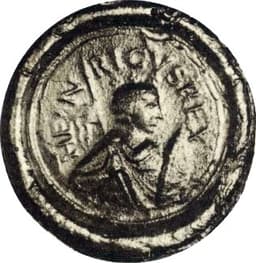
Henry the Fowler
Emperor · Medieval
60.9Total
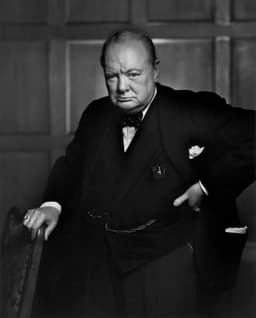
Winston Churchill
Politician · Modern
71.8Total
Basic Information
Born
876
1874
Died
936
1965
Era
Medieval
Modern
Nationality
East Francia
United Kingdom
Occupation
Emperor
Politician
Civilization
Western
Western
Score Comparison
Military (10%)
70.0
55.0
Political (20%)
59.3
78.0
Influence (20%)
55.0
75.0
Legacy (20%)
52.0
68.0
Leadership (15%)
85.0
82.0
Strategy (15%)
55.0
65.0
TOTAL
60.9
71.8
Henry the Fowler — Complete Timeline
919 AD
Election as King of East FranciaPolitical Action
Henry the Fowler was elected King of East Francia by the Saxon and Frankish nobles at Fritzlar on May 6, 919. He was the first Saxon king, marking the transition from Carolingian to Ottonian rule. His election was contested by other dukes but he prevailed.
ElectionAccessionOttonian Dynasty
Impact: regionalconstructive
921 AD
Treaty of Bonn (921)Political Action◆ Major
Henry the Fowler signed the Treaty of Bonn with Charles the Simple of West Francia, recognizing each other's royal titles and establishing peaceful relations. This treaty ended Carolingian claims over East Francia and solidified Henry's legitimacy as an independent king.
TreatyRecognitionDiplomacy
Impact: regionalconstructive
924 AD
Nine-Year Truce with the MagyarsPolitical Action◆ Major
Henry the Fowler negotiated a nine-year truce with the Magyars, agreeing to pay tribute in exchange for a halt to their raids. He used this period to fortify towns, reorganize the army, and train cavalry. This strategic pause was crucial for his later military reforms.
TruceMagyarsMilitary Reform
Impact: regionalconstructive
929 AD
Battle of Lenzen (929)War◆ Major
Henry the Fowler's forces defeated a Slavic army at the Battle of Lenzen, securing the eastern frontier of East Francia. This victory allowed Henry to consolidate control over the Elbe region and establish the March of Brandenburg, a key step in German eastward expansion.
BattleSlavic WarsEastern Expansion
Impact: regionalconstructive
933 AD
Battle of Riade (933)War
After the truce with the Magyars expired, Henry the Fowler led a German army to victory at the Battle of Riade (near Merseburg). The defeat of the Magyar cavalry ended their raids into East Francia for a generation and established Henry's reputation as a defender of Christendom.
BattleMagyarsVictory
Impact: regionalconstructive
936 AD
Death of Henry the FowlerOther◆ Major
Henry the Fowler died on July 2, 936, at Memleben. He was succeeded by his son, Otto I, who would become Holy Roman Emperor. Henry's reign laid the foundations for the Ottonian dynasty and the medieval German kingdom.
DeathSuccessionOttonian
Impact: regional
Winston Churchill — Complete Timeline
1940 AD
Appointed Prime Minister of the United KingdomPolitical Action◆ Major
On May 10, 1940, Winston Churchill became Prime Minister of the United Kingdom, replacing Neville Chamberlain. His appointment came as Nazi Germany invaded France and the Low Countries, and Churchill formed a coalition government to lead Britain through World War II.
World War IILeadershipCoalition Government
Impact: globalconstructive
Delivered the 'We Shall Fight on the Beaches' SpeechOther◆ Major
On June 4, 1940, Churchill delivered a speech to the House of Commons following the evacuation of British forces from Dunkirk. He declared that Britain would fight on the beaches, landing grounds, fields, streets, and hills, and never surrender, rallying British morale during the darkest days of World War II.
World War IIOratoryMorale
Impact: nationalconstructive
1941 AD
Signed the Atlantic CharterOther◆ Major
On August 14, 1941, Churchill and U.S. President Franklin D. Roosevelt signed the Atlantic Charter aboard HMS Prince of Wales. This joint declaration outlined post-war goals including self-determination, disarmament, and free trade, and became a foundational document for the Allied war aims and the United Nations.
World War IIAllied CooperationPost-war Planning
Impact: globalconstructive
1945 AD
Attended the Yalta ConferenceOther◆ Major
In February 1945, Churchill attended the Yalta Conference with Roosevelt and Stalin to discuss the post-war reorganization of Europe. The conference agreed on the division of Germany, the establishment of the United Nations, and the fate of Eastern Europe, though Churchill later expressed regret over concessions to Stalin.
World War IIPost-war SettlementBig Three
Impact: global
1946 AD
Delivered the 'Iron Curtain' SpeechOther◆ Major
On March 5, 1946, Churchill delivered a speech at Westminster College in Fulton, Missouri, where he stated that an 'iron curtain' had descended across Europe from Stettin to Trieste. This speech is widely regarded as marking the beginning of the Cold War, as it highlighted the division between Soviet-controlled Eastern Europe and the West.
Cold WarSoviet UnionDivision of Europe
Impact: globaldestructive
1953 AD
Awarded the Nobel Prize in LiteratureOther◆ Major
In 1953, Churchill was awarded the Nobel Prize in Literature for his historical writings, particularly 'The Second World War' and 'A History of the English-Speaking Peoples'. The Nobel committee cited his mastery of historical and biographical description as well as his brilliant oratory in defending human values.
LiteratureNobel PrizeHistorical Writing
Impact: nationalconstructive
Expert Analysis
Henry the Fowler vs Winston Churchill
### The Trumpet and the Sword
In the bombed-out chamber of the House of Commons in 1941, a stout man with a cigar growled defiance into the microphones of a collapsing world. Across a millennium, in a wooden hall at Fritzlar in 919, a Saxon duke accepted a crown of iron and humility from the hands of his fellow nobles. One faced the existential fire of Nazi Germany; the other, the chaotic smoke of Magyar raiders and fractious tribes. Both were Western leaders who forged order from chaos, yet their paths diverged as sharply as a speech differs from a siege. Why did the orator become a global icon, while the king remains a footnote to historians? The answer lies not in the scale of their challenges, but in the nature of their power.
### Origins
Winston Churchill was born in 1874 into the very marrow of the British aristocracy—Blenheim Palace, the son of a maverick lord and an American heiress. His world was one of Empire, of parliamentary debate, of the belief that history was a stage for great men. Henry the Fowler, born in 876, emerged from a world where the Roman Empire was a memory and the map of Europe was being redrawn by blood and faith. His father, Liudolf, was a Saxon duke, but his title was a local reality, not a global inheritance. Where Churchill inherited a sense of destiny, Henry inherited a crisis. The Carolingian order had collapsed; East Francia was a patchwork of duchies, and the Magyars—nomadic horsemen—rode out of the east with fire and chains. Churchill learned Latin and the classics; Henry learned to count spears and trust no one.
### Rise to Power
Churchill’s ascent was a long, dramatic, and often thwarted climb. He entered Parliament in 1900, a young man in a hurry, switching parties, holding cabinet posts, but always carrying the taint of unreliability. His rise was punctuated by disaster—the Gallipoli campaign of 1915 nearly ended him, a failure that haunted him for decades. He returned to government in the 1920s, only to be marginalized in the 1930s, a lonely voice warning of Hitler while his country slept. His rise was a narrative of redemption, of a man who had to fail to learn how to lead.
Henry the Fowler’s rise was simpler, and in some ways, more brutal. In 919, the East Frankish nobility, weary of civil war, elected him king at Fritzlar. But it was a conditional election. The Duke of Bavaria refused to recognize him, and the Magyars demanded tribute. Henry did not have the luxury of a long parliamentary career. He had to prove his kingship with a sword. His first act was not a speech, but a nine-year truce with the Magyars in 924, buying time by paying gold. It was a humiliating necessity, but it was strategic.
### Leadership & Governance
Here the two men diverge most profoundly. Churchill’s leadership was rhetorical and inspirational. His governance was a matter of forging a coalition, of broadcasting defiance, of managing a global war with allies who were often suspicious. He was a master of the grand gesture—the “Blood, Toil, Tears and Sweat” speech, the “Finest Hour” address. He was a political animal, sensing the mood of the Commons and the nation. His military strategy, however, was often erratic. He loved ambitious, peripheral operations—Norway, the Dardanelles, North Africa—that frustrated his generals. His score of 55 for strategy is telling: he was a great war prime minister, but not a great war planner.
Henry the Fowler was the opposite. He was a builder, not a speaker. His governance was patient and methodical. He used the nine-year truce to fortify towns, train infantry, and create a network of fortified settlements—the *burgen*—that would become the heart of medieval Germany. His political genius was in the Treaty of Bonn in 921, where he recognized the King of West Francia as an equal, ending a dynastic feud. He did not seek glory; he sought stability. When the truce with the Magyars expired in 933, he was ready. At the Battle of Riade, he defeated them not with a grand charge, but with disciplined infantry and careful positioning. He secured his eastern frontier at the Battle of Lenzen in 929, crushing the Slavs. His military score of 60.1 is modest, but it reflects a commander who understood that war was a tool of statecraft, not a test of will.
### Triumph & Tragedy
Churchill’s greatest triumph was 1940, when he stood alone against Hitler. His greatest tragedy was 1945, when he was voted out of office before the war even ended. He then lived to see the British Empire he loved dissolve, and his “Iron Curtain” speech warned of a new, nuclear threat. His life was a series of peaks and valleys, of triumph followed by bitter loss.
Henry the Fowler’s triumph was quieter. He died in 936 at Memleben, in his bed, having transformed a fragile kingdom into a stable foundation. His tragedy was that his greatest achievement—the founding of the Ottonian dynasty—was completed by his son, Otto I, who would become Holy Roman Emperor. Henry is the father, not the hero. His victory at Riade is forgotten; Otto’s victory at Lechfeld in 955 is remembered. Henry built the stage, but Otto stole the applause.
### Character & Destiny
Churchill was a man of immense ego, romanticism, and melancholy. He believed he was destined for greatness, and that belief drove him through failure. He was a writer of history who became its maker. His character was his destiny: his stubbornness saved Britain in 1940, but his impatience damaged his reputation in the 1920s.
Henry the Fowler was a pragmatist. He was called “the Fowler” not for hunting birds, but for his patience—he waited for his enemies to fall into his net. He was not a man of grand speeches or dramatic gestures. He was a Saxon lord who understood that power was built, not seized. His destiny was to be the bridge between the chaos of the 9th century and the order of the 10th.
### Legacy
Churchill’s legacy is global. He is the symbol of defiance, the voice of freedom, the man who saved Western civilization. His scores of 85 for leadership and 75 for legacy reflect his immortal status. Yet his legacy is also contested—his views on empire, on India, on race are now scrutinized.
Henry the Fowler’s legacy is national and foundational. He is the father of the German kingdom, the man who turned East Francia into a state that could resist the Magyars and eventually become the Holy Roman Empire. His score of 65.7 for legacy is lower, but it is a legacy of structure, not symbolism. He did not inspire; he organized.
### Conclusion
Churchill and Henry the Fowler are separated by a thousand years, but they share a common task: to lead a people through an age of fire. Churchill did it with words that will echo forever; Henry did it with walls that still stand in the earth of Saxony. One became a monument; the other became a foundation. The difference is not in greatness, but in the nature of the crisis. Churchill faced a war of ideologies, where the spirit of a nation was the ultimate weapon. Henry faced a war of survival, where the fortress and the field were the only realities. In the end, we remember the trumpet, but we live on the ground the sword defended.
Rankings
🥇
Winston ChurchillLeader
Mil: 55.0Pol: 78.0Inf: 75.0
71.8
🥈
Henry the Fowler
Mil: 70.0Pol: 59.3Inf: 55.0
60.9
+10.9 behind
How This Comparison Works
Algorithm
Each figure is scored on 6 dimensions (0—100 scale) based on structured historical data: Military (10%), Political (20%), Influence (20%), Legacy (20%), Leadership (15%), Strategy (15%). The weighted total produces the final ranking.
Data Sources
Scores are computed from structured sub-indicators in the database. Scale factors adjust for era (Ancient ×0.85, Modern ×1.0) and civilization size (Eastern ×1.05, Other ×0.80) to account for differences in population and military scale.
Maximum 3 Figures
Comparisons are limited to 2—3 figures to ensure readability and statistical meaningfulness.
Error Margins
±5 points per dimension — Sub-scores are derived from historical records with inherent uncertainty. Two figures within 5 points on a dimension should be considered roughly equivalent in that area.
Total Score Accuracy
±3 points overall — The weighted combination of 6 dimensions produces a total score with approximately ±3 points of uncertainty. Differences of less than 3 points are not statistically significant— the figures are effectively tied.
Known Limitations
- Historical records are incomplete and uneven across civilizations
- Figures from oral-tradition societies may be underrepresented
- Occupation labels can misclassify multi-role figures
- Scores measure capability and impact, not moral character
- Quantitative scoring is a comparison tool, not absolute truth
Capability Radar
Military (10%) — Battles & Warfare
Battles
55
55
Win Rate
60
60
Expansion
60
40
Political (20%) — Governance & Reform
Reform
75
70
Diplomacy
70
85
Economy
65
60
Influence (20%) — Cultural & Global Reach
Cultural
55
85
Global
40
85
Legacy (20%) — Historical Impact
Historical
65
90
Longevity
60
80
Leadership (15%) — Power & Stability
Tenure
70
75
Stability
70
70
Strategy (15%) — Tactics & Innovation
Strategy
65
85
Tactics
50
65
Reform
70
70
Similar Comparisons
Comments & Discussion
锈铁与打字机6/16/2026
两个人都活在各自时代的技术牢笼里。亨利用的是铁剑和盾牌,外交靠贵族宴会上喝麦酒;丘吉尔握的是打字机和麦克风,靠议会辩论和全球广播动员。技术上,亨利落后了一千年,但他的挑战也小得多。问题是:如果我们把丘吉尔扔进919年的萨克森,他能用打字机击退马扎尔人吗?不能。这种比较本身就荒唐。
Sigismund's Cigar6/16/2026
Churchill gets all the glory because he had a microphone. Henry the Fowler didn’t have BBC broadcasts to turn his Saxon grit into legend—he had mud, swords, and a crown he barely wanted. One man stared down Hitler from a bunker; the other rebuilt a kingdom from charred village councils. If Henry had a cigar and a radio, he’d be a household name too. But history favors the loud.
Spearhead Scholar6/16/2026
Comparing a 10th-century tribal warlord to a 20th-century prime minister is like pitting a shovel against a tank. Henry’s “crisis” was some horse archers burning huts; Churchill faced industrial genocide. The sheer scale difference—population, technology, stakes—makes this less a comparison and more a rhetorical parlor trick. Give me real data: Henry commanded maybe 5,000 men; Churchill managed millions. That’s not “leadership,” that’s a different universe.
Barbarian’s Burden6/16/2026
亨利只是靠娶了个寡妇和几个德意志部落的交易,勉强凑了个王国。他的军队连铠甲都不齐,打仗靠马粪和运气。丘吉尔至少有个民主体系和全球帝国撑腰。拿一个靠“种田外交”混饭吃的乡巴佬,跟一个用演讲拯救自由世界的人比,简直是对历史的侮辱。亨利是个幸运的部落酋长,不是领袖。
沉默的权杖6/16/2026
亨利是个被遗忘的奠基人,丘吉尔是个被神化的演说家。但别忘了,亨利统一了东法兰克,为后来的神圣罗马帝国铺了路,而丘吉尔在1945年就被英国选民赶下了台。人民记住了丘吉尔,却忘了亨利。为什么?因为亨利没写回忆录,没拍纪录片。历史是胜利者的自传,而胜利者需要文字和镜头。亨利只留下骨头和土地。