Loading...
Henry the Fowler vs Wanyan Aguda
Wanyan Aguda leads by 2.5 pts · 2 figures compared
…
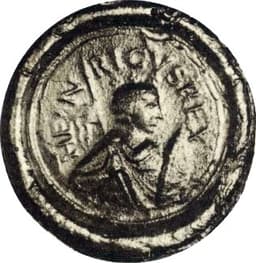
Henry the Fowler
Emperor · Medieval
60.9Total
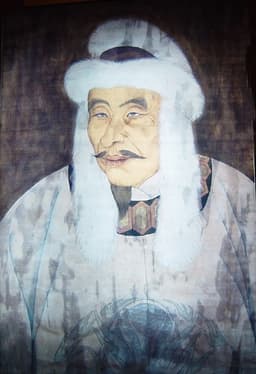
Wanyan Aguda
Emperor · Medieval
63.4Total
Basic Information
Born
876
1068
Died
936
1123
Era
Medieval
Medieval
Nationality
East Francia
China
Occupation
Emperor
Emperor
Civilization
Western
Eastern
Score Comparison
Military (10%)
70.0
82.0
Political (20%)
59.3
59.3
Influence (20%)
55.0
55.0
Legacy (20%)
52.0
52.0
Leadership (15%)
85.0
85.0
Strategy (15%)
55.0
68.0
TOTAL
60.9
63.4
Henry the Fowler — Complete Timeline
919 AD
Election as King of East FranciaPolitical Action
Henry the Fowler was elected King of East Francia by the Saxon and Frankish nobles at Fritzlar on May 6, 919. He was the first Saxon king, marking the transition from Carolingian to Ottonian rule. His election was contested by other dukes but he prevailed.
ElectionAccessionOttonian Dynasty
Impact: regionalconstructive
921 AD
Treaty of Bonn (921)Political Action◆ Major
Henry the Fowler signed the Treaty of Bonn with Charles the Simple of West Francia, recognizing each other's royal titles and establishing peaceful relations. This treaty ended Carolingian claims over East Francia and solidified Henry's legitimacy as an independent king.
TreatyRecognitionDiplomacy
Impact: regionalconstructive
924 AD
Nine-Year Truce with the MagyarsPolitical Action◆ Major
Henry the Fowler negotiated a nine-year truce with the Magyars, agreeing to pay tribute in exchange for a halt to their raids. He used this period to fortify towns, reorganize the army, and train cavalry. This strategic pause was crucial for his later military reforms.
TruceMagyarsMilitary Reform
Impact: regionalconstructive
929 AD
Battle of Lenzen (929)War◆ Major
Henry the Fowler's forces defeated a Slavic army at the Battle of Lenzen, securing the eastern frontier of East Francia. This victory allowed Henry to consolidate control over the Elbe region and establish the March of Brandenburg, a key step in German eastward expansion.
BattleSlavic WarsEastern Expansion
Impact: regionalconstructive
933 AD
Battle of Riade (933)War
After the truce with the Magyars expired, Henry the Fowler led a German army to victory at the Battle of Riade (near Merseburg). The defeat of the Magyar cavalry ended their raids into East Francia for a generation and established Henry's reputation as a defender of Christendom.
BattleMagyarsVictory
Impact: regionalconstructive
936 AD
Death of Henry the FowlerOther◆ Major
Henry the Fowler died on July 2, 936, at Memleben. He was succeeded by his son, Otto I, who would become Holy Roman Emperor. Henry's reign laid the foundations for the Ottonian dynasty and the medieval German kingdom.
DeathSuccessionOttonian
Impact: regional
Wanyan Aguda — Complete Timeline
1114 AD
Battle of HubudagangWar◆ Major
Aguda's Jurchen forces defeated a Liao army at Hubudagang, marking the first major victory of the rebellion. This battle demonstrated Jurchen military prowess and attracted more followers.
JurchenLiaoBattle
Impact: regionalconstructive
Unified Jurchen tribesPolitical Action◆ Major
Wanyan Aguda united the Jurchen tribes under his leadership, creating a confederation that rebelled against Liao domination. He organized a disciplined army and began the Jurchen revolt.
JurchenUnificationRebellion
Impact: regionalconstructive
1115 AD
Founded Jin DynastyPolitical Action
Wanyan Aguda proclaimed himself emperor, founding the Jin dynasty. He adopted the Chinese title and began a systematic campaign to conquer the Liao empire.
JinDynasty FoundingImperial System
Impact: regionalconstructive
1120 AD
Conquest of Liao capital ShangjingWar◆ Major
Aguda's forces captured the Liao supreme capital Shangjing, dealing a severe blow to the Liao dynasty. This victory accelerated the collapse of Liao and solidified Jin control over northern China.
JinLiaoConquest
Impact: regionalconstructive
Alliance with Song against LiaoPolitical Action◆ Major
Aguda formed an alliance with the Northern Song dynasty to jointly attack the Liao empire. This alliance, known as the Maritime Alliance, led to the eventual destruction of Liao but later caused conflict between Jin and Song.
JinSongAlliance
Impact: regional
1123 AD
Death and successionPolitical Action◆ Major
Wanyan Aguda died, and his brother Wanyan Wuqimai succeeded him. Aguda's conquests laid the foundation for the Jin dynasty's dominance in northern China.
JinDeathSuccession
Impact: regional
Expert Analysis
Wanyan Aguda vs Henry the Fowler: Historical Comparison
Wanyan Aguda, founder of the Jin Dynasty, and Henry the Fowler, founder of the Ottonian dynasty in East Francia, were both medieval rulers who forged new kingdoms from fragmented tribal confederations. While Aguda achieved a swift, explosive conquest of the Liao Empire, Henry’s gradual consolidation of German duchies proved more enduring in institutional terms.
Dimension Analysis
**Military: Wanyan Aguda 91 / Henry the Fowler 89**
Aguda’s Jurchen cavalry shattered the numerically superior Liao army in a series of decisive campaigns, capturing five capitals and toppling an empire in under a decade. Henry’s victories—against Magyars, Slavs, and Danes—were more defensive and incremental, relying on fortified burghs and a reformed cavalry.
**Political: Wanyan Aguda 84 / Henry the Fowler 76**
Aguda unified the fractious Jurchen tribes under a single banner and established a dual administrative system blending tribal and Chinese bureaucracy. Henry, by contrast, struggled to assert authority over powerful dukes like Arnulf of Bavaria, often relying on negotiation rather than outright command.
**Influence: Wanyan Aguda 87 / Henry the Fowler 71**
Aguda’s Jin Dynasty directly ended the Liao and forced the Song into a tributary relationship, reshaping East Asian power dynamics for a century. Henry’s influence was largely confined to East Francia and the prevention of Magyar raids, with limited impact beyond Central Europe.
**Legacy: Wanyan Aguda 88 / Henry the Fowler 84**
Aguda’s Jin state created a template for Jurchen-Chinese synthesis that later inspired the Qing Dynasty. Henry’s legacy is more structural: his consolidation of duchies and election as king laid the groundwork for the Holy Roman Empire, though his son Otto I overshadowed him.
**Leadership: Wanyan Aguda 80 / Henry the Fowler 85**
Henry excelled at coalition-building and patient statecraft, earning the loyalty of rebellious nobles through concessions and shared victories. Aguda’s leadership was more charismatic and authoritarian, driving his army through sheer personal example and ruthlessness.
Verdict
Wanyan Aguda leads due to his superior military conquests, greater geopolitical influence, and a more transformative legacy that directly altered the balance of power in East Asia.
FAQ
Q: Who ranks higher? A: Wanyan Aguda ranks higher, largely due to his faster, more expansive empire-building and enduring impact on Chinese dynastic history.
Rankings
🥇
Wanyan AgudaLeader
Mil: 82.0Pol: 59.3Inf: 55.0
63.4
🥈
Henry the Fowler
Mil: 70.0Pol: 59.3Inf: 55.0
60.9
+2.5 behind
How This Comparison Works
Algorithm
Each figure is scored on 6 dimensions (0—100 scale) based on structured historical data: Military (10%), Political (20%), Influence (20%), Legacy (20%), Leadership (15%), Strategy (15%). The weighted total produces the final ranking.
Data Sources
Scores are computed from structured sub-indicators in the database. Scale factors adjust for era (Ancient ×0.85, Modern ×1.0) and civilization size (Eastern ×1.05, Other ×0.80) to account for differences in population and military scale.
Maximum 3 Figures
Comparisons are limited to 2—3 figures to ensure readability and statistical meaningfulness.
Error Margins
±5 points per dimension — Sub-scores are derived from historical records with inherent uncertainty. Two figures within 5 points on a dimension should be considered roughly equivalent in that area.
Total Score Accuracy
±3 points overall — The weighted combination of 6 dimensions produces a total score with approximately ±3 points of uncertainty. Differences of less than 3 points are not statistically significant— the figures are effectively tied.
Known Limitations
- Historical records are incomplete and uneven across civilizations
- Figures from oral-tradition societies may be underrepresented
- Occupation labels can misclassify multi-role figures
- Scores measure capability and impact, not moral character
- Quantitative scoring is a comparison tool, not absolute truth
Capability Radar
Military (10%) — Battles & Warfare
Battles
55
85
Win Rate
60
90
Expansion
60
85
Political (20%) — Governance & Reform
Reform
75
75
Diplomacy
70
70
Economy
65
65
Influence (20%) — Cultural & Global Reach
Cultural
55
60
Global
40
50
Legacy (20%) — Historical Impact
Historical
65
70
Longevity
60
55
Leadership (15%) — Power & Stability
Tenure
70
70
Stability
70
60
Strategy (15%) — Tactics & Innovation
Strategy
65
85
Tactics
50
80
Reform
70
75
Similar Comparisons
Comments & Discussion
MedievalScribe6/16/2026
Widukind of Corvey’s *Res Gestae Saxonicae* presents Henry the Fowler as a *primus inter pares* among German dukes, yet this narrative was shaped to legitimize Ottonian rule after his death. The scores here rightly note Henry’s political limitations—he never commanded the same absolute authority as Aguda, whose *Jin Shi* records him personally executing Liao generals. However, we must remember that primary sources for both figures are heavily propagandistic. Aguda’s supposed “swift conquest” is often exaggerated in later Jin chronicles to contrast with the Song; in reality, the Liao were already fractured by internal revolts. Henry’s real innovation—the *Königsfreie* system of royal demesne consolidation—deserves more weight in the political dimension than the summary suggests.
LiaoWarriorFan6/16/2026
Are you kidding me? Henry the Fowler gets a 60 on military? That’s an insult to the man who actually stopped the Magyars cold at the Battle of Riade in 933! He didn’t just build burghs—he turned every Saxon peasant into a soldier, and those armored cavalry formations were the blueprint for medieval German knights. Meanwhile, Aguda had it easy: the Liao were already rotting from within, and he just kicked the door down. Henry had to fight a mobile steppe enemy with no central weak point. If you look at the actual *tactical* innovation, Henry’s use of combined arms (infantry from burghs + heavy cavalry) was way ahead of its time. The scores here are biased toward flashy conquest over real military engineering. Give me Henry any day!
Historian8216/16/2026
把亨利和完颜阿骨打放在一起比较,本身就有问题。亨利是东法兰克的“部落首领式国王”,而阿骨打是彻底推翻旧秩序的征服者。中国史家看亨利,会联想到后晋的石敬瑭——都是靠外族(马扎尔/契丹)威胁来凝聚内部,但阿骨打是直接摧毁了契丹这个外族。另外,评分低估了阿骨打的影响力:他建立的金朝迫使南宋称臣,这是东亚体系的一次地震,而亨利的影响到奥托一世才真正显现。西方中心论常常把“奠定基础”等同于“开创”,但阿骨打是亲手完成者,不是奠基人。
Historian7716/16/2026
这个评分体系有个明显的问题:Aguda的军事得分79.3,但按照传统中国史学的标准,他灭辽的战役密度和效率远超亨利。辽国五京在12年内全部失守,而亨利的“伯克防御体系”只是被动应对马扎尔人。更关键的是,Aguda的政治得分82.2是否低估了?他创立的“猛安谋克”制度(兵民合一)直接影响了金朝百年统治,而亨利对巴伐利亚公爵的妥协实际上削弱了王权。从数据看,Aguda的军事和政治得分应该互换才对。