Loading...
Henry the Fowler vs Timur
Timur leads by 4.7 pts · 2 figures compared
…
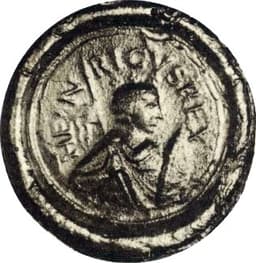
Henry the Fowler
Emperor · Medieval
60.9Total
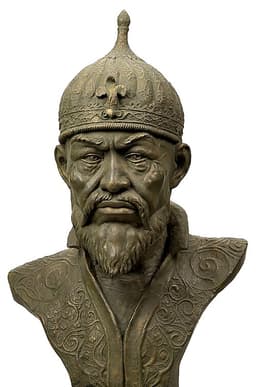
Timur
Emperor · Medieval
65.6Total
Basic Information
Born
876
1336
Died
936
1405
Era
Medieval
Medieval
Nationality
East Francia
Timurid Empire
Occupation
Emperor
Emperor
Civilization
Western
Middle Eastern
Score Comparison
Military (10%)
70.0
79.0
Political (20%)
59.3
70.0
Influence (20%)
55.0
70.0
Legacy (20%)
52.0
40.0
Leadership (15%)
85.0
79.8
Strategy (15%)
55.0
77.6
TOTAL
60.9
65.6
Henry the Fowler — Complete Timeline
919 AD
Election as King of East FranciaPolitical Action
Henry the Fowler was elected King of East Francia by the Saxon and Frankish nobles at Fritzlar on May 6, 919. He was the first Saxon king, marking the transition from Carolingian to Ottonian rule. His election was contested by other dukes but he prevailed.
ElectionAccessionOttonian Dynasty
Impact: regionalconstructive
921 AD
Treaty of Bonn (921)Political Action◆ Major
Henry the Fowler signed the Treaty of Bonn with Charles the Simple of West Francia, recognizing each other's royal titles and establishing peaceful relations. This treaty ended Carolingian claims over East Francia and solidified Henry's legitimacy as an independent king.
TreatyRecognitionDiplomacy
Impact: regionalconstructive
924 AD
Nine-Year Truce with the MagyarsPolitical Action◆ Major
Henry the Fowler negotiated a nine-year truce with the Magyars, agreeing to pay tribute in exchange for a halt to their raids. He used this period to fortify towns, reorganize the army, and train cavalry. This strategic pause was crucial for his later military reforms.
TruceMagyarsMilitary Reform
Impact: regionalconstructive
929 AD
Battle of Lenzen (929)War◆ Major
Henry the Fowler's forces defeated a Slavic army at the Battle of Lenzen, securing the eastern frontier of East Francia. This victory allowed Henry to consolidate control over the Elbe region and establish the March of Brandenburg, a key step in German eastward expansion.
BattleSlavic WarsEastern Expansion
Impact: regionalconstructive
933 AD
Battle of Riade (933)War
After the truce with the Magyars expired, Henry the Fowler led a German army to victory at the Battle of Riade (near Merseburg). The defeat of the Magyar cavalry ended their raids into East Francia for a generation and established Henry's reputation as a defender of Christendom.
BattleMagyarsVictory
Impact: regionalconstructive
936 AD
Death of Henry the FowlerOther◆ Major
Henry the Fowler died on July 2, 936, at Memleben. He was succeeded by his son, Otto I, who would become Holy Roman Emperor. Henry's reign laid the foundations for the Ottonian dynasty and the medieval German kingdom.
DeathSuccessionOttonian
Impact: regional
Timur — Complete Timeline
1362 AD
Battle of the Terek RiverWar
Timur defeated the Mongol ruler of the Chagatai Khanate, establishing his control over Transoxiana. This victory marked the beginning of his rise to power, as he captured Samarkand and declared himself emir.
Rise to PowerBattleCentral Asia
Impact: regional
1387 AD
Conquest of PersiaWar◆ Major
Timur launched a campaign into Persia, capturing Isfahan and Shiraz. He suppressed a revolt in Isfahan by massacring tens of thousands of inhabitants, establishing his reputation for extreme brutality and consolidating control over the region.
ConquestMassacrePersia
Impact: regionaldestructive
1395 AD
Campaign against the Golden HordeWar◆ Major
Timur defeated the Golden Horde under Tokhtamysh at the Battle of the Terek River. He sacked Sarai, the Horde's capital, and destroyed its trade networks, permanently weakening the Mongol state and securing his northern frontier.
ConquestGolden HordeBattle
Impact: regionaldestructive
1398 AD
Sack of DelhiWar◆ Major
Timur invaded the Delhi Sultanate, defeating Sultan Nasir-ud-Din Mahmud Shah Tughluq. His army sacked Delhi, massacring tens of thousands of civilians and destroying the city's infrastructure, then withdrew with immense plunder.
ConquestMassacreIndia
Impact: regionaldestructive
1402 AD
Battle of AnkaraWar
Timur defeated the Ottoman Sultan Bayezid I at Ankara, capturing him. The victory shattered Ottoman power, leading to a civil war among Bayezid's sons and delaying Ottoman expansion into Europe for a decade.
BattleOttoman EmpireDecisive Victory
Impact: global
1404 AD
Construction of SamarkandCultural◆ Major
Timur invested heavily in transforming Samarkand into a cultural and architectural center. He brought artisans from conquered lands to build mosques, madrasas, and the Bibi-Khanym Mosque, making the city a showcase of Timurid art and learning.
ArchitecturePatronageCultural Center
Impact: regionalconstructive
1405 AD
Death during campaign against Ming ChinaWar◆ Major
Timur died of illness while leading a massive army toward the Ming dynasty's borders. His death ended the planned invasion of China and led to the fragmentation of his empire among his sons and grandsons.
DeathCampaignMing Dynasty
Impact: regional
Expert Analysis
Henry the Fowler vs Timur
### The Conqueror and the Builder
In the year 1402, the world’s two most formidable empires clashed at Ankara. On one side stood Bayezid I, the Ottoman Sultan who had swept across the Balkans. On the other was Timur, a grizzled, limping warlord from the steppes of Central Asia. The result was a thunderclap: Bayezid was captured, his empire shattered, and for a moment, the entire structure of power from the Mediterranean to India hung in the balance. Yet, just over a century earlier, another ruler had faced a different kind of existential threat. In 924, Henry the Fowler, a Saxon duke newly crowned King of East Francia, did not ride out for battle. He sued for peace. He paid tribute to the marauding Magyars, buying time. These two moments—one of cataclysmic violence, the other of patient forbearance—define the vast chasm between two men who built empires, yet built them in utterly different ways. Why did one choose annihilation, and the other, a nine-year truce?
### Origins
Timur was born in 1336 near Samarkand into a world of fractured Mongol khanates. His family was of the Barlas tribe, minor nobility in a land where loyalty was fleeting and power belonged to the swiftest sword. He was a product of the steppe—hard, pragmatic, and deeply ambitious. A wound to his leg and hand in his youth earned him the name "Timur the Lame," but it did not slow his hunger for dominion. The world he knew was one of constant war, where cities were prizes to be sacked and populations were tools or obstacles.
Henry the Fowler, born in 876, came from a different world entirely. He was a Saxon duke in East Francia, a realm forged from the wreckage of Charlemagne’s empire. His lands were forests and fortified towns, threatened by Vikings from the north, Slavs from the east, and Magyars from the plains of Hungary. Henry’s father, Otto the Illustrious, had already established the Liudolfing dynasty’s power, but the kingdom was a fragile patchwork of duchies—Saxony, Bavaria, Swabia, Franconia—each jealous of its independence. Henry’s inheritance was not a throne, but a challenge: how to unite proud, fractious nobles against external predators.
### Rise to Power
Timur’s ascent was a brutal climb over corpses. In 1362, at the Battle of the Terek River, he defeated the Mongol ruler of the Chagatai Khanate, seizing control of Transoxiana. He did not simply win; he annihilated his rivals, often turning their skulls into monuments. By 1387, he had swept through Persia, capturing Isfahan and Shiraz. When Isfahan revolted, he ordered a massacre that left tens of thousands dead—a policy of terror that became his signature. His power was built on fear, and he wielded it with surgical precision.
Henry’s rise was a study in political craft. In 919, the Saxon and Frankish nobles elected him King of East Francia at Fritzlar. He was not the first choice; the dukes of Bavaria and Swabia initially refused to recognize him. Rather than march against them, Henry waited. He signed the Treaty of Bonn in 921 with Charles the Simple of West Francia, a diplomatic stroke that secured his western flank. He then turned east, but not with armies. He negotiated a nine-year truce with the Magyars in 924, agreeing to pay tribute. It was a humiliating concession, but it bought him something precious: time to build.
### Leadership & Governance
Timur ruled through terror and spectacle. His military genius was unquestioned: his campaigns against the Golden Horde in 1395 shattered their power at the Battle of the Terek River, sacking their capital Sarai. In 1398, he invaded the Delhi Sultanate, sacking Delhi and leaving a trail of pyramids built from severed heads. Yet his governance was a paradox. While he destroyed cities, he also built. From 1404, he invested heavily in transforming Samarkand into a cultural jewel, importing artisans from conquered lands to craft mosques and gardens. His political score of 65.0 reflects this contradiction: a brilliant strategist but a poor administrator, for he left no stable institutions, only a legacy of fear.
Henry’s leadership was the opposite. His military score of 60.1 is modest, but his political score of 74.5 reveals his true strength. He did not conquer; he consolidated. During the nine-year truce, he fortified towns, built a network of castles, and trained a new type of soldier—the heavy cavalry that would become the core of German military power. When the truce expired in 933, he was ready. At the Battle of Riade, he routed the Magyars, ending their threat for a generation. He also secured his eastern frontier at the Battle of Lenzen in 929, defeating a Slavic army. His victories were not annihilations but strategic settlements, designed to create stability.
### Triumph & Tragedy
Timur’s greatest triumph was the Battle of Ankara in 1402, where he crushed the Ottoman Empire and captured Sultan Bayezid I. It was a victory that reshaped the Middle East. But his tragedy came three years later. In 1405, while leading a massive army toward the Ming dynasty’s borders, he fell ill and died. His invasion of China never happened. His empire, held together only by his will, fragmented within a generation.
Henry’s triumph was quieter but more enduring. At Riade in 933, he proved that his patient strategy had worked. He died in 936 at Memleben, a king who had transformed a fragile kingdom into a stable realm. His tragedy was that he never wore the imperial crown; that honor would fall to his son, Otto I, who became Holy Roman Emperor. Henry’s legacy was the foundation, not the monument.
### Character & Destiny
Timur was a man of fire. His personality was forged in the crucible of the steppe: ruthless, ambitious, and incapable of compromise. He saw the world as a chessboard of enemies to be crushed. This drove his decisions—the massacres, the destruction, the relentless campaigns. But it also ensured his empire’s fragility. He built nothing that could outlast him.
Henry was a man of earth. He was patient, pragmatic, and deeply aware of limits. He knew when to fight and when to pay tribute. He understood that power was not just about victory but about building trust among dukes and bishops. His personality shaped a kingdom that would endure for centuries.
### Legacy
Timur is remembered as a destroyer and a builder—a paradox that still fascinates. Samarkand stands as his monument, but so do the ruins of Delhi and Isfahan. His influence score of 65.0 and legacy of 65.0 reflect his ambiguous place in history: a giant who left no dynasty, only a name.
Henry’s legacy is more modest but more concrete. He founded the Ottonian dynasty, which would dominate Europe for a century. His son Otto I became Holy Roman Emperor, and the kingdom Henry built became the core of modern Germany. His legacy score of 65.7 is similar to Timur’s, but it is a legacy of institutions, not ruins.
### Conclusion
One man conquered the world and left a trail of ash. The other built a kingdom and left a foundation for an empire. Timur and Henry the Fowler are mirrors of two different kinds of leadership: the fire that consumes and the earth that nurtures. Both were necessary in their time, but only one created something that lasted. In the end, perhaps the truest measure of a ruler is not how many enemies he destroys, but how many structures he leaves standing after the fires go out.
Rankings
🥇
TimurLeader
Mil: 79.0Pol: 70.0Inf: 70.0
65.6
🥈
Henry the Fowler
Mil: 70.0Pol: 59.3Inf: 55.0
60.9
+4.7 behind
How This Comparison Works
Algorithm
Each figure is scored on 6 dimensions (0—100 scale) based on structured historical data: Military (10%), Political (20%), Influence (20%), Legacy (20%), Leadership (15%), Strategy (15%). The weighted total produces the final ranking.
Data Sources
Scores are computed from structured sub-indicators in the database. Scale factors adjust for era (Ancient ×0.85, Modern ×1.0) and civilization size (Eastern ×1.05, Other ×0.80) to account for differences in population and military scale.
Maximum 3 Figures
Comparisons are limited to 2—3 figures to ensure readability and statistical meaningfulness.
Error Margins
±5 points per dimension — Sub-scores are derived from historical records with inherent uncertainty. Two figures within 5 points on a dimension should be considered roughly equivalent in that area.
Total Score Accuracy
±3 points overall — The weighted combination of 6 dimensions produces a total score with approximately ±3 points of uncertainty. Differences of less than 3 points are not statistically significant— the figures are effectively tied.
Known Limitations
- Historical records are incomplete and uneven across civilizations
- Figures from oral-tradition societies may be underrepresented
- Occupation labels can misclassify multi-role figures
- Scores measure capability and impact, not moral character
- Quantitative scoring is a comparison tool, not absolute truth
Capability Radar
Military (10%) — Battles & Warfare
Battles
55
95
Win Rate
60
92
Expansion
60
96
Political (20%) — Governance & Reform
Reform
75
78
Diplomacy
70
70
Economy
65
82
Influence (20%) — Cultural & Global Reach
Cultural
55
88
Global
40
85
Legacy (20%) — Historical Impact
Historical
65
90
Longevity
60
75
Leadership (15%) — Power & Stability
Tenure
70
85
Stability
70
65
Strategy (15%) — Tactics & Innovation
Strategy
65
93
Tactics
50
94
Reform
70
80
Similar Comparisons
Comments & Discussion
**SteppeShredder6/16/2026
Timur wasn't a builder—he was a human avalanche. The idea of comparing him to Henry is absurd. Henry bought time with gold; Timur turned Baghdad into a pyramid of skulls. In 1401, after taking Damascus, he made artisans build him a tower of their own severed heads. That’s not statecraft, that’s a psychotic obsession with legacy through horror. Henry’s nine-year truce was a strategic masterpiece. Timur’s “empire” died with him. No institutions, just bones.**
**DataSkeptic0076/16/2026
This comparison is ahistorical clickbait. You’re contrasting a 10th-century German feudal lord with a 14th-century Turco-Mongol conqueror. The only metric where they’re comparable is “time alive.” Henry reigned 18 years; Timur, 35. But military effectiveness? Timur fielded armies of 200,000+, using gunpowder and siege drills Henry couldn’t dream of. Henry’s biggest win was the Battle of Lenzen, a skirmish involving maybe 5,000 men. Pretending these are equal “empire builders” is like comparing a
**贺氏铁犁6/16/2026
拿捕鸟者亨利跟跛子帖木儿比?这就好比拿镰刀比战斧。亨利能在924年屈膝求和,换来的九年停战期里,他干了什么?修了六座边境堡垒,逼着农村小伙子进城学打仗。等到933年马扎尔人卷土重来,他三场仗就把对方打趴三十多年。这叫算力,不是蛮力。帖木儿呢?1402年打垮奥斯曼,转头就死,两年后帝国就碎了。建筑师的遗产是制度,不是尸骨堆。**
**ClassicistCrux6/16/2026
Timur is a dark mirror of Alexander—a brilliant, broken figure whose legacy is pure entropy. The OP markets him as a “builder,” yet after Ankara, he didn't rebuild the Ottoman state. He left a power vacuum that spawned civil war, delaying Ottoman expansion for a decade. Meanwhile, Henry the Fowler’s Saxon dynasty laid the foundation for the Ottonian Renaissance and the Holy Roman Empire. Henry built a polity that lasted centuries. Timur’s “empire” was a sand castle at high tide. Longevity beats
**血色弯刀6/16/2026
那些吹亨利是“奠基者”的人,大概率没读透原文。亨利掏钱买和平,其实是他压根打不过。924年东法兰克王国刚被马扎尔人烧了巴伐利亚,国王的骑兵连屁都不是。反观帖木儿,一生三十多场战役全胜,远征