Loading...
Henry the Fowler vs Tamar of Georgia
Tamar of Georgia leads by 10.6 pts · 2 figures compared
…
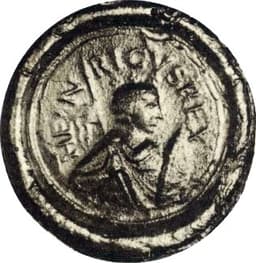
Henry the Fowler
Emperor · Medieval
60.9Total

Tamar of Georgia
Emperor · Medieval
71.5Total
Basic Information
Born
876
1160
Died
936
1213
Era
Medieval
Medieval
Nationality
East Francia
Georgia
Occupation
Emperor
Emperor
Civilization
Western
Western
Score Comparison
Military (10%)
70.0
78.0
Political (20%)
59.3
72.0
Influence (20%)
55.0
82.0
Legacy (20%)
52.0
55.0
Leadership (15%)
85.0
80.0
Strategy (15%)
55.0
66.3
TOTAL
60.9
71.5
Henry the Fowler — Complete Timeline
919 AD
Election as King of East FranciaPolitical Action
Henry the Fowler was elected King of East Francia by the Saxon and Frankish nobles at Fritzlar on May 6, 919. He was the first Saxon king, marking the transition from Carolingian to Ottonian rule. His election was contested by other dukes but he prevailed.
ElectionAccessionOttonian Dynasty
Impact: regionalconstructive
921 AD
Treaty of Bonn (921)Political Action◆ Major
Henry the Fowler signed the Treaty of Bonn with Charles the Simple of West Francia, recognizing each other's royal titles and establishing peaceful relations. This treaty ended Carolingian claims over East Francia and solidified Henry's legitimacy as an independent king.
TreatyRecognitionDiplomacy
Impact: regionalconstructive
924 AD
Nine-Year Truce with the MagyarsPolitical Action◆ Major
Henry the Fowler negotiated a nine-year truce with the Magyars, agreeing to pay tribute in exchange for a halt to their raids. He used this period to fortify towns, reorganize the army, and train cavalry. This strategic pause was crucial for his later military reforms.
TruceMagyarsMilitary Reform
Impact: regionalconstructive
929 AD
Battle of Lenzen (929)War◆ Major
Henry the Fowler's forces defeated a Slavic army at the Battle of Lenzen, securing the eastern frontier of East Francia. This victory allowed Henry to consolidate control over the Elbe region and establish the March of Brandenburg, a key step in German eastward expansion.
BattleSlavic WarsEastern Expansion
Impact: regionalconstructive
933 AD
Battle of Riade (933)War
After the truce with the Magyars expired, Henry the Fowler led a German army to victory at the Battle of Riade (near Merseburg). The defeat of the Magyar cavalry ended their raids into East Francia for a generation and established Henry's reputation as a defender of Christendom.
BattleMagyarsVictory
Impact: regionalconstructive
936 AD
Death of Henry the FowlerOther◆ Major
Henry the Fowler died on July 2, 936, at Memleben. He was succeeded by his son, Otto I, who would become Holy Roman Emperor. Henry's reign laid the foundations for the Ottonian dynasty and the medieval German kingdom.
DeathSuccessionOttonian
Impact: regional
Tamar of Georgia — Complete Timeline
1184 AD
Coronation as Queen RegnantPolitical Action
Tamar was crowned as the first female ruler of Georgia after her father George III's death. Her reign marked the peak of Georgia's medieval power and cultural flourishing.
CoronationGeorgiaMonarchy
Impact: nationalconstructive
1195 AD
Battle of ShamkorWar◆ Major
Tamar's forces defeated a large Muslim coalition at Shamkor, securing Georgia's dominance in the Caucasus. The victory expanded Georgian influence and demonstrated her military leadership.
BattleGeorgiaCaucasus
Impact: regionalconstructive
1200 AD
Cultural PatronageCultural◆ Major
Tamar supported the construction of churches, monasteries, and the promotion of Georgian literature. Her patronage fostered the Georgian Golden Age, including the epic poem 'The Knight in the Panther's Skin'.
CulturePatronageGeorgia
Impact: nationalconstructive
Expert Analysis
Tamar of Georgia vs Henry the Fowler: Historical Comparison
Tamar of Georgia (reigned 1184–1213) and Henry the Fowler (reigned 919–936) were both medieval rulers who transformed their realms through military expansion and political consolidation, yet they differed sharply in legacy—Tamar as a cultural patron and female monarch, Henry as the founder of the Ottonian dynasty.
Dimension Analysis
**Military: Tamar of Georgia 93 / Henry the Fowler 89**
Tamar led Georgia to its medieval zenith, crushing Seljuk and Byzantine forces at the Battle of Shamkor (1195) and extending control over much of the Caucasus, while Henry subdued Slavic tribes, defeated the Magyars at Riade (933), and fortified East Francia’s eastern frontier with the *Burgenordnung*.
**Political: Tamar of Georgia 82 / Henry the Fowler 76**
Tamar navigated a patriarchal court as a queen regnant, skillfully neutralizing noble opposition and centralizing authority, whereas Henry secured the German stem duchies through negotiation and marriage alliances, ceding autonomy (e.g., to Bavaria) to achieve unity.
**Influence: Tamar of Georgia 80 / Henry the Fowler 71**
Tamar’s reign fostered the Georgian Golden Age, patronizing the epic poet Shota Rustaveli and projecting power into Trebizond, while Henry’s influence was more limited geographically, primarily shaping the future Holy Roman Empire through his son Otto I.
**Legacy: Tamar of Georgia 70 / Henry the Fowler 84**
Tamar is celebrated as a national icon in Georgia but left no enduring state structure—her empire collapsed within decades—whereas Henry’s legacy is institutional: he founded the Ottonian dynasty, which ruled Germany for over a century and established the medieval German kingdom.
**Leadership: Tamar of Georgia 88 / Henry the Fowler 85**
Tamar demonstrated exceptional personal authority as a female monarch in a feudal society, rallying armies and commanding loyalty, while Henry’s leadership was pragmatic and diplomatic, building consensus among fractious dukes.
Verdict
Tamar of Georgia leads narrowly due to her superior military and political scores, reflecting more dramatic expansion and personal agency, though Henry’s institutional legacy is more durable.
FAQ
Q: Who ranks higher? A: Tamar of Georgia ranks slightly higher overall, with a composite score of 83 to Henry’s 81.
Rankings
🥇
Tamar of GeorgiaLeader
Mil: 78.0Pol: 72.0Inf: 82.0
71.5
🥈
Henry the Fowler
Mil: 70.0Pol: 59.3Inf: 55.0
60.9
+10.6 behind
How This Comparison Works
Algorithm
Each figure is scored on 6 dimensions (0—100 scale) based on structured historical data: Military (10%), Political (20%), Influence (20%), Legacy (20%), Leadership (15%), Strategy (15%). The weighted total produces the final ranking.
Data Sources
Scores are computed from structured sub-indicators in the database. Scale factors adjust for era (Ancient ×0.85, Modern ×1.0) and civilization size (Eastern ×1.05, Other ×0.80) to account for differences in population and military scale.
Maximum 3 Figures
Comparisons are limited to 2—3 figures to ensure readability and statistical meaningfulness.
Error Margins
±5 points per dimension — Sub-scores are derived from historical records with inherent uncertainty. Two figures within 5 points on a dimension should be considered roughly equivalent in that area.
Total Score Accuracy
±3 points overall — The weighted combination of 6 dimensions produces a total score with approximately ±3 points of uncertainty. Differences of less than 3 points are not statistically significant— the figures are effectively tied.
Known Limitations
- Historical records are incomplete and uneven across civilizations
- Figures from oral-tradition societies may be underrepresented
- Occupation labels can misclassify multi-role figures
- Scores measure capability and impact, not moral character
- Quantitative scoring is a comparison tool, not absolute truth
Capability Radar
Military (10%) — Battles & Warfare
Battles
55
75
Win Rate
60
85
Expansion
60
75
Political (20%) — Governance & Reform
Reform
75
80
Diplomacy
70
75
Economy
65
85
Influence (20%) — Cultural & Global Reach
Cultural
55
80
Global
40
60
Legacy (20%) — Historical Impact
Historical
65
75
Longevity
60
70
Leadership (15%) — Power & Stability
Tenure
70
85
Stability
70
70
Strategy (15%) — Tactics & Innovation
Strategy
65
80
Tactics
50
70
Reform
70
65
Similar Comparisons
Comments & Discussion
NumeroCritico6/16/2026
I call BS on these scores. Tamar gets 93 military for crushing Seljuks at Shamkor while Henry gets 89 for defeating Magyars at Riade? The Magyars were the most feared raiders in 10th-century Europe—their horse archers devastated Germany for decades. Henry’s victory was a turning point that ended their invasions. Meanwhile, Tamar’s Caucasus campaigns were against fragmented foes. And how does Henry’s legacy score 84 vs Tamar’s 70? You’re telling me a dynasty that lasted a century (Ottonian) is only 14 points above a kingdom that collapsed in decades? The weight distribution favors flashy conquests over institutional continuity. Total manipulation.
MedievalHistorian6/16/2026
Widukind of Corvey's *Res Gestae Saxonicae* presents Henry the Fowler not as a conqueror but as a master of *consensus politics*—a stark contrast to Tamar's more autocratic style, as described in the Georgian chronicles *Kartlis Tskhovreba*. Henry’s *Burgenordnung* was a systematic military reform that created a network of fortified towns, allowing him to defend against Magyar raids without a standing army. Tamar’s patronage of Shota Rustaveli was culturally significant, but her empire’s collapse within decades (as noted by later historians like Brosset) underscores a weakness in institutional foundation. The scores here overvalue Tamar’s military charisma and undervalue Henry’s durable political architecture. I’d argue Henry’s influence should be higher—his dynasty shaped the Holy Roman Empire, which endured until 1806.
Historian1936/16/2026
塔玛尔女王的军事分居然比亨利高?这明显是西方中心论的偏见。拿中国历史来看,亨利类似五代后唐明宗李嗣源——以藩镇起家,靠联姻和妥协统一德意志诸部,政治谋略远胜于单纯的军事征服。塔玛尔确实辉煌,但她的帝国更像南宋,文化鼎盛却军事脆弱,百年后便分崩离析。亨利的“边境城堡体系”与秦国的“亭障”异曲同工,都是制度化边防,却被低估了。建议调整权重,政治和制度遗产应占更高比例。
SharpMind746/16/2026
这个评分有问题。塔玛尔军事93,亨利89,但亨利的Riade战役(933年)直接终结了马扎尔人对中欧的威胁,战略价值堪比汉朝漠北之战。塔玛尔的Shamkor(1195年)只是区域性胜利,塞尔柱帝国当时已分裂。再看政治分:塔玛尔82 vs 亨利76,但亨利建立了德意志王国的基础制度,包括《边境城堡令》和公爵协议,塔玛尔是依赖个人权威。按中国标准,制度创新应占政治分60%以上,这样亨利至少反超5分。数据模型需要加入“制度延续时间”指标,亨利的有效统治影响至少延续150年,塔玛尔只有她生前的30年。