Loading...
Henry the Fowler vs Tailapa II
Henry the Fowler leads by 0.5 pts · 2 figures compared
…
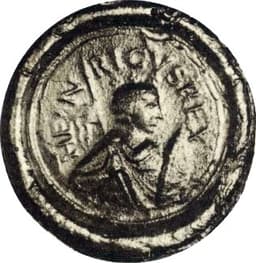
Henry the Fowler
Emperor · Medieval
60.9Total
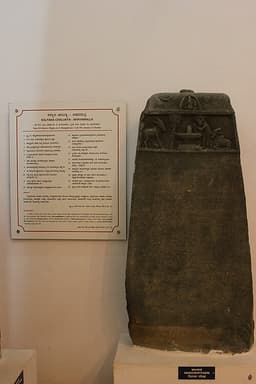
Tailapa II
Emperor · Medieval
60.4Total
Basic Information
Born
876
957
Died
936
997
Era
Medieval
Medieval
Nationality
East Francia
India
Occupation
Emperor
Emperor
Civilization
Western
Indian
Score Comparison
Military (10%)
70.0
74.7
Political (20%)
59.3
53.8
Influence (20%)
55.0
61.0
Legacy (20%)
52.0
52.0
Leadership (15%)
85.0
72.0
Strategy (15%)
55.0
58.0
TOTAL
60.9
60.4
Henry the Fowler — Complete Timeline
919 AD
Election as King of East FranciaPolitical Action
Henry the Fowler was elected King of East Francia by the Saxon and Frankish nobles at Fritzlar on May 6, 919. He was the first Saxon king, marking the transition from Carolingian to Ottonian rule. His election was contested by other dukes but he prevailed.
ElectionAccessionOttonian Dynasty
Impact: regionalconstructive
921 AD
Treaty of Bonn (921)Political Action◆ Major
Henry the Fowler signed the Treaty of Bonn with Charles the Simple of West Francia, recognizing each other's royal titles and establishing peaceful relations. This treaty ended Carolingian claims over East Francia and solidified Henry's legitimacy as an independent king.
TreatyRecognitionDiplomacy
Impact: regionalconstructive
924 AD
Nine-Year Truce with the MagyarsPolitical Action◆ Major
Henry the Fowler negotiated a nine-year truce with the Magyars, agreeing to pay tribute in exchange for a halt to their raids. He used this period to fortify towns, reorganize the army, and train cavalry. This strategic pause was crucial for his later military reforms.
TruceMagyarsMilitary Reform
Impact: regionalconstructive
929 AD
Battle of Lenzen (929)War◆ Major
Henry the Fowler's forces defeated a Slavic army at the Battle of Lenzen, securing the eastern frontier of East Francia. This victory allowed Henry to consolidate control over the Elbe region and establish the March of Brandenburg, a key step in German eastward expansion.
BattleSlavic WarsEastern Expansion
Impact: regionalconstructive
933 AD
Battle of Riade (933)War
After the truce with the Magyars expired, Henry the Fowler led a German army to victory at the Battle of Riade (near Merseburg). The defeat of the Magyar cavalry ended their raids into East Francia for a generation and established Henry's reputation as a defender of Christendom.
BattleMagyarsVictory
Impact: regionalconstructive
936 AD
Death of Henry the FowlerOther◆ Major
Henry the Fowler died on July 2, 936, at Memleben. He was succeeded by his son, Otto I, who would become Holy Roman Emperor. Henry's reign laid the foundations for the Ottonian dynasty and the medieval German kingdom.
DeathSuccessionOttonian
Impact: regional
Tailapa II — Complete Timeline
973 AD
Founding of the Western Chalukya DynastyPolitical Action◆ Major
Tailapa II overthrew the Rashtrakuta ruler Karka II and established the Western Chalukya dynasty. This marked the end of Rashtrakuta rule in the Deccan and the beginning of a new Chalukya era.
Impact: regional
995 AD
Defeat of the Paramara King MunjaWar◆ Major
Tailapa II defeated and captured the Paramara king Munja of Malwa. This victory consolidated Western Chalukya control over the northern Deccan and established their military reputation.
Impact: regional
Expert Analysis
Henry the Fowler vs Tailapa II
### The King Who Paid Tribute, and the King Who Refused
On a spring morning in 933, Henry the Fowler, King of East Francia, stood before his assembled army near the town of Riade. For nine years, he had paid the Magyars—those fearsome horsemen from the steppes—a heavy tribute to keep them from ravaging his lands. But now the truce had expired, and the tribute chests were empty. In their stead, Henry had spent those years building fortresses, training cavalry, and forging a new kind of army. When the Magyar envoys arrived to demand payment, Henry reportedly sent them back with a dead dog—a message as clear as it was contemptuous. The battle that followed was a decisive victory, and the Magyar threat to East Francia was broken for a generation.
Nearly six decades later and five thousand miles away, another king faced a similar reckoning. Tailapa II, a feudatory of the Rashtrakuta Empire in the Deccan, had watched his overlords grow weak. In 973, he struck, overthrowing the Rashtrakuta ruler Karka II and founding the Western Chalukya dynasty. But his greatest test came in 995, when he faced the Paramara king Munja of Malwa, a rival who had long threatened his southern domains. Tailapa II defeated and captured Munja, consolidating his hold on the Deccan. Yet unlike Henry, he did not transform his victory into a lasting peace—the Chola wars that followed would bleed his kingdom for generations.
What drove these two medieval founders—one in the forests of Germany, one in the plateaus of India—down such different paths? The answer lies not in their military scores (Henry’s 55.2 to Tailapa’s 55.4, nearly identical), but in the worlds they inherited and the choices they made.
### Origins
Henry was born in 876 into the chaos of Carolingian decline. East Francia was a patchwork of duchies—Saxony, Bavaria, Swabia, Franconia—each ruled by proud dukes who barely acknowledged a central king. The Magyars raided at will, and the Norse harried the coasts. Henry’s father, Duke Otto of Saxony, had fought to defend his lands, but he died when Henry was just a boy. Henry grew up in a world where power was local, survival was personal, and kingship was a burden, not a birthright.
Tailapa II, born in 957, came from a different tradition. He was a scion of the Chalukya dynasty, which had ruled the Deccan centuries earlier before being eclipsed by the Rashtrakutas. His family had served as feudatories—local lords who paid tribute to the Rashtrakuta emperor. But the Rashtrakutas had grown decadent, and their empire was cracking. Tailapa grew up in a world where legitimacy came from lineage, where the past was a golden age to be restored, and where power was won not by building something new, but by reclaiming something old.
### Rise to Power
Henry’s rise was a study in patience and pragmatism. In 919, the Saxon and Frankish nobles elected him king at Fritzlar—but he was not the first choice. The Duke of Bavaria had refused the crown, and the Duke of Swabia was hostile. Henry accepted the title, but he did not try to rule by decree. Instead, he spent years negotiating, cajoling, and sometimes fighting to win the loyalty of the other dukes. He signed the Treaty of Bonn in 921 with Charles the Simple of West Francia, recognizing each other’s royal title—a clever move that secured his western flank. And in 924, when the Magyars threatened, he did the unthinkable: he agreed to pay them tribute for nine years. It was a humiliating bargain, but it bought him time.
Tailapa II’s rise was swifter and more dramatic. In 973, he saw his moment: the Rashtrakuta emperor Karka II was weak, and the empire was in turmoil. Tailapa raised his banner, marched on the capital, and overthrew him in a single campaign. He declared himself king and revived the Chalukya name. There was no gradual consolidation, no long truce with enemies. Tailapa seized power in a coup, and he expected his subjects to accept it.
### Leadership & Governance
Henry governed as a builder. During the nine-year truce, he transformed East Francia. He ordered the construction of fortified towns—*Burgen*—across the land, each with a garrison of trained soldiers. He reformed the army, creating a cavalry force that could meet the Magyars on equal terms. He also cultivated the church, using bishops as administrators and allies against the proud dukes. His political wisdom lay in knowing when to fight and when to wait. When the truce expired in 933, he was ready.
Tailapa governed as a conqueror. He defeated the Paramara king Munja in 995, but he did not annex Malwa—he simply extracted tribute and returned to his capital. His military campaigns were brilliant but reactive: he fought the Paramaras, then the Cholas, then the Paramaras again. He built no lasting fortifications, no network of loyal garrisons. His power rested on his personal reputation and the fear he inspired. When he died in 997, his son inherited a kingdom that was strong but brittle.
### Triumph & Tragedy
Henry’s greatest moment was the Battle of Riade in 933. It was not a massive slaughter—the Magyars fled early—but it was a psychological victory. Henry had proven that a German king could defeat the steppe raiders. He died three years later, in 936, at Memleben, having secured his dynasty and his realm. His tragedy was that he never became emperor—that title would go to his son, Otto I, who would be crowned Holy Roman Emperor in 962.
Tailapa’s greatest moment was the capture of Munja in 995. It was a triumph of strategy and nerve—he had lured the Paramara king into a trap and crushed him. But his tragedy was that this victory did not lead to peace. The Chola king Rajaraja I was already eyeing the Deccan, and Tailapa’s successors would spend decades fighting a losing war. The Western Chalukya dynasty would collapse within a century, swallowed by the very forces Tailapa had tried to control.
### Character & Destiny
Henry was cautious, patient, and deeply pragmatic. He understood that power was not about glory but about survival. He accepted humiliation to buy time, built slowly, and died with his work unfinished but his foundation solid. His personality shaped a kingdom that would become the Holy Roman Empire.
Tailapa was bold, ambitious, and proud. He saw himself as a restorer of a lost golden age, a warrior-king who would reclaim his ancestors’ glory. He won battles, but he never built institutions. His personality shaped a dynasty that would burn brightly and fade quickly.
### Legacy
Henry the Fowler is remembered as the founder of the Ottonian dynasty, the father of Otto the Great, and the king who saved Germany from the Magyars. His legacy is one of patient statecraft—the art of building a kingdom out of fragments.
Tailapa II is remembered as the founder of the Western Chalukya dynasty, the king who restored Chalukya rule to the Deccan. His legacy is one of martial valor—the art of winning a kingdom through courage and cunning.
### Conclusion
History has a way of rewarding the patient over the bold. Henry the Fowler, who paid tribute and waited, founded a dynasty that lasted for centuries. Tailapa II, who struck quickly and gloriously, founded one that crumbled within a hundred years. Both were great kings, but they lived in different worlds—one where power was built brick by brick, and one where it was seized sword by sword. The difference was not in their courage, but in their understanding of time. Henry knew that a kingdom is not won in a day; Tailapa believed it could be. In the end, the slow builder outlasted the swift conqueror.
Rankings
🥇
Henry the FowlerLeader
Mil: 70.0Pol: 59.3Inf: 55.0
60.9
🥈
Tailapa II
Mil: 74.7Pol: 53.8Inf: 61.0
60.4
+0.5 behind
How This Comparison Works
Algorithm
Each figure is scored on 6 dimensions (0—100 scale) based on structured historical data: Military (10%), Political (20%), Influence (20%), Legacy (20%), Leadership (15%), Strategy (15%). The weighted total produces the final ranking.
Data Sources
Scores are computed from structured sub-indicators in the database. Scale factors adjust for era (Ancient ×0.85, Modern ×1.0) and civilization size (Eastern ×1.05, Other ×0.80) to account for differences in population and military scale.
Maximum 3 Figures
Comparisons are limited to 2—3 figures to ensure readability and statistical meaningfulness.
Error Margins
±5 points per dimension — Sub-scores are derived from historical records with inherent uncertainty. Two figures within 5 points on a dimension should be considered roughly equivalent in that area.
Total Score Accuracy
±3 points overall — The weighted combination of 6 dimensions produces a total score with approximately ±3 points of uncertainty. Differences of less than 3 points are not statistically significant— the figures are effectively tied.
Known Limitations
- Historical records are incomplete and uneven across civilizations
- Figures from oral-tradition societies may be underrepresented
- Occupation labels can misclassify multi-role figures
- Scores measure capability and impact, not moral character
- Quantitative scoring is a comparison tool, not absolute truth
Capability Radar
Military (10%) — Battles & Warfare
Battles
55
70
Win Rate
60
75
Expansion
60
75
Political (20%) — Governance & Reform
Reform
75
65
Diplomacy
70
60
Economy
65
65
Influence (20%) — Cultural & Global Reach
Cultural
55
55
Global
40
40
Legacy (20%) — Historical Impact
Historical
65
60
Longevity
60
50
Leadership (15%) — Power & Stability
Tenure
70
70
Stability
70
60
Strategy (15%) — Tactics & Innovation
Strategy
65
70
Tactics
50
65
Reform
70
60
Similar Comparisons
Comments & Discussion
RiversideForger6/16/2026
The real difference isn't tactics—it's timing. Henry the Fowler used tribute as a stalling tactic to rebuild his military from scratch. He paid for nine years, then won one battle and secured peace for a generation. Tailapa II captured Munja, but then got dragged into endless Chola wars because he skipped the state-building phase. Henry understood that winning the peace matters more than winning the war. Tailapa treated victory like an ending when it was just the beginning.
KartaReckoner6/16/2026
说实话,Tailapa II根本不是Henry的对手。Henry最大的成就不是打了一次胜仗,而是在9年里把东法兰克王国的军事体系彻底翻新——建城堡,练骑兵,改革动员机制。Tailapa II呢?他赢了Paramara,但德干高原上的城堡体系有多差?他根本没解决。打下一场战争依赖的是之前的建设,不是一时的勇猛。真正的差别不是“付不付贡金”,是“用那段时间做了什么”。
SlavicShadow6/16/2026
I can't get past the dead dog. It's not just an insult—it's a strategic message. Henry sent the Magyars an animal they considered unclean. He's telling them: our relationship is over, and I don't respect your power anymore. Tailapa sent no such signal. He captured Munja and then what—ransom? Prison? That's medieval politics, not a declaration of a new era. Henry's theater of contempt was part of his military strategy. Tailapa forgot that wars end with symbols, not just swords.
SpiceRouteSkeptic6/16/2026
这种比较最讨厌的就是强行找对称。Henry和Tailapa完全不在一个战略位上。Henry面对的是游牧骑兵,目标单一:别让他们再来抢劫。Tailapa面对的是印度次大陆的多极混战——帕拉玛拉、朱罗、罗湿拘罗拘陀,每个都是文明级的对手。你拿Pay the Tribute vs Refuse当标题,那我把话挑明:Henry只需要管好东线,Tailapa得同时盯住四个方向。这不是一个人做错了什么,是整个地理系统不同。
ScribeOfTheSlain6/16/2026
What nobody says: Tailapa II's victory over Munja was actually more impressive than Henry's over the Magyars. Henry fought on his own turf, with years of prep, against a raiding force that couldn't lay siege. Tailapa marched into Malwa, defeated a rival kingdom's king in battle, captured him alive, and then integrated that victory into a new dynasty's founding myth. Henry got one battle against people who didn't want to be there. Tailapa dismantled an entire kingdom. But he paid for it with a ce
晨雾筑城者6/16/2026
历史最讽刺的地方是:Henry把贡金转换成城堡,Tail